Year: 1960
Runtime: 101 mins
Language: English
Mark Lewis, a solitary film‑studio employee, spends his nights photographing women in lurid poses while filming a documentary on fear. He records victims' terror as he murders them. He captures their final cries on tape. He befriends Helen, the daughter of the tenants below his apartment, and vaguely mentions the disturbing movie he is creating.
Warning: spoilers below!
Haven’t seen Peeping Tom yet? This summary contains major spoilers. Bookmark the page, watch the movie, and come back for the full breakdown. If you're ready, scroll on and relive the story!
Read the complete plot breakdown of Peeping Tom (1960), including all key story events, major twists, and the ending explained in detail. Discover what really happened—and what it all means.
In London, Mark Lewis, Karlheinz Böhm, a shy, reclusive focus puller on a film crew, covertly films Dora, Brenda Bruce, a prostitute, with a camera hidden under his coat. He follows her into her flat, murders her with a blade concealed in one leg of his tripod, and later watches the film in his darkroom. The following morning, posing as a reporter, he films the police removing Dora’s corpse from her home.
Lewis is a member of a film crew who aspires to become a filmmaker himself. He also works part-time photographing soft-porn pin-up pictures of women, sold under the counter. He is a shy, reclusive young man who hardly socialises outside of his workplace. He lives in the house of his late father, renting most of it via an agent while posing as a tenant himself. Helen Stephens, a sweet-natured young woman who lives with her blind mother in the flat below his, befriends him out of curiosity after he is discovered spying on her 21st birthday party.
Mark reveals to Helen, through home films taken by his father, Michael Powell (A.N. Lewis), that, as a child, he was used as a guinea pig for his father’s studies on fear in children. Mark’s father would study his son’s reaction to various stimuli, such as large lizards he put on his bed, and would film the boy in all sorts of situations, even recording Mark’s reactions at his mother’s deathbed. (He married another woman suspiciously soon afterwards.) His studies enhanced his reputation as a renowned psychologist.
Mark arranges with Vivian, Moira Shearer, a stand-in at the studio, to make a film after the set is closed; he then kills her and stuffs her into a prop trunk. The body is discovered later during shooting by Pauline, Shirley Anne Field, a cast member who has already antagonised the fussy director by acting a faint badly, and then actually fainting from exhaustion at the many retakes. The police link the two murders and notice that each victim died with a look of utter terror on her face. They interview everyone on the set, including Mark, who always keeps his camera running, claiming that he is making a documentary.
Helen goes out to dinner with Mark, persuading him to leave his camera behind for once, and briefly kisses him once they return. Her mother finds his behavior peculiar, being aware, despite her blindness, that Mark often looks through Helen’s window. She is waiting inside Mark’s flat after his evening out with her daughter. Unable to wait until she leaves due to his compulsion, he begins screening his latest snuff film with her still in the room. She senses how emotionally disturbed he is and threatens to move, but Mark reassures her that he will never photograph or film Helen.
A psychiatrist is called to counsel Pauline. He chats with Mark and is familiar with his father’s work. The psychiatrist relates the details of the conversation to the police, noting that Mark has
his father’s eyes
Mark is tailed by the police to the newsagents, where he takes photographs of pin-up model Milly, Pamela Green. Shortly afterwards, it emerges that Mark has killed Milly.
Helen, who is curious about Mark’s films, finally runs one of them. She becomes upset and then frightened when he catches her. Mark reveals that his father not only filmed his experiments on him, but recorded them and has wired the house, and he plays a recording of her with her boyfriend. Mark makes his films so that he can capture the fear of his victims. He has mounted a mirror on his camera so that he can film his victims’ reactions as they see their own impending deaths. He points the tripod’s blade towards Helen’s throat and we see her reaction distorted in the mirror, but he cannot kill her.
The police approach and Mark hears their sirens. As he planned from the very beginning, he impales himself on the knife with the camera running, providing the finale for his documentary. Helen cries over Mark’s dead body as the police enter the room. As the scene fades, we hear a recording of his father calling him a good boy.
Last Updated: October 09, 2025 at 10:47
Discover curated groups of movies connected by mood, themes, and story style. Browse collections built around emotion, atmosphere, and narrative focus to easily find films that match what you feel like watching right now.
Stories that delve into the traumatic origins and disturbing logic of a killer.For viewers who want movies like Peeping Tom, this thread focuses on psychological thrillers and dramas that delve into the origins of a psychopath. These similar stories examine how trauma shapes a killer, often with a bleak tone and heavy emotional weight.
These narratives often follow a central, psychologically disturbed character, revealing their past trauma through flashbacks or dialogue while they commit acts in the present. The plot structure is less about external conflict with law enforcement and more about the internal, tragic collapse of a human being, leading to an inevitable, bleak conclusion.
Movies in this thread are grouped by their shared focus on psychological dissection over simple thriller mechanics. They prioritize understanding the 'why' behind monstrous acts, creating a heavy, disturbing, and often melancholic experience that is rooted in character study rather than plot-driven suspense.
Films where the camera itself becomes an intrusive and complicit character.If you liked the intrusive perspective of Peeping Tom, this thread collects similar movies about voyeurism and the ethics of watching. These films share an anxious, claustrophobic mood where the act of filming or observing is key to the narrative and thematic tension.
The narrative pattern often involves a protagonist who obsessively watches others, with the story unfolding from their limited, distorted perspective. This creates a sense of claustrophobia and moral ambiguity, as the audience is forced to share the voyeur's point of view, leading to a confrontation with the darkness inherent in looking.
These films are linked by their shared meta-commentary on spectatorship and the power dynamics of observation. They create a unique, anxious mood by making the viewer acutely aware of their own role as a watcher, often resulting in a deeply unsettling and intellectually provocative experience.
Don't stop at just watching — explore Peeping Tom in full detail. From the complete plot summary and scene-by-scene timeline to character breakdowns, thematic analysis, and a deep dive into the ending — every page helps you truly understand what Peeping Tom is all about. Plus, discover what's next after the movie.
Track the full timeline of Peeping Tom with every major event arranged chronologically. Perfect for decoding non-linear storytelling, flashbacks, or parallel narratives with a clear scene-by-scene breakdown.
Discover the characters, locations, and core themes that shape Peeping Tom. Get insights into symbolic elements, setting significance, and deeper narrative meaning — ideal for thematic analysis and movie breakdowns.
Get a quick, spoiler-free overview of Peeping Tom that covers the main plot points and key details without revealing any major twists or spoilers. Perfect for those who want to know what to expect before diving in.
Visit What's After the Movie to explore more about Peeping Tom: box office results, cast and crew info, production details, post-credit scenes, and external links — all in one place for movie fans and researchers.
Discover movies like Peeping Tom that share similar genres, themes, and storytelling elements. Whether you’re drawn to the atmosphere, character arcs, or plot structure, these curated recommendations will help you explore more films you’ll love.
Peeping Tom (1960) Scene-by-Scene Movie Timeline
Peeping Tom (1960) Movie Characters, Themes & Settings
Peeping Tom (1960) Spoiler-Free Summary & Key Flow
Movies Like Peeping Tom – Similar Titles You’ll Enjoy
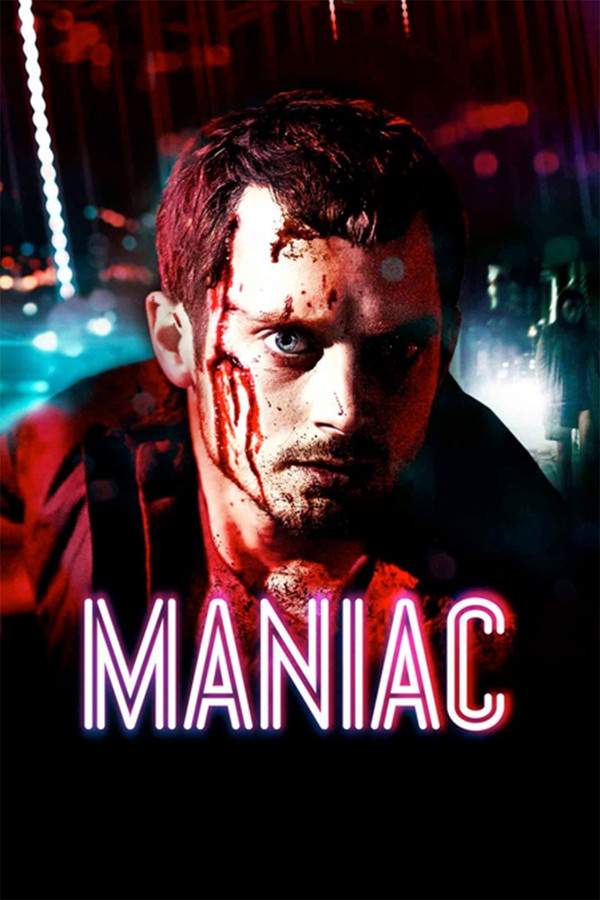
Maniac (2013) Film Overview & Timeline
Murder-Set-Pieces (2005) Spoiler-Packed Plot Recap
Creep (2004) Ending Explained & Film Insights
The Poughkeepsie Tapes (2007) Movie Recap & Themes
Murder Obsession (1981) Movie Recap & Themes
Angst (1983) Film Overview & Timeline
Rorret (1988) Film Overview & Timeline
Crawlspace (1986) Spoiler-Packed Plot Recap
Rorret (1988) Spoiler-Packed Plot Recap
What the Peeper Saw (1972) Complete Plot Breakdown
Hands of the Ripper (1971) Spoiler-Packed Plot Recap
The Peeping Tom (1997) Film Overview & Timeline
The Strangler (1964) Full Summary & Key Details
The Killing Kind (1973) Full Summary & Key Details
Thirsty for Love: Sex and Murder (1972) Full Movie Breakdown