









Plot Explained Spoilers guaranteed!
Plot Explained

Browse by genre

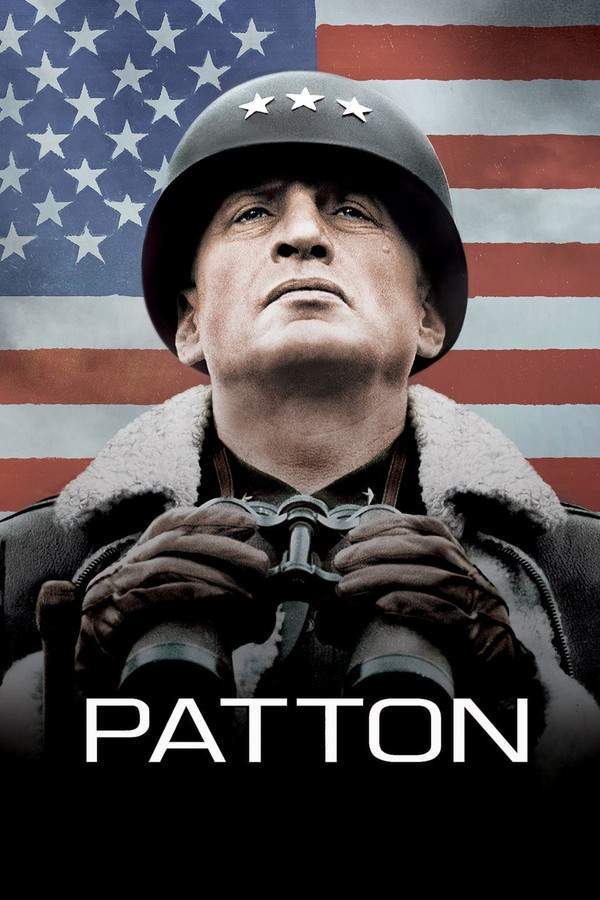
Patton (1970) movie poster

Timeline

Patton (1970) Timeline Explained – Every Event in Order

Release, runtime and language
1970 · 172 min · English
JustWatch #2,448 15
Directed by
Franklin J. Schaffner
Starring
Karl Malden, George C. Scott
Budget
$12M

This gripping biographical drama portrays the life of General George S. Patton, a celebrated but controversial figure in World War II. The film explores his extraordinary military leadership and tactical brilliance, alongside his fiery personality and outspoken views that often led to conflict. Witnessing both his triumphs and setbacks, the story follows Patton’s journey from the battlefield to a tragic downfall in the war’s aftermath.

On this page (6)
  1. 1 Where to watch
  2. 2 Events in order (14)
  3. 3 Timeline questions answered
  4. 4 Movie threads
  5. 5 Movies like Patton
  6. 6 Every angle

Where to watch

Where to Watch Patton (1970)

Where can you watch Patton? Stream, rent or buy it in the US, including on Amazon Prime Video, fuboTV and Amazon Video: current JustWatch availability with up-to-date prices.

Streaming availability powered by JustWatch

14 events in order · contains spoilers

Patton Timeline: Events in Chronological Order

Every key event of Patton (1970) in order, scene by scene, with when and where it takes place. Use it to untangle flashbacks, time jumps and parallel storylines, to refresh your memory before the sequel or to find the exact scene you are thinking of.

  1. General Patton's Pre-Battle Address

    As a backdrop of the Stars and Stripes waves, General George S. Patton delivers a stirring address to his troops just before a critical battle. His dynamic personality shines through as he moves from stern to jovial tones, reflecting his belief that war is the ultimate test of the human spirit.

    When
    1942
  2. Defeat in North Africa

    The American forces face a devastating defeat against Rommel's Africa Corps in North Africa. This loss prompts General Omar Bradley to recognize the urgent need for a skilled commander to turn the tides of battle.

    When
    1942
    Where
    North Africa
  3. Patton Takes Command

    General Patton arrives at the battlefield amidst blaring sirens, startling the soldiers with his commanding presence. Concerned about the troops' lax attitude, he begins to instill discipline and order, believing it to be the key to success.

    Where
    North Africa
  4. Study of Rommel's Strategies

    Recognizing Rommel's tactical brilliance, Patton immerses himself in studying the enemy's strategies. This preparation showcases Patton's willingness to learn and adapt, demonstrating his respect for the enemy's capabilities.

  5. Rommel's Response to Patton

    As the German forces analyze Patton's growing reputation, Rommel chillingly vows to eliminate Patton before he can do the same. This sentiment highlights the threats both generals present to each other in the unfolding conflict.

  6. Victory in Tunisia

    Patton's keen assessments lead to an important American victory as the Germans launch an offensive in Tunisia. His triumph further swells his ego, cementing his status as a bold and formidable commander.

    Where
    Tunisia
  7. Rivalry with Montgomery

    As the African campaign nears its conclusion, the rivalry between Patton and British Field Marshal Montgomery becomes intense. Patton is infuriated when Montgomery's strategy is chosen over his own for the next phase of the campaign.

  8. Invasion of Sicily

    After the invasion of Sicily, tensions rise as Patton, initially tasked with supporting Montgomery, decides to lead his troops independently. His aggressive push for Palermo and Messina stirs dissatisfaction among his commanders.

    Where
    Sicily
  9. Controversial Actions at Field Hospital

    During a visit to a field hospital, Patton encounters a soldier who is displaying signs of PTSD. Misinterpreting the soldier's condition as cowardice, Patton reacts violently, resulting in public outcry and a significant reprimand.

  10. Summoned to England for D-Day

    Patton is summoned to England in preparation for D-Day, but quickly learns that his aggressive reputation has made him a liability. Under orders to stay silent, he wrestles with the frustration of potentially missing the pivotal battle.

    Where
    England
  11. Rapid Advance Through France

    After a meeting with General Bradley, Patton is given a chance at redemption and leads American forces swiftly through France. His tactics gain ground faster than any other Allied unit, showcasing his strategic prowess.

    Where
    France
  12. The Battle of the Bulge

    As Christmas approaches, the Germans launch a fierce counterattack during the Battle of the Bulge, surrounding American troops in a dire situation. Patton vows to lead his men to deliver a miracle and relieve the beleaguered forces.

  13. Patton's Trouble with Allies

    Following the war’s progress, Patton's outspoken nature results in tensions with the Soviets, ultimately leading to his removal from command by Eisenhower. His refusal to conform to the political landscape highlights the challenges of leadership during wartime.

  14. Patton's Reflection on Glory

    Looking back on his storied military career, Patton reflects on the fleeting nature of glory and triumph. His contemplative statement about Roman conquerors emphasizes his awareness of the transient nature of fame and success.

Last updated: October 27, 2024 at 17:58

Was this helpful?

Timeline questions answered

Patton Timeline Explained: Your Questions Answered

When does it happen, and why in that order? The questions people ask about the chronology of Patton (1970): time jumps, flashbacks, cause and effect between scenes and the correct order of events, each answered with spoilers.

Q1

Why was General Patton brought to North Africa after the initial defeats?

After the Americans suffered a devastating defeat against Rommel's Africa Corps in North Africa, General Omar Bradley recognized that the only chance of turning the tide was to bring in the best tank commander available. Patton was summoned specifically because of his reputation as an aggressive and effective tank commander who could restore discipline and lead the American forces to victory.

Foreshadowing: Earlier, the summary notes that the American forces faced a devastating defeat that prompted the need for a skilled commander.

  • patton
  • north africa
  • ommel
  • commander
  • defeat
Q2

Why did Patton slap the soldier at the field hospital?

During a routine visit to a field hospital, Patton encountered a soldier displaying signs of what would now be recognized as PTSD or shell shock. Misinterpreting the soldier's extreme stress and trembling as cowardice, Patton erupted in anger, physically slapping the man and ordering him back to the front lines. This incident caused public outcry and led to a significant reprimand and forced apology.

Foreshadowing: The film establishes Patton's volatile temperament early, showing his tendency to shift from stern to profanity-laced outbursts.

  • patton
  • field hospital
  • slapping soldier
  • cowardice
  • reprimand
Q3

Why was Patton kept away from the D-Day invasion?

Patton was summoned to England in preparation for D-Day but quickly learned that his aggressive reputation and outspoken nature had made him a liability to the delicate Allied alliance that Eisenhower was trying to maintain. He was ordered to remain silent and avoid trouble, leaving him frustrated at the possibility of missing the grand battle he had long awaited.

Foreshadowing: Earlier, the Germans analyze Patton's character traits, recognizing him as a romantic who reads the Bible, curses, and believes in reincarnation.

  • patton
  • d-day
  • eisenhower
  • alliance
  • liability
Q4

Why was Patton removed from command by Eisenhower?

Following the war's progress, Patton's penchant for speaking out landed him in trouble when he offended the Russians. His refusal to conform to the political landscape and his continued outspoken behavior ultimately led Eisenhower to remove him from command, despite his remarkable military successes.

Foreshadowing: The film establishes Patton's tendency to speak his mind regardless of consequences throughout his campaigns.

  • patton
  • eisenhower
  • russians
  • removal
  • command
Q5

How did Patton contribute to the Battle of the Bulge?

When the Germans launched their fierce counterattack during the Battle of the Bulge, surrounding American troops in a dire situation, Patton vowed to deliver what he called a miracle. He marched his Third Army with urgency and arrived just in time to relieve the besieged forces, once again capturing the spotlight and saving countless American lives.

Foreshadowing: Earlier, Patton demonstrates his willingness to take decisive action against orders, such as when he pushed forward independently during the Sicily invasion.

  • patton
  • battle of the bulge
  • third army
  • relief
  • miracle
Q6

Why did Patton ignore orders during the Sicily invasion?

During the Sicily campaign, Patton was originally assigned to support Montgomery's forces. However, he decided to chart his own course, ignoring orders and pushing his troops forward independently. He first captured Palermo and then raced towards Messina, prioritizing speed over the welfare of his men. This aggressive move frustrated his commanders who were wary of unnecessary American casualties.

Foreshadowing: The rivalry between Patton and Montgomery intensifies earlier, with Patton furious when Montgomery's strategy is adopted over his own invasion plan.

  • patton
  • sicily
  • montgomery
  • palermo
  • messina
  • orders
Q7

What caused the rivalry between Patton and Montgomery?

The rivalry stemmed from competing military strategies and ego clashes during the African and Italian campaigns. Both commanders commanded respect and contention, but Patton was particularly outraged when Montgomery's strategy for the next phase of the campaign was adopted over his own plan to invade Sicily. The tension continued throughout the war as both vied for recognition and strategic dominance.

Foreshadowing: The timeline shows the rivalry intensifying as the African campaign nears its end, with both generals commanding American and British forces respectively.

  • patton
  • montgomery
  • rivalry
  • strategy
  • british
  • american
Q8

Why did Patton study Rommel's military strategies?

Patton recognized the tactical prowess of his enemy and immersed himself in studying Rommel's strategies. This demonstrated his willingness to learn from an opponent he respected, showing his tactical intelligence and adaptability. Rommel himself acknowledged the threat, vowing to attack and annihilate Patton before Patton could do the same.

Foreshadowing: Earlier, the Americans face defeat against Rommel's Africa Corps, making the enemy's capabilities immediately apparent.

  • patton
  • rommel
  • strategies
  • tactics
  • enemy
  • study
Q9

Why did Patton impose such strict discipline on his troops?

Patton believed that the troops' lax attitude was the root of their failure in North Africa. Upon arrival, he set about diligently restoring order and discipline, imposing his steadfast philosophy on his men. His iron will and unwavering self-confidence drove him to command with absolute authority, believing discipline was essential for military success.

Foreshadowing: The initial defeat in North Africa is directly linked to the troops' relaxed attitude, which Patton aims to correct immediately.

  • patton
  • discipline
  • training
  • troops
  • command
  • army
Q10

What did Patton mean by his reflection on Roman conquerors and glory?

Patton reflected that all glory is fleeting, quoting the Roman tradition where a slave stood behind conquering generals whispering a warning: 'That all glory is fleeting.' This contemplative statement emphasized his awareness of the transient nature of fame and success, especially as he faced an uncertain future after being removed from command.

Foreshadowing: The film has shown Patton's massive ego throughout, making this moment of reflection particularly poignant as he acknowledges the temporary nature of his achievements.

  • patton
  • glory
  • roman
  • conqueror
  • fleeting
  • reflection

Movie threads

More Movies Like Patton, by Mood & Story

Curated lists built around what makes Patton tick: the same mood, the same kind of story or the same emotional payoff. Each list explains why these movies belong together.

Complex Portraits of Flawed Genius like in Patton

Biographical dramas exploring brilliant but deeply troubled historical figures. Explore movies like Patton that showcase brilliant but deeply flawed historical figures. If you enjoyed the complex portrayal of General Patton, you'll find similar biographical dramas exploring the fine line between genius and self-destruction in films about iconic leaders, artists, and innovators.

  • driven
  • authoritative
  • confrontational
  • tragic
  • somber
  • epic
  • Tone: tense, grim, somber
  • Pacing: fast, driven
Why these movies?

The story pattern: These narratives typically follow a rise-and-fall arc, charting the subject's ascent to greatness while simultaneously foreshadowing the character flaws that will lead to their downfall. The central conflict is often internal—the battle between the individual's brilliance and their pride, ambition, or psychological struggles—set against a large-scale, high-stakes backdrop.

Why they belong together: Movies in this thread share a focus on morally complex protagonists whose greatness is shadowed by significant flaws. They offer a heavy emotional weight, a tense or grim tone, and a bittersweet ending that acknowledges achievement while mourning personal failure, creating a cohesive experience of ambitious but tragic lives.
War Dramas about the Psychological Toll of Command like Patton

Intense war dramas focusing on the heavy burden of leadership. Find movies similar to Patton that examine the heavy psychological burden of military leadership. If you were captivated by the intense portrayal of command stress, these war films explore the inner turmoil, moral conflicts, and personal costs faced by leaders on the front lines.

  • intense
  • grim
  • psychological
  • somber
  • authoritative
  • driven
  • Tone: tense, grim, somber
  • Pacing: fast, relentless
Why these movies?

The story pattern: The narrative pattern revolves around a leader grappling with the overwhelming responsibility of command. Scenes of strategic triumph are intercut with moments of profound doubt, guilt, and emotional isolation. The story examines how constant pressure and exposure to trauma erode the protagonist's psyche, questioning the very concept of glory in warfare.

Why they belong together: These films are united by their high intensity, fast pacing driven by military campaigns, and a heavy emotional weight derived from the psychological toll of war. They share a tense, often grim tone and use the war setting not just for action, but as a crucible for exploring the human cost of leadership.

If you liked this

Movies Like Patton

Similar movies to Patton: the same genre, themes or kind of story. Each one comes with its own plot summary, timeline and ending explained.

Browse all movie summaries

Every angle

Patton (1970) Explained: Plot, Timeline & Characters

Everything about Patton in one place: what happens in the plot summary, the timeline in chronological order, the characters and meaning and a spoiler-free summary. What's After the Movie adds the cast, box office and post-credit scenes.

Coming soon on iOS and Android

The Plot Explained Movie Summary App

Plot summaries, endings explained and timelines on your phone. Catch up on any movie in minutes, save your favorites and never miss a twist again.

Be the first to know when we launch. Your email stays private, always.

Learn more about the app