Plot Explained Spoilers guaranteed!
Plot Explained

Browse by genre

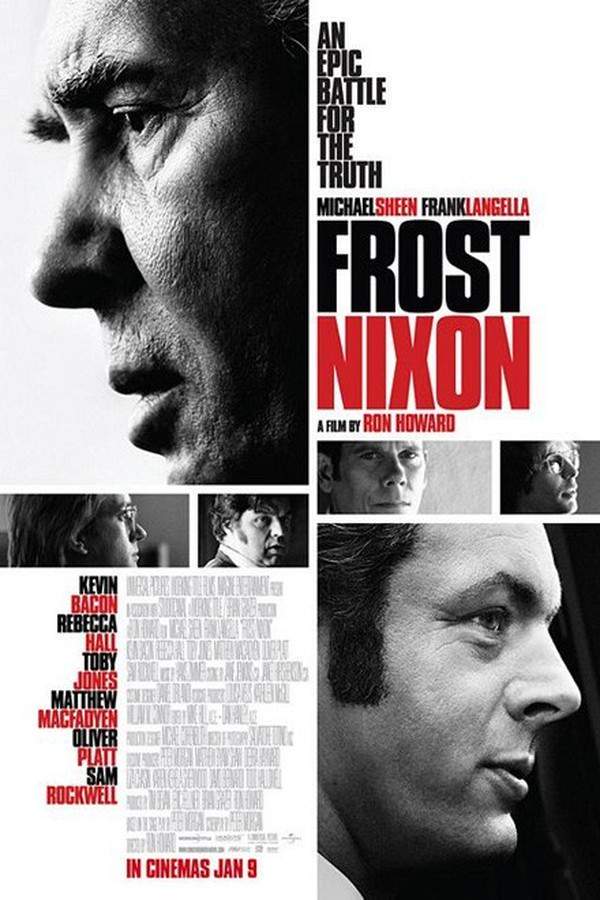
Frost/Nixon (2008) movie poster

Plot Summary

Frost/Nixon (2008) Plot Summary Explained

Release, runtime and language
2008 · 122 min · English
Loading streaming availability…
Directed by
Ron Howard
Starring
Michael Sheen, Frank Langella, Kevin Bacon
Budget
$25M

In 1977, former President Richard Nixon seeks to rehabilitate his image through a series of interviews with British journalist David Frost. The discussions become a tense and strategic contest, as Nixon attempts to control the narrative surrounding the Watergate scandal. Frost, determined to explore the full extent of Nixon's involvement, presses him with incisive questions, leading to a revealing and captivating exchange between the two men.

On this page (7)
  1. 1 Where to watch
  2. 2 What happens: full plot
  3. 3 Plot questions answered
  4. 4 The book behind the movie
  5. 5 Movie threads
  6. 6 Movies like Frost/Nixon
  7. 7 Every angle
Loading streaming availability…

Full plot summary · contains spoilers

What Happens in Frost/Nixon: Full Plot Summary

The whole story of Frost/Nixon (2008) explained, from the opening scene to the final frame: every key event, every twist and what it all adds up to. Read it as a quick recap before the sequel, to check a scene you missed, or to finally understand what really happened.

After the monumental Watergate scandal of 1972, when members of Nixon's campaign were caught attempting to bug the Democratic National Party's headquarters, the political landscape was forever altered. As a result, a staggering 400 million viewers tuned in to witness Richard Nixon depart from the White House in 1974 aboard Marine One, doing so without any admission of guilt or apology. Among those captivated by this spectacle was British journalist David Frost, who, while recording a talk show in Australia, felt inspired to seize the opportunity to interview Nixon.

After Nixon was granted a full pardon by Gerald Ford, he avoided trial altogether. Meanwhile, he endeavored to pen his memoirs with the assistance of Diane Sawyer (Kate Jennings Grant) and Frank Gannon (Andy Milder). Nixon's literary agent, Irving Lazar (Toby Jones), envisioned the interviews as a chance for Nixon to redeem his tarnished image and secure financial gain. Initially demanding $500,000, Lazar ultimately negotiated a staggering $600,000 for the series, far exceeding Frost's other offers.

With determination and some persuasion, Frost convinced his producer and friend, John Birt (Matthew Macfadyen), that the interviews could indeed be a success. On their way to meet Nixon, Frost struck up a romantic connection with Caroline Cushing (Rebecca Hall), who accompanied him on the journey.

Despite facing significant challenges, including struggles to secure American networks for the interviews, Frost opted to fund the project through private investments. He negotiated deals with advertisers and local TV networks, pouring all his efforts into this venture to finance Nixon's fee. To prepare adequately, he enlisted investigators Bob Zelnick (Oliver Platt) and James Reston Jr. (Sam Rockwell) to help shape the discussions.

Reston was particularly motivated by a desire to hold Nixon accountable for his actions, urging Frost to pursue a confession. On encountering Nixon beforehand, Nixon expressed his eagerness for what he called their impending ‘duel.’

As Frost navigated the constraints and pressures of the interviews, he faced close scrutiny from Nixon’s chief of staff, Jack Brennan, who mandated that a significant portion of the discussions highlight Nixon's presidential achievements. As Frost struggled to ask poignant questions, Nixon frequently redirected the conversation towards his successes, even manipulating details about the Vietnam War to his advantage.

Despite investing nearly $2 million in the project, Frost encountered difficulties when advertisers began to withdraw their support, exacerbated by troubling reports from the sessions. As Nixon continued to toy with Frost, taunting him both professionally and personally about his relationship with Caroline, Frost found himself at a perilous crossroads after 11 interviews—each of which Nixon had managed to dominate.

Days before the pivotal final interview set to focus on Watergate, a drunken Nixon reached out to Frost, acknowledging the high stakes involved for both men. This conversation inspired Frost to push himself harder in preparation for the final stretch.

As the concluding interview commenced, Frost took an audacious step by confronting Nixon with incriminating transcripts that had been unearthed, leading to a critical moment when Nixon conceded, “When the President does it, that means it's not illegal.” However, the interview was interrupted by Brennan, who stopped the recording but ultimately allowed it to resume.

In the aftermath, Frost's relentless questioning resulted in Nixon finally admitting his wrongdoings, acknowledging that he had indeed “let the American people down.” Sometime later, Frost and Cushing bid farewell to Nixon at his villa, where appreciation and a hint of reflection bridged their shared experience. Nixon, accepting defeat, extended gratitude to Frost, who reciprocated with a symbolic gift of Italian shoes.

The interviews proved to be a commercial success, but Nixon remained embroiled in controversy until his death from a stroke in 1994, forever staining his legacy.
Last updated: November 08, 2024 at 02:33

Was this helpful?

Plot questions answered

Frost/Nixon Plot Explained: Your Questions Answered

The questions people ask most about Frost/Nixon (2008): what happens in the confusing scenes, why the characters do what they do, the twists, hidden details and what the ending means. Each answer contains spoilers.

Q1

Why did Nixon agree to do the interview with David Frost?

Nixon agreed to the interview primarily for financial reasons and to rehabilitate his tarnished public image. His literary agent, Irving Lazar, negotiated a massive $600,000 fee for the interviews, which Nixon desperately needed. Additionally, Nixon believed he could control the narrative and use the platform to highlight his presidential accomplishments rather than face accountability for Watergate.

Foreshadowing: Earlier, Nixon departed the White House without any admission of guilt, showing his reluctance to accept responsibility.

  • nixon interview motivation
  • why nixon agreed
  • frost nixon deal
Q2

How did Frost get Nixon to admit wrongdoing?

Frost secured the confession through meticulous preparation and persistence. He enlisted investigators Bob Zelnick and James Reston Jr. to uncover incriminating transcripts. During the final interview, Frost confronted Nixon with these transcripts, pushing him repeatedly until Nixon ultimately conceded that he had "let the American people down" after claiming his actions weren't illegal.

Foreshadowing: Reston had urged Frost throughout to seek a confession, believing that was the interview's true purpose.

  • frost nixon confession
  • how nixon admitted guilt
  • watergate admission
Q3

What did Nixon mean by "when the President does it, that means it's not illegal"?

This statement revealed Nixon's belief in executive immunity, he argued that actions taken by the President in office cannot be considered illegal, regardless of their legality for ordinary citizens. This became the pivotal moment of the interviews, exposing his fundamental justification for the Watergate cover-up.

Foreshadowing: Nixon had spent the interviews redirecting questions toward his accomplishments and manipulating Vietnam War details to serve his narrative.

  • president does it not illegal
  • nixon quote meaning
  • executive power watergate
Q4

Why did Frost agree to pay Nixon $600,000?

Frost paid the enormous fee because the opportunity to interview a former President about the biggest political scandal in American history was unprecedented. Despite the financial risk, Frost invested nearly $2 million total and faced advertiser withdrawals, he believed the interviews could be both journalistically significant and commercially successful.

Foreshadowing: Frost was inspired while watching Nixon's resignation and immediately saw the historical importance of securing the interview.

  • frost paid nixon
  • interview cost
  • why frost took the risk
Q5

What was Jack Brennan's role in the interviews?

Jack Brennan was Nixon's chief of staff who actively worked to control the interviews. He mandated that a significant portion of the discussions focus on Nixon's presidential achievements and frequently interrupted to redirect conversations away from Watergate. Brennan even stopped the recording during the final interview when Nixon made the incriminating statement, though he eventually allowed it to resume.

Foreshadowing: Throughout the interviews, Nixon frequently redirected conversations toward his successes, which aligned with Brennan's agenda.

  • jack brennan nixon
  • chief of staff role
  • interview control
Q6

Why did Nixon refer to the interviews as a "duel"?

Nixon framed the interviews as a "duel" because he viewed the confrontation as a competitive battle between himself and Frost. This mindset reflected his intent to fight back against what he saw as unfair scrutiny and to ultimately win the exchange. Both men understood the high stakes involved, for Nixon, his legacy was on the line, and for Frost, his career depended on extracting meaningful answers.

Foreshadowing: The description establishes the tense, competitive atmosphere that defined the entire interview series.

  • nixon duel metaphor
  • frost nixon battle
  • competitive dynamic
Q7

Did Frost make money from the interviews?

Yes, the interviews proved to be commercially successful. Though Frost faced significant financial strain when advertisers withdrew and invested nearly $2 million of his own money, the final product generated substantial profit. The interviews also established Frost's reputation as a serious journalist.

Foreshadowing: Frost had struggled to secure American network funding and financed the project through private investments and advertiser deals.

  • frost profit
  • interview commercial success
  • financial outcome
Q8

Why did advertisers withdraw from the Frost-Nixon interviews?

Advertisers withdrew their support due to troubling reports leaking from the interview sessions. As the nature of Frost's challenging questions and Nixon's defensive responses became known, sponsors became concerned about being associated with controversial content. This created additional financial pressure on Frost during the already risky project.

Foreshadowing: The withdrawal exacerbated Frost's financial difficulties after he had already invested heavily in the project.

  • advertiser withdrawal
  • interview funding
  • financial struggles
Q9

What was Nixon's strategy during the interviews?

Nixon's strategy was to control the narrative and avoid accountability. He attempted to redirect every question toward his presidential accomplishments, manipulate details about the Vietnam War, and rely on Jack Brennan to enforce discussions of his achievements. He also tried to psychologically unsettle Frost by taunting him about his relationship with Caroline Cushing.

Foreshadowing: Nixon had previously resigned without admitting guilt, establishing his pattern of avoiding responsibility.

  • nixon strategy
  • interview tactics
  • avoiding watergate questions
Q10

Why was Nixon's pardon significant to the story?

President Gerald Ford's full pardon of Nixon in September 1974 allowed Nixon to avoid trial entirely for his Watergate actions. This controversial decision meant Nixon faced no legal consequences and freed him to pursue image rehabilitation through ventures like the Frost interviews. The pardon also fueled public debate about accountability and contributed to Ford's 1976 electoral loss.

Foreshadowing: The pardon meant Nixon could participate in interviews without fear of self-incrimination affecting legal proceedings.

  • nixon pardon ford
  • watergate accountability
  • legal implications
Q11

What happened to Nixon after the interviews?

After the interviews, Nixon remained embroiled in controversy until his death in 1994. Despite extracting a confession, his legacy remained permanently stained by Watergate. He suffered a stroke that year and passed away, with the scandal defining his place in history. The interviews did not restore his reputation as he had hoped.

Foreshadowing: The film notes the ending was bittersweet, Frost achieved victory while Nixon's legacy remained tarnished.

  • nixon death 1994
  • watergate legacy
  • after the interviews
Q12

How did Frost prepare for such a challenging interview?

Frost prepared extensively by enlisting two investigators, Bob Zelnick and James Reston Jr., to research Watergate and develop probing questions. Reston was particularly motivated by a desire to hold Nixon accountable and pushed Frost to pursue a confession. Frost also spent the days before the final interview pushing himself harder after a late-night call from a drunken Nixon acknowledging the stakes.

Foreshadowing: The investigators' work directly enabled Frost to confront Nixon with incriminating transcripts during the final interview.

  • frost preparation
  • research team
  • interview prep

Movie threads

More Movies Like Frost/Nixon, by Mood & Story

Curated lists built around what makes Frost/Nixon tick: the same mood, the same kind of story or the same emotional payoff. Each list explains why these movies belong together.

Movies with high-stakes intellectual duels like Frost/Nixon

Stories where minds clash in high-stakes battles of strategy and will. If you enjoyed the tense strategic battle in Frost/Nixon, explore more movies where brilliant minds engage in high-stakes intellectual duels. These recommendations feature courtroom dramas, psychological thrillers, and historical confrontations centered on verbal and strategic warfare.

  • tense
  • strategic
  • intellectual
  • methodical
  • cerebral
  • high-stakes
  • Tone: tense, strategic, methodical
  • Pacing: steady, building
Why these movies?

The story pattern: The narrative typically builds around a focused confrontation between two characters, often an interview, a trial, or a negotiation. The plot hinges on the strategic preparation and execution of this encounter, with tension rising as each participant attempts to outmaneuver the other mentally and psychologically.

Why they belong together: Movies are grouped here for their shared focus on a central, high-pressure intellectual conflict. They deliver a similar experience of methodical tension, strategic gameplay, and the cathartic release of a decisive verbal confrontation.

Bittersweet historical reckoning dramas like Frost/Nixon

Dramas where a pivotal moment of truth reshapes our understanding of history. For viewers who liked the historical confrontation in Frost/Nixon, this list features similar dramas about pivotal reckonings. Find movies centered on public figures, political scandals, and moments of accountability that carry a heavy, bittersweet emotional weight.

  • historical
  • revealing
  • somber
  • cathartic
  • weighty
  • accountability
  • Tone: tense, somber, revealing
  • Pacing: steady, methodical
Why these movies?

The story pattern: The narrative follows a linear path toward a crucial event that forces a re-examination of history or a public figure. The emotional journey is one of mounting pressure, culminating in a cathartic but ultimately somber moment of truth that acknowledges the complexity of accountability and legacy.

Why they belong together: These films share a common DNA of exploring a weighty historical subject with a steady, intense pace. They deliver a similar emotional mix: the intellectual satisfaction of uncovering truth paired with the melancholy of irreversible consequences.

If you liked this

Movies Like Frost/Nixon

Similar movies to Frost/Nixon: the same genre, themes or kind of story. Each one comes with its own plot summary, timeline and ending explained.

Browse all movie summaries

Every angle

Frost/Nixon (2008) Explained: Plot, Timeline & Characters

Everything about Frost/Nixon in one place: what happens in the plot summary, the timeline in chronological order, the characters and meaning and a spoiler-free summary. What's After the Movie adds the cast, box office and post-credit scenes.

Coming soon on iOS and Android

The Plot Explained Movie Summary App

Plot summaries, endings explained and timelines on your phone. Catch up on any movie in minutes, save your favorites and never miss a twist again.

Be the first to know when we launch. Your email stays private, always.

Learn more about the app