Year: 1986
Runtime: 146 mins
Language: English
Director: Delbert Mann
Now assigned to a desk job with the U.S. military after World II, General George S. Patton finds the transition to civilian routine jarring. While coping with this dramatic lifestyle shift, he is seriously injured in a car accident. As his health declines, Patton turns inward, deeply recalling his marriage to Beatrice, memories of his youth, and the fierce battles he fought on the World War I front.
Warning: spoilers below!
Haven’t seen The Last Days of Patton yet? This summary contains major spoilers. Bookmark the page, watch the movie, and come back for the full breakdown. If you're ready, scroll on and relive the story!
Read the complete plot breakdown of The Last Days of Patton (1986), including all key story events, major twists, and the ending explained in detail. Discover what really happened, and what it all means.
In this biographical drama, General George S. Patton stands at the center of a complicated portrait: a brilliant but polarizing American commander whose bold beliefs about war and postwar policy spark deep political pushback. When Patton openly defends the idea of employing former Nazis to help rebuild occupied Germany, General Dwight D. Eisenhower removes him from that assignment and reassigns him to oversee “an army of clerks” whose task is to write the official history of the U.S. military’s World War II involvement. The shift from battlefield fame to bureaucratic duty marks a turning point that exposes Patton’s insecurities, his sense of legacy, and the friction between pragmatic strategy and public perception.
Shortly after this reassignment, Patton’s life takes a dramatic turn. On December 9, 1945, as he prepares for a eventual transfer back to the United States, he is gravely injured in an automobile accident that leaves him with a paralyzed spine. Seated in a hospital bed, he confronts a running stream of memories and second chances that illuminate the forces that shaped him. The memories touch on stories his father told him about his grandfather’s Civil War service—stories that helped drive Patton toward the United States Military Academy at West Point. They also revisit the deeply personal chapter of his life: his marriage to Beatrice Ayer Patton, a partnership that offered him a steady counterweight to the demands of command, and his lifelong conviction in the transformative power of tanks and mechanized warfare. The film treats these recollections with a quiet, reflective tone, balancing military ambition with the intimate ties that sustained him.
As the narrative unfolds, Patricia’s public persona collides with private vulnerability, and the viewers are asked to consider the cost of greatness in a man who believed deeply in modern firepower and decisive action. President Harry S. Truman, along with other government officials, make the difficult choice not to let Patton die in Germany, ordering his transfer to a stateside hospital where medical care becomes a high-stakes theater of its own. The story delves into the preparations for Patton’s care, the symbolic plaster cast that marks his body, and the slow, painful lecture of mortality that follows. The tension between public myth and personal fragility adds a melancholy layer to the film, inviting reflection on how a larger-than-life figure is remembered.
Ultimately, the narrative culminates in Patton’s death from an embolism on December 21, 1945, a moment that reframes a career defined by audacity, controversy, and a relentless belief in the future of armored warfare. The film leaves viewers with a nuanced portrait of a strategic genius who shaped a generation’s understanding of war while wrestling with the human limits that even the most formidable leaders cannot surpass.
Last updated: February 18, 2026 at 23:44
Explore frequently asked questions about The Last Days of Patton (1986) with spoiler-rich answers covering the full plot summary, major story beats, character motivations, hidden details, and ending meaning. This movie summary FAQ helps explain confusing scenes, plot twists, and narrative decisions in clear, searchable detail.
Patton was removed after he openly defended hiring former Nazi officials to help rebuild occupied Germany, arguing for pragmatic cooperation with former enemies. This controversial policy conflicted with Allied leadership's denazification goals, and General Dwight D. Eisenhower ultimately rejected Patton's approach, removing him from the reconstruction assignment and reassigning him to oversee the army writing the official WWII history.
Patton's tendency to prioritize military pragmatism over political considerations had earlier shaped his battlefield decisions.
On December 9, 1945, while preparing for his transfer back to the United States, Patton was involved in a serious automobile accident in Germany that injured his spinal column and left him paralyzed. The accident occurred abruptly, ending his ability to influence postwar policy and marking the beginning of his final days.
President Harry S. Truman and other officials ordered Patton's transfer to a stateside hospital because they feared he might die in Germany. The decision reflected concerns about the political implications of the famed general dying abroad, and it marked his definitive return to America for his final days.
After being removed from the postwar reconstruction task, Patton was reassigned to oversee an army of clerks tasked with writing the official history of the U.S. military's World War II involvement. This marked a dramatic shift from his celebrated battlefield leadership to bureaucratic documentation work, which he reportedly found frustrating.
The assignment reflected the Allied leadership's desire to sideline Patton from meaningful policy influence.
Patton believed in pragmatic cooperation with former Nazi officials for rebuilding occupied Germany, arguing that their administrative expertise was necessary for effective reconstruction. He defended this position publicly despite significant controversy among Allied leaders, believing that practical military considerations should take precedence over political denazification efforts.
This approach reflected Patton's lifelong emphasis on military efficiency over political nuance.
Patton died on December 21, 1945, in a U.S. hospital, from an embolism. His death came twelve days after the automobile accident that had left him paralyzed, following his transfer from Germany. The embolism ended the life of the controversial general whose career was defined by bold strategy and frequent conflict with military and political leadership.
The film had shown his physical decline and the gravity of his injuries leading to this outcome.
Patton was inspired to pursue a military career and attend West Point by stories his father told him about his grandfather's Civil War service. This family legacy of military service became a defining influence on Patton's life, setting him on the path to becoming one of World War II's most celebrated and controversial commanders.
The film uses this early inspiration to frame Patton's entire career as rooted in family tradition.
Patton was a strong advocate for tanks and mechanized warfare long before World War II made his ideas mainstream. He believed deeply in the transformative power of armored divisions and aggressive mobile warfare, which shaped his reputation as a bold commander who favored decisive action and modern firepower.
This conviction foreshadowed his aggressive approach to warfare that defined his WWII campaigns.
Patton's marriage to Beatrice Ayer Patton offered him a steady counterweight to the demanding pressures of military command. The film depicts their partnership as an important source of personal stability in his life, showing flashbacks that reveal a more intimate, vulnerable side of the generally combative general.
The film portrays Patton as a strategic genius who shaped a generation's understanding of war while ultimately confronting human limits he could not overcome. His legacy is one of audacity, controversy, and relentless belief in armored warfare, tempered by the melancholy of decline and the contrast between his larger-than-life public image and his private vulnerability.
The hospital-bound frame narrative repeatedly emphasizes this tension between myth and man.
Discover curated groups of movies connected by mood, themes, and story style. Browse collections built around emotion, atmosphere, and narrative focus to easily find films that match what you feel like watching right now.
Stories centered on a character's poignant reckoning with their life and mortality.If you were moved by the reflective tone of The Last Days of Patton, you'll find similar films here. These movies explore the final days of notable figures or ordinary people, focusing on themes of legacy, memory, and mortality with a heavy emotional weight.
These narratives typically use a frame story, often set during a character's final illness or period of decline, which triggers extended flashbacks. The plot is less about external events and more an internal journey, tracing the character's life through key memories as they come to terms with their end.
Movies in this thread share a melancholic tone, slow pacing, and a heavy emotional focus on life's reckoning. They prioritize introspection over action, creating a cohesive vibe of somber reflection that resonates with viewers seeking deeply personal and moving stories.
Character-driven stories where a sudden accident forces a profound re-evaluation of life.Viewers affected by the pivotal car accident in The Last Days of Patton will appreciate these similar movies. They explore the quiet, profound aftermath of sudden tragedies, focusing on grief, adjustment, and the heavy emotional journey that follows a life-changing event.
The narrative often begins with a stable or defined life that is shattered by a random accident. The majority of the story then deals with the consequences: the physical and emotional fallout, the strain on relationships, and the character's difficult journey toward a new, often diminished, reality.
These films are grouped by their shared focus on the psychological impact of tragedy rather than its cause. They exhibit a slow, deliberate pacing, a melancholic or somber tone, and a heavy emotional weight, creating a cohesive experience of empathetic human drama.
Don't stop at just watching - explore The Last Days of Patton in full detail. From the complete plot summary and scene-by-scene timeline to character breakdowns, thematic analysis, and a deep dive into the ending - every page helps you truly understand what The Last Days of Patton is all about. Plus, discover what's next after the movie.
Track the full timeline of The Last Days of Patton with every major event arranged chronologically. Perfect for decoding non-linear storytelling, flashbacks, or parallel narratives with a clear scene-by-scene breakdown.
Discover the characters, locations, and core themes that shape The Last Days of Patton. Get insights into symbolic elements, setting significance, and deeper narrative meaning - ideal for thematic analysis and movie breakdowns.
Discover movies like The Last Days of Patton that share similar genres, themes, and storytelling elements. Whether you’re drawn to the atmosphere, character arcs, or plot structure, these curated recommendations will help you explore more films you’ll love.
The Last Days of Patton (1986) Scene-by-Scene Movie Timeline
The Last Days of Patton (1986) Movie Characters, Themes & Settings
The Last Days of Patton (1986) Spoiler-Free Summary & Key Flow
Movies Like The Last Days of Patton – Similar Titles You’ll Enjoy
The Last Days (1998) Plot Summary & Ending Explained
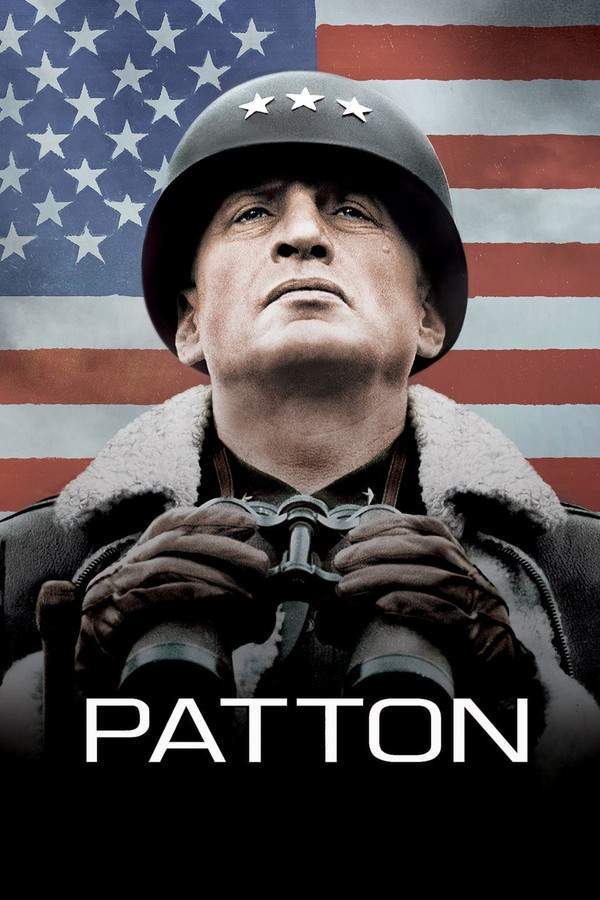
Patton (1970) Film Overview & Timeline
The Last Front (2024) Plot Summary & Ending Explained
The Last Rifleman (2024) Spoiler-Packed Plot Recap
The Lost Battalion (2001) Detailed Story Recap
The Last Full Measure (2019) Ending Explained & Film Insights
The Last Chance (1945) Movie Recap & Themes
Hitler: The Last Ten Days (1973) Ending Explained & Film Insights
The Last Stage (1948) Complete Plot Breakdown
The Last Act (1955) Film Overview & Timeline
The Last Lieutenant (1993) Plot Summary & Ending Explained
Salt in the Wound (1969) Story Summary & Characters
The Last Flight (1931) Full Movie Breakdown
The Last Blitzkrieg (1959) Movie Recap & Themes
Paratroop Command (1959) Spoiler-Packed Plot Recap