Plot Explained Spoilers guaranteed!
Plot Explained

Browse by genre

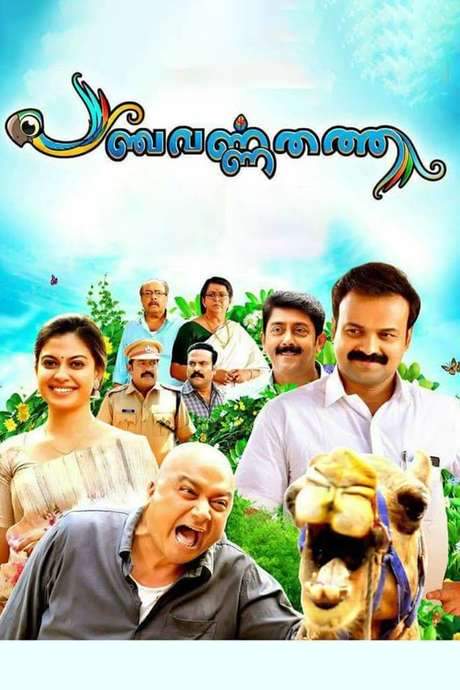
Panchavadi Palam (1984) movie poster

Timeline

Panchavadi Palam (1984) Timeline Explained – Every Event in Order

Release, runtime and language
1984 · 140 mins · Malayalam
Directed by
K. G. George
Starring
Jagathy Sreekumar, Kalpana, Innocent, Thilakan, Nedumudi Venu, Sukumari

A henpecked politician wants his name attached to a new bridge, even if that means destroying another, perfectly serviceable bridge.

On this page (5)
  1. 1 Events in order (12)
  2. 2 Timeline questions answered
  3. 3 Movie threads
  4. 4 Movies like Panchavadi Palam
  5. 5 Every angle

12 events in order · contains spoilers

Panchavadi Palam Timeline: Events in Chronological Order

Every key event of Panchavadi Palam (1984) in order, scene by scene, with when and where it takes place. Use it to untangle flashbacks, time jumps and parallel storylines, to refresh your memory before the sequel or to find the exact scene you are thinking of.

  1. Dussasana pushes for his name on a new bridge

    A henpecked politician, Dussasana Kuruppu, presses to have his name attached to a new bridge. He argues that publicity will benefit the village, even if it means tearing down the existing bridge. His push sets the stage for political maneuvering and public dissatisfaction.

    When
    Pre-relocation phase
    Where
    Village
  2. Sikhandi Pillai engineers the demolition plan

    Sikhandi Pillai, Dussasana's trusted ally with a crooked mind, fuels the scheme and polishes the manipulation. He helps push the demolition plan through the party ranks and coordinates with Dussasana. The pair's scheming heightens tensions with opponents.

    When
    Early planning
    Where
    Village
  3. Ishak Tharakan opposes the project and fights for the presidency

    Ishak Tharakan, the opposition leader, mobilizes to thwart the plan and contest the village presidency. He maneuvers alliances and exposes the potential misuse of public works. His resistance becomes the main counterweight to the ruling faction.

    When
    Early to mid-planning
    Where
    Village
  4. Political compromise: relocate the bridge and build a new road

    Facing backlash and the risk of stalling development, the groups compromise by relocating the bridge to a distant site, effectively creating a need for a new road. The goal is to keep the bridge operational while preserving political face. The compromise shifts the project from demolition to a coordinated infrastructure plan.

    When
    Negotiation phase
    Where
    Relocated site / village outskirts
  5. Tenders issued for bridge and road

    Two tenders are issued for the bridge and the road, awarded to local contractors. One contractor is aligned with the ruling party, while the other is backed by the opposition. The tendering process becomes a battleground for political influence and perceived fairness.

    When
    Tender phase
    Where
    Local government offices
  6. Contracts awarded along party lines

    Bridge contract goes to the ruling party supporter; road contract goes to the opposition backer. The awards cement the political divide and raise questions about conflicts of interest. Public skepticism grows as the works move forward.

    When
    Post-tender
    Where
    Government offices
  7. Construction begins at the relocated site

    Construction begins for the relocated bridge and the new road, linking the distant site to the village. Workers assemble the components, and the project becomes a visible symbol of the uneasy alliance between parties. The site becomes a focal point for political rhetoric and public anticipation.

    When
    Construction phase
    Where
    Relocated bridge site
  8. Bridge completed and opened on the wedding day

    The bridge is completed and opened on the same day as the marriage of Dussasana Kuruppu’s daughter and the bridge contractor. The ceremony marks a public triumph and showcases the convergence of politics, business, and personal life. The crowd attends both the wedding and the bridge opening in a single, symbolic moment.

    When
    Day of the marriage
    Where
    Distant bridge site / wedding venue
  9. Minister attends the wedding, signaling endorsement

    The minister of state for the public works department attends the wedding, signaling government endorsement. Guests mingle from the village and nearby towns, celebrating what is presented as progress. The official presence blurs lines between governance and social ceremony.

    When
    During the wedding
    Where
    Wedding venue
  10. Wedding guests cross the bridge to celebrate

    Guests cross the bridge to celebrate its inauguration, walking in a procession that showcases the bridge’s supposed safety. The structure bears their weight as it sways under the crowd. Cracks appear and panic spreads, revealing the fragility of the project.

    When
    Day of the wedding
    Where
    Bridge site / wedding route
  11. Bridge collapses and Kathavarayan dies

    The bridge collapses under the crowd, killing Kathavarayan, the crippled man who had symbolized the town's suffering. The tragedy exposes the cost of political gamesmanship and reckless planning. Emergency responses and blame begin to swirl through the village as investigators probe the incident.

    When
    Immediately after collapse
    Where
    Bridge site
  12. Ending shot: broken bridge in the background

    The film ends with a broken bridge looming in the background, a stark reminder of ambition without accountability. The concluding shots emphasize the consequences of expedient politics and misused public works. The village is left to confront the cost of the decisions rushed to gain political advantage.

    When
    End
    Where
    Bridge site

Last updated: February 18, 2026 at 23:44

Was this helpful?

Timeline questions answered

Panchavadi Palam Timeline Explained: Your Questions Answered

When does it happen, and why in that order? The questions people ask about the chronology of Panchavadi Palam (1984): time jumps, flashbacks, cause and effect between scenes and the correct order of events, each answered with spoilers.

Q1

Why does Dussasana Kuruppu want his name attached to the new bridge?

Dussasana Kuruppu, a henpecked politician, pushes to have his name on the bridge primarily for vanity and political self-promotion. He argues that the publicity will benefit the village, but his real motivation is to leave a permanent legacy and boost his political standing. This personal ambition drives him to engineer the demolition of an existing, serviceable bridge to make way for his namesake project.

Foreshadowing: Early in the film, Dussasana's preoccupation with public recognition establishes his willingness to prioritize personal glory over public welfare.

  • Dussasana Kuruppu
  • bridge
  • political vanity
  • legacy
Q2

What is the political conflict between Dussasana Kuruppu and Ishak Tharakan?

Ishak Tharakan leads the opposition and aims to thwart Dussasana's bridge scheme while also challenging him for the village presidency. Their conflict represents a broader political battle where infrastructure projects become tools for gaining power. While Dussasana represents the ruling party pushing the bridge project, Ishak exposes the misuse of public works and mobilizes against it, turning the bridge into a symbol of political rivalry.

Foreshadowing: The opposition's resistance is established early as Ishak maneuvers alliances to challenge Dussasana's political dominance.

  • Ishak Tharakan
  • political conflict
  • village presidency
  • opposition
Q3

Why was the bridge relocated to a distant site instead of being built near the village?

The bridge was relocated to avoid a direct clash between the political factions. The compromise involved moving the bridge to a distant site, which also required building a new road to connect it to the village. This solution was meant to defuse tensions while still allowing the project to proceed, but it created additional infrastructure requirements that became another point of political competition.

Foreshadowing: The decision to relocate foreshadows how political compromise leads to rushed, impractical solutions that set the stage for disaster.

  • bridge relocation
  • compromise
  • new road
  • distant site
Q4

How did the tender system contribute to the bridge collapse?

Two tenders were issued, one for the bridge and one for the road, awarded to contractors along party lines. The bridge contract went to a contractor linked to the ruling party (Dussasana's faction), while the road contract went to an opposition-backed contractor. This politically divided tendering process created rivalries, shortcuts, and likely compromised construction standards. The rush to complete both projects for a politically symbolic opening day contributed to the bridge's structural failure.

Foreshadowing: The tender awards along party lines early in the timeline establish that the project was driven by political timing rather than engineering integrity.

  • tenders
  • contractors
  • party lines
  • construction shortcuts
Q5

What happens when the bridge opens on the wedding day?

On the same day as Dussasana Kuruppu's daughter's wedding, the bridge is completed and opened. The minister of state for public works attends the wedding, signaling government endorsement. As wedding guests cross the bridge in celebration, the structure begins to sway, cracks appear, and the bridge collapses, killing Kathavarayan, a crippled man who had symbolized the town's suffering.

Foreshadowing: The timeline builds tension toward this moment, with the symbolic convergence of the wedding and bridge opening creating a perfect setting for tragedy.

  • bridge collapse
  • wedding day
  • minister
  • guests
Q6

Who is Kathavarayan and why is his death significant?

Kathavarayan is a crippled man portrayed by Sreenivasan who had symbolized the town's suffering and struggles. His death during the bridge collapse transforms the political disaster into a human tragedy. His death underscores the real cost of political vanity and corruption, innocent people paying the price for leaders who prioritized glory over safety. It turns what should be a celebration into a catastrophe.

Foreshadowing: Kathavarayan's presence throughout the film as a symbol of the town's hardships makes his death a poignant consequence of the political gamesmanship.

  • Kathavarayan
  • crippled man
  • death
  • symbol of suffering
Q7

What caused the bridge to collapse?

The bridge collapsed because it was poorly constructed due to political rush and compromised standards. The project was hurried to align with the politically symbolic wedding day opening. The tender awarded along party lines likely involved shortcuts and substandard work. When the crowd of wedding guests crossed the bridge together, the weight exposed the structural weaknesses, causing the collapse.

Foreshadowing: The rushed construction timeline and politically-driven deadlines foreshadow that corners were cut in the building process.

  • bridge collapse
  • poor construction
  • rush
  • structural failure
Q8

What does the ending of Panchavadi Palam symbolize?

The film ends with the broken bridge looming in the background, a stark image symbolizing how power struggles and political ambition can destroy both infrastructure and lives. The bleak ending shows the tragic cost of negligence without any redemption. It serves as a commentary on how petty political desires lead to devastating consequences for ordinary people.

  • broken bridge
  • ending
  • symbolism
  • political ambition
Q9

What is Shikhandi Pillai's role in the bridge scheme?

Shikhandi Pillai is Dussasana's crooked-minded right-hand figure who helps engineer the demolition plan and pushes it through the party ranks. He coordinates with Dussasana to manipulate the political system and fuel the scheme. His involvement represents the corrupt network of aides who enable politicians to pursue selfish goals at public expense.

Foreshadowing: Shikhandi Pillai's early introduction establishes him as the key manipulator behind Dussasana's more visible ambitions.

  • Shikhandi Pillai
  • corruption
  • political scheme
  • manipulation
Q10

Why is the bridge opening held on the same day as the wedding?

The bridge opening coincides with Dussasana Kuruppu's daughter's wedding as a deliberate political spectacle. The timing was meant to showcase the politician's achievement and combine personal celebration with public works inauguration. The presence of the minister of state further elevated the event's political significance, making it a calculated public relations opportunity rather than a straightforward infrastructure milestone.

Foreshadowing: The intertwining of the wedding and bridge opening early in the timeline signals that political showmanship drives the project's timeline.

  • wedding
  • bridge opening
  • political spectacle
  • minister

Movie threads

More Movies Like Panchavadi Palam, by Mood & Story

Curated lists built around what makes Panchavadi Palam tick: the same mood, the same kind of story or the same emotional payoff. Each list explains why these movies belong together.

Political Satire Tragedies like Panchavadi Palam

Stories where petty political ambition leads to disastrous public consequences. If you enjoyed the cynical political drama of Panchavadi Palam, this list features movies where corruption and abuse of power lead to bleak, catastrophic conclusions. Discover similar stories exploring the tragic fallout of negligence and moral compromise.

  • satirical
  • cynical
  • tense
  • tragic
  • corrupt
  • absurd
  • Tone: dark, satirical, tragic
  • Pacing: steady, methodical
Why these movies?

The story pattern: These narratives typically follow a clear arc: a seemingly minor act of political vanity or corruption sets in motion a chain of events. The story progresses methodically, revealing the intersecting personal motives and public failings that build towards an unavoidable, often physically manifest, disaster with profound human cost.

Why they belong together: Movies in this thread share a specific blend of dark satire and genuine tragedy. They are united by a cynical tone, a steady pacing that builds dread, and a focus on how small, selfish acts within a corrupt system can have large-scale, devastating effects, resulting in a heavy emotional impact.


Absurdist Bureaucratic Nightmares like Panchavadi Palam

Tales of everyday life crushed by the illogical and corrupt machinations of power. For viewers who appreciated the absurd political struggle in Panchavadi Palam, this list highlights movies about systems failing their people. Explore similar tense stories where community well-being is sacrificed for pointless, often corrupt, bureaucratic goals.

  • absurd
  • tense
  • cynical
  • bureaucratic
  • system failure
  • community
  • Tone: absurd, tense, cynical
  • Pacing: steady, deliberate
Why these movies?

The story pattern: The narrative pattern involves a community or protagonist facing a seemingly nonsensical but powerful institutional decision. The story unfolds with a steady, inevitable pace, highlighting the absurdity of the situation while maintaining a serious, tense atmosphere. The conflict arises from the collision between self-serving authority and the practical needs of people, often ending on a bleak note of loss.

Why they belong together: These films are grouped by their shared atmosphere of systemic absurdity and the resulting tension. They combine a dark, satirical view of authority with a genuine sense of tragedy, creating a coherent vibe of powerlessness in the face of illogical and corrupt systems.

If you liked this

Movies Like Panchavadi Palam

Similar movies to Panchavadi Palam: the same genre, themes or kind of story. Each one comes with its own plot summary, timeline and ending explained.

Browse all movie summaries

Every angle

Panchavadi Palam (1984) Explained: Plot, Timeline & Characters

Everything about Panchavadi Palam in one place: what happens in the plot summary, the timeline in chronological order, the characters and meaning and a spoiler-free summary. What's After the Movie adds the cast, box office and post-credit scenes.

Coming soon on iOS and Android

The Plot Explained Movie Summary App

Plot summaries, endings explained and timelines on your phone. Catch up on any movie in minutes, save your favorites and never miss a twist again.

Be the first to know when we launch. Your email stays private, always.

Learn more about the app