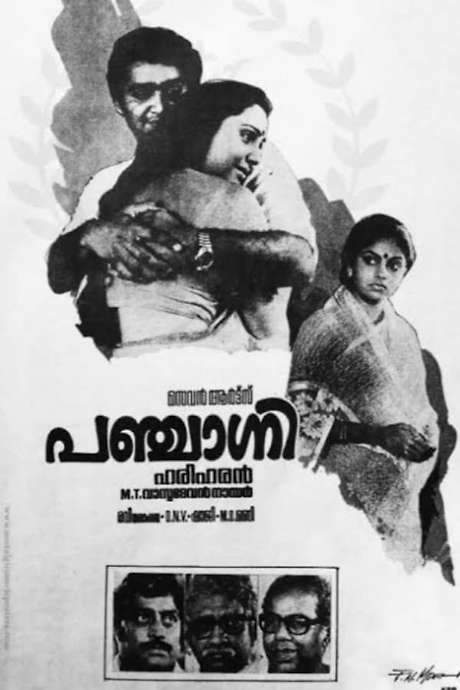
Panchagni

Panchagni

Year: 1986

Runtime: 133 mins

Language: Malayalam

Director: T Hariharan

Crime

The film follows Indira, a tribal woman serving a life sentence for killing Avarachan, the landlord who raped and murdered a young tribal woman. It examines her quest for justice, the consequences of his cruelty, and the lingering trauma that haunts her community.

Warning: spoilers below!

Haven’t seen Panchagni yet? This summary contains major spoilers. Bookmark the page, watch the movie, and come back for the full breakdown. If you're ready, scroll on and relive the story!

Timeline – Panchagni (1986)

Trace every key event in Panchagni (1986) with our detailed, chronological timeline. Perfect for unpacking nonlinear stories, spotting hidden connections, and understanding how each scene builds toward the film’s climax. Whether you're revisiting or decoding for the first time, this timeline gives you the full picture.

1

Parole granted; Indira leaves Cannanore central jail

Indira, a Naxal activist serving a life sentence for the murder of Avarachan, is released on a two-week parole. She steps out of the Cannanore central jail into a world that will soon become unfamiliar to her. The parole period is tightly supervised, with expectations about her conduct during this fragile window.

Day 1 Cannanore central jail
2

Return home; mother on deathbed

Indira returns to her family home and is greeted by her mother, a former freedom fighter, who is on her deathbed. The reunion brings a mix of relief and impending sorrow as the family processes her temporary freedom. The atmosphere blends hopeful anticipation with the gravity of her mother's condition.

Day 2 Indira's home
3

Ravi's anger at Indira's presence

Ravi, Indira's younger brother, reacts with anger to her return, blaming her for his inability to secure a job. The volatile dynamic adds pressure to the household during the parole period. His resentment foreshadows further familial strain as events unfold.

Days 3-4 Indira's home
4

Older brother refuses to talk during death rites

Indira's older brother, back from Delhi to perform their mother's death rites, refuses to speak with her and eventually leaves after a major quarrel. The rift disrupts the family's ritual duties and deepens Indira's isolation. The nephew ends up performing some rites in her stead.

During death rites Indira's home
5

Sharadha remains a supportive neighbor

Sharadha, Indira's old classmate who lives nearby, offers quiet support and friendship amid the family's tensions. She provides a steady presence in Indira's circle, contrasting with the hostility she sometimes faces at home. Her companionship becomes a lifeline during the parole window.

Early parole period Near Sharadha's home
6

Rasheed's interview attempt and Indira's initial refusal

Rasheed, a freelance journalist, persistently seeks an interview with Indira. She initially declines, annoyed by his persistence, signaling a complicated professional curiosity around her case. This interaction plants the seeds for a later, deeper connection between them.

Mid-parole Rasheed's residence
7

Indira's housing instability grows

As days pass, Indira feels unwanted and ends up with no permanent place to stay. The lack of shelter intensifies her sense of vulnerability during the parole window. The family and friends struggle to provide lasting support.

Mid-parole Town/temporary shelters
8

Indira moves in with Rasheed

Seeking stability, Indira asks Rasheed for help and ends up staying at his place. The arrangement gives her a safe space during the parole period and marks a turning point in their evolving relationship. The proximity increases emotional connection between them.

Mid to late parole Rasheed's residence
9

Rasheed and Indira's bond deepens

Over time, Indira and Rasheed grow closer and a loving relationship blossoms. They share confidences and navigate the complexities of parole together. The relationship provides emotional support as external pressures mount.

Mid to late parole Rasheed's residence
10

Remission order secured

Rasheed works with bureaucratic channels and, after significant effort, secures a government remission order in time. This development means Indira may avoid returning to jail when the parole ends. The moment brings relief but also highlights the fragility of the system.

Towards the end of parole Government remission office
11

Family reconciliation and relief

Savithri and Ravi reconcile with Indira, rejoicing at the prospect of her release. The family begins to imagine a future beyond the two-week period, embracing the possible freedom she now seems to have earned. The mood shifts from suspicion to hopeful celebration.

End of parole period Indira's home
12

Indira learns of the incident at Sharadha's home

Rushing to Sharadha's place to share the good news, Indira discovers that Sharadha’s maid Malu has been gang-raped by her husband Rajan and his friends. The scene exposes brutal violence and tests Indira's righteous resolve. She reacts with shock, realizing the danger around those close to her.

End of parole period Sharadha's residence
13

Indira shoots Rajan and surrenders

True to her righteous self, Indira shoots Rajan with his hunting rifle to stop the assault. Immediately after, she surrenders herself at the police station, accepting responsibility for her actions. The act culminates the two-week arc with a dramatic choice and personal sacrifice.

Immediately after incident Sharadha's residence; police station

Last Updated: November 29, 2025 at 00:47

Mobile App Preview

Coming soon on iOS and Android

The Plot Explained Mobile App

From blockbusters to hidden gems — dive into movie stories anytime, anywhere. Save your favorites, discover plots faster, and never miss a twist again.

Sign up to be the first to know when we launch. Your email stays private — always.

Explore Movie Threads

Discover curated groups of movies connected by mood, themes, and story style. Browse collections built around emotion, atmosphere, and narrative focus to easily find films that match what you feel like watching right now.

Bleak Social Realism and Justice Denied movies like Panchagni

Gritty dramas where systemic failure and trauma lead to bleak outcomes.If you liked the raw social commentary and tragic trajectory of Panchagni, discover more movies like it. This thread groups similar gritty dramas that explore themes of systemic failure, trauma, and justice denied, offering a sobering look at societal ills.

grittyoppressivesombertensemelancholicanxiousdark

Narrative Summary

Stories in this thread typically follow a protagonist's grim struggle against an unjust system or powerful antagonist. The narrative arc often involves a traumatic inciting event, a difficult and often futile quest for justice, and a conclusion that reinforces the cyclical nature of violence and oppression, rarely offering redemption.

Why These Movies?

Movies are grouped here for their shared commitment to dark social realism, a heavy emotional weight centered on trauma and injustice, and a consistently bleak tone. They provide a similar viewing experience of grim, thought-provoking drama.


Movies about trauma and cycles of violence like Panchagni

Character studies where past violence dictates a grim present.For viewers who appreciated Panchagni's deep dive into the lingering effects of trauma, this section features movies with similar character journeys. Explore stories about characters haunted by their past, where attempts at freedom are shattered by cyclical violence.

tensemelancholicsomberanxiouspsychologicaldarkgritty

Narrative Summary

The narrative pattern involves a character, often an ex-convict or trauma survivor, being released into a semblance of normal life. Fleeting moments of hope or connection are introduced, but the weight of past events and ongoing external hostility escalate, culminating in a tragic relapse into violence or self-destruction.

Why These Movies?

These movies share a core focus on a character's psychological imprisonment by trauma. They feature a steady pacing that builds tension towards an inevitable, bleak conclusion, creating a cohesive vibe of tragic inevitability and heavy psychological drama.

Unlock the Full Story of Panchagni

Don't stop at just watching — explore Panchagni in full detail. From the complete plot summary and scene-by-scene timeline to character breakdowns, thematic analysis, and a deep dive into the ending — every page helps you truly understand what Panchagni is all about. Plus, discover what's next after the movie.

Panchagni Summary

Read a complete plot summary of Panchagni, including all key story points, character arcs, and turning points. This in-depth recap is ideal for understanding the narrative structure or reviewing what happened in the movie.

Panchagni Summary

Characters, Settings & Themes in Panchagni

Discover the characters, locations, and core themes that shape Panchagni. Get insights into symbolic elements, setting significance, and deeper narrative meaning — ideal for thematic analysis and movie breakdowns.

Characters, Settings & Themes in Panchagni

Panchagni Spoiler-Free Summary

Get a quick, spoiler-free overview of Panchagni that covers the main plot points and key details without revealing any major twists or spoilers. Perfect for those who want to know what to expect before diving in.

Panchagni Spoiler-Free Summary

More About Panchagni

Visit What's After the Movie to explore more about Panchagni: box office results, cast and crew info, production details, post-credit scenes, and external links — all in one place for movie fans and researchers.

More About Panchagni

Similar Movies to Panchagni

Discover movies like Panchagni that share similar genres, themes, and storytelling elements. Whether you’re drawn to the atmosphere, character arcs, or plot structure, these curated recommendations will help you explore more films you’ll love.