Plot Explained Spoilers guaranteed!
Plot Explained

Browse by genre

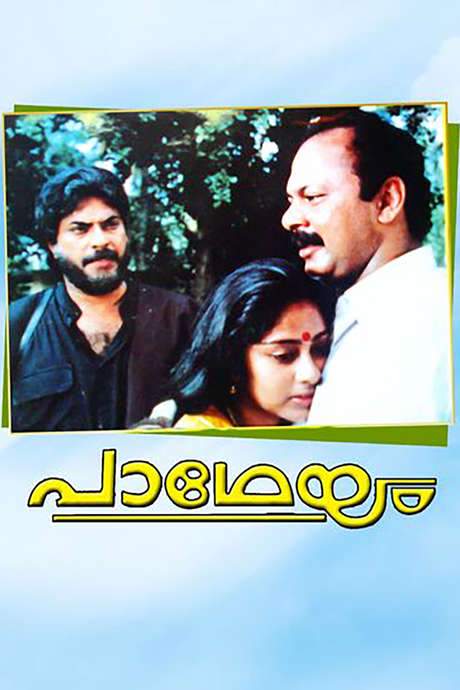
Padheyam (1993) movie poster

Plot Summary

Padheyam (1993) Plot Summary Explained

Release, runtime and language
1993 · 137 mins · Malayalam
Loading streaming availability…
Directed by
Bharathan
Starring
Mammootty, Revathi, Lalu Alex, Nedumudi Venu, Kozhikode Narayanan Nair, Priyanka Anoop

Chandradas, a celebrated poet, unexpectedly encounters his long‑separated teenage daughter Harita. Determined, he brings her to his ancestral home, hoping to rebuild their bond. Yet Harita carries the weight of a troubled past that continues to haunt her, creating tension between memory and hope.

On this page (6)
  1. 1 Where to watch
  2. 2 What happens: full plot
  3. 3 Plot questions answered
  4. 4 Movie threads
  5. 5 Movies like Padheyam
  6. 6 Every angle
Loading streaming availability…

Full plot summary · contains spoilers

What Happens in Padheyam: Full Plot Summary

The whole story of Padheyam (1993) explained, from the opening scene to the final frame: every key event, every twist and what it all adds up to. Read it as a quick recap before the sequel, to check a scene you missed, or to finally understand what really happened.

Chandradas, Mammootty, a famous and best-selling poet and author, arrives in Kodaikanal to attend a school felicitation ceremony. There he meets Harita, Chippy, a brilliant student who directs and performs the lead in a group dance skit based on one of his poems. The moment he witnesses the originality and brilliance of her performance, he becomes deeply intrigued and starts to dig for more about Harita, hoping to understand the person behind the striking routine.

After a quiet, revealing meeting with her, he discovers a truth that unsettles him: Harita is his own daughter, conceived fifteen years earlier when he raped her mother, Radha, Revathi. This revelation upends their relationship, and he resolves to reach her again, though the strict rules of the school hamper his attempts. To bridge the distance, he arranges a meeting with her through one of her beloved teachers and lays bare the history and the truth that ties them together.

Harita, who once imagined a paternal bond with a man she has never met, is initially crushed by the revelation that the man she considered a father figure is not her biological father. Yet, over time, she begins to reconcile with her new identity and the complex legacy that surrounds her. She decides to spend a period with Chandradas, soaking in a world she never expected to belong to and stepping into a life that blends memory, guilt, and longing.

Harita’s grandfather, Kozhikode Narayanan Nair Govinda Menon, arrives to collect her after exams, only to be startled when the school principal reports that she is missing. News travels quickly to her parents, who hastily reunite and bring her back after her trip, torn between worry and relief as the boarding house atmosphere settles into a tense calm.

Chandradas returns to her parental home, seeking consent to take Harita for a few days to his ancestral house. The request is met with resistance from Govinda Menon, who treats him coldly and asks him to leave. Unfazed, Chandradas pursues formal legal recourse to secure his rights over his daughter, setting in motion a legal and emotional battle that tests loyalties and love.

When the court asks Harita to choose who she wishes to spend her time with during the proceedings, she selects Chandradas, a choice that shatters the familiar circle of her family and raises the stakes of the entire case. The decision marks a turning point, forcing everyone involved to confront what family means and who deserves to be called “home.”

Chandradas and his brother take Harita to their ancestral home, where she experiences a few days of happiness and a sense of belonging. Yet the memories of the life she left behind—the warmth, the ordinary moments, and the gentleness she had felt from her step-father—haunt her as days pass. The sweetness of those memories stands in stark contrast to the scene she leaves behind, and she clings to the moments that felt most like love.

In the final days, Harita shares one last, idyllic afternoon with her father-figure and his brother—an intimate, peaceful time in which she cooks for them and they share stories that will stay with her for life. On the journey back to her parents, Chandradas tells Harikita’s stepfather, Harikumara Menon, that her love for him is vastly stronger than her love for him, a line that underscores the profound, complicated bond that has formed between them.

Her return to the family she knows does not erase what has happened, but it becomes a testament to the enduring complexity of love, memory, and identity. As Chandradas walks toward the waiting car, bound for Kolkata, Harita watches him leave with tears in her eyes, aware that the evenings they spent together have carved a permanent space in her heart. The film lingers on the emotional aftertaste of a journey that traversed memory, forgiveness, and the unreturnable path of a father-daughter relationship.
Last updated: October 09, 2025 at 09:22

Was this helpful?

Plot questions answered

Padheyam Plot Explained: Your Questions Answered

The questions people ask most about Padheyam (1993): what happens in the confusing scenes, why the characters do what they do, the twists, hidden details and what the ending means. Each answer contains spoilers.

Q1

Why does Chandradas travel to Kodaikanal?

Chandradas travels to Kodaikanal to attend a school felicitation ceremony as the chief guest. It is at this event that he witnesses Harita performing in a dance skit based on his poetry, which leads to their initial meeting.

  • kodaikanal
  • felicitation ceremony
  • poet
  • school event
Q2

How does Chandradas learn that Harita is his daughter?

After being intrigued by Harita's performance, Chandradas arranges a meeting through one of her teachers. During this private meeting, he discovers that Harita is his biological daughter, conceived fifteen years earlier when he raped her mother Radha.

Foreshadowing: The meeting reveals the disturbing truth about Harita's conception.

  • harita
  • daughter
  • radha
  • revelation
  • birth
Q3

Why does Harita choose to stay with Chandradas during the court proceedings?

When the court asks Harita to decide who she wants to spend time with during the adjudication, she chooses Chandradas. This decision reflects her desire to know her biological father and understand her true identity, despite the painful circumstances of her conception.

  • court
  • choice
  • custody
  • decision
  • legal battle
Q5

Why does Harita return to her parents at the end of the film?

Although Harita experiences joy and belonging at Chandradas's ancestral home, she ultimately returns to the family that raised her. Her memories of her stepfather's love and the warmth of her childhood home remain powerful. She acknowledges both families but chooses the familiar environment where she grew up.

  • return
  • family
  • parents
  • home
  • stepfather
Q6

What happened to Harita's mother Radha?

The film reveals that Radha was raped by Chandradas fifteen years before the present story, resulting in Harita's conception. After the traumatic event, Radha left, and Harita was raised by her stepfather Harikumara Menon and grandfather Govinda Menon. Radha's current whereabouts or status is not detailed in the summary.

  • radha
  • mother
  • harita
  • absence
  • past
Q7

Who is Harita's stepfather and what is their relationship like?

Harita's stepfather is Harikumara Menon. The summary indicates that Harita remembers the gentleness and warmth of her stepfather with deep affection. On the return journey, Chandradas tells Harikumara that Harita's love for him is stronger than her love for Chandradas, highlighting the strong bond she shares with her stepfather.

  • stepfather
  • harikumara
  • love
  • bond
  • family
Q8

What does the ending signify with Harita watching Chandradas leave?

The ending is bittersweet. Harita returns to her family but watches Chandradas walk away toward the car heading to Kolkata with tears in her eyes. This moment signifies that while she has chosen to stay with her original family, the time spent with her biological father has left a permanent mark on her heart. The bond they formed, though brief, remains significant.

  • ending
  • tears
  • departure
  • kolkata
  • emotional
Q9

What does Harita experience at Chandradas's ancestral home?

At Chandradas's ancestral home, Harita experiences moments of happiness and belonging. She spends idyllic days cooking for Chandradas and his brother, sharing stories and creating memories. However, she is also haunted by memories of her childhood home and the love she received from her stepfather, creating an internal conflict.

  • ancestral home
  • happiness
  • memory
  • days
  • cooking
Q10

Why does Harita's grandfather refuse to let Chandradas take her?

Harita's grandfather Govinda Menon treats Chandradas coldly and asks him to leave when he comes requesting to take Harita for a few days. This rejection stems from the grandfather's knowledge of how Harita was conceived, through Chandradas's crime against Radha. The grandfather cannot forgive or accept the man responsible for his family's trauma.

  • grandfather
  • rejection
  • refuse
  • angry
  • history

Movie threads

More Movies Like Padheyam, by Mood & Story

Curated lists built around what makes Padheyam tick: the same mood, the same kind of story or the same emotional payoff. Each list explains why these movies belong together.

Slow burn family dramas like Padheyam

Stories where the slow excavation of family trauma reveals painful truths. If you appreciated the heavy emotional weight and slow pacing of Padheyam, you'll find similar stories here. These movies like Padheyam explore complex family dynamics, the legacy of trauma, and the difficult path toward forgiveness, all told with a patient, character-driven approach.

  • melancholic
  • somber
  • emotional
  • tense
  • reflective
  • haunting
  • Tone: melancholic, reflective, tense
  • Pacing: slow, deliberate, character-driven
Why these movies?

The story pattern: Narratives in this thread typically involve a central family conflict, often stemming from a historical trauma or secret that is slowly revealed. The plot revolves around characters confronting this past, leading to tense, introspective dialogues and a re-evaluation of relationships. The journey is internal, focused on emotional healing rather than external action, often concluding with a bittersweet resolution that acknowledges the scars of the past.

Why they belong together: Movies are grouped here because they share a focus on the emotional fallout within families, a slow and deliberate narrative pace that mirrors real-life processing of grief, and a tone that balances somber reflection with moments of tender connection. They prioritize character depth over plot twists.

Movies about identity crisis like Padheyam

Character studies where a crisis of self leads to a complex, unresolved ending. For viewers who were moved by Harita's struggle with her identity in Padheyam, this list features similar movies about identity crisis. These dramas focus on characters grappling with a fractured sense of self, painful pasts, and stories that end on a bittersweet note of acceptance, not simple solutions.

  • introspective
  • emotional
  • somber
  • psychological
  • haunting
  • reflective
  • Tone: melancholic, introspective, somber
  • Pacing: slow, psychological
Why these movies?

The story pattern: The narrative pattern involves a protagonist whose stable identity is shattered by new information or a confrontation with their past. The story is a deeply internal one, charting their confusion, anger, and eventual, partial acceptance. The conflict is often with themselves or with figures from their history. Endings typically reject a full restoration of the old self, instead offering a complex new understanding that acknowledges lasting pain.

Why they belong together: These films are united by their focus on the psychological theme of identity dissolution and reconstruction. They share a heavy emotional weight, a reflective and often melancholic mood, and a commitment to endings that feel true to the complexity of human experience—more bittersweet than happy.

If you liked this

Movies Like Padheyam

Similar movies to Padheyam: the same genre, themes or kind of story. Each one comes with its own plot summary, timeline and ending explained.

Browse all movie summaries

Every angle

Padheyam (1993) Explained: Plot, Timeline & Characters

Everything about Padheyam in one place: what happens in the plot summary, the timeline in chronological order, the characters and meaning and a spoiler-free summary. What's After the Movie adds the cast, box office and post-credit scenes.

Coming soon on iOS and Android

The Plot Explained Movie Summary App

Plot summaries, endings explained and timelines on your phone. Catch up on any movie in minutes, save your favorites and never miss a twist again.

Be the first to know when we launch. Your email stays private, always.

Learn more about the app