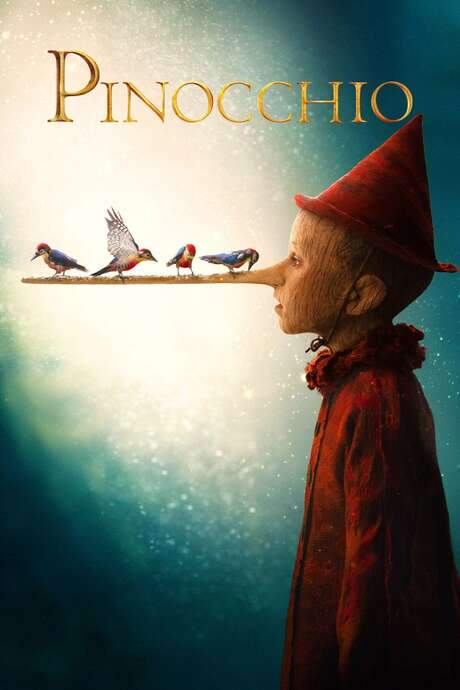
Aged woodcarver Geppetto creates a wooden puppet named Pinocchio, who miraculously comes to life. Eager for adventure, Pinocchio is easily tempted from the right path, encountering enchanting creatures and extraordinary sights. Along his journey, he makes both friends and enemies, all while yearning to become a real boy. Achieving this dream depends on him learning valuable lessons and changing his ways.
Find where to stream, rent, or buy Pinocchio (2019) in the US with current JustWatch availability, up-to-date pricing, and platform listings for subscription, rental, and digital purchase options.
Warning: spoilers below!
Haven’t seen Pinocchio yet? This summary contains major spoilers. Bookmark the page, watch the movie, and come back for the full breakdown. If you're ready, scroll on and relive the story!
Still thinking about how Pinocchio (2019) ended? Here’s a full breakdown of the ending, key final moments, major twists, and the deeper meaning behind the film’s conclusion.
In the film’s climax Pinocchio, his battered friend Spazzatura, and the grieving Geppetto are trapped inside the massive Dogfish that has swallowed them. Cricket, who has lived inside Pinocchio’s chest, devises a desperate escape: Pinocchio stretches his nose to poke the creature’s blowhole, forces the fish to sneeze, and they all burst out into open water. Their luck runs out when a hidden sea‑mine detonates, killing Pinocchio and sending his spirit to the limbo‑like realm of Purgatory.
There, a personified Death explains the cruel arithmetic of resurrection: each time someone dies, the waiting period in Purgatory lengthens exponentially. Pinocchio could return quickly enough to rescue Geppetto, but doing so would strip him of his magical immortality, condemning him to a mortal life. Ignoring the rule, he chooses to come back, saves his father, and then collapses once more, surrendering his endless existence for a single act of love.
The Wood Sprite, who originally granted Pinocchio life, arrives just as the tragedy unfolds. Seeing that Geppetto has now been forced to lose a child twice, she hesitates, but Cricket uses the single wish he was promised for caring for Pinocchio. He asks the Sprite to make Pinocchio truly alive. Rather than turning him into a flesh‑and‑blood boy, the wish gives him the gift of mortality: a finite, human‑like life.
From that point the story follows Pinocchio as he watches Geppetto age, become a grandfather, and eventually die, while his companion Spazzatura rebels against his tyrannical master and finds his own path. Cricket eventually leaves for the wider world, reflecting on whether Pinocchio’s death was ordinary or something beyond ordinary mortality. The film ends on a quiet, bittersweet note, suggesting that Pinocchio’s true transformation is not in becoming a perfect puppet‑boy, but in embracing the fragile, fleeting nature of human life—choosing self‑sacrifice, love, and humility over endless perfection.
Last updated: October 09, 2025 at 07:43
Read frequently asked questions about the ending of Pinocchio (2019), including final-scene interpretation, twist explanations, character outcomes, and the deeper meaning behind the conclusion. This ending explained FAQ is designed for viewers searching for clear spoiler-heavy answers and ending breakdown insights.
Pinocchio chooses to sacrifice his magical immortality because he values his love for Geppetto more than living forever. In Purgatory, Death explains that returning quickly would strip him of his endless existence, condemning him to a mortal life. Despite understanding the permanent consequences, Pinocchio ignores the rule and chooses to come back, collapsing afterward and surrendering his infinite life for a single act of love. This selfless decision proves he has learned the lesson of humility and love that the story has been teaching him.
Earlier in the film, Pinocchio is warned that his wooden nature makes him different from humans, but he yearns to be like a real boy.
Cricket uses his single wish to ask the Wood Sprite to make Pinocchio truly alive. Rather than transforming him into a flesh-and-blood boy, the wish gives him the gift of mortality, a finite, human-like life. This means Pinocchio will age, grow old, and eventually die, just like any human. The wish grants his deepest desire not through magic that makes him perfect, but through the imperfection and fragility that defines human existence.
The Wood Sprite previously explained that Pinocchio could become a real boy through demonstrated virtue, not magical transformation.
The ending shows Pinocchio embracing the core truth of human life: its fragility and fleeting nature. After gaining mortality, he watches Geppetto age, become a grandfather, and eventually die. This sequence demonstrates that Pinocchio's transformation is complete, he no longer seeks endless perfection or immortality. Instead, he accepts the natural cycle of life and death, finding meaning in love and sacrifice rather than living forever as a perfect puppet.
The film repeatedly contrasts the artificial permanence of Pinocchio's wooden existence with the natural impermanence of human life.
The sea-mine explosion kills Pinocchio while Geppetto remains alive but trapped inside the Dogfish. Only after Pinocchio dies does his spirit travel to the limbo-like realm of Purgatory, where the resurrection rule applies. Death explains that each time someone dies, their waiting period in Purgatory lengthens exponentially. Pinocchio could have stayed in Purgatory indefinitely as an immortal spirit, but he chooses to return quickly to rescue his father, which requires giving up his immortality permanently.
The film establishes early on that Pinocchio is magically immortal, he survives hanging, drowning, and other fatal situations.
After Pinocchio gains mortality and returns to the living world, Spazzatura, the donkey who became his battered friend, rebels against his tyrannical master and finds his own path. The ending implies that Spazzatura breaks free from whatever control or servitude had bound him, choosing independence over his previous life of captivity and abuse.
Spazzatura shows signs of loyalty to Pinocchio during their shared captivity in the Dogfish.
Pinocchio becomes a real boy in the sense that he gains mortality, the quality that defines human life. He is no longer an immortal wooden puppet who cannot die. Instead, he becomes a finite being who will age, feel pain, and eventually die. This fulfills his dream of becoming real, though not through the magical transformation he initially imagined. The film suggests that being real means embracing the full human experience, including mortality, not simply having flesh and blood.
Pinocchio's original desire to become a real boy was driven by his longing to be like other children and escape his wooden nature.
The ending is bittersweet because Pinocchio achieves his dream but at a profound cost. He gains mortality and becomes a real boy, but this means he must watch everyone he loves age and die, including Geppetto. The film shows Geppetto becoming a grandfather and eventually dying, while Pinocchio outlives him. The joy of gaining humanity is tempered by the inevitable loss that comes with it. Pinocchio accepts this trade-off, finding peace in the fleeting nature of human life rather than mourning what he has lost.
Throughout the story, Pinocchio experiences loss and grief as consequences of his choices and the world's dangers.
After Pinocchio gains mortality and the main story resolves, Cricket eventually leaves for the wider world. The film shows him reflecting on whether Pinocchio's death was ordinary or something beyond ordinary mortality, suggesting uncertainty about the true nature of what Pinocchio achieved. Cricket's departure marks the end of his role as Pinocchio's spiritual guide and companion.
Cricket has served as Pinocchio's internal moral compass throughout the film, living inside his chest.
Discover curated groups of movies connected by mood, themes, and story style. Browse collections built around emotion, atmosphere, and narrative focus to easily find films that match what you feel like watching right now.
Charming stories where fantastical journeys teach clear and heartfelt lessons.If you enjoyed the blend of fantasy and morality in Pinocchio, you'll love these movies. Discover other films where magical adventures serve as heartwarming and instructive journeys, with similar light emotional weight and happy endings.
Narratives typically follow a naive protagonist on a journey where they are tempted or make mistakes, facing reversible but instructive consequences. The structure is often linear and cause-and-effect, building toward a clear moment of redemption where the protagonist learns a key lesson about honesty, bravery, or selflessness.
These movies share a specific tone that balances the wonder of fantasy with the clarity of a moral lesson. They feel cohesive because they maintain a light-hearted spirit even when tackling difficult choices, creating an experience that is both magical and meaningful.
Characters embark on extraordinary quests to fundamentally change who they are.Fans of Pinocchio's journey to become a real boy will enjoy these films about transformation. Find similar movies featuring a central character arc of growth and self-discovery, wrapped in fantastical adventures with heartfelt relationships.
The plot revolves around the protagonist's core desire to change their state of being. This external goal is achieved only after they complete an internal journey, learning the virtues or lessons that make them worthy of the transformation. The story often involves a guiding figure or a surrogate family relationship that supports their growth.
They are grouped by the powerful, emotionally resonant theme of transformation driven by personal growth. The shared narrative arc—from longing, through trial, to earned change—creates a deeply satisfying and hopeful viewing experience that connects with universal desires.
Don't stop at just watching - explore Pinocchio in full detail. From the complete plot summary and scene-by-scene timeline to character breakdowns, thematic analysis, and a deep dive into the ending - every page helps you truly understand what Pinocchio is all about. Plus, discover what's next after the movie.
Read a complete plot summary of Pinocchio, including all key story points, character arcs, and turning points. This in-depth recap is ideal for understanding the narrative structure or reviewing what happened in the movie.
Track the full timeline of Pinocchio with every major event arranged chronologically. Perfect for decoding non-linear storytelling, flashbacks, or parallel narratives with a clear scene-by-scene breakdown.
Discover the characters, locations, and core themes that shape Pinocchio. Get insights into symbolic elements, setting significance, and deeper narrative meaning - ideal for thematic analysis and movie breakdowns.