Plot Explained Spoilers guaranteed!
Plot Explained

Browse by genre

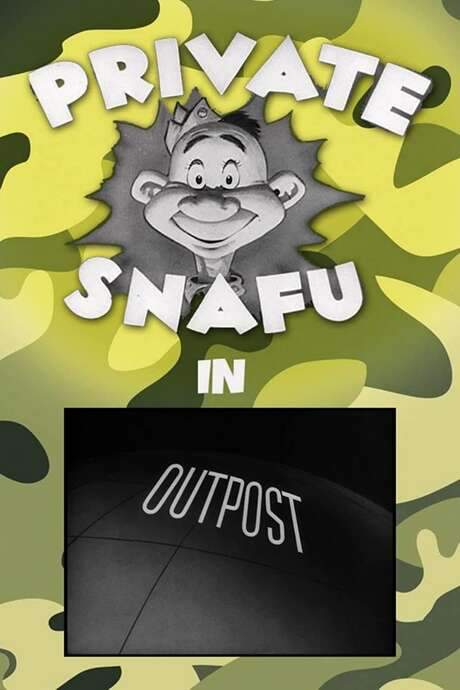
Outpost (1944) movie poster

Characters & Themes

Outpost (1944) Characters, Setting & Themes Explained

Release, runtime and language
1944 · 5 mins · English
Loading streaming availability…
Directed by
Chuck Jones
Starring
Mel Blanc, Robert C. Bruce

Snafu has an object lesson on the value of complete and accurate regular reports when he discovers and reports evidence of the enemy’s presence at his assigned area.

On this page (8)
  1. 1 Where to watch
  2. 2 Characters explained (2)
  3. 3 Where & when it takes place
  4. 4 Themes & meaning (3)
  5. 5 Character & meaning questions
  6. 6 Movie threads
  7. 7 Movies like Outpost
  8. 8 Every angle
Loading streaming availability…

2 main characters · contains spoilers

Outpost Characters Explained: Who Is Who

The main characters of Outpost (1944), heroes and villains: what drives them, how they change over the course of the story and what each of them reveals about the film's bigger ideas.

  • Pvt. Snafu (Mel Blanc)

    A lazy, cantankerous sentry who treats his assignment as a waiting game rather than combat. He exhibits stubborn boredom, a habit of reciting logs, and a willingness to lash out at innocuous rivals like a bird. His behavior drives the cartoon’s humor and undermines the seriousness of military life.

    • 😒 Bored Soldier
    • 🗒️ Logbook Obsession
    • 🐦 Bird Rivalry
  • Narrator (Robert C. Bruce)

    The voiceover narrator frames the premise of U.S. outposts and the outlandish routine of a lone sentinel. He guides the audience through the setup and provides the tonal context for the satire.

    • 🎙️ Narrator
    • 📣 Storytelling

Last updated: October 04, 2025 at 18:42

Was this helpful?

Setting

Where and When Does Outpost Take Place?

The setting of Outpost (1944): the year and time period, the places and locations, and how they shape the characters, the mood and the tension of the story.

Time period

World War II, 1940s

The events unfold in the Pacific Theater during the 1940s. Outpost routines hinge on tracking a Japanese fleet via reference points and radio logs, revealing the blend of high-stakes warfare and mundane bureaucracy. The story uses this period to explore boredom, discipline, and the contrast between daily tasks and real combat.

Location

Tiny Pacific Island Outpost

An isolated U.S. military outpost on a tiny Pacific island, defined by a single palm tree and a quiet shoreline. The sentinel here is Private Snafu, with only a local bird for company. The setting underscores the remoteness of frontier war stations and the oddball humor of life on the edge of conflict.

  • 🏝️ Island
  • 🛰️ Remote Outpost

Last updated: October 04, 2025 at 18:42

Was this helpful?

3 major themes

Outpost Meaning: Themes & Message Explained

What is Outpost (1944) really about? The emotional, social and philosophical themes the film keeps returning to, its symbolism and the message beneath the surface.

  • War Boredom

    The outpost life is monotonous, with Snafu spending days waiting for action. His dream sequences and constant complaints drive the humor, highlighting how soldiers cope with isolation and tedium instead of combat. The routine is punctured only by trivial tasks and miscommunications, which reveals the absurd side of military life.

  • Isolation

    A single palm tree, a lone sentinel, and a backwater radio create a sense of remoteness. The narrative uses the island's seclusion to lampoon how distance from the front can distort perception and elevate trivial details into significance. The setting emphasizes how separation from real danger can make daily reports feel monumental.

  • Duty vs. Distraction

    The plot pivots on mundane evidence—the tin-can entry—that becomes crucial in hunter-like tracking of the enemy. This tension between routine duties and absurd distractions reveals how small misinterpretations can shape wartime outcomes. The humor comes from treating inconsequential finds as strategic breakthroughs.

Last updated: October 04, 2025 at 18:42

Was this helpful?

Character & theme questions

Outpost Characters & Meaning: Your Questions Answered

The questions people ask about Outpost (1944): who the characters really are, their relationships, what the symbols mean, where it takes place and what the movie is really about. Each answer contains spoilers.

Q1

Where is Outpost set?

The movie takes place on a tiny, isolated Pacific island that serves as a U.S. military outpost. The setting is defined by a single palm tree and a quiet shoreline, emphasizing the remoteness of frontier war stations.

Foreshadowing: The island's seclusion is established immediately through visual establishing shots of the sparse landscape.

  • pacific island
  • military outpost
  • setting
  • remote location
Q2

What time period does Outpost depict?

Outpost is set during World War II in the 1940s Pacific Theater. The story references tracking Japanese fleet movements via radio logs and reference points, grounding the narrative in that specific wartime context.

  • world war ii
  • 1940s
  • pacific theater
  • time period
Q3

What are the main themes in Outpost?

The film explores three interconnected themes: war boredom (the monotony of waiting for action), isolation (how distance from real danger distorts perception), and duty vs. distraction (how trivial matters become exaggeratedly important).

  • war boredom
  • isolation
  • duty
  • distraction
  • themes
Q4

How does Outpost portray war boredom?

The film uses Private Snafu's constant complaining and dream sequences to highlight how soldiers cope with isolation and tedium. His daily routine consists of waiting for action that never arrives, with the comedy emerging from trivial tasks and miscommunications that punctuate the monotony.

  • war boredom
  • soldiers
  • tedium
  • monotony
Q5

What role does isolation play in Outpost?

The island's seclusion becomes a narrative tool, lampooning how distance from the front lines can distort a soldier's perspective. Small details like a tin can become magnified into apparent strategic breakthroughs, showing how separation from real danger elevates inconsequential finds to monumental importance.

Foreshadowing: The lone palm tree and constant presence of the bird reinforce the isolation from the very first frames.

  • isolation
  • pacific island
  • remote
  • solitude
Q6

What is the message about duty versus distraction in Outpost?

The plot pivots on mundane evidence, a tin can, that becomes crucial in tracking the enemy. This reveals how small misinterpretations can shape wartime outcomes, with the humor coming from treating inconsequential finds as strategic breakthroughs while ignoring actual threats.

  • duty
  • distraction
  • military
  • reports
  • tin can
Q7

Who is Private Snafu in Outpost?

Private Snafu is the lazy, cantankerous sentinel assigned to the outpost. He treats his posting as a waiting game rather than actual combat duty, spending his time reciting logs, complaining about boredom, and lashing out at a local bird. His behavior drives the cartoon's humor while undermining the seriousness of military life.

Foreshadowing: His cantankerous attitude toward the bird is established early, showing his frustration with even the smallest companions.

  • pvt snafu
  • private snafu
  • sentinel
  • characters
Q8

Who is the narrator in Outpost?

The narrator is Robert C. Bruce, who provides the voiceover that frames the premise of U.S. outposts and the outlandish routine of a lone sentinel. He guides the audience through the setup and provides the tonal context for the film's satirical take on military life.

  • narrator
  • robert c bruce
  • voiceover
Q9

What is the tone of Outpost?

Despite being set during WWII, the film has a whimsical, light-hearted tone typical of wartime propaganda cartoons. The humor comes from cartoonish animation, an anthropomorphic bird companion, and an absurd dream sequence that filters the serious subject of war through comedy.

  • tone
  • whimsical
  • cartoon
  • comedy
  • propaganda
Q10

Is Outpost a propaganda cartoon?

Yes, Outpost is a World War II-era propaganda cartoon from the Private Snafu series. These cartoons were designed to entertain while teaching soldiers practical lessons, in this case, the importance of accurate and complete regular reports.

  • propaganda
  • cartoon
  • private snafu
  • wwii
  • satire

Movie threads

More Movies Like Outpost, by Mood & Story

Curated lists built around what makes Outpost tick: the same mood, the same kind of story or the same emotional payoff. Each list explains why these movies belong together.

Movies with a whimsical look at mundanity like Outpost

Stories where ordinary life is made charming and absurd by a playful tone. If you enjoyed the charming absurdity of 'Outpost,' find more movies like it here. This list features similar lighthearted stories where boring routines and lonely settings are transformed by a playful, silly tone and gentle humor.

  • whimsical
  • comic
  • silly
  • mundane
  • boring
  • dreamlike
  • Tone: whimsical, comic
  • Pacing: steady, character-focused
Why these movies?

The story pattern: These stories typically involve a character in a monotonous situation, like a dull job or isolated post. The narrative unfolds as small, often absurd, events or interactions disrupt the routine, providing comic relief without drastically altering the character's fundamental circumstances. The journey is more about observing a charmingly distorted reality than achieving major goals.

Why they belong together: These movies share a distinct combination of a light emotional weight, a whimsical tone, and a steady, un-rushed pacing. They create a cohesive vibe by blending feelings of boredom or isolation with comedic, sometimes dreamlike, elements, resulting in a uniquely charming and low-intensity viewing experience.

Stories about unwitting heroes in isolation like in Outpost

Characters in remote posts whose small actions unknowingly trigger major events. Fans of 'Outpost' will enjoy these movies about solitary characters whose small observations have big impacts. Discover similar films featuring accidental heroes in remote settings, where a sense of duty and boredom collide with unforeseen consequences.

  • isolated
  • boredom
  • duty
  • ironic
  • unwitting
  • consequential
  • Tone: mixed, ironic
  • Pacing: steady
Why these movies?

The story pattern: The narrative pattern centers on an isolated protagonist performing a routine duty. A seemingly trivial observation or action by the protagonist—often done out of boredom or strict adherence to rules—is later revealed to have been critically important. The story's tension comes from the audience's awareness of the significance, which contrasts with the protagonist's continued obliviousness or frustration.

Why they belong together: Movies in this thread are grouped by their shared narrative structure of 'small actions, big consequences,' and their common setting of isolation. They blend themes of duty and boredom with a mixed ending feel, where external success is paired with the protagonist's lack of awareness, creating a specific, often ironic, story arc.

If you liked this

Movies Like Outpost

Similar movies to Outpost: the same genre, themes or kind of story. Each one comes with its own plot summary, timeline and ending explained.

Browse all movie summaries

Every angle

Outpost (1944) Explained: Plot, Timeline & Characters

Everything about Outpost in one place: what happens in the plot summary, the timeline in chronological order, the characters and meaning and a spoiler-free summary. What's After the Movie adds the cast, box office and post-credit scenes.

Coming soon on iOS and Android

The Plot Explained Movie Summary App

Plot summaries, endings explained and timelines on your phone. Catch up on any movie in minutes, save your favorites and never miss a twist again.

Be the first to know when we launch. Your email stays private, always.

Learn more about the app