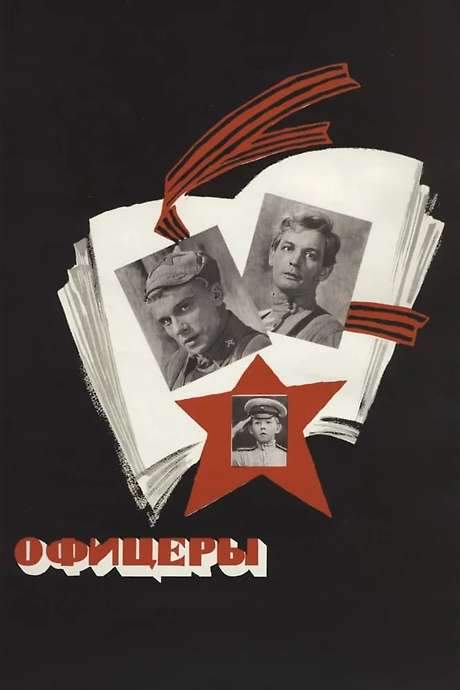
Year: 1976
Runtime: 87 mins
Language: Russian
The families of 18 soldiers who heroically died in 1944 are meeting at the place of the squad last battle.
Warning: spoilers below!
Haven’t seen One-Two, Soldiers Were Going… yet? This summary contains major spoilers. Bookmark the page, watch the movie, and come back for the full breakdown. If you're ready, scroll on and relive the story!
Read the complete plot breakdown of One-Two, Soldiers Were Going… (1976), including all key story events, major twists, and the ending explained in detail. Discover what really happened—and what it all means.
One-Two, Soldiers Were Going… follows two parallel storylines set in different eras that gradually converge on a shared memory forged on a battlefield. The tale centers on a brutal sacrifice dated March 18, 1944, and the memory of that act kept alive by family and friends on the same date in 1974. The film builds a bridge between past and present, showing how grief, duty, and belonging travel across generations.
In the present, Colonel Konstantin Svyatkin, Leonid Bakshtayev just earned a promotion and is riding a wave of professional pride when a postcard invites him to Podbednya station—a place linked to his father’s death thirty years earlier. Raised in an orphanage after his mother’s early passing, Konstantin has only a hazy memory of the man his father was, and the invitation stirs a quiet, long-buried curiosity. On the train to Podbednya, he crosses paths with Anna Velenstovich, Evgeniya Uralova a woman whose father, Junior Lieutenant Igor Suslin, fell in the same battle. Anna, who took the initiative to organize the gathering, is joined by the village leader in hopes that the reunion might knit together relatives of the fallen and heal old wounds. Among the witnesses is Valentina Ivanovna, Nataliia Naum, who recalls the night Suslin’s platoon stayed in her family home before heading toward their ultimate fate. The gathering draws in others touched by the war—among them Kima, Yelena Shanina—a local who also bears the imprint of loss and memory. The day is less about closure and more about marking a connection that refuses to fade with time.
The 1944 storyline shifts us to the front, where Junior Lieutenant Igor Suslin has just taken command of an anti-tank platoon. Among his soldiers is Corporal Svyatkin, Leonid Bakshtayev —a seasoned, good-natured combatant nicknamed “Matchmaker” for his easy humor and stubborn courage. The unit is ordered to spend the night in Ilyinka and press on to Rumyantsevo, a trek that tightens the crew into a tight-knit band through shared danger. That night, Suslin’s men mark a small personal milestone: Svyatkin celebrates the birthday of his newborn son with his comrades, joking that he has “no birthday” of his own to celebrate, a light moment that stands in stark relief against the looming threat. Suslin also reconnects with an old classmate and spends the evening with her, a quiet reminder of life beyond the front. By morning, a wounded colonel delivers urgent news: a German motorized unit has broken through and is advancing toward Ilyinka. The order is clear and perilous—Suslin’s platoon must hold the line and prevent the enemy from reaching the many wounded nearby. Svyatkin remains a key figure in this effort, his role underscored by the bond between him and the rest of the crew as they brace for impact. The mission is perilous, but their resolve and sacrifice will later become a touchstone of remembrance for families and communities who honor the fallen on that same date decades later.
As the two timelines unfold, the film keeps returning to the idea that memory is more than recollection—it is a living force that shapes choices, honors sacrifice, and binds strangers into a single memory-worked community. The present-day reunion brings together figures from the past and present, including the memory of Suslin’s platoon under fire, the late-night stories shared around a humble village table, and the quiet testimonies of those who survived and those who mourn. The characters’ lives—parents, siblings, friends, and neighbors—are woven together in ways that feel intimate and inevitable, reminding viewers that history is carried not just by grand events, but by the everyday acts of care and remembrance that endure.
Throughout, the film employs a restrained, respectful tone that honors the realities of war without over-dramatizing. The interplay between past and present invites audiences to reflect on how a single day—March 18—can sustain a lifetime of memory, shaping descendants’ sense of purpose and connection. The ensemble cast, featuring [Leonid Bakshtayev], [Vladimir Konkin], [Evgeniya Uralova], [Nataliia Naum], [Yelena Shanina], [Nikolai Sektimenko], [Georgi Dvornikov], [Vladimir Gerasimov], [Boris Kudryavtsev], [Viktor Miroshnichenko], [Sergei Ivanov], [Ivan Havryliuk], [Margarita Koshelyova], [Pyotr Lyubeshkin], [Mikhail Yezepov], [Leonid Bykov], [Vladimir Volkov], [Nikolai Grinko], and [Svetlana Kondratova] among others, gives texture to the stories and grounds the emotional arc in concrete memories and faces.
In the end, One-Two, Soldiers Were Going… presents a patient meditation on loss, memory, and the ways communities keep faith with those who served. It is a film about fidelity to the past and responsibility to the future, about how a shared tragedy can become a source of unity and healing for generations to come.
Last Updated: October 09, 2025 at 09:33
Discover curated groups of movies connected by mood, themes, and story style. Browse collections built around emotion, atmosphere, and narrative focus to easily find films that match what you feel like watching right now.
Quiet films that explore the long shadow of war through memory and reflection.Discover movies like 'One-Two, Soldiers Were Going…' that share its thoughtful, melancholic tone. These similar war dramas explore themes of memory, loss, and the enduring impact of conflict on families and communities, often with a slow, deliberate pace.
These narratives often move between past and present, juxtaposing the intensity of wartime events with the quiet, persistent grief of remembrance. The central conflict is not just the battle itself, but the ongoing struggle to process loss and preserve legacy across generations.
These films are grouped together by their shared melancholic tone, heavy emotional weight, and focus on the psychological and emotional aftermath of war. They favor atmosphere and reflection over action, creating a cohesive experience centered on memory and sacrifice.
Stories where profound loss is met with a quiet, unifying sense of purpose.If you liked the bittersweet ending and heavy emotional weight of 'One-Two, Soldiers Were Going…', explore these similar movies. They feature characters processing deep loss and finding a complex mix of sadness and solace, often leading to a poignant but not despairing conclusion.
The core journey involves characters confronting a significant, often collective, loss. The narrative arc is less about overcoming the pain and more about learning to carry it, frequently culminating in a moment of shared remembrance or the affirmation of a legacy that transforms grief into a source of connection.
Movies in this thread share a specific emotional trajectory: they bear a heavy emotional weight and explore deep sadness, yet their tone is reverent and their endings offer a bittersweet resolution that acknowledges pain while finding value in memory and unity.
Don't stop at just watching — explore One-Two, Soldiers Were Going… in full detail. From the complete plot summary and scene-by-scene timeline to character breakdowns, thematic analysis, and a deep dive into the ending — every page helps you truly understand what One-Two, Soldiers Were Going… is all about. Plus, discover what's next after the movie.
Track the full timeline of One-Two, Soldiers Were Going… with every major event arranged chronologically. Perfect for decoding non-linear storytelling, flashbacks, or parallel narratives with a clear scene-by-scene breakdown.
Discover the characters, locations, and core themes that shape One-Two, Soldiers Were Going…. Get insights into symbolic elements, setting significance, and deeper narrative meaning — ideal for thematic analysis and movie breakdowns.
Get a quick, spoiler-free overview of One-Two, Soldiers Were Going… that covers the main plot points and key details without revealing any major twists or spoilers. Perfect for those who want to know what to expect before diving in.
Visit What's After the Movie to explore more about One-Two, Soldiers Were Going…: box office results, cast and crew info, production details, post-credit scenes, and external links — all in one place for movie fans and researchers.
Discover movies like One-Two, Soldiers Were Going… that share similar genres, themes, and storytelling elements. Whether you’re drawn to the atmosphere, character arcs, or plot structure, these curated recommendations will help you explore more films you’ll love.
One-Two, Soldiers Were Going… (1976) Scene-by-Scene Movie Timeline
One-Two, Soldiers Were Going… (1976) Movie Characters, Themes & Settings
One-Two, Soldiers Were Going… (1976) Spoiler-Free Summary & Key Flow
Movies Like One-Two, Soldiers Were Going… – Similar Titles You’ll Enjoy
Soldier Boy (2019) Ending Explained & Film Insights
Two Soldiers (2003) Full Movie Breakdown
Do It - One! (1989) Ending Explained & Film Insights
Do It - One! (1989) Full Movie Breakdown
At War as at War (1969) Story Summary & Characters
A Diving Bomber Chronicle (1968) Plot Summary & Ending Explained
Two Comrades Were Serving (1968) Full Summary & Key Details
Men in Soldier’s Overcoats (1968) Detailed Story Recap
Two Soldiers (1943) Full Summary & Key Details
One War (2009) Detailed Story Recap
One Chance in One Thousand (1968) Full Summary & Key Details
Father of a Soldier (1965) Complete Plot Breakdown
Ballad of a Soldier (1959) Detailed Story Recap
Soldiers (1956) Spoiler-Packed Plot Recap
Officers (1971) Spoiler-Packed Plot Recap