Plot Explained Spoilers guaranteed!
Plot Explained

Browse by genre

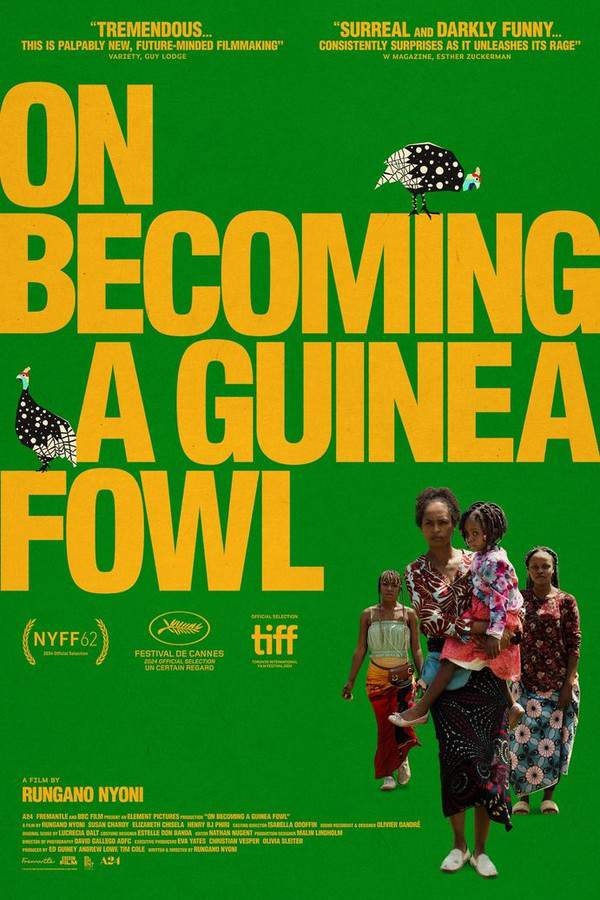
On Becoming a Guinea Fowl (2025) movie poster

Ending Explained

On Becoming a Guinea Fowl (2025) Ending Explained – Final Scene & Meaning

Release, runtime and language
2025 · 1 h 35 m · English
Echo score 90
Loading streaming availability…
Directed by
Rungano Nyoni
Starring
Henry B.J. Phiri, Maggie Mulubwa, Susan Chardy, Elizabeth Chisela, Roy Chisha, Blessings Bhamjee

While driving along a deserted road late at night, Shula discovers the body of her uncle. The ensuing funeral brings her and her cousins together, where they uncover long-held secrets within their Zambian family.

On this page (7)
  1. 1 Where to watch
  2. 2 What happens at the end
  3. 3 Final events in order
  4. 4 Ending questions answered
  5. 5 Movie threads
  6. 6 Movies like On Becoming a Guinea Fowl
  7. 7 Every angle
Loading streaming availability…

Ending explained · contains spoilers

What Happens at the End of On Becoming a Guinea Fowl?

How On Becoming a Guinea Fowl (2025) ends, what the final scene means, which earlier moments set it up and how to read the ending if the film leaves it open. The full ending explained, with every spoiler.

The film concludes on a somber and unresolved note, emphasizing the ongoing cycle of silence and denial surrounding sexual violence within the family and society. After the revelation of Uncle Fred’s heinous acts, the family members seem more focused on protecting their own interests, such as inheritance, rather than seeking justice or confronting the trauma. The involuntary widow, now free from her marriage, faces the difficult reality of figuring out how to support her children while society turns a blind eye to her suffering. The film does not offer a neat resolution; instead, it leaves viewers with a reflective space to consider how such issues persist in many communities. The silence, much like the loud, constant calls of the guinea fowl, underscores how many people are aware of abuse but choose to remain silent to avoid conflict or shame. The ending challenges viewers to think about their own role in breaking the cycle of denial and advocating for change, highlighting that justice remains elusive for many victims of sexual violence. Ultimately, the story closes with a haunting reminder that the problems of secrecy, complicity, and suppressed trauma are deeply ingrained, and that real progress requires ongoing awareness and action.

Last updated: June 25, 2025 at 08:44

Was this helpful?

The last 4 events

How On Becoming a Guinea Fowl Ends: The Final Events in Order

The last events of On Becoming a Guinea Fowl (2025) in chronological order, the run-up to the ending explained above. The complete timeline has all 13 events, scene by scene.

Open the full timeline
  1. Shula dictates obituary; Bupe discharges herself and overdoses again

    Shula is tasked with dictating Fred's obituary while haunted by Bupe's confession. Bupe discharges herself from the hospital and begins cooking for the family, but soon suffers another overdose and is readmitted. The family's fragility surfaces under the stress of the funeral.

    When
    Next day
    Where
    Shula's home; hospital
  2. Nsansa admits Fred abused her

    Back at home, Nsansa finally admits that Fred did abuse her. The admission shatters Shula's previous belief and changes how the family perceives Fred's legacy. The truth unsettles the already fragile family dynamics.

    When
    Following day
    Where
    Home
  3. Shula confronts the widow about the missing cellphone cable

    Shula talks to Fred's widow, who explains she cannot charge her cellphone because she uses an old model with a rare cable. She says she left the cable at Fred's home. This small detail becomes a symbolic thread linking the living and the dead.

    When
    That evening
    Where
    Fred's home
  4. Morning discovery: the children, the cable, and the grandmother's plea

    The following morning, Shula retrieves the cable and meets Fred's seven children, who are under the care of their maternal grandmother. From the children's ages, she realises that the widow was only 11 or 12 when she got pregnant, which deepens the sense of injustice. The grandmother begs Shula to prevent the family from taking the house from the widow.

    When
    Morning
    Where
    Maternal grandmother's home

Ending questions answered

On Becoming a Guinea Fowl Ending: Your Questions Answered

The questions people ask most about the ending of On Becoming a Guinea Fowl (2025): what the final scene means, how the twist works, what happens to each character and how to read the ending. Each answer contains spoilers.

Q1

Why doesn't the family confront Uncle Fred's crimes after learning the truth?

The family chooses to protect their own interests rather than seek justice. After the revelations about Uncle Fred's sexual abuse, the relatives become more concerned with inheritance and maintaining the family's reputation than addressing the trauma. This reflects the film's central theme that many families prioritize silence and reputation over confronting painful truths, even when they know abuse has occurred.

Foreshadowing: Earlier scenes show the family exchanging money and discussing property rights, hinting at where their true priorities lie.

  • uncle fred
  • family silence
  • justice
  • abuse coverup
  • inheritance
Q2

What happens to Fred's widow in the ending?

Fred's wife, who was trapped in a marriage to an abuser, is now technically free from her marriage but faces extreme hardship. The film shows her as an 'involuntary widow' who must figure out how to support her children with no meaningful support from society or her in-laws. Her situation illustrates how victims of sexual violence often have no safety net even after their abuser is gone.

  • fred's wife
  • widow
  • victims
  • children
  • society neglect
Q3

What does Shula's final scream represent?

Shula's act of screaming like a guinea fowl at the end is a powerful moment of defiance. Unlike the rest of the family who remain silent about the abuse, Shula openly expresses her anger and pain through this primal scream. However, the film leaves unclear whether this act will lead to any real change, representing both catharsis for Shula and the uncertain possibility of breaking the family's cycle of silence.

Foreshadowing: The guinea fowl's loud, constant calls are established throughout the film as a symbol of awareness that chooses not to speak.

  • shula
  • guinea fowl
  • scream
  • defiance
  • catharsis
Q4

Why does the film end without a resolution?

The director chose not to offer a neat resolution to reflect the real-world reality that many victims of sexual violence never get justice. By leaving the ending ambiguous, the film forces viewers to sit with the uncomfortable truth that the cycle of silence continues for many families. This approach challenges audiences to consider their own role in addressing such issues rather than being handed a comforting conclusion.

  • ambiguous ending
  • no resolution
  • justice
  • real world
Q5

What is the symbolism of the guinea fowl in the ending?

The guinea fowl represents awareness that chooses silence. Throughout the film, the bird's loud calls are heard constantly, symbolizing how everyone knows about the abuse but remains silent to avoid conflict and shame. The ending reinforces this metaphor - the family hears Shula's scream but chooses not to act, just as they chose not to act on what they already knew about Fred's crimes.

Foreshadowing: The constant guinea fowl calls are established early as a recurring motif representing noticed but ignored truth.

  • guinea fowl
  • symbolism
  • silence
  • awareness
  • metaphor
Q6

Why does the family focus on inheritance after learning about the abuse?

The family's preoccupation with inheritance rather than justice reveals their priority on material interests over moral responsibility. This behavior demonstrates how families often protect their own status and assets rather than confront painful truths about abuse. The film uses this to illustrate how complicity operates - not through active wrongdoing, but through prioritizing comfort and security over truth.

  • inheritance
  • family priorities
  • complicity
  • material interests
Q7

What is the film's message about cycles of abuse in families?

The ending suggests that abuse continues when families maintain silence to protect their reputation. The film shows that without intervention or accountability, the pattern of abuse and denial persists across generations. By showing the family choosing denial over justice, the film argues that such cycles require active breaking through awareness and action, not passive hope that problems will resolve themselves.

  • cycle of abuse
  • family silence
  • generations
  • breaking the cycle
Q8

Is there any hope for the victims at the end of the film?

The ending offers a mix of catharsis and uncertainty. Shula's scream provides an emotional release and represents resistance against the family's corruption. However, the film deliberately leaves unclear whether this leads to meaningful change. The unresolved ending suggests that hope exists but is not guaranteed - progress requires ongoing awareness and action from those willing to speak out.

  • hope
  • victims
  • change
  • shula
  • resistance
Q9

What does the ending ask viewers to consider about speaking out?

The ending challenges viewers to examine their own role in addressing abuse and silence. By refusing to provide a satisfying resolution, the film forces audiences to consider: would they speak out in such a situation? The haunting final moments suggest that awareness alone is insufficient - justice for victims requires active advocacy and a willingness to disrupt the comfortable silence that protects abusers.

  • viewers
  • speaking out
  • action
  • advocacy
  • responsibility

Movie threads

More Movies Like On Becoming a Guinea Fowl, by Mood & Story

Curated lists built around what makes On Becoming a Guinea Fowl tick: the same mood, the same kind of story or the same emotional payoff. Each list explains why these movies belong together.

Movies about explosive family secrets like On Becoming a Guinea Fowl

When a family gathering exposes generations of buried trauma and lies. Explore films like On Becoming a Guinea Fowl where a catalyst—often a funeral or wedding—forces a family to confront a long-buried trauma. If you liked the tense uncovering of truth and generational pain, you'll find similar powerful dramas here.

  • tense
  • claustrophobic
  • unsettling
  • melancholic
  • cathartic
  • despairing
  • Tone: dark, tense, unsettling
  • Pacing: steady, deliberate
Why these movies?

The story pattern: These narratives typically revolve around a pivotal family event that acts as a pressure cooker. Characters are trapped together, and through a steady, deliberate pace, deeply hidden truths about abuse, betrayal, or complicity are dragged into the light, testing loyalties and forcing characters to confront a painful past.

Why they belong together: They share a heavy emotional weight, an oppressive and tense atmosphere, and a central theme of silencing versus speaking out. The pacing is steady, building tension relentlessly as characters grapple with revelations that redefine their understanding of their family.

Movies with cathartic confrontations like the ending of On Becoming a Guinea Fowl

A protagonist's climactic act of defiance against a corrupt system or family. Discover films similar to On Becoming a Guinea Fowl, where a character's final, defiant act provides a powerful but ambiguous release. If you were moved by the scream against silence, these stories of resilience and catharsis will resonate.

  • cathartic
  • despairing
  • tense
  • unsettling
  • heavy
  • defiant
  • Tone: heavy, cathartic, bleak
  • Pacing: steady, mounting pressure
Why these movies?

The story pattern: The plot builds steadily under the weight of oppression or trauma, focusing on a character's internal struggle. The climax is not a tidy resolution but a raw, emotional outburst—a scream, a public accusation, a symbolic gesture—that serves as a personal victory against systemic wrongs, leaving the larger outcome uncertain.

Why they belong together: They are grouped by their shared focus on a heavy, often bleak tone that builds to a moment of intense, cathartic release. The pacing is steady, guiding the viewer through mounting pressure towards an emotionally charged, ambiguous climax centered on defiance.

If you liked this

Movies Like On Becoming a Guinea Fowl

Similar movies to On Becoming a Guinea Fowl: the same genre, themes or kind of story. Each one comes with its own plot summary, timeline and ending explained.

Browse all movie summaries

Every angle

On Becoming a Guinea Fowl (2025) Explained: Plot, Ending, Timeline & Characters

Everything about On Becoming a Guinea Fowl in one place: what happens in the plot summary, the timeline in chronological order, the characters and meaning, the ending explained and a spoiler-free summary. What's After the Movie adds the cast, box office and post-credit scenes.

Coming soon on iOS and Android

The Plot Explained Movie Summary App

Plot summaries, endings explained and timelines on your phone. Catch up on any movie in minutes, save your favorites and never miss a twist again.

Be the first to know when we launch. Your email stays private, always.

Learn more about the app