Plot Explained Spoilers guaranteed!
Plot Explained

Browse by genre

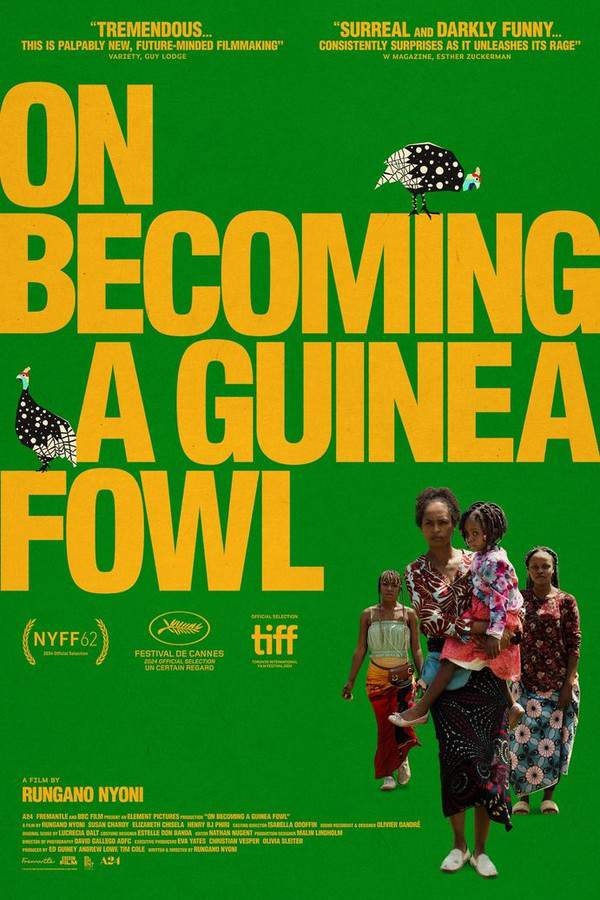
On Becoming a Guinea Fowl (2025) movie poster

Plot Summary

On Becoming a Guinea Fowl (2025) Plot Summary & Ending Explained

Release, runtime and language
2025 · 1 h 35 m · English
Echo score 90
Loading streaming availability…
Directed by
Rungano Nyoni
Starring
Henry B.J. Phiri, Maggie Mulubwa, Susan Chardy, Elizabeth Chisela, Roy Chisha, Blessings Bhamjee

While driving along a deserted road late at night, Shula discovers the body of her uncle. The ensuing funeral brings her and her cousins together, where they uncover long-held secrets within their Zambian family.

On this page (7)
  1. 1 Where to watch
  2. 2 What happens: full plot
  3. 3 Plot questions answered
  4. 4 How it ends
  5. 5 Movie threads
  6. 6 Movies like On Becoming a Guinea Fowl
  7. 7 Every angle
Loading streaming availability…

Full plot summary · contains spoilers

What Happens in On Becoming a Guinea Fowl: Full Plot Summary

The whole story of On Becoming a Guinea Fowl (2025) explained, from the opening scene to the final frame: every key event, every twist and what it all adds up to. Read it as a quick recap before the sequel, to check a scene you missed, or to finally understand what really happened.

On the drive home from a party, Shula discovers Uncle Fred dead in the road near a brothel, and has a brief vision of herself as a young girl. She calls Shula's Father, who tells her to stay near the body until the police come in the morning, and also asks her for money. Her cousin Nsansa, who is drunk, also happens across the body, but Shula is reluctant to let her into her car.

The next day she goes home to rest, but her relatives come to empty out the house in preparation for the funeral. She is harangued by her aunties for washing on a funeral day and pressured to pick up Shula's Mother from the airport.

As the funeral goes on, Shula becomes increasingly distressed by the hostility toward Fred’s widow. She is forbidden from bringing the widow food, as Fred’s family believes that he died because she did not take proper care of him. Shula and Nsansa go to Bupe, their cousin, who is staying at a college dorm. On the way, Nsansa recollects how Fred attempted to abuse her but couldn’t get an erection; she says she hit him and made him run away. They arrive at the dorm and find Bupe has taken an overdose.

Bupe is hospitalised, and Shula finds a confession on her phone saying that Fred had been serially abusing her. Bupe’s mother says to keep quiet about Fred’s behaviour. Shula struggles to sleep as she remembers an educational children’s TV show that talked about the guinea fowl.

The next day, Shula is sent to dictate an obituary, but she is haunted by Bupe’s confession. She returns home and is shocked to find that Bupe has discharged herself and is now making food for the family. Bupe shrugs off the confession, saying that Fred is dead and it’s in the past. Shula tries to find Bupe’s mother, but is waylaid by various men demanding her to serve them food. She finds Bupe has overdosed again and is taken to the hospital. Back at the house, Nsansa admits that her story was a lie — Fred did actually abuse her. Shula goes for a walk and talks to Fred’s widow. The widow says that she cannot charge her cellphone because it’s an old model with a rare cable, and she left it at Fred’s home.

The following morning, Shula goes to retrieve the cable, and meets Fred’s seven children, who are being looked after by their maternal grandmother. Shula realises from the children’s ages that Fred’s widow was only 11 or 12 when she first got pregnant. When the grandmother learns that Shula is on Fred’s side of the family, she falls to her knees and begs Shula to tell them not to take the house from Fred’s widow, as they have nowhere to raise the children.

Shula goes to her father, who is having a party. She asks him why nobody is speaking up about Fred, but he is unconcerned, and says since he is dead there is no point. He asks her for more money. As she walks away, a thought occurs to him — he calls her cellphone and asks if Fred abused her. She says he did not. She goes to her mother and asks why she told all of Shula’s aunties about the abuse, but not her dad. Her mother says that the aunties talked to Fred and he assured them he wouldn’t do it again. Her mother, seemingly unbothered by any of this, tells her to gather more food for the funeral dinner.

Shula is drinking in the kitchen cupboard with Nsansa when the aunties step in and assure her that they love her and they do not want harm to come to her. Outside, the widow and her family have been made to sleep in the empty swimming pool. Nsansa mentions Shula watching a children’s TV show about guinea fowl one day while holding a hot water bottle to her belly. Nsansa says that was the day Shula decided she hated Uncle Fred. She asks if Shula is all right, and Shula just nods. Shula and Nsansa go to Bupe’s hospital window, climb in and hug her to sleep.

Shula remembers watching the TV show about the guinea fowl. In it, the host explains that the guinea fowl is very important in protecting the other animals, because it makes a loud noise when predators are near.

At the house, the men of the family hold a court in which Fred’s relatives tell the widow that she failed him. The widow says she tried to stop him drinking after he was hospitalised, but he didn’t listen to her. The men decide that her family should pay a sum of money and give up the house and Fred’s possessions. The family members begin to fight over ownership of the items. Outside, Shula arrives with Fred’s children and begins to screech the sound of a guinea fowl.
Last updated: January 28, 2026 at 12:46

Was this helpful?

Plot questions answered

On Becoming a Guinea Fowl Plot Explained: Your Questions Answered

The questions people ask most about On Becoming a Guinea Fowl (2025): what happens in the confusing scenes, why the characters do what they do, the twists, hidden details and what the ending means. Each answer contains spoilers.

Q1

Why does Shula hate Uncle Fred?

Shula secretly hated Fred ever since she was a child. Nsansa reveals that one day Shula was watching a children's TV show about guinea fowl while holding a hot water bottle to her belly, the same day Shula decided she hated Uncle Fred, implying she was also a victim of his abuse.

Foreshadowing: Earlier, Shula has a brief vision of herself as a young girl when she discovers Fred's body, hinting at childhood trauma.

  • shula
  • uncle fred
  • abuse
  • childhood trauma
  • family secrets
Q2

What does the guinea fowl symbolize in the movie?

The guinea fowl represents protection and warning. In the children's TV show Shula remembers, the host explains that guinea fowls are important because they make a loud noise when predators are near, alerting other animals to danger. This parallels Shula's final act of screaming like a guinea fowl to expose the family's predators.

Foreshadowing: The guinea fowl memory recurs throughout the movie, haunting Shula as she processes the revelations about Fred.

  • guinea fowl
  • symbolism
  • protection
  • defiance
  • warning
Q3

Why is Fred's widow being blamed for his death?

Fred's family blames his widow for his death because they believe she did not take proper care of him. During the funeral, the family is hostile toward her, and the men eventually decide her family should pay a sum of money and give up the house and Fred's possessions as punishment.

Foreshadowing: Early on, aunties pressure Shula to fetch the widow from the airport and forbid her from bringing the widow food.

  • fred's widow
  • blame
  • family
  • funeral
  • accusation
Q4

Why does Bupe overdose?

Bupe attempts suicide because she was serially abused by Uncle Fred. She confesses this on her phone while hospitalized, revealing that Fred had been abusing her. The overwhelming guilt and trauma from years of abuse, combined with the family forcing her to stay silent, drives her to overdose.

Foreshadowing: On the way to Bupe's dorm, Nsansa recalls how Fred attempted to abuse her but couldn't get an erection, hinting at his predatory behavior.

  • bupe
  • overdose
  • suicide
  • abuse
  • confession
Q5

Why does the family want to silence the abuse allegations?

Bupe's mother urges the family to keep quiet about Fred's abuse to protect the family from scandal. Similarly, Shula's mother tells the aunties about the abuse, but after talking to Fred, they accept his promise not to do it again and choose to stay silent. The family prioritizes reputation over protecting the victims.

Foreshadowing: Shula's father dismisses speaking up about Fred, saying since he's dead there no point in bringing up the past.

  • family silence
  • abuse
  • cover-up
  • scandal
  • reputation
Q6

Why does Nsansa initially lie about what happened with Fred?

Nsansa initially tells Shula that Fred attempted to abuse her but couldn't get an erection, and she hit him and made him run away. However, she later admits this was a lie, Fred did actually abuse her. She likely minimized the truth initially due to shame and fear of not being believed.

Foreshadowing: Nsansa arrives drunk at the scene of Fred's body, suggesting she may have been self-medicating to cope with trauma.

  • nsansa
  • lie
  • abuse
  • trauma
  • denial
Q7

What is the meaning of Shula's final scream?

In the final scene, Shula arrives with Fred's seven children and screeches the sound of a guinea fowl. This act is a symbolic defiance against the family's corruption and silence. Like the guinea fowl that warns others of predators, Shula uses her voice to expose the predators within her own family, the relatives who enabled abuse and blamed the victims.
Foreshadowing: Throughout the film, Shula is haunted by the memory of the guinea fowl show, building toward this moment of vocal resistance.

  • shula
  • final scene
  • guinea fowl
  • scream
  • defiance
Q8

Why is Shula's father only concerned about money?

Shula's father shows no interest in justice or family solidarity. When Shula calls him after finding Fred's body, he tells her to stay by the body until police come in the morning, but also immediately asks her for money. Later, at his party, he dismisses speaking up about Fred and again asks Shula for money. His character represents the moral bankruptcy enabling the family's dysfunction.

Foreshadowing: Shula's father asking for money while she stands alone by a corpse establishes his priorities early.

  • shula's father
  • money
  • father
  • neglect
  • selfishness
Q9

How old was Fred's widow when she first got pregnant?

Shula realizes from the children's ages that Fred's widow was only 11 or 12 years old when she first got pregnant. This revelation underscores the predatory nature of Fred's actions and explains why the widow was so young with seven children.

Foreshadowing: The timeline detail about the children's ages becomes crucial when Shula meets the maternal grandmother.

  • fred's widow
  • age
  • pregnancy
  • abuse
  • children
Q10

Why doesn't Shula's mother tell her father about the abuse?

Shula's mother admits she told the aunties about the abuse, but not Shula's father. She explains that the aunties talked to Fred and he assured them he wouldn't do it again. Her mother seems unbothered by the whole situation, choosing to believe Fred's promise over protecting her daughter, demonstrating the family's failure to prioritize victim safety.

Foreshadowing: Shula's mother tells her to gather more food for the funeral dinner while dismissively discussing the abuse.

  • shula's mother
  • father
  • abuse
  • family silence
  • trust
Q11

Why is Fred's widow made to sleep in the empty swimming pool?

Fred's widow and her family are made to sleep in the empty swimming pool outside the house. This symbolizes their exclusion and punishment, the family blames the widow for Fred's death and treats her as less than family, even denying her proper shelter during mourning.

Foreshadowing: The hostility toward the widow is established early when aunties forbid Shula from bringing her food.

  • widow
  • swimming pool
  • shelter
  • punishment
  • family
Q12

Why does Bupe discharge herself from the hospital?

Bupe discharges herself from the hospital and begins making food for the family, shrugging off her own confession about Fred's abuse. She says Fred is dead and it's in the past. This minimizes her trauma and allows the family to continue functioning normally, showing how victims are pressured to suppress their experiences for the family's comfort.

Foreshadowing: Bupe's mother urged silence about the abuse to avoid scandal.

  • bupe
  • hospital
  • discharge
  • abuse
  • denial

Ending explained

What Happens at the End of On Becoming a Guinea Fowl?

How On Becoming a Guinea Fowl (2025) ends, in short: the final scene, the last twist and what it means for the characters. The full ending explained, with every spoiler, lives on its own page.

Read the full ending explained

The film concludes on a somber and unresolved note, emphasizing the ongoing cycle of silence and denial surrounding sexual violence within the family and society. After the revelation of Uncle Fred’s heinous acts, the family members seem more focused on protecting their own interests, such as inheritance, rather than seeking justice or confronting the trauma. The involuntary widow, now free from her marriage, faces the difficult reality of figuring out how to support her children while society turns a blind eye to her suffering. The film does not offer a neat resolution; instead, it leaves viewers with a reflective space to consider how such issues persist in many communities. The silence, much like the loud, constant calls of the guinea fowl, underscores how many people are aware of abuse but choose to remain silent to avoid conflict or shame. The ending challenges viewers to think about their own role in breaking the cycle of denial and advocating for change, highlighting that justice remains elusive for many victims of sexual violence. Ultimately, the story closes with a haunting reminder that the problems of secrecy, complicity, and suppressed trauma are deeply ingrained, and that real progress requires ongoing awareness and action.

On Becoming a Guinea Fowl ending explained in full

Movie threads

More Movies Like On Becoming a Guinea Fowl, by Mood & Story

Curated lists built around what makes On Becoming a Guinea Fowl tick: the same mood, the same kind of story or the same emotional payoff. Each list explains why these movies belong together.

Movies about explosive family secrets like On Becoming a Guinea Fowl

When a family gathering exposes generations of buried trauma and lies. Explore films like On Becoming a Guinea Fowl where a catalyst—often a funeral or wedding—forces a family to confront a long-buried trauma. If you liked the tense uncovering of truth and generational pain, you'll find similar powerful dramas here.

  • tense
  • claustrophobic
  • unsettling
  • melancholic
  • cathartic
  • despairing
  • Tone: dark, tense, unsettling
  • Pacing: steady, deliberate
Why these movies?

The story pattern: These narratives typically revolve around a pivotal family event that acts as a pressure cooker. Characters are trapped together, and through a steady, deliberate pace, deeply hidden truths about abuse, betrayal, or complicity are dragged into the light, testing loyalties and forcing characters to confront a painful past.

Why they belong together: They share a heavy emotional weight, an oppressive and tense atmosphere, and a central theme of silencing versus speaking out. The pacing is steady, building tension relentlessly as characters grapple with revelations that redefine their understanding of their family.

Movies with cathartic confrontations like the ending of On Becoming a Guinea Fowl

A protagonist's climactic act of defiance against a corrupt system or family. Discover films similar to On Becoming a Guinea Fowl, where a character's final, defiant act provides a powerful but ambiguous release. If you were moved by the scream against silence, these stories of resilience and catharsis will resonate.

  • cathartic
  • despairing
  • tense
  • unsettling
  • heavy
  • defiant
  • Tone: heavy, cathartic, bleak
  • Pacing: steady, mounting pressure
Why these movies?

The story pattern: The plot builds steadily under the weight of oppression or trauma, focusing on a character's internal struggle. The climax is not a tidy resolution but a raw, emotional outburst—a scream, a public accusation, a symbolic gesture—that serves as a personal victory against systemic wrongs, leaving the larger outcome uncertain.

Why they belong together: They are grouped by their shared focus on a heavy, often bleak tone that builds to a moment of intense, cathartic release. The pacing is steady, guiding the viewer through mounting pressure towards an emotionally charged, ambiguous climax centered on defiance.

If you liked this

Movies Like On Becoming a Guinea Fowl

Similar movies to On Becoming a Guinea Fowl: the same genre, themes or kind of story. Each one comes with its own plot summary, timeline and ending explained.

Browse all movie summaries

Every angle

On Becoming a Guinea Fowl (2025) Explained: Plot, Ending, Timeline & Characters

Everything about On Becoming a Guinea Fowl in one place: what happens in the plot summary, the timeline in chronological order, the characters and meaning, the ending explained and a spoiler-free summary. What's After the Movie adds the cast, box office and post-credit scenes.

Coming soon on iOS and Android

The Plot Explained Movie Summary App

Plot summaries, endings explained and timelines on your phone. Catch up on any movie in minutes, save your favorites and never miss a twist again.

Be the first to know when we launch. Your email stays private, always.

Learn more about the app