Plot Explained Spoilers guaranteed!
Plot Explained

Browse by genre

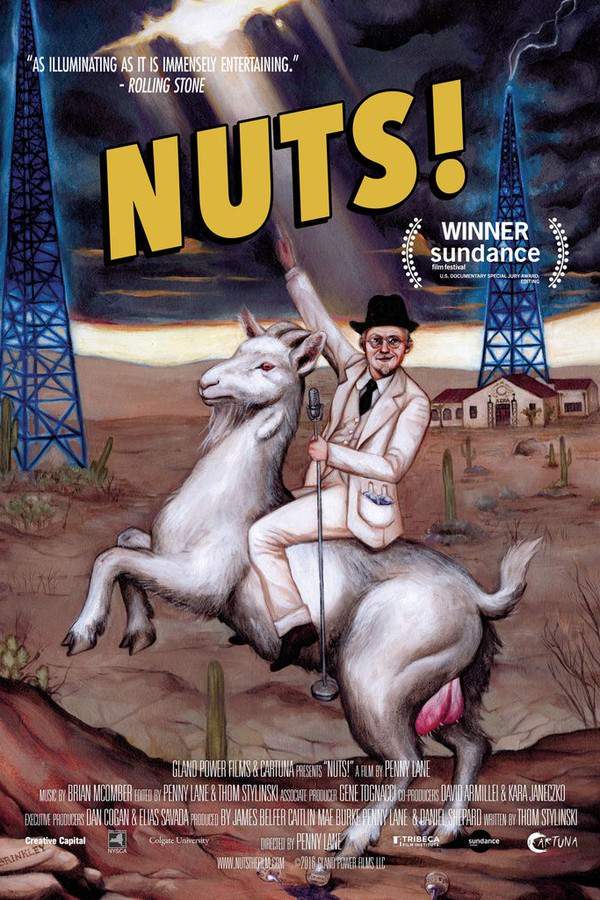
Nuts! (2016) movie poster

Timeline

Nuts! (2016) Timeline Explained – Every Event in Order

Release, runtime and language
2016 · 79 min · English
Loading streaming availability…
Directed by
Penny Lane

This animated documentary tells the bizarre true story of Dr. John Romulus Brinkley, a self-proclaimed inventor and medical pioneer. He gained notoriety for his unconventional treatment for impotence, involving the transplantation of goat testicles. Beyond his medical "breakthrough," Brinkley was also a pioneer in broadcasting, establishing a powerful 1-million-watt radio station that significantly impacted the airwaves. His audacious methods and questionable credentials are explored in this outrageous and unexpected tale.

On this page (6)
  1. 1 Where to watch
  2. 2 Events in order (12)
  3. 3 Timeline questions answered
  4. 4 Movie threads
  5. 5 Movies like Nuts!
  6. 6 Every angle
Loading streaming availability…

12 events in order · contains spoilers

Nuts! Timeline: Events in Chronological Order

Every key event of Nuts! (2016) in order, scene by scene, with when and where it takes place. Use it to untangle flashbacks, time jumps and parallel storylines, to refresh your memory before the sequel or to find the exact scene you are thinking of.

  1. Origin as a Milford druggist and self-styled physician

    Brinkley begins as a Milford, Kansas druggist who positions himself as a physician. He claims to have discovered cures for ailments, including a controversial procedure involving goat testicles. The combination of salesmanship and unconventional medicine marks the start of his public career.

    When
    c. 1910s
    Where
    Milford, Kansas
  2. Rising fame through testimonials

    Public interest grows through testimonials from self-described 'satisfied' customers who report improvements. His sensational assertions propel him to national attention as a flamboyant medical figure. His early success rests on crowds, charisma, and a readiness to bend conventional science.

    When
    1920s
    Where
    United States
  3. Building KFKB and turning on the airwaves

    Brinkley constructs the KFKB radio station, known as Kansas Folk Know Better, and makes it the world’s most powerful station of its time. The broadcasts promote his cures and quasi-medical theories to a wide audience. He uses the platform to popularize country music and sell his ideas through showmanship.

    When
    1920s
    Where
    Milford, Kansas
  4. Infomercial era and showmanship

    On air he popularizes country or hillbilly music through his broadcasts. He also invents an infomercial style, delivering long diatribes about public health that blend entertainment with pseudo-science. The gimmicks create a distinctive, persuasive media persona.

    When
    1920s-1930s
    Where
    United States
  5. Regulatory crackdown on KFKB

    Regulators begin to notice his activities; the Federal Radio Commission shuts down KFKB. Brinkley faces license loss and public scrutiny, signaling the end of his first broadcasting empire. The regulatory action marks a turning point in his career.

    When
    Late 1920s
    Where
    United States
  6. Border-blaster move to Mexico

    To bypass restrictions, Brinkley moves operations to Mexico and launches XERA, a border-blaster that continues broadcasting at high power. The new station extends his reach into the United States despite U.S. regulatory pressure. He preserves his brand of sensational broadcasting in a new locale.

    When
    Late 1920s-1930s
    Where
    Mexico
  7. Political ambition: Governor run in 1930

    Brinkley runs for governor of Kansas in 1930 as a write-in candidate. The campaign attracts attention and suggests he might win, though thousands of votes are reportedly disqualified by his opponents. The bid underscores how his public persona translates into political clout.

    When
    1930
    Where
    Kansas
  8. Libel lawsuit against Fishbein

    Brinkley sues Morris Fishbein, editor of the Journal of the American Medical Association, for libel. The legal fight becomes a symbol of the clash between sensational media and medical authority. The case intensifies scrutiny of Brinkley’s practices.

    When
    Mid-to-late 1920s-1930s
    Where
    United States
  9. Emerging credibility crises

    Late in the film it is revealed that Brinkley faces numerous wrongful death suits and has dubious academic credentials and an arrest record. These revelations undermine his public image and contribute to the decline of his empire. The credibility gap widens as legal and ethical challenges mount.

    When
    1930s
    Where
    United States
  10. Decline of fame and enterprise

    Brinkley's fame deteriorates as regulatory, legal, and ethical challenges accumulate. The film traces the unraveling of his medical career and radio empire, ending with a tarnished legacy. His once-dominant presence is gradually replaced by doubt and legal agitations.

    When
    Late 1930s
    Where
    United States
  11. Legacy in radio and music

    Despite his downfall, the documentary credits Brinkley with shaping radio formats and helping popularize hillbilly music. The impact shows how media power can manufacture celebrity and influence culture, even when backed by questionable science. His influence persists in how broadcast media blend entertainment with advertising.

    When
    1920s-1930s
    Where
    United States
  12. Death and retrospective

    Brinkley dies in 1942, leaving behind a controversial legacy. Nuts! closes by weighing his innovations against his deceit and the consequences of sensationalism in medicine and broadcasting. The film presents a nuanced portrait of a man who reshaped media and medicine in provocative ways.

    When
    1942
    Where
    United States

Last updated: February 24, 2026 at 14:18

Was this helpful?

Timeline questions answered

Nuts! Timeline Explained: Your Questions Answered

When does it happen, and why in that order? The questions people ask about the chronology of Nuts! (2016): time jumps, flashbacks, cause and effect between scenes and the correct order of events, each answered with spoilers.

Q1

Why did Brinkley claim goat testicles could cure impotence?

Brinkley claimed that implanting goat testicles into men would cure impotence because he believed the goat's hormonal properties would transfer to the human body. He had no legitimate medical training and presented his theory as a revolutionary breakthrough, using testimonials from patients who reported improvements. The procedure had no scientific basis, but the combination of desperate male patients, Brinkley's charisma, and anecdotal evidence created a profitable business built on placebo effect and false promises.

  • goat testicle transplant
  • impotence cure
  • medical fraud
  • hormone theory
Q2

What made KFKB radio station so powerful?

KFKB (Kansas Folk Know Better) was built by Brinkley in Milford, Kansas, and became the world's most powerful radio station of its time, broadcasting at 1 million watts. This unprecedented signal strength allowed his medical claims and infomercial-style broadcasts to reach millions of listeners across the United States. The station also pioneered the spread of country or 'hillbilly' music, effectively creating one of the first radio formats dedicated to that genre.

  • KFKB
  • radio station
  • million watts
  • broadcasting
  • hillbilly music
Q3

Why did the AMA revoke Brinkley's medical license?

The American Medical Association, led by editor Morris Fishbein, revoked Brinkley's medical license because his goat testicle procedure had no scientific validity and was considered dangerous medical practice. The AMA viewed him as a dangerous quack who was exploiting vulnerable patients for profit. Fishbein became one of Brinkley's primary opponents, and the revocation marked a major turning point that eventually led to the downfall of his medical career.

  • American Medical Association
  • medical license revocation
  • Morris Fishbein
  • quack doctor
Q4

Why did Brinkley move his radio station to Mexico?

After U.S. regulators shut down KFKB and revoked his broadcast license, Brinkley moved his operations to Mexico to bypass American regulations. He built XERA, a so-called 'million-watt border blaster' located just across the Mexican border. This allowed him to continue broadcasting his programs into the United States at high power while evading U.S. Federal Radio Commission restrictions. This tactic was known as the 'border blaster' workaround common among controversial broadcasters of the era.

  • XERA
  • border blaster
  • Mexico radio station
  • regulatory evasion
Q5

What was the libel lawsuit between Brinkley and Morris Fishbein?

Brinkley sued Morris Fishbein, the editor of the Journal of the American Medical Association, for libel after Fishbein publicly criticized him as a fraud and quack. The lawsuit became a high-profile legal battle that symbolized the clash between Brinkley's sensational media empire and traditional medical authority. The case intensified public scrutiny of Brinkley's practices and was part of the broader campaign to expose his fraudulent medical claims.

  • Morris Fishbein
  • libel lawsuit
  • American Medical Association
  • legal battle
Q6

Why did Brinkley run for governor of Kansas in 1930?

Brinkley ran for governor of Kansas as a write-in candidate in 1930, leveraging his fame and radio audience to pursue political power. His campaign attracted significant support, and the film suggests he might have won were it not for thousands of votes reportedly disqualified by his opponents. The bid demonstrated how his media celebrity translated into political influence, though the questionable ballot handling underscored the contentious political landscape surrounding his career.

  • Kansas governor campaign
  • 1930 election
  • write-in candidate
  • political ambition
Q7

How did Brinkley invent the infomercial?

Brinkley pioneered the modern infomercial format by using his KFKB radio station to deliver long, persuasive broadcasts about his medical treatments and public health theories. These programs combined entertainment with salesmanship, presenting what were essentially extended advertisements for his goat testicle procedures under the guise of medical advice. His model of using broadcast media to directly sell products or ideas to consumers became a template for future infomercials and late-night advertising.

  • infomercial
  • advertising
  • broadcast media
  • salesmanship
  • medical claims
Q8

How did Brinkley help popularize country music?

Through his powerful KFKB broadcasts, Brinkley accidentally became a major force in popularizing country or 'hillbilly' music. His station was one of the first to regularly play country music to a wide audience, helping establish the genre's reach beyond local performances. The documentary credits Brinkley with shaping radio formats and bringing hillbilly music to national attention, showing how his media empire had cultural impact beyond his medical fraud.

  • hillbilly music
  • country music
  • radio format
  • cultural influence
  • broadcasting legacy
Q9

What wrongful death lawsuits did Brinkley face?

Late in his career, Brinkley faced multiple wrongful death lawsuits from patients who suffered complications or died as a result of his goat testicle procedures. These lawsuits, combined with revelations about his dubious academic credentials and arrest record, painted a troubling picture of his medical practice. The mounting legal and ethical challenges contributed to the rapid decline of his fortune and professional reputation.

  • wrongful death lawsuits
  • medical malpractice
  • patient harm
  • legal consequences
Q10

What was Brinkley's lasting legacy in radio and medicine?

Brinkley's legacy is complex: he pioneered the power of media to manufacture celebrity and influence public discourse, invented the infomercial format, and helped popularize country music through broadcasting. However, he also represented a cautionary tale about medical fraud, the dangers of unchecked media power, and the ethical boundaries of professional practice. The documentary presents him as a figure who reshaped both media and medicine through audacious showmanship, though his contributions remain tainted by deception and exploitation of vulnerable patients.

  • media legacy
  • broadcasting influence
  • medical fraud
  • cautionary tale
  • cultural impact

Movie threads

More Movies Like Nuts!, by Mood & Story

Curated lists built around what makes Nuts! tick: the same mood, the same kind of story or the same emotional payoff. Each list explains why these movies belong together.

Documentaries about con artists and their downfall like Nuts!

Stories tracing the audacious rise and inevitable fall of charismatic fraudsters. Discover movies like Nuts! that explore the audacious lives of fraudsters. These films track the rise and fall of charismatic con artists, blending true crime intrigue with a cautionary tale structure. If you were fascinated by the outrageous story of Dr. Brinkley, you'll find similar tales of deception and hubris here.

  • cautionary
  • tense
  • fraud
  • hubris
  • rise and fall
  • deceptive
  • Tone: dark, cautionary, tense
  • Pacing: steady, methodical
Why these movies?

The story pattern: Stories in this thread typically begin with a charismatic individual discovering a lucrative deception. They experience a rapid rise to power and wealth, fueled by their charm and audacity. The narrative builds tension as their lies accumulate, leading to a climax where their empire begins to crumble under investigation or internal pressure, culminating in a definitive downfall.

Why they belong together: These movies are grouped together because they share a focus on the psychology of the con artist, the mechanics of deception, and the dramatic arc of a rise-and-fall narrative. The tone often balances fascination with the protagonist's ingenuity against the dark consequences of their actions.
Bizarre documentaries with dark humor like Nuts!

Animated and traditional documentaries that find the humor in strange, unbelievable true events. If you enjoyed the bizarre true story and darkly humorous tone of Nuts!, explore this collection of documentaries. These movies uncover strange, unbelievable real-life events, often using animation and a satirical lens. Find films that share the same energetic, incredulous vibe and focus on the weird side of history.

  • bizarre
  • satirical
  • outrageous
  • incredulous
  • dark humor
  • unconventional
  • Tone: dark, satirical, bizarre
  • Pacing: steady, engaging
Why these movies?

The story pattern: The narrative pattern involves uncovering a strange chapter of history or an eccentric real-life figure. The storytelling is often unconventional, using animation or stylistic reenactments to enhance the absurdity. The journey is one of discovery, leaving the viewer both amused and astonished by the truth.

Why they belong together: These films are united by their shared tone of dark humor and their focus on bizarre, almost-too-weird-to-be-true subject matter. They balance factual reporting with a satirical, energetic presentation that makes learning about history an entertaining and surprising experience.

If you liked this

Movies Like Nuts!

Similar movies to Nuts!: the same genre, themes or kind of story. Each one comes with its own plot summary, timeline and ending explained.

Browse all movie summaries

Every angle

Nuts! (2016) Explained: Plot, Timeline & Characters

Everything about Nuts! in one place: what happens in the plot summary, the timeline in chronological order, the characters and meaning and a spoiler-free summary. What's After the Movie adds the cast, box office and post-credit scenes.

Coming soon on iOS and Android

The Plot Explained Movie Summary App

Plot summaries, endings explained and timelines on your phone. Catch up on any movie in minutes, save your favorites and never miss a twist again.

Be the first to know when we launch. Your email stays private, always.

Learn more about the app