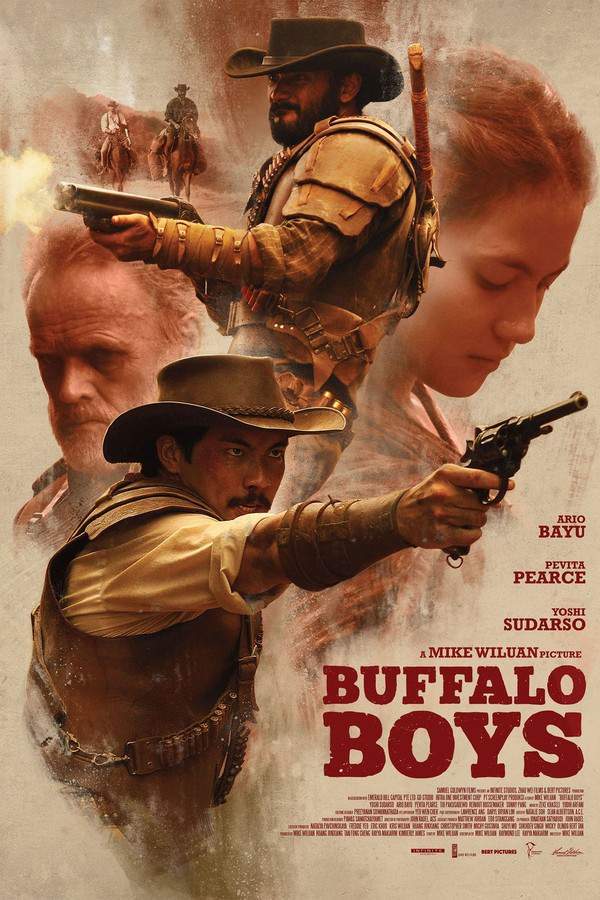
Set during the Java War, when Prince Diponegoro leads a broad uprising against Dutch rule, this film unfolds in a small Central Java town where the Dutch military tighten their grip out of fear that locals are aiding Diponegoro’s forces. The village chief, Jayengnegoro, finds himself caught in a web of suspicion as he accuses elder Kromoludiro of helping the Javanese fighters, leading to Kromoludiro’s arrest and brutal questioning by Dutch Captain de Borst. The tension in the village climbs as fear, loyalty, and local pride collide under the shadow of occupation. In a bid to uncover the truth and calm the growing unrest, the kyai Karto Sarjan sends one of his students on a delicate mission to locate Sentot Prawirodirdjo, one of the leaders rallying the Javanese resistance.
Within the torture chamber, a crucial admission from de Borst’s second-in-command, Lieutenant van Aaken, cracks the surface of the truth: it was he who had tipped off Diponegoro’s forces about the Dutch movements. This revelation sparks a fierce reaction in de Borst, who responds with ruthless resolve by killing Kromoludiro and detaining van Aaken, signaling a ruthless tightening of Dutch control and a deepening of personal enmity within the Dutch ranks. The town’s atmosphere shifts from suspicion to outright danger as the resistance moves closer, and the lines between oppressor and ally blur in the heat of the moment.
Not long after, Sentot’s force makes a dramatic entrance, disguising themselves as dancers to slip into the village and strike from within. The ruse creates chaos among the Dutch troops, who struggle to distinguish friend from foe as the ambush unfolds. Sentot himself arrives with purpose, delivering a blow that the Dutch cannot quickly recover from, turning the tide of the confrontation. In the ensuing clash, Captain de Borst fights to hold his ground but is gradually overwhelmed and dies at the hands of the encroaching violence. Nearby, van Aaken meets his end in the crossfire, a stark reminder of how swiftly loyalties can fracture in war.
The village emerges from the turmoil with a resounding demonstration of resilience and the harsh costs of resistance. The intertwined fates of the Dutch occupiers and the Javanese fighters underscore a broader tale of courage, betrayal, and the heavy price paid by those who live through the turbulence of occupation and uprising.