






Plot Explained Spoilers guaranteed!
Plot Explained

Browse by genre

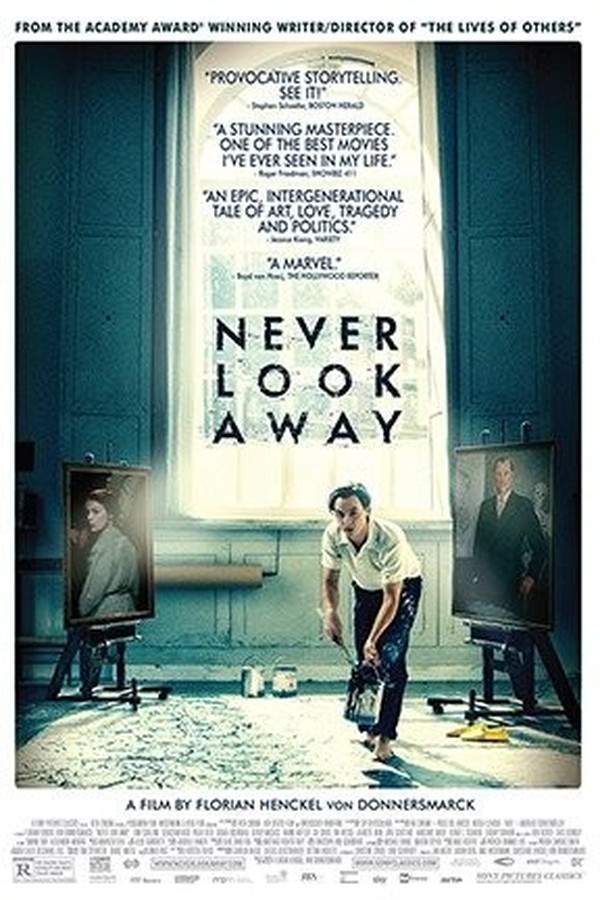
Never Look Away (2019) movie poster

Timeline

Never Look Away (2019) Timeline Explained – Every Event in Order

Release, runtime and language
2019 · 189 min · German
Echo score 72
Directed by
Florian Henckel von Donnersmarck
Starring
Sebastian Koch, Oliver Masucci, Paula Beer, Saskia Rosendahl, Cai Cohrs, Ina Weisse
Budget
$18M

A young artist, Kurt Barnert, confronts the lingering effects of Germany's Nazi and GDR pasts. Seeking refuge in art and love, he creates emotionally charged paintings that capture the pain of his generation. As Kurt develops a relationship with student Ellie, his artwork becomes a powerful reflection of the complexities of German history and a testament to the enduring strength of the human spirit.

On this page (6)
  1. 1 Where to watch
  2. 2 Events in order (15)
  3. 3 Timeline questions answered
  4. 4 Movie threads
  5. 5 Movies like Never Look Away
  6. 6 Every angle

Where to watch

Where to Watch Never Look Away (2019)

Where can you watch Never Look Away? Stream, rent or buy it in the US, including on Amazon Video, Apple TV Store and Fandango At Home: current JustWatch availability with up-to-date prices.

Streaming availability powered by JustWatch

15 events in order · contains spoilers

Never Look Away Timeline: Events in Chronological Order

Every key event of Never Look Away (2019) in order, scene by scene, with when and where it takes place. Use it to untangle flashbacks, time jumps and parallel storylines, to refresh your memory before the sequel or to find the exact scene you are thinking of.

  1. Kurt's Fascination at the Exhibit

    Kurt Barnert visits the 'Degenerate Art' exhibit in Dresden with his aunt Elisabeth. He becomes captivated by the avant-garde sculpture 'Girl with Blue Hair' by Eugen Hoffmann, sparking a deep interest in art during the oppressive days of Nazi Germany.

    Where
    Dresden
  2. Elisabeth's Public Admiration

    Elisabeth, a member of the National Socialist Women's League, proudly presents a bouquet to Adolf Hitler at a Nazi rally. This moment highlights her deep admiration for the regime, contrasting sharply with her hidden love for art and music.

  3. The Private Concert

    Kurt discovers his aunt's private concert, where she joyfully plays Bach's music while nude. This intimate glimpse into her character reveals her complex nature and the joy she finds in art, providing an escape from her regimented life.

  4. Elisabeth's Mental Health Struggles

    Tragically, Elisabeth is diagnosed with schizophrenia, reflecting the devastating impact of mental illness. Her condition leads to forced sterilization and her later murder under the Nazi euthanasia program, showcasing the horrors of the regime.

  5. Seeband's Dark Influence

    Professor Carl Seeband, an SS medical corps member, plays a critical role in Elisabeth's fate. His involvement in the euthanasia program underscores his moral depravity, which will eventually haunt him as he faces his own reckoning.

  6. A Surprising Redemption

    As World War II nears its end, Seeband finds himself facing execution. In a twist of fate, he volunteers his medical skills during a Red Army officer's wife's childbirth, successfully saving both her and the child, which leads to his release.

  7. Kurt's Artistic Journey

    While exploring artistic avenues at the Dresden Academy of Fine Arts, Kurt meets Ellie, a fashion design student. Their connection is strained by unspoken familial ties and opposing values regarding art, particularly socialist realism.

    Where
    Dresden Academy of Fine Arts
  8. Seeband's Manipulations

    As Kurt and Ellie grow closer, Seeband manipulates events to undermine their relationship. His fabrications and deceit lead to a heartbreaking moment, including orchestrating an abortion to sever their bond, showcasing his tyrannical hold over Ellie.

  9. Kurt and Ellie's Marriage

    Despite Seeband's oppressive influence, Kurt and Ellie’s love prevails, culminating in their marriage. This union not only defies familial expectations but also represents a hopeful new beginning away from the horrors of their past.

  10. The Move to West Germany

    Seeband, fearing retribution, escapes from East Germany to West Germany. Kurt and Ellie, seeking a fresh start and freedom from their tumultuous history, decide to follow him in pursuit of a brighter future.

    Where
    West Germany
  11. Struggles at Düsseldorf Art Academy

    Once in West Germany, Kurt enrolls at the prestigious Düsseldorf Art Academy where he struggles to find his artistic identity. His experiences juxtapose the traditional training he received with the academy's emphasis on modern innovation.

    Where
    Düsseldorf Art Academy
  12. Friendship with Harry Preusser

    At the academy, Kurt forms a meaningful friendship with fellow student Harry Preusser, known for his unique approach to art. This camaraderie provides Kurt with inspiration and support as he navigates his creative journey during societal upheaval.

  13. Artistic Evolution

    Kurt's artistic vision begins to shift as he finds new sources of inspiration. He creates innovative works that incorporate personal memories and socio-political commentary, pushing the boundaries of his previous artistic approaches.

  14. A Pivotal Artistic Revelation

    A newspaper article about a captured Nazi doctor ignites Kurt's imagination, leading him to create a pivotal artwork. His exploration of mixing reality with art deepens as he includes elements reminiscent of his own family history.

  15. Joyous News and Artistic Recognition

    After enduring emotional pain from past events, Ellie reveals she's pregnant, bringing joy back into their lives. Kurt captures this moment on canvas, and his artwork is celebrated in its inaugural exhibition, marking a significant achievement in his artistic career.

Last updated: November 22, 2024 at 18:59

Was this helpful?

Timeline questions answered

Never Look Away Timeline Explained: Your Questions Answered

When does it happen, and why in that order? The questions people ask about the chronology of Never Look Away (2019): time jumps, flashbacks, cause and effect between scenes and the correct order of events, each answered with spoilers.

Q1

Why was Kurt's aunt Elisabeth killed?

Elisabeth was diagnosed with schizophrenia by the Nazi regime. Because of her mental illness, she was forcibly sterilized and later murdered under the Nazi euthanasia program. The SS doctor who carried out her fate was Professor Carl Seeband, who would later become Ellie's father.

Foreshadowing: Earlier, Elisabeth's complex personality and joy in art contrasted sharply with her public persona as an ideal Nazi Hausfrau, hinting at the tragic fate that awaited her.

  • elisabeth
  • schizophrenia
  • nazi euthanasia
  • sterilization
  • kurt barnert
Q2

How did Professor Seeband escape execution after WWII?

As WWII ended, Seeband faced execution for his Nazi affiliations. However, he volunteered his medical services to assist a Red Army officer's wife during a dangerous childbirth. By saving both mother and child, he earned the gratitude of the Soviet officer, who then obscured evidence of Seeband's Nazi past and secured his release.

Foreshadowing: Seeband's willingness to use any opportunity for survival establishes his character as someone who manipulates situations to escape consequences.

  • seeband
  • red army
  • execution
  • escape
  • soviet officer
Q3

Why did Seeband try to separate Kurt and Ellie?

Seeband was Ellie's father and wanted to prevent her from marrying Kurt, whom he considered unsuitable. Additionally, Seeband had a dark secret: he was directly responsible for the murder of Kurt's aunt Elisabeth during the Nazi regime. He feared this connection would be exposed if Kurt and Ellie remained together.

Foreshadowing: Seeband's intense opposition to Kurt seems disproportionate for simple paternal disapproval, hinting at deeper, hidden motivations.

  • seeband
  • ellie
  • manipulation
  • abortion
  • kurt
Q4

What inspired Kurt's artistic breakthrough?

Kurt's breakthrough came from a newspaper article about a captured Nazi doctor who was Seeband's superior. This ignited his imagination, leading him to create innovative works that blended black-and-white photographs with painterly techniques. He incorporated Seeband's passport photos alongside his own memories of Aunt Elisabeth, creating emotionally charged paintings that merged personal history with Germany's collective trauma.

Foreshadowing: Kurt's earlier fascination with the 'Degenerate Art' exhibit and his aunt's tragic fate planted the seeds for this artistic exploration of truth and memory.

  • artistic breakthrough
  • newspaper
  • nazi doctor
  • photographs
  • painting
Q5

Why did Ellie look like Kurt's aunt Elisabeth?

Ellie bore a striking resemblance to Kurt's aunt Elisabeth, which was not coincidental. Ellie is revealed to be the daughter of Professor Seeband, who was directly responsible for Elisabeth's murder. The visual similarity between Ellie and Elisabeth becomes symbolically significant, representing the interconnectedness of their fates across generations.

Foreshadowing: Kurt notices Ellie's resemblance to his aunt from their first meeting at the Dresden Academy, and their unspoken familial bond creates underlying tension in their relationship.

  • ellie
  • elisabeth
  • resemblance
  • seeband
  • family
Q6

How did Kurt develop his own artistic style in West Germany?

At the Düsseldorf Art Academy, Kurt struggled to find his voice amid the pressure of modern innovation. His breakthrough came when he combined his personal memories with historical events, transposing black-and-white photographs onto canvas with a distinctive sfumato effect. His friend Harry Preusser's nail-and-board art technique also inspired him to experiment boldly. The key was blending his East German training with his family's painful history.

Foreshadowing: Professor Antonius van Verten observed that Kurt's rich experiences hadn't yet translated into a unique artistic voice, predicting this struggle would eventually become his strength.

  • kurt
  • düsseldorf academy
  • artistic style
  • harry preusser
  • sfumato
Q7

Why did Seeband flee to West Germany?

Seeband escaped from East Germany to West Germany because he feared retribution. The Soviet officer who had protected him by concealing his Nazi past was reassigned, leaving Seeband vulnerable to exposure. Fearing consequences for his war crimes and his role in Elisabeth's murder, he fled westward.

Foreshadowing: Seeband's earlier manipulation of Kurt and Ellie, including orchestrating Ellie's abortion, showed his desperation to control situations before they could threaten his safety.

  • seeband
  • escape
  • west germany
  • east germany
  • soviet officer
Q8

What did the painting with Seeband's likeness reveal?

Kurt created a painting that included Seeband's likeness alongside a captured Nazi doctor and a tender moment with Elisabeth. When Seeband saw this painting in Kurt's studio, he immediately recognized the connection to his dark past and abruptly left, but Kurt remained unaware of their familial relationship and Seeband's guilt.

Foreshadowing: This moment planted the seeds for future revelation, as the painting symbolized how art could uncover hidden truths that characters sought to bury.

  • painting
  • seeband
  • likeness
  • exposure
  • art
Q9

How did Ellie's pregnancy affect Kurt's art?

After years of emotional pain caused by Seeband's earlier orchestration of Ellie's abortion, the news of Ellie's pregnancy brought joy back into their lives. Kurt celebrated this new life by painting Ellie's nude form, representing love, hope, and the cyclical nature of life. This work became part of his first successful exhibition.

Foreshadowing: The earlier abortion orchestrated by Seeband had created deep emotional wounds, making this pregnancy a powerful moment of healing and renewal.

  • ellie
  • pregnancy
  • nude painting
  • exhibition
  • healing
Q10

Why did Kurt struggle to find his voice at the Düsseldorf Art Academy?

Kurt struggled because he had been trained in traditional figurative painting in East Germany, which the Düsseldorf Academy considered outdated. His instructor Professor Antonius van Verten acknowledged Kurt's rich life experiences but noted he hadn't yet transformed them into a unique artistic identity. Kurt needed to bridge his classical training with modern innovation while processing his personal and family trauma.

Foreshadowing: This struggle directly led to his breakthrough when he finally merged his memories with contemporary techniques, creating a style that was uniquely his own.

  • düsseldorf academy
  • traditional painting
  • artistic identity
  • struggle
  • van verten
Q11

What impact did the Degenerate Art exhibit have on Kurt?

The Degenerate Art exhibit in Dresden, which Kurt attended with his aunt Elisabeth, was transformative. He became captivated by Eugen Hoffmann's sculpture 'Girl with Blue Hair,' sparking his lifelong fascination with avant-garde art. This experience planted the seed for his artistic rebellion against both Nazi constraints and later socialist realism in East Germany.

Foreshadowing: This early artistic awakening set Kurt on his path, eventually leading to his signature style that blended forbidden art with personal memory.

  • degenerate art
  • dresden
  • girl with blue hair
  • eugen hoffmann
  • inspiration

Movie threads

More Movies Like Never Look Away, by Mood & Story

Curated lists built around what makes Never Look Away tick: the same mood, the same kind of story or the same emotional payoff. Each list explains why these movies belong together.

Movies about artists against oppression like Never Look Away

Stories of creators finding their voice and truth under the weight of tyranny. If you were moved by the artistic journey in Never Look Away, explore these movies about creators struggling under oppressive regimes. Discover similar historical dramas and stories where art becomes a powerful weapon against political control and a testament to the human spirit.

  • historical
  • reflective
  • soulful
  • tense
  • inspiring
  • somber
  • Tone: reflective, somber, inspiring
  • Pacing: steady, character-driven
Why these movies?

The story pattern: These narratives typically follow a creator's journey, starting with an initial state of compliance or fear. As the regime's influence encroaches on their life and work, they begin a quiet rebellion through their art. Their creative process becomes intrinsically linked to their political awakening and personal healing, culminating in works that defy the system.

Why they belong together: Movies in this thread are grouped by their central theme of creative expression as defiance. They share a serious, reflective tone, a steady pacing that allows for deep character exploration, and a focus on the historical and psychological impact of political control on the individual.
Bittersweet historical journey movies like Never Look Away

Sweeping life stories where personal triumphs are shadowed by historical scars. For viewers who enjoyed the generational sweep of Never Look Away, this list features similar epic dramas. Find more movies with bittersweet tones that follow a character's life through turbulent history, blending heavy emotional themes with a sense of hard-earned hope.

  • melancholic
  • historical
  • atmospheric
  • soulful
  • reflective
  • somber
  • Tone: bittersweet, melancholic, hopeful
  • Pacing: steady, epic, life-spanning
Why these movies?

The story pattern: These films often follow a protagonist from youth to maturity, charting their life against major societal shifts like war, political upheaval, or social change. The central conflict is both internal, dealing with trauma and memory, and external, navigating a dangerous world. The conclusion is rarely purely happy but offers a meaningful, hopeful resolution built upon immense struggle.

Why they belong together: These films are connected by their bittersweet tone, steady chronological pacing, and heavy emotional weight derived from historical trauma. They create a specific, resonant experience where joy is tempered by loss, and survival itself is a complex victory.

If you liked this

Movies Like Never Look Away

Similar movies to Never Look Away: the same genre, themes or kind of story. Each one comes with its own plot summary, timeline and ending explained.

Browse all movie summaries

Every angle

Never Look Away (2019) Explained: Plot, Timeline & Characters

Everything about Never Look Away in one place: what happens in the plot summary, the timeline in chronological order, the characters and meaning and a spoiler-free summary. What's After the Movie adds the cast, box office and post-credit scenes.

Coming soon on iOS and Android

The Plot Explained Movie Summary App

Plot summaries, endings explained and timelines on your phone. Catch up on any movie in minutes, save your favorites and never miss a twist again.

Be the first to know when we launch. Your email stays private, always.

Learn more about the app