Plot Explained Spoilers guaranteed!
Plot Explained

Browse by genre

NAZA (2026) movie poster

Timeline

NAZA (2026) Timeline Explained – Every Event in Order

Release, runtime and language
2026 · 1 h 20 m
Loading streaming availability…
Directed by
Rachel Szor
Starring
Yuval Abraham

Shot from Tel Aviv rooftops after dark, this investigative documentary delves into the civilian toll of Israel’s military campaigns in Gaza, revealing how targeted‑killing systems operate and the human cost inflicted on Palestinian communities. It juxtaposes the night‑time surveillance footage with survivor testimonies to highlight the scale of loss.

On this page (5)
  1. 1 Where to watch
  2. 2 Events in order (19)
  3. 3 Timeline questions answered
  4. 4 Movie threads
  5. 5 Every angle
Loading streaming availability…

19 events in order · contains spoilers

NAZA Timeline: Events in Chronological Order

Every key event of NAZA (2026) in order, scene by scene, with when and where it takes place. Use it to untangle flashbacks, time jumps and parallel storylines, to refresh your memory before the sequel or to find the exact scene you are thinking of.

  1. October 7 Prologue

    The film opens with an introductory sequence summarising the October 7 attacks. This establishes the historical moment from which the Israeli military's entire campaign and the interviewees' account unfold.

    When
    October 7, 2023
    Where
    Southern Israel
  2. Rooftop Confessions in Tel Aviv

    Over three years, Yuval Abraham conducts nighttime interviews with 24 Israeli soldiers and intelligence officers on rooftops in Tel Aviv. The interviewees appear only as dark silhouettes with distorted voices to protect their identities, describing the AI systems and phone surveillance used to identify targets in Gaza. Between interviews, the film shows atmospheric shots of Tel Aviv at night.

    When
    Night, over three years
    Where
    Tel Aviv
  3. NAZA: The Arithmetic of Collateral Damage

    A soldier explains that 'NAZA' is a military acronym for Nezek Agavi, meaning 'collateral damage'. Each potential target is assigned a NAZA value representing the expected number of civilian deaths from an airstrike. As he puts it, 'We say 15 NAZA. We don't say 15 people killed and certainly not that 15 children and women will be killed.'

  4. Bombing Without Limits

    Targets with NAZA values below 20 required no special authorization, while approvals for higher values were possible, reaching up to 500 in one case. Interviewees note that combined values for potential Hamas fighters exceeded Gaza's total population. One recalls bluntly: 'At the start of the war, we bombed everything. NAZA wasn't an issue.'

    When
    Start of the war
    Where
    Gaza
  5. Color-Coded Quadrants in Northern Gaza

    During efforts to drive Palestinians out of northern Gaza, maps divided the territory into color-coded quadrants to track military progress. An interviewee explains that the objective was to destroy as much as possible before any questions about the legitimacy of operations could arise.

    Where
    Northern Gaza
  6. Annihilation Zones

    Designated 'annihilation zones' were marked off remotely, from Tel Aviv. Palestinians learned the boundaries of these zones only by being shot when they entered them. As one man explains, 'Whoever you decided to kill was considered a terrorist.'

    Where
    Gaza / Tel Aviv (command)
  7. Snipers at the Food Distribution Point

    One interviewee recalls Israeli snipers firing on starving Palestinians gathered at a food distribution point. He illustrates the incident for the camera with a simple stick-figure drawing, showing how civilians risking hunger were met with bullets instead of aid.

    Where
    Gaza
  8. Bodies Left in the Streets

    After strikes and shootings, bodies were left lying in the streets until they were eaten by dogs. A female soldier recounts that when injured people were seen lying on the ground, she would drop another bomb on them to ensure they were killed.

    Where
    Gaza
  9. 'Cogs' in a Machine

    Most interviewees describe killing from a distance as routine office work, seeing themselves as merely 'cogs' in a machine. They justify their actions with phrases like 'If I hadn't been there, someone else would have done it' and 'My role is technical. I'm not supposed to express any moral or principled position.'

  10. Lavender: A Factory of Targets

    The AI system 'Lavender' analysed vast amounts of data from the Israeli-controlled phone network to estimate the likelihood that any individual in Gaza was a 'Hamas operative', assigning each a NAZA number. One interviewee calls it a 'factory of targets' with an 85% accuracy rate, but admits to errors: among roughly 70,000 earmarked phones, 'It once marked an 80-year-old woman. They bombed her house with her entire family in it.'

  11. 'Where's Daddy?'

    The tactic nicknamed 'Where's Daddy?' involved hacking a child's phone to determine when their father would be home, so an airstrike could kill him along with his entire family. Monitoring children's calls for words like 'Daddy' and 'return' proved an effective targeting strategy. One interviewee describes it bluntly: 'You hack her phone and then kill her.' Soldiers add that it is absurd to speak of human shields when fighters are bombed at home alongside their families.

    Where
    Gaza
  12. The Missile That Missed the Father

    In one case, a father went out and inadvertently left his mobile phone at home, so the missile aimed at his flat killed his daughters, aged 3 to 6, while he was spared. The officer recalls listening in on the phone as one of the daughters burned alive and her mother called for help. Interviewees note that accessing the cameras and microphones of any phone in Gaza, including children's, made them 'feel like God'.

    Where
    Gaza
  13. 'No Innocents in Gaza'

    Several interviewees say the mass killing of civilians was not only accepted but viewed as a duty, reflecting the widespread belief after October 7 that there were 'no innocents in Gaza'. Retaliation was uppermost in the intelligence services' minds: 'We said we need to erase Gaza… they deserve it.'

  14. A Video Game, Then Lunch

    One interviewee says killing Palestinians and carrying out the mission 'felt good', and although psychological support was available, no one in his unit needed it. Others liken remote killing to a video game, describing doing an airstrike and then going for lunch or out with friends. They insist they are liberals, not racists: 'No one in my unit hated Arabs.'

  15. 'Insanely Fun': The Genocide Admission

    A member of an elite unit says completing missions could at times be 'insanely fun'. After recalling a visit to Poland and asking himself, 'I still see those Nazis as evil, but what does that mean I am?', he says he now understands how a man can destroy a building with everyone inside and then carry on as normal. Asked whether he participated in a genocide, he answers 'yes' without hesitation, adding: 'We intended to kill those children.'

  16. Holocaust Remembrance Intercuts

    Interspersed with the elite soldier's testimony are images of people in Tel Aviv observing silence on Holocaust Remembrance Day. The film also shows a retrospective at the Tel Aviv Cinematheque honouring documentary filmmaker Claude Lanzmann, whose work chronicled the Holocaust.

    When
    Holocaust Remembrance Day
    Where
    Tel Aviv
  17. The 'Bibi Department' and The Hague

    The film reveals a unit within military intelligence nicknamed the 'Bibi Department', said to operate in the service of the Prime Minister. It used methods such as blackmail to thwart efforts by Palestinians or Israelis to pass information to international investigators in The Hague.

    Where
    The Hague
  18. Archive Echoes: Telephones and Displacement

    Archive footage includes a 1970s Israeli-made film celebrating Israel's installation of Gaza's telephone infrastructure, with a voiceover explaining how useful the system would be for surveillance in the years to come. The film also shows historical footage of Tel Aviv's founding and the last remaining building of the Palestinian villages the city engulfed, many of whose inhabitants were displaced to Gaza.

    When
    1970s (archive footage)
    Where
    Tel Aviv / Gaza
  19. Closing: What Cannot Be Said

    Abraham is told there is more that would be too risky to speak about on camera. Late in the film, a clip shows a younger Netanyahu promoting a book and defining terrorism as politically motivated violence against innocents. The film closes with a short sequence from Gaza of a Palestinian father calling into a destroyed building for his children, whose legs protrude from beneath a concrete slab.

    Where
    Gaza

Last updated: November 01, 2026 at 15:33

Was this helpful?

Timeline questions answered

NAZA Timeline Explained: Your Questions Answered

When does it happen, and why in that order? The questions people ask about the chronology of NAZA (2026): time jumps, flashbacks, cause and effect between scenes and the correct order of events, each answered with spoilers.

Q1

What does the military acronym “Nezek Agavi” mean?

It means “collateral damage”: the expected number of civilian deaths in a strike. In NAZA, soldiers would say “15 NAZA” rather than acknowledge 15 people, or specifically women and children, being killed. The terminology lets anticipated deaths function as an operational statistic rather than a human consequence.

  • nezek agavi
  • collateral damage
  • civilian death estimates
  • military terminology
  • dehumanization
Q2

How did the Lavender AI system identify targets in Gaza?

According to the soldiers interviewed in NAZA, Lavender analyzed vast amounts of data from the Israeli-controlled phone network and estimated which individuals were likely Hamas operatives. It then assigned each person a NAZA value indicating the civilian deaths expected if that person was struck. The scale and routine processing of those estimates are why one interviewee called it a “factory of targets.”

  • lavender ai
  • phone surveillance
  • target identification
  • gaza
  • hamas operatives
Q3

What did the “Where’s Daddy?” tactic involve?

“Where’s Daddy?” was a method for hacking Palestinian children’s phones to learn when their fathers would return home so a strike could catch the family together. Operators monitored calls for words such as “Daddy” and “return” and treated the discovered pattern as a targeting signal. The practice converted routine family communication into evidence for lethal surveillance.

Foreshadowing: Lavender’s earlier phone-network analysis establishes the wider surveillance infrastructure behind this tactic.

  • where's daddy
  • child phone hacking
  • family surveillance
  • airstrike targeting
  • phone calls
Q4

Why did soldiers say there were “no innocents in Gaza”?

Several interviewees say that, after October 7, retaliation became the intelligence services’ top priority and that Gaza had to be “erased.” Within that worldview, the distinction between fighters and civilians collapsed, allowing mass civilian killing to be treated as a legitimate response. The film presents this as the reasoning that turns individual strikes into collective punishment.

Foreshadowing: The opening account of October 7 supplies the event that the interviewees say drove this retaliatory logic.

  • no innocents in gaza
  • october 7
  • retaliation
  • collective punishment
  • civilian targeting
Q5

How were airstrikes approved when hundreds of civilian deaths were expected?

Interviewees say a target’s NAZA value below 20 required no special authorization, while higher values could still be approved; one case reached 500. They also recalled that the combined NAZA estimates for potential Hamas fighters exceeded Gaza’s population. The system could therefore treat exceptionally high expected harm as an administrable cost rather than an exceptional moral decision.

Foreshadowing: An early recollection that “at the start of the war, we bombed everything” shows how quickly this cost became normalized.

  • collateral damage thresholds
  • airstrike authorization
  • civilian casualties
  • gaza population
  • military approval
Q6

What happens when Lavender misidentifies someone?

The documentary presents a case in which Lavender marked an 80-year-old woman as a target, after which her house was bombed with her entire family inside. An interviewee had also claimed an 85% accuracy rate, so the example exposes the gap between system-level performance and the safety of any individual family. The error was not merely a false label; it became a lethal decision.

  • lavender errors
  • false targets
  • 85 percent accuracy
  • civilian casualties
  • phone data
Q7

Why did the father survive the strike that killed his daughters?

The father had gone out and left his mobile phone at home, so the missile still targeted the flat where his family was. His daughters, aged three to six, died in the strike, while he survived because he was not there. The case shows how phone-based location data could send violence to a home even when the intended target was absent.

Foreshadowing: The earlier “Where’s Daddy?” tactic explains why the phone left behind could determine where the strike landed.

  • father survived
  • daughters killed
  • airstrike
  • phone location
  • family tragedy
Q8

What were the “annihilation zones” in Gaza?

These were areas designated remotely from Tel Aviv for destruction, with boundaries that were not clearly communicated to residents. One interviewee says Palestinians learned they had crossed into a zone by being shot, and that whoever had been selected for killing was considered a terrorist. The arrangement made a map drawn in Tel Aviv a lethal boundary on the ground.

Foreshadowing: The earlier color-coded maps of northern Gaza foreshadow how territorial planning translated into remote target designation.

  • annihilation zones
  • gaza strike zones
  • remote targeting
  • boundary maps
  • designated killings
Q9

Why did an elite soldier admit to participating in genocide?

When asked directly whether he had taken part in a genocide, the soldier answered “yes” and added, “We intended to kill those children.” His statement is tied to the earlier worldview that Gaza had no innocent civilians and to a system that converted people into target scores. His direct admission makes explicit the intent that other soldiers often described in procedural terms.

Foreshadowing: Earlier testimony about routine missions and “no innocents” prepares the logic behind his admission.

  • genocide admission
  • elite unit
  • civilian intent
  • no innocents
  • soldiers testimony
Q10

How did soldiers describe mass killing as routine office work?

Many interviewees said their role was technical and that someone else would do the killing if they left, describing themselves as “cogs in a machine.” Others compared approving airstrikes to playing a video game and then going to lunch or seeing friends; some even found missions “insanely fun.” Their testimony shows how specialization, screen-based work, and social distance could make mass killing emotionally ordinary.

Foreshadowing: The early admission that “we bombed everything” foreshadows how quickly remote killing became normalized.

  • cogs in a machine
  • routine killing
  • video game analogy
  • psychological distance
  • soldiers
Q11

Why does the film end with Netanyahu’s definition of terrorism and a father searching for children?

The closing juxtaposition in NAZA contrasts a public definition of terrorism, which centers violence against innocents, with the soldiers’ accounts of how civilians were classified and killed. The father calling into the rubble makes the film’s numerical and technological language concrete through one family’s loss. It closes the documentary by testing public rhetoric against the consequences shown in Gaza.

Foreshadowing: The elite soldier’s earlier genocide admission prepares the moral comparison the final sequence makes explicit.

  • netanyahu definition
  • terrorism
  • final scene
  • palestinian father
  • civilian victims
Q12

Why was northern Gaza divided into color-coded quadrants?

The quadrants were used to track the military campaign to drive Palestinians out of northern Gaza. One interviewee says the underlying aim was to destroy as much as possible before questions about the operation’s legitimacy could arise. The color coding therefore coordinated both territorial progress and the pace of destruction.

Foreshadowing: The opening October 7 sequence foreshadows the retaliatory campaign in which the maps were used.

  • northern gaza
  • color coded quadrants
  • military campaign
  • destruction
  • population displacement
Q13

What was the “Bibi Department” and what did it do at The Hague?

Interviewees describe it as a military-intelligence unit operating in the service of Prime Minister Benjamin Netanyahu. Its methods included blackmail to block Palestinian or Israeli efforts to deliver information to international investigators in The Hague. The unit’s role was therefore to protect operations from external legal scrutiny, not only to gather operational intelligence.

  • bibi department
  • military intelligence
  • the hague
  • blackmail
  • international investigators
Q14

What does the 1970s Gaza telephone footage add to the story?

Archival footage celebrates Israel’s installation of Gaza’s telephone network and points to its future usefulness for surveillance. Decades later, Lavender and “Where’s Daddy?” turn that infrastructure into a tool for military targeting. The archive places the contemporary phone-surveillance system within a longer history of communications technology used for control.

  • gaza telephone network
  • archival footage
  • historical surveillance
  • lavender ai
  • phone infrastructure
Q15

Why are the soldiers’ faces hidden and their voices distorted?

Yuval Abraham uses silhouettes and altered voices to protect the interviewees’ identities while preserving their testimony. The anonymous format keeps attention on what the military system required them to do rather than on personal public identities. It also supports the documentary’s focus on institutional responsibility and complicity rather than individual psychology alone.

  • anonymous interviews
  • distorted voices
  • source protection
  • rooftop testimony
  • yuval abraham

Movie threads

More Movies Like NAZA, by Mood & Story

Curated lists built around what makes NAZA tick: the same mood, the same kind of story or the same emotional payoff. Each list explains why these movies belong together.

Movies Like Naza: Algorithmic Warfare and Civilian Harm

Testimony and surveillance imagery expose the chilling human cost of machine-assisted violence. Explore movies like Naza that examine AI-assisted targeting, mass surveillance, and civilian harm through survivor testimony, archival evidence, and stark visual observation. These similar documentary stories turn military systems into deeply unsettling moral critiques, while building sustained grief and outrage.

  • civilian suffering
  • algorithmic violence
  • surveillance
  • moral outrage
  • grief
  • chilling evidence
  • Tone: bleak, chilling, mournful
  • Pacing: slow, deliberate, cumulative
Why these movies?

The story pattern: These stories move from systems and abstractions toward individual suffering. Military and institutional explanations are set against survivor testimony, fragmented images, and evidence of targeted killing, gradually replacing analytical distance with grief, horror, and a demand for moral accountability. The conclusion rarely offers relief, leaving accountability as the central unresolved issue.

Why they belong together: They share a bleak, high-intensity focus on the human consequences of mechanized violence and surveillance. Their slow, complex presentation lets viewers connect technical systems to civilian suffering, while disturbing imagery and intimate testimony produce a similarly chilling, emotionally exhausting response.
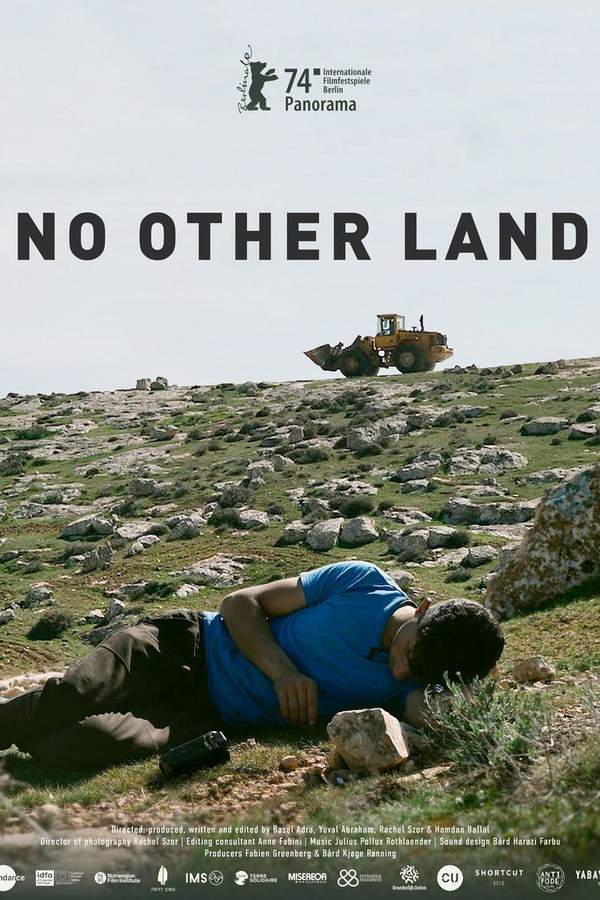
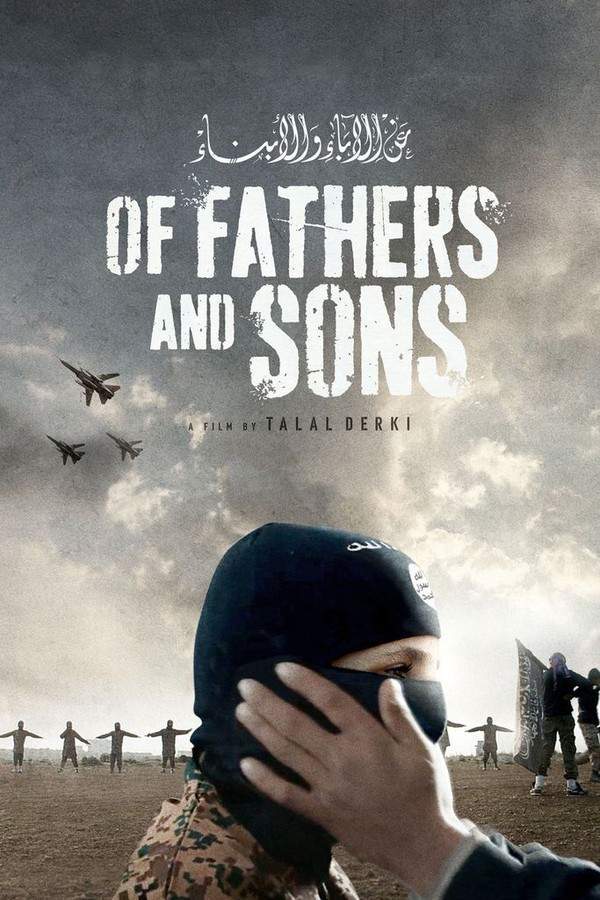
Bleak Movies Like Naza That Turn Evidence Into Grief

Procedural inquiry gradually yields to grief, horror, and a shattering sense of responsibility. Find movies like Naza with slow, complex structures that move from procedural observation to devastating personal testimony. If you liked Naza's bleak atmosphere and unresolved moral weight, these similar films use archival fragments, stark images, and survivor accounts to expose civilian loss and deepen emotional distress.

  • procedural detachment
  • grief
  • moral anguish
  • slow burn
  • unsettling
  • bleak reflection
  • Tone: bleak, somber, emotionally draining
  • Pacing: slow, contemplative, escalating
Why these movies?

The story pattern: The pattern starts with restraint: nightbound observation, anonymized speakers, archival material, or detached explanation. As the narrative connects these fragments, the scale of suffering becomes personal; controlled analysis gives way to horror, mourning, and condemnation, often ending with searching or loss rather than closure.

Why they belong together: The defining shared experience is not action but accumulation. Slow pacing, bleak tone, complex evidence, and heavy emotional content turn inquiry into an ordeal, with the audience's initial unease deepening into grief and moral condemnation.

Every angle

NAZA (2026) Explained: Plot, Timeline & Characters

Everything about NAZA in one place: what happens in the plot summary, the timeline in chronological order, the characters and meaning and a spoiler-free summary. What's After the Movie adds the cast, box office and post-credit scenes.

Coming soon on iOS and Android

The Plot Explained Movie Summary App

Plot summaries, endings explained and timelines on your phone. Catch up on any movie in minutes, save your favorites and never miss a twist again.

Be the first to know when we launch. Your email stays private, always.

Learn more about the app