Plot Explained Spoilers guaranteed!
Plot Explained

Browse by genre

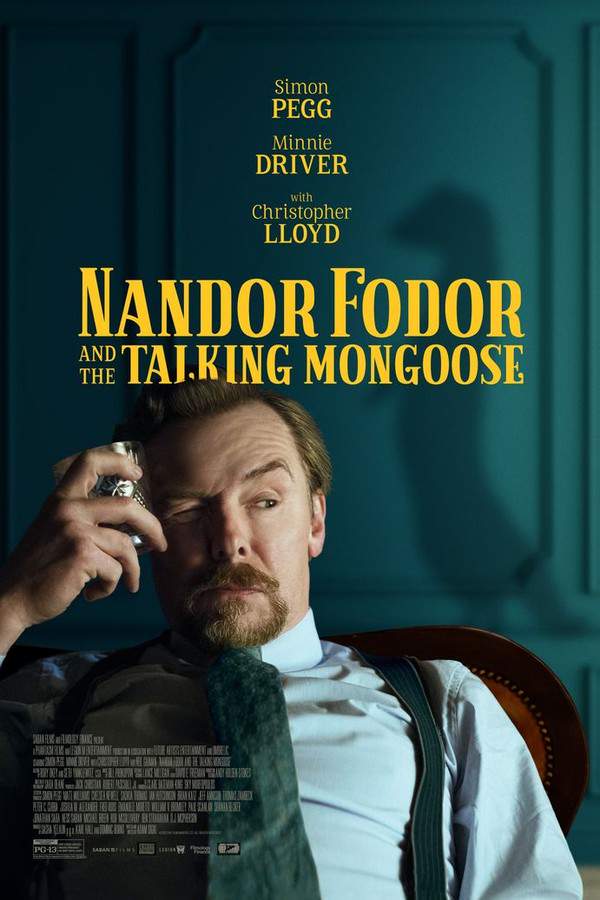
Nandor Fodor and the Talking Mongoose (2023) movie poster

Plot Summary

Nandor Fodor and the Talking Mongoose (2023) Plot Summary & Ending Explained

Release, runtime and language
2023 · 96 min · English
Echo score 60
Loading streaming availability…
Directed by
Adam Sigal
Starring
Simon Pegg, Gary Beadle, Minnie Driver, Neil Gaiman, Christopher Lloyd, Paul Kaye

In 1935 London, the respected paranormal investigator Dr. Nandor Fodor is called in to examine a perplexing phenomenon: a talking mongoose. As he investigates, he finds himself drawn into a complicated case filled with hidden agendas and baffling clues. His pursuit of the truth becomes an all-consuming obsession, leading him down a path of unexpected revelations and challenging his understanding of the supernatural.

On this page (7)
  1. 1 Where to watch
  2. 2 What happens: full plot
  3. 3 Plot questions answered
  4. 4 How it ends
  5. 5 Movie threads
  6. 6 Categories
  7. 7 Every angle
Loading streaming availability…

Full plot summary · contains spoilers

What Happens in Nandor Fodor and the Talking Mongoose: Full Plot Summary

The whole story of Nandor Fodor and the Talking Mongoose (2023) explained, from the opening scene to the final frame: every key event, every twist and what it all adds up to. Read it as a quick recap before the sequel, to check a scene you missed, or to finally understand what really happened.

Renowned parapsychologist Nandor Fodor embarks on a mystical journey to the Isle of Man, accompanied by his trusted assistant, Anne. Their mission? To unravel the captivating case of Gef, the talking mongoose, which has stirred both intrigue and skepticism among the locals. Despite its elusive nature, reports about Gef’s extraordinary capabilities have captured the attention of many, with claims of its ability to predict the future, recite poetry, and even conduct telephone conversations, leaving those who encounter it in sheer amazement. However, doubt shrouds this phenomenon as rumors swirl regarding the potential influence of Voirrey Irving, the merchant's daughter, whose exceptional ventriloquism skills cast shadows on Gef’s purported abilities.

As Fodor and Anne dive deeper into the enigma, they meet various residents who wholeheartedly believe in the existence of Gef, despite the lack of substantial visual evidence. Instead, many recount auditory experiences where they claim to have heard the mongoose's voice whispering mysterious messages or reciting verses. These occurrences often unfold on the edges of their awareness—transient glimpses of a furry figure darting out of sight just as quickly. This quest for truth transforms into a profound exploration, as Fodor and Anne navigate the complex realms of the paranormal, seeking to decipher the truth behind Gef's enigmatic presence on the Isle of Man.

Fodor's skepticism is further challenged when a casual remark from Errol stating, > "there's no Gef," leads to an unsettling late-night phone call from the very entity they seek. The disembodied voice eerily echoes the last words Fodor’s father whispered during their goodbye in Hungary, > "I shall never see you again," before ominously promising that Gef will reveal itself the next day. During a gathering arranged by Mr. Irving in his barn, a fleeting sighting of brownish fur peeks out from a wooden box, only to vanish as quickly as it appeared. Frustration mounts for Fodor as he suspects Errol's complicity in a potential ruse orchestrated by the Irvings. In a philosophical response, Errol suggests that "everybody wants to be happy" and perhaps Fodor would find peace if he allowed others their beliefs.

As the night wears on, Fodor's pent-up frustration erupts, leading him to barge into the barn where Gef was believed to have appeared. However, Errol’s quick action with an iron bar leaves Fodor dazed and ultimately locked in a police cell, unable to contact anyone for help. Haunted by Gef's taunting voice, Fodor is confronted with his father's last cryptic words: > "What if there is nothing after this, no Heaven, no Hell, just nothing?" In desperation, Fodor urges Gef to validate its reality by leaving a mark on his hand. The resulting "little scratch" manifests as three jagged gashes, igniting feelings of gratitude and catharsis within him.

Upon their return to London, Anne tentatively suggests that Fodor should consider the possibility of Gef’s existence. Yet, Fodor remains steadfast in his intent to write an honest, non-judgmental account of the mysterious events that unfolded at the Irvings’ farm. Through this experience, he has come to appreciate the intrinsic human desire to be remembered. A poignant visit to his father's resting place compels Fodor to confront the intricate layers of their relationship and the painful circumstances of their parting, signaling a crucial juncture in his emotional growth.

As the credits roll, viewers are treated to a nostalgic nod to the 1936 book, The Haunting of Cashen's Gap: A Modern "Miracle" Investigated by Harry Price and Richard S. Lambert, enhanced by a series of historical photographs. This serves as a touching reminder of the film's rich legacy and intellectual backdrop. The credits then shift to a wry acknowledgment from the producers, cast, and crew, expressing gratitude to the myriad individuals and, in a delightful twist, mongooses, who contributed to "Gef's army." Yet, amidst this grateful chorus, one conspicuously omitted name draws attention—a pointed message purposely eluding acknowledgment.

As the credits conclude, a post-credits scene reveals a surprise gathering of the film's key actors, including Ruth Connell, Tim Downie, Gary Beadle, Paul Kaye, Christopher Lloyd, and Simon Pegg. In a whimsical turn, each cast member humorously critiques the director, Adam Sigal, leading to a playful concluding remark: > "Adam, in all seriousness... you suck."
Last updated: November 17, 2024 at 21:15

Was this helpful?

Plot questions answered

Nandor Fodor and the Talking Mongoose Plot Explained: Your Questions Answered

The questions people ask most about Nandor Fodor and the Talking Mongoose (2023): what happens in the confusing scenes, why the characters do what they do, the twists, hidden details and what the ending means. Each answer contains spoilers.

Q1

Why does Gef echo Nandor Fodor's father's last words?

During the late-night phone call, Gef repeats the exact phrase Fodor's father whispered before leaving Hungary: "I shall never see you again." This uncanny connection suggests Gef has access to personal information it shouldn't know, which deeply unsettles Fodor. The moment blurs the line between possible hoax and genuine supernatural knowledge, as Gef seems to be targeting Fodor's specific emotional vulnerabilities.

  • gef
  • fodor father
  • phone call
  • supernatural
  • words
Q2

Is Gef the talking mongoose real or a hoax?

The film deliberately leaves this question unresolved. Evidence points both ways: Voirrey Irving possesses impressive ventriloquist skills that could explain Gef's voice, yet Fodor receives a mysterious phone call and later gets three scratches on his hand that he didn't inflict himself. The narrative suggests the truth may be less important than what people need to believe, reflecting the theme that "everybody wants to be happy."

  • gef real
  • hoax
  • ventriloquism
  • truth
  • mongoose
Q3

Why does Fodor get scratched by Gef in the police cell?

After being locked up and haunted by Gef's taunting voice, Fodor desperately demands proof of the mongoose's existence. He asks Gef to leave a mark on him, and three jagged gashes mysteriously appear on his hand. Fodor interprets this as validation and feels gratitude rather than fear, describing it as a form of catharsis. Whether this is supernatural or another elaborate trick remains ambiguous.

  • scratches
  • mark
  • police cell
  • catharsis
  • proof
Q4

Who is Voirrey Irving and why is she suspected of faking Gef?

Voirrey Irving is the daughter of merchant Mr. Irving, who owns the farm where Gef is reportedly seen. She is rumored to possess exceptional ventriloquism skills, which casts significant doubt on whether Gef's claimed abilities are genuine. Fodor suspects the Irving family may be orchestrating an elaborate ruse, possibly for attention or financial gain, though he never proves this conclusively.

  • voirrey irving
  • ventriloquist
  • hoax
  • irving family
Q5

What happens when Fodor confronts Errol in the barn?

Overcome with frustration over the lack of concrete evidence, Fodor barges into the barn where Gef was supposedly appearing. Errol, a local skeptic, strikes Fodor with an iron bar, leaving him dazed. Fodor is then locked in a police cell, isolated from Anne and unable to contact anyone. This violent confrontation escalates Fodor's obsession and leads directly to the pivotal police cell scene where he interacts with Gef.

  • barn
  • errol
  • iron bar
  • police cell
  • confrontation
Q6

Why does Fodor visit his father's grave at the end?

Fodor's journey to the Isle of Man is deeply connected to unresolved grief over his father, who died under painful circumstances in Hungary. The phone call where Gef echoes his father's last words triggers this emotional thread. At the film's end, Fodor visits his father's grave to confront their complex relationship and the painful circumstances of their goodbye, achieving significant personal growth and emotional resolution.

  • father
  • grave
  • grief
  • hungary
  • emotional journey
Q7

What is the significance of the scratches on Fodor's hand?

The three jagged gashes represent the core of Fodor's emotional transformation. After months of investigating paranormal claims without finding proof, Fodor desperately needs something tangible to believe in. The scratches fulfill this psychological need - regardless of their true origin, they provide him with a sense of validation and connection to something beyond the rational world. He describes feeling gratitude and catharsis, suggesting the experience offered him closure regardless of whether Gef is real.

  • scratches
  • belief
  • validation
  • catharsis
  • transformation
Q8

Why does Errol say there's no Gef and then receive a phone call from it?

Errol is established as a skeptic who openly dismisses the Gef phenomenon as nonsense, publicly stating "there's no Gef." This makes the subsequent late-night phone call from Gef particularly unsettling - the entity seemingly responds to Errol's denial by contacting him directly. The call mirrors the words Errol spoke, suggesting Gef has been listening and can target anyone who challenges its existence, whether skeptic or believer.

  • ervol
  • skepticism
  • phone call
  • denial
Q9

What does Anne suggest to Fodor after they return to London?

Upon returning to London, Anne tentatively suggests that Fodor should consider the possibility that Gef might actually exist. This represents a shift from her earlier skepticism, as the mysterious events have affected her perspective too. However, Fodor remains committed to writing an honest, non-judgmental account of the case, indicating he values truth-telling over personal belief systems, even as he grapples with his own need for validation.

  • anne
  • london
  • belief
  • honest account
Q10

What abilities is Gef the mongoose claimed to have?

Local residents claim Gef possesses extraordinary supernatural abilities, including predicting the future, reciting poetry, and conducting telephone conversations. These reported talents have generated both intrigue and skepticism on the Isle of Man. However, most encounters are auditory rather than visual - people hear the mongoose's voice whispering or reciting verses, but very few actually see the creature itself, feeding into the mystery of whether Gef truly exists or is merely an elaborate auditory illusion.

  • predictions
  • poetry
  • telephone
  • abilities
  • auditory
Q11

Why does Fodor become so obsessed with the Gef case?

Fodor's obsession goes beyond professional curiosity. The case triggers unresolved personal trauma - his father's death and the painful goodbye they never properly completed. When Gef echoes his father's final words, it creates a powerful emotional connection that makes the investigation deeply personal. His pursuit of Gef becomes intertwined with his need to find meaning and closure, transforming a professional investigation into a quest for personal catharsis.

  • obsession
  • father
  • grief
  • personal
  • trauma
Q12

What does Fodor's father mean by 'what if there is nothing after this'?

While being haunted by Gef's voice in the police cell, Fodor recalls his father's cryptic final question: "What if there is nothing after this, no Heaven, no Hell, just nothing?" This philosophical query represents Fodor's deepest fear - that death is final and there is no supernatural dimension where the dead can communicate with the living. Gef's apparent ability to echo these words creates a paradox: if Gef can channel the dead, perhaps there IS something after death, which offers Fodor hope even as he questions whether Gef is real.

  • father
  • death
  • heaven
  • hell
  • nothing
  • philosophical

Ending explained

What Happens at the End of Nandor Fodor and the Talking Mongoose?

How Nandor Fodor and the Talking Mongoose (2023) ends, in short: the final scene, the last twist and what it means for the characters. The full ending explained, with every spoiler, lives on its own page.

Read the full ending explained

The ending of Nandor Fodor and the Talking Mongoose suggests that the entire myth of Gef, the talking mongoose, was a carefully constructed hoax. Throughout the story, Dr. Fodor investigates the claims by visiting the Isle of Man, talking to villagers, and observing the supposed presence of Gef. Despite numerous stories and alleged encounters, no concrete evidence emerged that Gef truly existed. The villagers and the Irving family all believed in Gef’s existence, but it was primarily through stories, hearsay, and Voirrey Irving’s ventriloquist skills that the voice was produced. When Fodor and his team searched for Gef in the caves, it was clear that the mongoose was nowhere to be found, and the physical evidence pointed to deception.

In a dramatic climax, Fodor breaks open the box where Gef was supposedly kept, only to find it empty. This confirms his suspicion that Gef was a fabrication. When he is detained and locked in a cell, he still hears Gef’s voice, which now underscores that the voice was likely coming from Voirrey, hidden behind the walls, using her ventriloquism. The film hints at the idea that the truth was manipulated by the Irvings to leave a legacy or to give their lives a sense of purpose by creating a myth that captivated the villagers and the outside world.

Continue reading the ending (1 more paragraphs)

Fodor's reflections upon the case suggest that reality is highly subjective—people create their own truths based on their perceptions. The Irvings' deception ultimately served a purpose: to establish a legacy, a belief that could give meaning to their lives. The film leaves viewers contemplating whether what you perceive as real is truly so, or if reality is merely what you choose to believe. It’s a story that challenges the idea of objective truth and highlights how stories or lies can become powerful enough to shape reality for those involved. In the end, the talking mongoose was simply a clever illusion, and the story behind it was an elaborate lie motivated by a desire for recognition and remembrance.

Nandor Fodor and the Talking Mongoose ending explained in full

Movie threads

More Movies Like Nandor Fodor and the Talking Mongoose, by Mood & Story

Curated lists built around what makes Nandor Fodor and the Talking Mongoose tick: the same mood, the same kind of story or the same emotional payoff. Each list explains why these movies belong together.

Whimsical Skeptical Investigations like Nandor Fodor and the Talking Mongoose

Eccentric characters investigate inexplicable phenomena with a mix of curiosity and doubt. If you enjoyed the quirky investigation in Nandor Fodor and the Talking Mongoose, you'll like these movies. This list features other films where eccentric characters explore unexplained phenomena with a blend of curiosity, skepticism, and charm, blending mystery with character-driven storytelling.

  • quirky
  • investigative
  • mysterious
  • uncanny
  • skeptical
  • contemplative
  • Tone: whimsical, mysterious, contemplative
  • Pacing: steady, investigative
Why these movies?

The story pattern: Stories in this thread typically center on a peculiar central mystery that challenges rational explanation. A protagonist, often a skeptic or academic, is drawn into the case, and their investigation unfolds at a steady pace, revealing hidden human dramas and psychological complexities more than supernatural threats. The journey is as much about the investigator's personal growth or obsessions as it is about solving the puzzle.

Why they belong together: These films are grouped together because they share a unique blend of a whimsical, offbeat tone with a sincere investigative plot. They mix light humor and quirky characters with a contemplative, mysterious atmosphere, creating a distinct viewing experience that is intellectually engaging without being overly intense.

Bittersweet Journeys of Obsession like in Nandor Fodor and the Talking Mongoose

Characters consumed by a personal quest find profound, ambiguous truths. Movies like Nandor Fodor and the Talking Mongoose that explore the bittersweet nature of obsession. If you liked Fodor's poignant quest for truth, these films feature similar character-driven stories where a personal investigation leads to emotional revelations and ambiguous, thought-provoking conclusions.

  • obsessive
  • reflective
  • contemplative
  • bittersweet
  • poignant
  • psychological
  • Tone: reflective, bittersweet, poignant
  • Pacing: steady, character-driven
Why these movies?

The story pattern: The narrative pattern follows a protagonist who becomes fixated on solving a mystery or proving a theory, often as a way to process a personal loss or trauma. The plot is moderately complex, driven by the character's internal conflict as much as by external clues. The climax usually involves a revelation about human nature or a personal catharsis, but the central mystery may remain unresolved, leaving the protagonist—and the audience—with a mix of peace and lingering questions.

Why they belong together: These movies are united by their focus on a protagonist's psychological obsession and the emotionally complex, bittersweet payoff. They share a medium emotional weight, a contemplative mood, and an ending that prioritizes character growth and thematic resonance over clear-cut solutions.

Categories

Movie Lists Featuring Nandor Fodor and the Talking Mongoose

Nandor Fodor and the Talking Mongoose appears in these hand-built movie categories. Each one groups movies by a specific mood, theme or story type, with their plot summaries and endings explained.

View all movie categories

Every angle

Nandor Fodor and the Talking Mongoose (2023) Explained: Plot, Ending, Timeline & Characters

Everything about Nandor Fodor and the Talking Mongoose in one place: what happens in the plot summary, the timeline in chronological order, the characters and meaning, the ending explained and a spoiler-free summary. What's After the Movie adds the cast, box office and post-credit scenes.

Coming soon on iOS and Android

The Plot Explained Movie Summary App

Plot summaries, endings explained and timelines on your phone. Catch up on any movie in minutes, save your favorites and never miss a twist again.

Be the first to know when we launch. Your email stays private, always.

Learn more about the app