










Plot Explained Spoilers guaranteed!
Plot Explained

Browse by genre

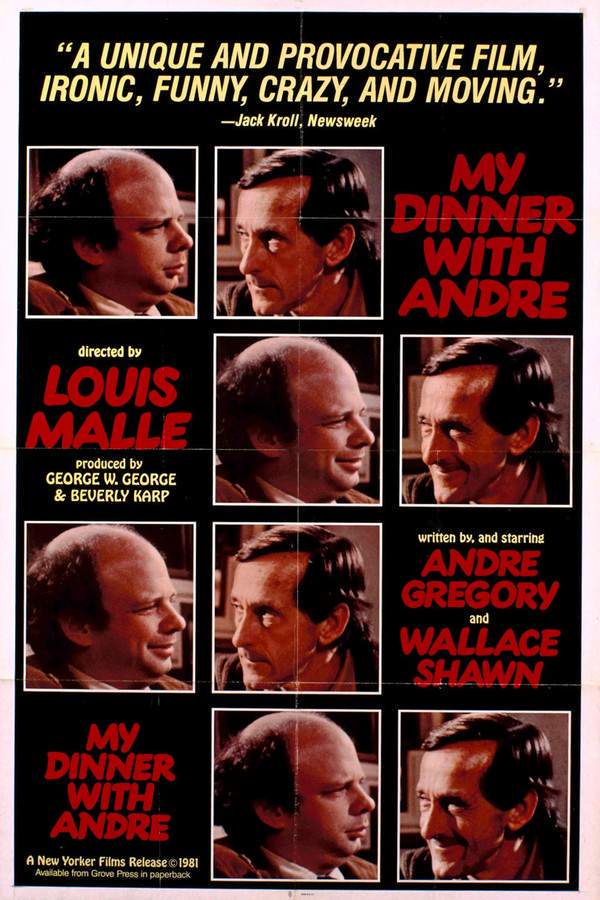
My Dinner with Andre (1981) movie poster

Timeline

My Dinner with Andre (1981) Timeline Explained – Every Event in Order

Release, runtime and language
1981 · 110 min · English
JustWatch #7,982 4
Directed by
Louis Malle
Starring
Wallace Shawn, Andre Gregory, Jean Lenauer, Roy Butler

Two longtime friends, Wallace and Andre, reconnect for an intimate dinner after a five-year separation. Andre, formerly a prominent figure in New York's theater world, has spent those years traveling extensively. Wallace, conversely, has stayed in New York and continues to work as a playwright. During their meal, Andre shares captivating stories from his global adventures, revealing differing perspectives and prompting a thoughtful examination of the choices that have defined their individual paths.

On this page (6)
  1. 1 Where to watch
  2. 2 Events in order (12)
  3. 3 Timeline questions answered
  4. 4 Movie threads
  5. 5 Movies like My Dinner with Andre
  6. 6 Every angle

Where to watch

Where to Watch My Dinner with Andre (1981)

Where can you watch My Dinner with Andre? Stream, rent or buy it in the US, including on HBO Max, Plex and Tubi TV: current JustWatch availability with up-to-date prices.

Streaming availability powered by JustWatch

12 events in order · contains spoilers

My Dinner with Andre Timeline: Events in Chronological Order

Every key event of My Dinner with Andre (1981) in order, scene by scene, with when and where it takes place. Use it to untangle flashbacks, time jumps and parallel storylines, to refresh your memory before the sequel or to find the exact scene you are thinking of.

  1. Wally Prepares for Dinner

    Wally, a struggling playwright, is filled with anxiety as he gets ready for a dinner with his old friend Andre. The anticipation of rekindling their friendship after so long brings a mix of dread and curiosity about what Andre has experienced during their time apart.

    When
    Late 1970s
    Where
    New York restaurant
  2. Andre's Spiritual Journey

    Andre shares his extensive spiritual journey since stepping away from his theater career in 1975. His experiences include explorations into eastern spirituality, synchronicity, and a life-altering near-death experience that changed his perspective on existence.

  3. Recollections of Poland

    While dining, Andre recounts his time working with notable director Jerzy Grotowski and Polish actors in the serene woods of Poland. These memories highlight the artistic and emotional depth of his past involvement in theater, setting a stark contrast with Wally's current struggles.

    Where
    Poland
  4. Adventures in the Sahara

    Andre talks about his journey to the Sahara where he aimed to create a play inspired by The Little Prince by Saint-Exupéry. This anecdote showcases his adventurous spirit and commitment to art, which is a divergence from the conventional paths that Wally feels trapped by.

    Where
    Sahara
  5. Findhorn Exploration

    Another significant part of Andre's journey was his time spent at Findhorn in Scotland. This exploration into spiritual living provided him insights that he deems essential for true human existence, challenging Wally's understanding of life's meaning.

    Where
    Findhorn, Scotland
  6. Halloween Experiences

    Andre shares a particularly memorable experience where he organized Halloween-themed activities with friends, including an unusual event where participants were buried alive. This shocking recount illustrates the extremes Andre is willing to explore in his search for genuine experience.

  7. Contrasting Worldviews

    As the conversation flows, Wally expresses skepticism about Andre's lifestyle, believing it to be unattainable for the average person. He finds happiness in simple pleasures, providing a stark contrast to Andre's adventurous, albeit tumultuous, experiences.

  8. Warning Against Complacency

    Andre cautions Wally against an excessive focus on comfort, arguing that such an approach could lead to complacency. He describes what many see as a 'normal' life as merely a dream, alluding to deeper existential questions that provoke Wally's thoughts.

    When
    Late 1970s
  9. Honest Dialogue

    Regardless of their differing views, Wally and Andre engage in an open and honest dialogue throughout the dinner. Their conversation allows both perspectives to coexist, enriching their understanding of each other’s lives and beliefs despite their contrasting lifestyles.

    Where
    New York restaurant
  10. Parting Ways

    As the night draws to a close and the restaurant begins to empty, Wally and Andre part ways on friendly terms. Andre graciously pays the dinner tab, emphasizing the bond they still share despite their differing life choices.

    When
    Late 1970s
    Where
    New York restaurant
  11. Taxi Ride Home

    Wally takes a taxi ride home, reflecting on the profound connection he felt during his conversation with Andre. The familiar sights of the city evoke a sense of nostalgia and contemplation about his own life choices.

    When
    Late 1970s
    Where
    New York City
  12. Sharing Insights with Girlfriend

    Upon arriving home, Wally eagerly shares the highlights and insights from his dinner with Andre with his girlfriend. This moment underscores the impact of their discussions, illustrating how impactful connections can inspire thought and reflection.

    Where
    Wally's home

Last updated: November 16, 2024 at 17:00

Was this helpful?

Timeline questions answered

My Dinner with Andre Timeline Explained: Your Questions Answered

When does it happen, and why in that order? The questions people ask about the chronology of My Dinner with Andre (1981): time jumps, flashbacks, cause and effect between scenes and the correct order of events, each answered with spoilers.

Q1

Why is Wally nervous about having dinner with Andre?

Wally feels anxious about the dinner because he hasn't seen Andre in five years and knows Andre has undergone a dramatic life transformation during that time. He anticipates that their diverging life paths, Andre's spiritual adventures versus Wally's conventional New York existence, will create an uncomfortable contrast. This dread stems from Wally's uncertainty about how to relate to a friend who has seemingly rejected the lifestyle Wally has chosen.

  • wally
  • andre
  • dinner
  • anxiety
  • friendship reunion
Q2

Why did Andre leave his theater directing career in 1975?

Andre left his successful theater career in New York because he felt trapped in what he describes as a mundane, sleepwalking existence. He wanted to awaken from his comfortable life and discover what it truly means to be human through spiritual exploration and extreme experiences. This decision marked a complete departure from his previous identity as a prominent theater director.

  • andre
  • career change
  • theater
  • grotowski
  • spiritual journey
Q3

What happened during Andre's near-death experience?

Andre briefly describes a life-altering near-death experience that fundamentally changed his perspective on existence. While the specific details aren't fully explained in the film, this pivotal moment convinced him that conventional living was insufficient and propelled him into his extensive spiritual quest. The experience became a turning point that validated his decision to leave his former life.

  • andre
  • near death
  • spiritual awakening
  • transformation
Q4

What is synchronicity that Andre mentions during dinner?

Synchronicity is a concept from psychologist Carl Jung describing meaningful coincidences that appear to be causally unrelated but hold deep personal significance. Andre uses this concept to explain how his spiritual journey revealed connections between events that seemed random, suggesting the universe operates on patterns beyond ordinary understanding. This philosophy underpins much of Andre's worldview during his travels.

  • synchronicity
  • jung
  • meaningful coincidences
  • spirituality
Q5

Why does Wally think Andre's lifestyle is unattainable?

Wally counters Andre's adventures by pointing out that most people cannot simply abandon their responsibilities to travel the world seeking spiritual enlightenment. He finds joy in accessible pleasures like a hot cup of coffee and a new electric blanket, arguing that genuine happiness doesn't require extreme measures or abandoning normal life. This represents the core tension between Andre's philosophical searching and Wally's pragmatic contentment.

  • wally
  • andre
  • lifestyle contrast
  • practical vs spiritual
  • comfort
Q6

What was Findhorn that Andre mentions in Scotland?

Findhorn is a famous intentional community in Scotland known for its experimental approach to spiritual living and organic gardening. Andre spent time there as part of his spiritual exploration, drawn by its reputation as a hub for people seeking alternative lifestyles and deeper meaning. The community represents one of the specific destinations Andre visited during his five-year journey away from conventional society.

  • findhorn
  • scotland
  • spiritual community
  • intentional living
Q7

Why does Andre warn Wally about complacency?

Andre warns that excessive focus on comfort and routine can lead to dangerous complacency, a kind of spiritual death where one exists without truly living. He suggests that what most people consider a normal, comfortable life in New York during the late 1970s is actually a kind of dream state. This warning reflects Andre's belief that security and comfort can become traps that prevent genuine human experience.

  • andre
  • warning
  • complacency
  • comfort trap
  • spiritual death
Q8

What does Andre mean when he says normal life is just a dream?

Andre suggests that people living conventional, comfortable lives are essentially sleepwalking through existence without genuine awareness. He views the routines of everyday life, careers, relationships, material comfort, as illusions that distract from true reality and authentic experience. This philosophical position justifies his extreme departure from his former life and explains his criticism of Wally's contentment with simple pleasures.

  • reality
  • dream
  • awakening
  • authenticity
  • conventional life
Q9

Why does Wally take a taxi at the end instead of the subway?

After his profound conversation with Andre, Wally chooses to take a taxi home instead of the subway, a small luxury that represents his newfound appreciation for his familiar world. The taxi ride allows him to observe the city streets he usually rushes through, and he feels a deeper connection to the ordinary beauty of New York. This moment suggests that Andre's challenging perspective has actually strengthened Wally's relationship with his own chosen life.

  • wally
  • taxi
  • new york
  • reflection
  • reconnection
Q10

What was the buried alive Halloween experience Andre describes?

Andre recounts organizing a Halloween gathering where participants agreed to be briefly buried alive as an extreme form of experiential exploration. This shocking activity illustrates how far Andre was willing to go in his quest for genuine, transformative experiences. The anecdote serves as a vivid example of the extremes Andre embraced to break free from conventional existence.

  • andre
  • halloween
  • buried alive
  • extreme experience
  • spiritual quest
Q11

What is the significance of Wally's electric blanket?

The electric blanket represents Wally's simple pleasure in material comfort and his contentment with ordinary life. When he mentions enjoying his new electric blanket, he's contrasting his modest joys with Andre's dramatic spiritual adventures. This mundane object becomes a symbol of the lifestyle choices Wally has made and his resistance to Andre's suggestion that such comfort is spiritually bankrupt.

  • wally
  • electric blanket
  • comfort
  • simple pleasures
  • lifestyle choice

Movie threads

More Movies Like My Dinner with Andre, by Mood & Story

Curated lists built around what makes My Dinner with Andre tick: the same mood, the same kind of story or the same emotional payoff. Each list explains why these movies belong together.

Movies with Philosophical Dialogues like My Dinner with Andre

Films built around deep, philosophical discussions that unfold in a single location. If you liked the conversational depth of My Dinner with Andre, explore other movies built around intellectual discourse. These films often feature characters engaging in meaningful debate in confined settings, exploring themes of existence, art, and human connection with a thoughtful, dialogue-driven pace.

  • conversational
  • thought-provoking
  • intellectual
  • philosophical
  • reflective
  • dialogue-heavy
  • Tone: neutral, reflective, philosophical
  • Pacing: slow, deliberate, conversational
Why these movies?

The story pattern: The narrative pattern in these films revolves around a contained encounter, often in real-time or over a short period, where characters engage in a substantive exchange of ideas. Conflict is typically intellectual rather than physical, leading to character revelation and a shifted perspective by the end.

Why they belong together: Movies are grouped here for their shared core structure: a deep, meandering conversation is the primary plot engine. They share a reflective mood, low intensity, and a focus on intellectual stimulation and philosophical inquiry over traditional narrative action.

Reflective Character-Driven Movies like My Dinner with Andre

Stories where characters reconnect and examine their life paths through shared experience. Discover movies like My Dinner with Andre that offer a quiet, thoughtful look at human connection. These character-driven stories often involve reunions or deep conversations, exploring existential themes with a steady pace and a focus on emotional and intellectual resonance rather than high drama.

  • reflective
  • introspective
  • thoughtful
  • intimate
  • philosophical
  • character-driven
  • Tone: neutral, thoughtful, intimate
  • Pacing: slow, character-driven, steady
Why these movies?

The story pattern: These narratives often follow characters reuniting or engaging in a shared experience that prompts a re-examination of their lives. The journey is internal and conversational, leading to a renewed sense of understanding, acceptance, or quiet hope, rather than a dramatic climax.

Why they belong together: This group shares a specific vibe: a calm, intellectually-stimulating atmosphere where the central drama is the exploration of personal philosophies and relationships. They are united by a moderate emotional weight, a neutral-to-hopeful tone, and a pacing that favors reflection over action.

If you liked this

Movies Like My Dinner with Andre

Similar movies to My Dinner with Andre: the same genre, themes or kind of story. Each one comes with its own plot summary, timeline and ending explained.

Browse all movie summaries

Every angle

My Dinner with Andre (1981) Explained: Plot, Timeline & Characters

Everything about My Dinner with Andre in one place: what happens in the plot summary, the timeline in chronological order, the characters and meaning and a spoiler-free summary. What's After the Movie adds the cast, box office and post-credit scenes.

Coming soon on iOS and Android

The Plot Explained Movie Summary App

Plot summaries, endings explained and timelines on your phone. Catch up on any movie in minutes, save your favorites and never miss a twist again.

Be the first to know when we launch. Your email stays private, always.

Learn more about the app