Plot Explained Spoilers guaranteed!
Plot Explained

Browse by genre

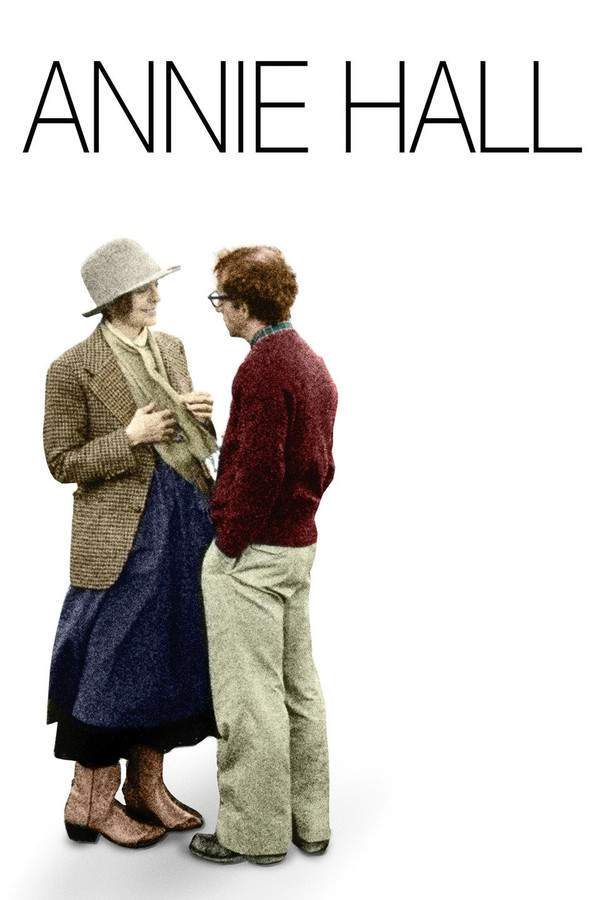
Annie Hall (1977) movie poster

Plot Summary

Annie Hall (1977) Plot Summary Explained

Release, runtime and language
1977 · 1 h 33 m · English
Starring
Diane Keaton, Woody Allen, Christopher Walken, Shelley Duvall, Carol Kane, Martin Rosenblatt
Budget
$4M

A quirky and insightful comedy, the film follows a neurotic playwright and his relationship with Annie Hall, a charming and free-spirited aspiring singer. Their romance begins as a whirlwind adventure, but as they navigate the complexities of love and life in New York City, Woody’s anxieties and insecurities begin to challenge their connection and ultimately impact their future together.

On this page (6)
  1. 1 Where to watch
  2. 2 What happens: full plot
  3. 3 Plot questions answered
  4. 4 Movie threads
  5. 5 Movies like Annie Hall
  6. 6 Every angle

Where to watch

Where to Watch Annie Hall (1977)

Where can you watch Annie Hall? Stream, rent or buy it in the US, including on Hoopla, Kanopy and Fandango at Home Free: current JustWatch availability with up-to-date prices.

Streaming availability powered by JustWatch

Full plot summary · contains spoilers

What Happens in Annie Hall: Full Plot Summary

The whole story of Annie Hall (1977) explained, from the opening scene to the final frame: every key event, every twist and what it all adds up to. Read it as a quick recap before the sequel, to check a scene you missed, or to finally understand what really happened.

The tumultuous journey of Alvy Singer, played by Woody Allen, revolves around his attempts to comprehend the end of his relationship with Annie Hall, portrayed by Diane Keaton, a year after their separation. Growing up in the vibrant streets of New York, Alvy perplexed his mother, Joan Newman, with profound queries about life's inherent emptiness while exhibiting a precocious and innocent curiosity about sexuality. At nearly 40 years old, Alvy is fundamentally a pessimist, believing that life is filled with suffering and that after all the turmoil, it concludes far too swiftly.

As a child, he experienced deep melancholy upon realizing the Universe's expansion, fearing it would eventually lead to total annihilation. Living beneath the roller coasters of Coney Island, his upbringing under the watchful eye of his father, Mordecai Lawner, who helmed the bumper car section, contributed to his anxious demeanor. With subpar teachers and far less intelligent peers, Alvy's early encounters with love began at the tender age of six, where he glimpsed a healthy sexual curiosity.

In a poignant scene, while in line for a Bergman film, Alvy and Annie encounter a man who misinterprets the thoughts of media theorist Marshall McLuhan. Interestingly, McLuhan himself intervenes to clarify the confusion. During this moment, Annie's mood sours, and Alvy becomes increasingly self-absorbed. She perceives Alvy as deeply egotistical, interpreting events solely through the lens of how they impact him. Assuming that her bad mood results from a hormonal change, Alvy navigates through their rift—with their intimacy and communication faltering.

That night, what starts as a discussion about Alvy's first wife, Allison, played by Carol Kane, quickly delves into the deficiencies of their past sexual experiences—where Alvy was more intrigued by the political discussions of the time than by Allison herself. Further reflecting on his past, Alvy shares his second marriage to a New York intellectual, which lacked pleasure as Alvy's focus drifted to basketball rather than their marital bond.

With Annie, however, things take a different turn. The two share joyful moments, like preparing a meal of boiled lobster, where Alvy playfully ridicules Annie's quirky past relationships—like Dennis, her high school beau, and Jerry, the actor with an affinity for cliched artistic dialogue, whom Annie finds off-putting.

Their romance blossoms on the tennis court after what seemed like awkward banter transforms into an enticing flirtation over a glass of wine. Following Annie's audition that sees her crooning "It Had to be You," their first date takes unexpected turns. Alvy urges a kiss as a mere formality, only to find himself overwhelmed after their passionate encounter. While Alvy grapples with his emotions, Annie effortlessly lounges with a joint post-lovemaking, adding layers to their relationship.

As they navigate through the intricacies of love, Alvy soon realizes Annie's admission of love comes with its own set of complications, like the tension arising from his need for her to pursue education, leading her to feel underestimated. Unbeknownst to them, a visit to her family in Chippewa Falls, Wisconsin, entails a cultural disconnect, particularly with her grandmother’s outdated views.

Through a tide of struggles, including a miscommunication that finds Alvy confronting Annie about her newfound closeness with a college professor, he searches for external validation about love, even requesting insight from random strangers. This culminates in a playful yet tragic dynamic, as their relationship reaches an inevitable conclusion filled with neuroses and disappointing encounters.

Despite attempts at rekindling the flame, including a desperate marriage proposal after losing her to a record producer, the separation becomes palpable. Alvy's attempts to reframe their story culminate in a play that presents an altered ending, showcasing the complexity of love—its necessity, even when clouded by neurosis. The film closes on a wistful note on New York's Upper West Side, capturing the essence of love as Annie performs “Seems Like Old Times”, leaving audiences with a profound reflection on the nature of relationships and the bittersweet memories they leave behind.

Last updated: October 24, 2024 at 09:24

Was this helpful?

Plot questions answered

Annie Hall Plot Explained: Your Questions Answered

The questions people ask most about Annie Hall (1977): what happens in the confusing scenes, why the characters do what they do, the twists, hidden details and what the ending means. Each answer contains spoilers.

Q1

Why is Alvy so obsessed with the universe expanding?

As a child, Alvy became deeply troubled after learning that the universe is constantly expanding. This realization filled him with existential dread, fearing that the expansion would eventually lead to total annihilation. This childhood anxiety set the tone for his lifelong pessimism and anxious worldview, which fundamentally shapes his personality and relationships throughout his life.

Foreshadowing: This childhood fear foreshadows Alvy's adult belief that life is filled with suffering and ends too quickly.

  • alvy singer
  • childhood
  • universe
  • anxiety
  • existentialism
Q2

Why does Annie feel underappreciated by Alvy?

Annie feels underappreciated because Alvy repeatedly pressures her to pursue her education, which she interprets as him wanting to change her rather than accepting her as she is. While Alvy sees this as encouraging her intellectual growth, Annie experiences it as dismissiveness toward her current self and her aspirations as a singer. This tension between her need for acceptance and his desire for her to 'improve' creates significant friction in their relationship.

Foreshadowing: This dynamic begins early in their relationship when Alvy critiques her past relationships, showing his tendency to judge rather than simply accept.

  • annie hall
  • alvy singer
  • education
  • relationship problems
  • self-esteem
Q3

What happens with the Marshall McLuhan scene?

While waiting in line to see a Bergman film, Alvy and Annie encounter a man who incorrectly quotes media theorist Marshall McLuhan. When the man insists his interpretation is correct despite knowing nothing about McLuhan's actual work, Alvy impulsively pulls McLuhan himself out of a nearby crowd to settle the dispute. McLuhan confirms the man is wrong, but the real tension emerges when Annie's mood sours, she sees Alvy's intervention as showy and self-aggrandizing, while Alvy assumes her bad mood is hormonal.

Foreshadowing: This scene establishes the pattern of Alvy seeking external validation and misreading Annie's emotional states.

  • marshall mcluhan
  • bergman film
  • cinema scene
  • alvy behavior
Q4

Why does Alvy confront Annie about the college professor?

Alvy becomes jealous and insecure when Annie grows close to a college professor she meets. His confrontation stems from his deep-seated fear of abandonment and need for reassurance. Rather than communicating his feelings openly, Alvy's insecurity manifests as suspicion and accusation, pushing Annie further away. This miscommunication highlights how Alvy's anxieties sabotage his relationships.

Foreshadowing: Earlier scenes establish Alvy's pattern of misreading situations, assuming Annie is in a bad mood due to hormones rather than his own behavior.

  • college professor
  • jealousy
  • alvy singer
  • miscommunication
  • insecurity
Q5

Why does Alvy's visit to Chippewa Falls go badly?

When Annie takes Alvy to visit her family in Chippewa Falls, Wisconsin, the trip reveals fundamental cultural differences. Alvy struggles to connect with Annie's grandmother, who holds outdated views, and generally feels out of place in her suburban, Midwestern world. This visit exposes how fundamentally different their backgrounds are and foreshadows the challenges they'd face trying to build a life together.

Foreshadowing: The visit comes after Alvy has already criticized Annie's past relationships, showing his inability to bridge cultural gaps.

  • chippewa falls
  • family visit
  • cultural difference
  • alvy singer
  • wisconsin
Q6

Why does Annie leave Alvy for the record producer?

Annie leaves Alvy partly because she is drawn to a record producer who represents her chance at a music career, but more importantly, the relationship had become suffocating. Alvy's constant need for reassurance, his jealousy over the professor, and his pressure for her to pursue education (which she saw as criticism) created an environment where she felt constrained. The record producer offered her freedom and validation that Alvy couldn't provide.

Foreshadowing: Alvy's desperate marriage proposal after losing her to the producer shows his pattern of reacting too little, too late.

  • record producer
  • annie hall
  • breakup
  • career
  • alvy singer
Q7

What is Alvy's play about their relationship?

After losing Annie, Alvy creates a play that reimagines their relationship with an altered ending. This creative work reflects his inability to accept the relationship's demise and his need to rewrite the narrative. The play demonstrates how Alvy processes loss through fantasy and reconstruction rather than acceptance, showing his neuroses manifest in his creative output as a way of coping with emotional pain.

Foreshadowing: This directly connects to the film's opening, where Alvy discusses trying to understand the end of the relationship.

  • alvy play
  • theater
  • rewrite ending
  • acceptance
  • processing loss
Q8

What does the ending with Annie's performance mean?

The film ends with Annie performing "Seems Like Old Times" on New York's Upper West Side while Alvy watches from the audience. This bittersweet moment represents acceptance, he can appreciate her and the memories they shared without possessing her. The lyrics about old times capturing "the best of everything" reflect Alvy's evolved understanding: love can be meaningful even when it doesn't last, and cherishing the experience matters more than bitter resentment.

Foreshadowing: This ending completes Alvy's character arc from the opening, where he struggled to accept the relationship's end.
  • ending
  • annie performance
  • upper west side
  • acceptance
  • bittersweet
Q9

Why did Alvy's second marriage fail?

Alvy's second marriage to a New York intellectual failed because he showed no interest in their relationship, he was more focused on playing basketball than connecting with his wife. This reveals a pattern in Alvy's romantic life where intellectual or political discussions (as with his first wife Allison) distract him from genuine emotional intimacy. His inability to be present in relationships predates Annie.

Foreshadowing: This pattern continues with Annie, where his self-absorption and distraction undermine their connection.

  • alvy marriages
  • second wife
  • basketball
  • emotional distance
  • pattern
Q10

What does Annie's audition song signify?

Annie's audition where she sings "It Had to Be You" represents a pivotal moment in their relationship, it becomes the catalyst for their first date. The song's romantic title and sentiment capture the film's themes of fate and romantic longing. This moment marks the point where their connection transitions from casual encounter to genuine romantic pursuit, though even here Alvy initially hesitates to kiss her as a "formalities" before being overwhelmed.

Foreshadowing: The passionate kiss that follows establishes the intensity they'll experience, both the joy and the complications.

  • audition
  • it had to be you
  • first date
  • romantic turning point
  • annie hall

Movie threads

More Movies Like Annie Hall, by Mood & Story

Curated lists built around what makes Annie Hall tick: the same mood, the same kind of story or the same emotional payoff. Each list explains why these movies belong together.

Bittersweet Autopsy of a Relationship like in Annie Hall

Comedic and poignant explorations of why love stories fall apart. Find movies like Annie Hall that examine the end of a romance with a mix of sharp wit and poignant sadness. These films offer a thoughtful and often humorous look at why relationships fail, blending comedy with heartfelt emotion, perfect for viewers who enjoy reflective and intelligent love stories.

  • witty
  • melancholic
  • introspective
  • reflective
  • neurotic
  • romantic
  • Tone: bittersweet, reflective
  • Pacing: variable, character-driven
Why these movies?

The story pattern: These narratives often unfold through reflection, using flashbacks or direct address to deconstruct the relationship's timeline. They focus on character-driven conflicts, especially internal anxieties and incompatibilities, leading to an ending that is emotionally resonant and realistically bittersweet rather than purely tragic.

Why they belong together: Movies in this thread are grouped by their shared tone—blending comedy with melancholy—and their focus on the analytical, reflective process of understanding a breakup. They feature complex characters, witty dialogue, and a narrative structure that prioritizes emotional insight over plot-driven action.

Movies about Neurotic Intellectuals like in Annie Hall

Stories of anxious, overthinking characters navigating life and love. Discover movies similar to Annie Hall featuring witty, anxious characters overanalyzing life and love in a big city. If you enjoyed Woody Allen's neurotic comedian, you'll appreciate these stories that blend intellectual humor with personal drama, capturing the specific angst of urban intellectuals.

  • neurotic
  • witty
  • anxious
  • introspective
  • urban
  • talky
  • Tone: witty, anxious
  • Pacing: variable, dialogue-heavy
Why these movies?

The story pattern: The journey follows a neurotic protagonist as they navigate romantic and existential challenges, using their intellect as both a shield and a weapon. The conflict is often internal—a battle between desire and self-sabotage—played out against the backdrop of a bustling metropolis that amplifies their anxieties.

Why they belong together: These films share a specific character archetype—the neurotic intellectual—and a tone that mixes cerebral humor with relatable anxiety. The urban setting is crucial, providing a stage for witty dialogue, social observations, and the character's perpetual sense of being slightly out of sync with the world.

If you liked this

Movies Like Annie Hall

Similar movies to Annie Hall: the same genre, themes or kind of story. Each one comes with its own plot summary, timeline and ending explained.

Browse all movie summaries

Every angle

Annie Hall (1977) Explained: Plot, Timeline & Characters

Everything about Annie Hall in one place: what happens in the plot summary, the timeline in chronological order, the characters and meaning and a spoiler-free summary. What's After the Movie adds the cast, box office and post-credit scenes.

Coming soon on iOS and Android

The Plot Explained Movie Summary App

Plot summaries, endings explained and timelines on your phone. Catch up on any movie in minutes, save your favorites and never miss a twist again.

Be the first to know when we launch. Your email stays private, always.

Learn more about the app