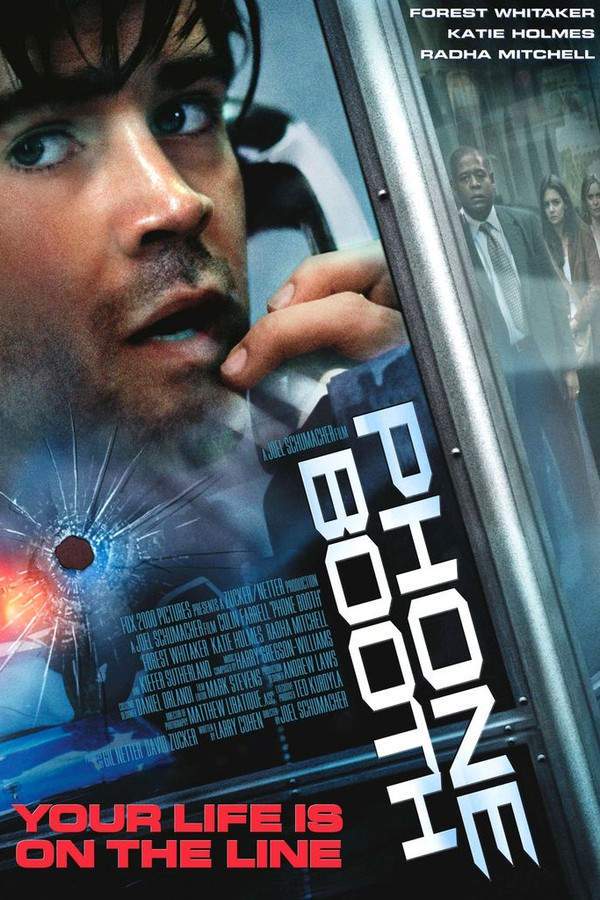
Nat Bridger, Richard Chamberlain, an ecology professor, returns to the Thorner home after teaching his class, stepping into a nightmare that seems to be about ordinary phones and ordinary people. A subway scene opens with a woman answering a public phone; at first she hears nothing, then a piercing, rising high-pitched beeping that makes her tremble, her eyes bleed, and a violent explosion hurls her onto the escalator. The incident sets a chilling tone for what follows: a pattern where phones become vehicles of murder.
The Thorners are still reeling from the loss of their daughter Sandra, the victim of a brutal murder that night in their home, and Nat soon finds himself drawn into a chain of deaths that begins to feel personal. A businessman named Gordon Smith is killed when the phone he’s using rings and a shock crashes him through a large glass window, ending with a crash onto a car below. The city seems to be under siege by a mysterious, sonic-powered weapon concealed in everyday devices.
In the days that follow, Nat is drawn into official business, receiving a letter of authorization to pursue the caller and heading to the police precinct to speak with Lt. Meara, Gary Reineke. The case deepens when Nat stays at the home of Stanley Markowitz, John Houseman, and interviews a woman who witnessed one of the killings. The danger escalates when Mrs. Andersen is killed in a similar fashion, a reminder that the threat is both intimate and unrelenting.
Nat’s investigation leads him to the subway’s repaired phone line and a series of conversations with a corporate supervisor, aiming to understand how the devices were repaired and who might be involved. Along the way, he encounters Ridley Taylor, Sara Botsford, a woman who becomes entangled in the mystery and whom Nat invites to dinner in hopes of uncovering more clues. The danger grows when Connie Lawson, Lenore Zann, is killed by a phone, underscoring the pattern that ties all the deaths together.
Tensions flare as Nat clashes with Meara over how the case should be handled. He is followed by a curious tourist who snaps photos as if he’s part of something larger, a misdirection that only fuels Nat’s suspicions. After a tense arrest and a recovery period at Stanley’s, Nat investigates the city’s phone-control infrastructure to track down the evidence, and discovers paired phones that have been used in the murders. The ride intensifies when Nat arrives at Ridley’s house, only to learn that Stanley has himself fallen victim to the very device he sought to understand.
With Ridley’s help and the backing of the commissioner, Nat presses deeper into the mystery, and a crucial video tape from Stanley’s residence points to Ridley’s neighbor Noah Clayton, the tour guide Robin Gammell. The revelation lands hard: Clayton is the operator behind the phone murders, seeking revenge for perceived injustices by weaponizing everyday devices. After Nat leaves Ridley’s home, she receives a call from Clayton, but Ridley acts quickly and discards the phone before he can strike again.
The search shifts toward the city’s power company, where new clues surface and Clayton’s scheme comes to a head. A deadly high-frequency sonic pulse—designed to murder through the telephone—is launched, and Nat faces a desperate confrontation. The pulse is reversed back through the line, causing Clayton to convulse as a shelf collapses onto him, ending the killings.
In the final moments, the city’s safety services congratulate Nat on solving the case as Ridley prepares to go home. Nat’s resolve remains steady, and he calls out to her with a promise that signal lights are still glowing in the night: “I’ll call you.” The scene closes on a curious, ominous note as the high-pitched beeps return, and the credits roll over the pensive silence that follows a city saved from a peril that began with a single, seemingly innocuous phone.