Plot Explained Spoilers guaranteed!
Plot Explained

Browse by genre

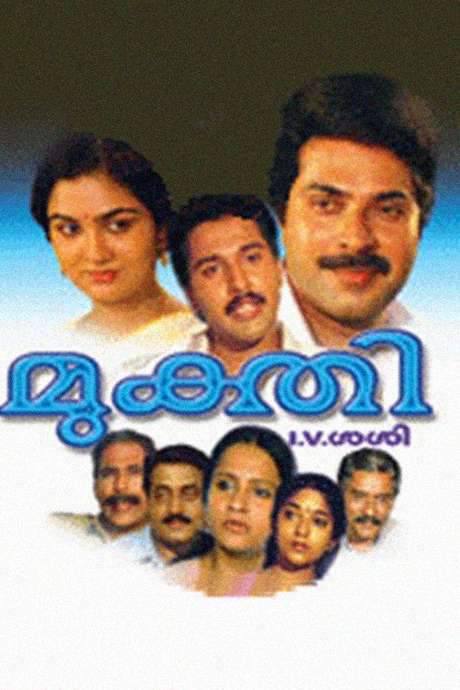
Mukthi (1988) movie poster

Plot Summary

Mukthi (1988) Plot Summary Explained

Release, runtime and language
1988 · More mins · Malayalam
Loading streaming availability…
Directed by
I V Sasi
Starring
Mammootty, Jagannatha Varma, Thilakan, Janardhanan, Sithara, Seema

Haridas (Mammootty), son of a village peon, returns to his home district as the government Collector. The job pressures cause a rift with his younger brother Sudhakaran (Rahman), who joins an opposing party, turning their relationship into a dangerous rivalry. The film is praised for strong performances and is considered one of I.V. Sasi’s finest.

On this page (6)
  1. 1 Where to watch
  2. 2 What happens: full plot
  3. 3 Plot questions answered
  4. 4 Movie threads
  5. 5 Movies like Mukthi
  6. 6 Every angle
Loading streaming availability…

Full plot summary · contains spoilers

What Happens in Mukthi: Full Plot Summary

The whole story of Mukthi (1988) explained, from the opening scene to the final frame: every key event, every twist and what it all adds up to. Read it as a quick recap before the sequel, to check a scene you missed, or to finally understand what really happened.

Haridasan, rising from a humble upbringing, steps into the demanding role of Calicut District Collector with a carefully chosen team behind him: Hameed as ADM and P. K. Nambyar as SP. At his residence, the steady presence of Ravunni Warrier, his loyal helper, grounds the new administrator as he navigates the complexities of public service and family life.

During a visit home, Haridasan reconnects with the tutorial world he left behind, meeting Pillai sir and his daughter Sudharma, whom he hopes to marry. He also returns to a modest household where he greets Amma, his younger brother Sudhi, and sister Shobha, each carrying their own hopes and tensions. The family’s sense of belonging is tested when their maternal uncle, Shekharan, who hadn’t always treated them well, arrives with his wife and daughter. The daughter, Radhika, becomes a figure who seems drawn to Hari, complicating old loyalties.

Hari’s focus increasingly centers on a local hotel run by Viswanathan Nair, which has encroached on government property. As Hari starts probing the matter, Vishwanathan pushes his own agenda: he wants his son Vinod to befriend Sudhi while pressing for his daughter Jayasree’s hand in marriage to Hari’s own prospects. The tangled web of proposals stretches Hari’s patience, and when Amma and the rest of the family urge him to accept a practical alliance, he seeks counsel from his mentor and from Sudhi, whose antics threaten to derail everything.

The tension sharpens as Sudhi is drawn into political maneuvering led by Shekharan’s party, with the Revenue Minister backing Sudhi as a rising star. A suggestion to unite the families through marriage—Radhika to Hari’s family in a bid to consolidate power, and Jayasree to Vinod—tests Hari’s priorities. Amid the wedding preparations, Jayasree discovers a showpiece depicting Sati pining for Shiva, stirring doubts about Hari’s past and testing the trust between Hari and Jayasree.

When Sudhi is caught up in an ongoing struggle involving the Beypore fishermen and the hotel dispute, Hari is forced to balance official action with family loyalties. Sudhi’s insistence on using Hari’s name to aid illegal revenue schemes deepens the rift, and Hari makes his stance clear—he will not tolerate wrongdoing, even if it means disappointing his own brother. Sudhi’s defiance culminates in a confrontation that strains the marriage prospects, prompting Hari and Jayasree to consider a temporary separation so they can discern the path forward.

Amid mounting political pressure, Sudhi rises as a youth leader within Shekharan’s party, and the party’s ambitions grow bolder. The minister’s plan to convert the Beypore crisis into a broader communal confrontation adds a dangerous edge to the already fragile political climate. Radhika, aware of the scheme, informs Hari, who works tirelessly to de-escalate tensions from every possible angle. He bluntly tells Sudhi that he would do anything to bring back his brother, a moment that crystallizes the gravity of Sudhi’s actions.

Tragedy strikes when Sudhi—driven by the political machine—attempts to incite violence at a temple festival and a subsequent clash leads to the deaths of two Hindus and a Muslim. Hari’s efforts to manage the crisis earn him praise from the Chief Minister, yet the fallout intensifies the strain on his personal life. Jayasree returns to Hari, and the couple resolves to repair their marriage, even as Sudhi’s path spirals toward a fatal reckoning. Sudhi's final choices push him toward a confrontation with the law and the people around him, and he is fatally shot by the police while trying to lead a protest.

The community reacts with mixed emotion—rebukes from Hari’s mother, anger from villagers, and the heavy weight of loss for those who supported Sudhi. Kunjunni steps in, asking what value the job holds in the face of such consequences, while Hari faces the difficult task of rebuilding trust. In the end, Hari returns to the very place where his teaching began: the tutorial college he once led. He sits down to teach another class, watched by Jayasree Nair, Pillai sir, and Sudharma, suggesting that education and perseverance may yet offer a path toward healing and renewal.

Last updated: October 09, 2025 at 14:33

Was this helpful?

Plot questions answered

Mukthi Plot Explained: Your Questions Answered

The questions people ask most about Mukthi (1988): what happens in the confusing scenes, why the characters do what they do, the twists, hidden details and what the ending means. Each answer contains spoilers.

Q1

Why did Sudhi turn against his brother Hari in the movie?

Sudhi was drawn into politics by his maternal uncle Shekharan and the Revenue Minister after he left home following a confrontation with Hari. Hari had rebuked Sudhi for using his name to aid illegal abkari operations. Shekharan and the minister encouraged Sudhi to join their party as a youth leader, promising political power and even marriage to Radhika. This opportunity gave Sudhi a chance to rise socially and economically, making him align against his brother.

Foreshadowing: Earlier, Amma and Shekharan push Sudhi to join politics even before the confrontation with Hari.

  • sudhi
  • haridasan
  • brother rivalry
  • politics
  • shekharan
  • revenue minister
Q2

What was the hotel encroachment case and why was it important?

The hotel owned by Viswanathan Nair had encroached on government property. As Collector, Hari began investigating this case, which put him in conflict with Viswanathan. The situation became complicated when Viswanathan proposed a marriage alliance, his son Vinod would marry Hari's sister Shobha, and Hari would marry Viswanathan's daughter Jayasree as a dowry settlement. This tangled web of proposals created family tension and ultimately led to a police raid that humiliated Hari and his family.

Foreshadowing: Viswanathan had already begun pushing these marriage proposals before Hari started the official investigation.

  • hotel encroachment
  • viswanathan nair
  • marriage proposal
  • dowry
  • calicut collector
Q3

What triggered the temple festival violence in the film?

Sudhi, now a youth leader in Shekharan's party, was used as a pawn in a political scheme. The Revenue Minister wanted to turn a dispute between Beypore fishermen and the hotel into a broader communal confrontation. Sudhi's followers triggered violence during the temple festival, which resulted in the deaths of two Hindus and a Muslim. This was part of a larger plan to transform the temple incident into a mosque attack to strengthen the party's political standing.

Foreshadowing: Radhika had informed Hari about the scheme to turn the temple incident into a mosque attack, showing she knew about the planned violence.

  • temple festival violence
  • communal clash
  • sudhi
  • shekharan party
  • beachore fishermen
Q4

How did Sudhi die in Mukthi?

Sudhi was fatally shot by police while trying to lead a protest. After the temple festival violence and the subsequent communal tensions, the situation escalated. When Sudhi attempted to stop the protests or lead further demonstrations, police encountered him and he was shot. His death triggered widespread unrest and condemnation from Hari's mother and the villagers, with Kunjunni questioning Hari about the value of his job in the face of such consequences.

Foreshadowing: The political machinery had been using Sudhi as a tool, and his escalating actions made his fatal outcome increasingly inevitable.

  • sudhi death
  • police shooting
  • protest
  • communal violence
Q5

Why did Hari agree to marry Jayasree instead of Sudharma?

Hari had met Sudharma, daughter of Pillai sir, at the tutorial college and hoped to marry her. However, his mother and family pressured him to accept the practical alliance with Jayasree, daughter of Viswanathan Nair. The marriage proposal came with complex conditions, Viswanathan wanted his son Vinod to marry Hari's sister Shobha as part of the deal. Under family pressure and facing the practical realities of his household dynamics, Hari accepted Jayasree despite his personal preference for Sudharma.

Foreshadowing: Amma had proposed Radhika to Hari first, and when he rejected that, the family pushed for the Viswanathan alliance.

  • jayasree marriage
  • sudharma
  • family pressure
  • practical alliance
  • haridasan
Q6

What was the Beypore fishermen dispute about?

The Beypore fishermen were involved in an ongoing struggle against police brutality and likely encroachment issues connected to Viswanathan Nair's hotel. Radhamma, a social activist, informed Hari about police brutality against these fishermen. This dispute became intertwined with the hotel encroachment case that Hari was investigating as Collector. The Revenue Minister and Shekharan's party later tried to exploit this situation politically, using the fishermen's grievances to create communal tension.

Foreshadowing: Radhamma's alert about police brutality sets up the later political exploitation of the fishermen's grievances.

  • beypore fishermen
  • police brutality
  • radhamma
  • hotel dispute
  • communal tension
Q7

Why did Radhika warn Hari about the violence plan?

Radhika, the daughter of maternal uncle Shekharan, had affection for Hari and was aware of the political machinery's dangerous scheme. She informed Hari about Sudhi's plan to turn the temple incident into a mosque attack, which was orchestrated by Shekharan's party and the Revenue Minister. Despite her family's involvement in the conspiracy, Radhika chose to alert Hari, demonstrating her moral stand against the violent politics that would harm innocent people.

Foreshadowing: Radhika's affection for Hari and her awareness of the party's machinations made her a crucial informant.

  • radhika warning
  • mosque attack plan
  • violence
  • shekharan party
  • political scheme
Q8

Why couldn't Hari save his brother from the fatal outcome?

Hari repeatedly tried to intervene and de-escalate the situation, he told Sudhi bluntly that he would do anything to bring back his brother. However, Sudhi had become deeply entangled in the political machinery of Shekharan's party, which was using him as a pawn. The party had risen to power by inciting communal tensions, and Sudhi's own choices to lead protests and incite violence ultimately led to his fatal confrontation with police. Despite Hari's efforts to manage the crisis and earn praise from the Chief Minister, he could not prevent the tragic consequences of his brother's path.

Foreshadowing: Hari's warning to Sudhi about doing anything to bring him back shows his awareness of the danger but inability to stop the political momentum.

  • hari saves brother
  • political machinery
  • fatal outcome
  • intervention failure
Q9

What is the significance of Hari returning to teach at the tutorial college?

The ending shows Hari returning to the tutorial college where he once taught, sitting down to teach another class while watched by Jayasree, Pillai sir, and Sudharma. This symbolizes his return to education and integrity after the political chaos that cost his brother's life. It represents hope and renewal, a return to honest work rather than the corruption and violence of politics. The bittersweet resolution suggests that education and perseverance may offer a path toward healing, even after profound loss.

Foreshadowing: Earlier in the film, Hari reconnects with Pillai sir and the tutorial world, establishing his teaching background.

  • ending tutorial college
  • teaching return
  • healing
  • hopeful resolution
  • bittersweet ending
Q10

Why did Sudhi use Hari's name for illegal activities?

Sudhi used Hari's name (as the District Collector) to aid an abkari operation, an illegal liquor revenue scheme. This was an attempt to make quick money leveraging his brother's official position. When Hari discovered this, he rebuked Sudhi firmly, declaring he would not tolerate wrongdoing even from his own brother. This confrontation led Sudhi to leave home and eventually join politics against Hari, marking the beginning of their dangerous rivalry.

Foreshadowing: Sudhi's character was already shown as someone who could be easily swayed by quick gains and external influence.

  • abkari operation
  • illegal scheme
  • using official name
  • brother confrontation

Movie threads

More Movies Like Mukthi, by Mood & Story

Curated lists built around what makes Mukthi tick: the same mood, the same kind of story or the same emotional payoff. Each list explains why these movies belong together.

Brother Against Brother Tragedies like in Mukthi

Stories where family loyalty is shattered by conflicting ideologies. If you were gripped by the familial conflict in Mukthi, explore more movies like it. This collection features similar stories of sibling rivalry tearing families apart, focusing on political or moral clashes that escalate into tragedy.

  • familial conflict
  • tragic
  • somber
  • moral dilemma
  • confrontational
  • gripping
  • Tone: tense, tragic, confrontational
  • Pacing: steady, building to a climax
Why these movies?

The story pattern: Narratives typically begin with a close-knit family unit, which is fractured when siblings adopt opposing worldviews. The plot escalates the conflict, transforming a personal bond into a public rivalry, and often culminates in a devastating loss that forces the survivors to confront the cost of their division.

Why they belong together: Movies are grouped here because they share the core theme of familial love being destroyed by ideological conflict. They deliver a heavy emotional experience centered on betrayal, moral dilemmas, and the profound sadness of a family broken from within.

Tense Political Dramas with Personal Cost like in Mukthi

Idealistic public servants face corruption and moral compromises. Fans of Mukthi's intense look at a collector's ethical struggle will find more movies like it here. Discover similar films about public servants facing political corruption, where the battle for integrity comes at a heavy personal price.

  • political
  • tense
  • moral dilemma
  • gripping
  • somber
  • brooding
  • Tone: somber, tense, morally complex
  • Pacing: steady, methodical
Why these movies?

The story pattern: The story follows a principled protagonist entering a position of power, only to find their ideals challenged by systemic corruption or personal betrayal. The central conflict explores the tension between public duty and private loyalties, often resulting in a bittersweet victory or a profound personal loss.

Why they belong together: These films are united by their exploration of moral integrity within a political context. They share a tense, somber mood, a steady pacing that builds pressure, and a heavy emotional weight derived from the high-stakes choices the protagonist must make.

If you liked this

Movies Like Mukthi

Similar movies to Mukthi: the same genre, themes or kind of story. Each one comes with its own plot summary, timeline and ending explained.

Browse all movie summaries

Every angle

Mukthi (1988) Explained: Plot, Timeline & Characters

Everything about Mukthi in one place: what happens in the plot summary, the timeline in chronological order, the characters and meaning and a spoiler-free summary. What's After the Movie adds the cast, box office and post-credit scenes.

Coming soon on iOS and Android

The Plot Explained Movie Summary App

Plot summaries, endings explained and timelines on your phone. Catch up on any movie in minutes, save your favorites and never miss a twist again.

Be the first to know when we launch. Your email stays private, always.

Learn more about the app