Year: 1994
Runtime: 126 min
Language: English
Director: Alan Rudolph
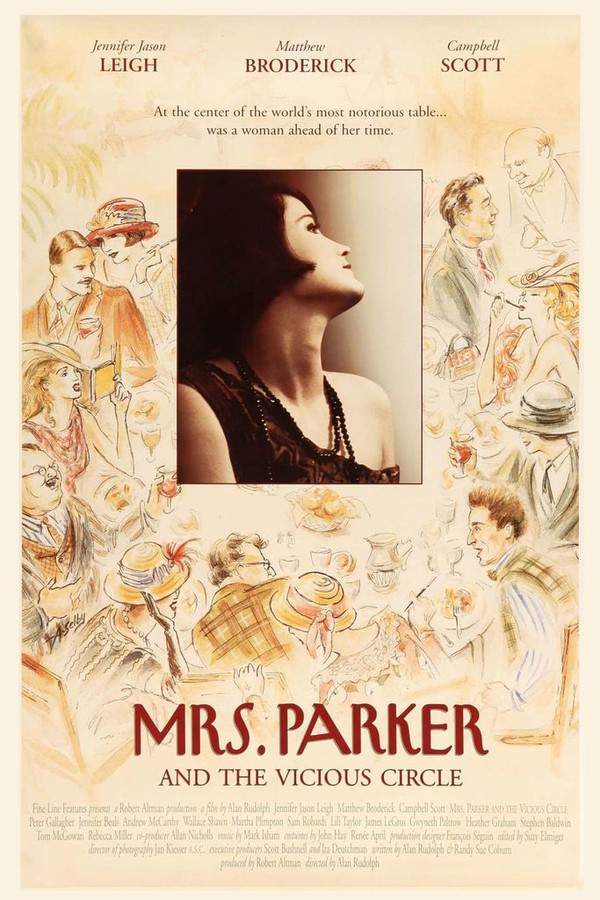
During the Jazz Age, the Algonquin Round Table’s celebrated members, including Dorothy Parker and Robert Benchley, engaged in spirited banter and created acclaimed literary works during lively lunches. The film explores the complexities behind their glamorous public image, revealing Dorothy Parker’s personal struggles with emotional turmoil and challenging romantic relationships. It offers a glimpse into the lives of these witty and influential figures of the era.
Find where to stream, rent, or buy Mrs. Parker and the Vicious Circle (1994) in the US with current JustWatch availability, up-to-date pricing, and platform listings for subscription, rental, and digital purchase options.
Warning: spoilers below!
Haven’t seen Mrs. Parker and the Vicious Circle yet? This summary contains major spoilers. Bookmark the page, watch the movie, and come back for the full breakdown. If you're ready, scroll on and relive the story!
Read the complete plot breakdown of Mrs. Parker and the Vicious Circle (1994), including all key story events, major twists, and the ending explained in detail. Discover what really happened, and what it all means.
In the Prohibition era, the famed Algonquin Hotel becomes a sanctuary for the intelligent and witty members of the “Vicious Circle,” a collective of distinguished individuals united by their literary prowess. Among them is Dorothy Parker, a celebrated author who is wrestling with the chaos stemming from her troubled marriage to a substance abuser. Struggling to find her place in this tumultuous environment, she discovers a sense of comfort and friendship with Robert Benchley, her colleague at Vanity Fair.
The “Vicious Circle” soon decides to put on an impromptu theatrical performance, which introduces Dorothy to Charles MacArthur. This encounter paves the way for a complex relationship, marked by feelings of abandonment and heartache, culminating in a painful abortion that shapes Dorothy’s critique of the world around her, intensifying her sharp and skeptical outlook on life.
As the burdens of her emotional turmoil weigh heavily on her, Dorothy finds herself ensnared by the shadows of depression, battling against the darkness in a bid to find relief through self-destructive behaviors. Robert Benchley wisely steps back from romantic advancement, haunted by the fear of future heartbreak. Consequently, Dorothy and Robert embark on their own separate journeys, seeking solace in new experiences and relationships.
Despite their attempts to move forward, the passage of time offers little solace for Dorothy. It isn’t until 1945, upon hearing about Robert’s untimely death from cirrhosis of the liver, that her grief reaches new depths. In subsequent years, efforts at undergoing psychoanalysis provide little relief from the pervasive fog of despair that envelops her.
As the decades roll by, Dorothy finds herself increasingly isolated in the bustling expanse of New York City, her once vibrant spirit fading under the weight of time’s relentless march. Yet, in 1958, she finally receives a significant literary accolade, a long-overdue acknowledgment of her artistic contributions, bringing a glimmer of recognition to her enduring legacy.
Last updated: November 22, 2024 at 16:25
Explore frequently asked questions about Mrs. Parker and the Vicious Circle (1994) with spoiler-rich answers covering the full plot summary, major story beats, character motivations, hidden details, and ending meaning. This movie summary FAQ helps explain confusing scenes, plot twists, and narrative decisions in clear, searchable detail.
Robert Benchley consciously stepped back from pursuing a romantic relationship with Dorothy because he recognized the complexities of their shared emotional landscape. He was haunted by the fear of future heartbreak, understanding that Dorothy was already trapped in a troubled marriage and battling significant emotional turmoil. Rather than adding to her burden or risking his own emotional devastation, he chose to maintain their friendship at a distance, eventually leading them to embark on separate journeys.
Earlier scenes establish their deep emotional bond and Dorothy's desperate need for support during her chaotic marriage.
Dorothy's abortion resulted from her tumultuous relationship with Charles MacArthur, whom she met during an impromptu theatrical performance organized by the Vicious Circle. Their relationship was marked by emotional highs and lows, eventually becoming strained to the point where she experienced a devastating abortion. This painful event significantly impacted her emotional state and intensified her already critical and skeptical perspective on life, love, and relationships.
The meeting at the theatrical performance establishes Charles as a significant new figure in Dorothy's life.
Dorothy Parker's depression stemmed from multiple interconnected factors that accumulated over decades. Her chaotic marriage to a substance abuser left her feeling lost and desperate. The painful abortion from her relationship with Charles MacArthur intensified her emotional wounds. The death of her close friend Robert Benchley in 1945 pushed her into deeper grief. Despite undergoing psychoanalysis in subsequent years, she found little relief. The relentless passage of time saw her increasingly isolated in New York City, her vibrant spirit fading under the weight of personal losses and lifelong emotional struggle.
The film establishes her troubled marriage and emotional instability from the earliest scenes.
In 1945, Dorothy received devastating news that Robert Benchley had died from cirrhosis of the liver. This tragic event plunged her into deeper grief and marked a pivotal moment in her lifelong struggle against depression. The loss of her close friend and confidant intensified her sense of isolation and compounded the emotional burden she had been carrying throughout her life.
The earlier decision by Robert to step back from their relationship gains tragic weight knowing their time together would be cut short.
In 1958, after years of struggle and relative obscurity, Dorothy Parker finally received significant literary acclaim, a long-overdue acknowledgment of her artistic contributions to American literature. This recognition served as a glimmer of hope and validation, though it came decades after her most productive period and was framed against a lifetime of personal loss and isolation.
The film establishes early on that Parker was a celebrated author at Vanity Fair, making this recognition a delayed fulfillment of her professional promise.
Dorothy Parker's marriage failed primarily because her husband was a substance abuser, creating a chaotic and unstable home environment. This conflict left her feeling lost and desperate for support as she navigated the challenges of her personal life. The turmoil from this troubled marriage drove her to seek comfort and friendship elsewhere, particularly through her connection with Robert Benchley at Vanity Fair.
The opening establishes her marriage difficulties as the central source of her emotional instability.
The Vicious Circle was a collective of distinguished intellectuals and literary talents who gathered at the Algonquin Hotel during the Prohibition era. United by their literary prowess, this group fostered an environment for creativity, witty banter, and camaraderie. Members included Dorothy Parker, Robert Benchley, and other celebrated figures who engaged in spirited conversations during lively lunches, creating acclaimed literary works while developing the sharp, satirical wit that defined their work.
The film opens with this gathering, establishing the vibrant social world that contrasts with Dorothy's personal struggles.
Dorothy Parker met Charles MacArthur when the Vicious Circle members decided to put on an impromptu theatrical performance. This event, which showcased their wit and talent, introduced Dorothy to Charles and marked the beginning of a profound and complex relationship that would later lead to her painful abortion and further emotional trauma.
The theatrical performance is positioned as a turning point that sets the tragic trajectory of Dorothy's future.
Following Robert Benchley's death in 1945, Dorothy sought help through psychoanalysis in hopes of alleviating her deep despair. Unfortunately, these efforts yielded little relief, and she remained engulfed by the persistent fog of sadness that had enveloped her for years. The treatment proved ineffective against the compounded grief from multiple losses throughout her life.
This attempt at help follows the devastating loss of Robert, showing her desperate search for relief.
As the decades passed following the death of Robert Benchley and the failure of psychoanalysis to provide relief, Dorothy Parker found herself increasingly isolated in the vibrant landscape of New York City. The relentless passage of time, combined with lifelong emotional struggles, the loss of close relationships, and her self-destructive behaviors, diminished her once-vibrant spirit. This isolation deepened her loneliness and contributed to the melancholic tone that defined her later years.
Her friendship with Robert had previously provided crucial emotional support; his absence left a void that could not be filled.
Discover curated groups of movies connected by mood, themes, and story style. Browse collections built around emotion, atmosphere, and narrative focus to easily find films that match what you feel like watching right now.
Exploring the deep personal despair behind celebrated creative success.If you enjoyed the portrait of Dorothy Parker's internal conflicts in Mrs. Parker and the Vicious Circle, you'll find similar stories here. This collection features films about writers, musicians, and artists whose creative genius is intertwined with deep personal struggles like addiction, depression, and self-destructive tendencies.
Narratives in this thread often follow a non-linear or multi-year timeline, juxtaposing moments of creative triumph with a gradual decline into personal despair. The central character's witty or charming exterior slowly cracks under the weight of their unresolved trauma and emotional pain.
These films are grouped by their shared focus on the archetype of the 'tortured artist,' blending sharp, witty dialogue with a profoundly melancholic core. They connect through a heavy emotional weight and a bittersweet or bleak ending feel, where professional recognition offers little solace for personal loss.
Elegant historical dramas with a core of profound sadness and loss.Find movies similar to Mrs. Parker and the Vicious Circle that capture the bittersweet feel of a historical era. These films are set in picturesque past decades and focus on creative communities or intellectual groups, but they explore themes of unhappy romance, deep friendship, grief, and the personal costs of a glamorous lifestyle.
Stories unfold within a specific, richly depicted historical period, often centered around a group of friends or colleagues. The narrative weaves together professional collaboration and personal entanglements, building towards an ending where the nostalgic beauty of the era is tinged with the sadness of loss and the inevitability of change.
These movies share a specific mood mix: the intellectual energy and visual elegance of a period setting combined with a deeply reflective and melancholic emotional core. The pacing is often variable, moving between lively social scenes and slower, more intimate moments of despair and reflection.
Don't stop at just watching - explore Mrs. Parker and the Vicious Circle in full detail. From the complete plot summary and scene-by-scene timeline to character breakdowns, thematic analysis, and a deep dive into the ending - every page helps you truly understand what Mrs. Parker and the Vicious Circle is all about. Plus, discover what's next after the movie.
Track the full timeline of Mrs. Parker and the Vicious Circle with every major event arranged chronologically. Perfect for decoding non-linear storytelling, flashbacks, or parallel narratives with a clear scene-by-scene breakdown.
Discover the characters, locations, and core themes that shape Mrs. Parker and the Vicious Circle. Get insights into symbolic elements, setting significance, and deeper narrative meaning - ideal for thematic analysis and movie breakdowns.
Discover movies like Mrs. Parker and the Vicious Circle that share similar genres, themes, and storytelling elements. Whether you’re drawn to the atmosphere, character arcs, or plot structure, these curated recommendations will help you explore more films you’ll love.
Mrs. Parker and the Vicious Circle (1994) Scene-by-Scene Movie Timeline
Mrs. Parker and the Vicious Circle (1994) Movie Characters, Themes & Settings
Mrs. Parker and the Vicious Circle (1994) Spoiler-Free Summary & Key Flow
Movies Like Mrs. Parker and the Vicious Circle – Similar Titles You’ll Enjoy
Lady Chatterley (2007) Movie Recap & Themes
The Painted Veil (2006) Full Summary & Key Details
Boogie Woogie (2010) Full Movie Breakdown
Café Society (2016) Story Summary & Characters
Mildred Pierce (1945) Film Overview & Timeline
Summer in February (2014) Ending Explained & Film Insights
The Artist's Wife (2020) Movie Recap & Themes
An Unmarried Woman (1978) Ending Explained & Film Insights
The Voyeur (1994) Movie Recap & Themes
Lady with a Past (1932) Ending Explained & Film Insights
Mrs. Parkington (1944) Plot Summary & Ending Explained
Women (1995) Complete Plot Breakdown
All Ladies Do It (1992) Full Summary & Key Details
The Lickerish Quartet (1970) Full Movie Breakdown
The Devious Path (1928) Full Summary & Key Details