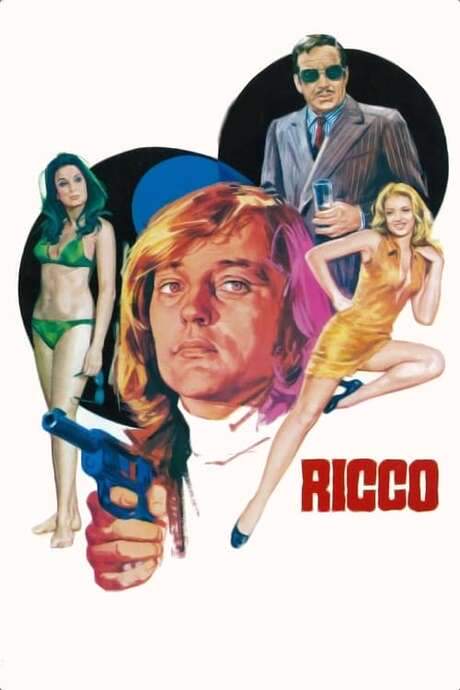
A murder charge is dropped against Frankie Steele, Thalmus Rasulala, a San Francisco black militant, and he is represented by liberal attorney Joe Ricco, Dean Martin. Two police officers are then gunned down, and an eyewitness—the young son of a friend of Ricco’s—identifies Steele as the man seen leaving the scene. The case tests Ricco’s ideals and his ability to navigate a trap filled with tension, race, and motive.
Ricco is a lonely widower with a loyal secretary and a dog, and his closest ally is George Cronyn, the detective in charge of the investigation, Eugene Roche. Cronyn is furious that Steele got away with killing a woman named Mary Justin and with the deaths of two fellow officers. In response, Cronyn and his team raid a hideout of Steele’s organization, the Black Serpents, but Steele slips away again. In a grim turn, a racist cop named Tanner shoots Calvin Mapes, an unarmed man, and plants a gun on him while arresting his brother Purvis Mapes, a wronged family caught in the crossfire of the case. Oliver Givens plays Calvin Mapes, while Philip Michael Thomas appears as Purvis Mapes, a man who becomes pivotal to Ricco’s defense.
Irene Mapes, Purvis’s sister and an art-gallery worker, seeks Ricco’s help to defend her brother. He agrees and soon uncovers evidence pointing to Tanner’s guilt, exposing systemic bias and a flawed process. In a calculated move, Ricco convinces Purvis to disclose where the fugitive Frankie Steele can be found. Irene invites Ricco to the opening of a new art exhibit, and there he meets Katherine Fremont, played by Geraldine Brooks, with whom he begins a budding romance amid the case’s rising stakes.
A sniper attempts to shoot Ricco in his own home, and a neighborhood watchful of aging eyes—a neighbor with poor eyesight—sees a man who looks like Steele. Cronyn responds by assigning a cop named Barrett to tail Ricco wherever he goes, though Ricco remains puzzled by why Steele would target his own lawyer. He resists the tail, holding his ground after vowing not to reveal Steele’s whereabouts to anyone, a promise tied to Purvis Mapes’s safety.
The tension escalates when Ricco goes to a church and confronts Steele, who initially denies killing the cops but then blurts out that he did murder Mary Justin. The confrontation ends in a fistfight that leaves Ricco hospitalized. As Ricco recovers, he grapples with the moral weight of his actions, apologizing to Mary Justin’s brother—only to be met with anger and the accusation that he is an accessory to murder. The flame of the case burns hotter as Tanner, the racist cop, is murdered, and Cronyn’s team moves to arrest Steele.
Next, Ricco attends a black-tie art gallery event with Katherine Fremont, while Barrett tags along. A sniper strikes, hitting Katherine and wounding Barrett. Ricco seizes Barrett’s pistol and gives chase as the shooter wounds more officers. The chase ends with a fatal shot that brings down the killer, who appears to be Steele—yet the body is later revealed to be Mary Justin’s brother in disguise, a shocking twist that reframes the earlier accusations and confronts Ricco with a troubling conclusion about justice, identity, and truth.
Throughout the escalating sequence, the film threads themes of loyalty, race relations, and the cost of defending a client who may be guilty. The gallery setting, the evolving relationships, and the relentless pursuit of truth drive the narrative forward, leaving audiences to question who truly bears responsibility when law and morality collide. The characters—from Ricco’s moral determination to Cronyn’s unwavering pursuit of order, and from Irene Mapes’s faith in due process to Katherine’s quiet resilience—are painted with nuance, creating a tapestry that asks hard questions about justice and the illusion of certainty.