Year: 2024
Runtime: 100 mins
Language: English
Director: Madeleine Hetherton-Miau
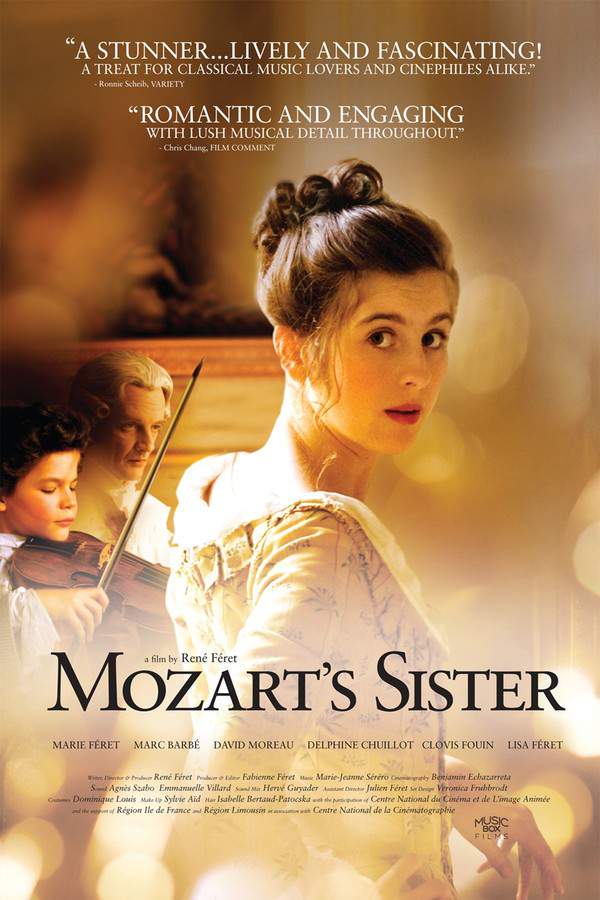
For the first eighteen years of her life, Maria Anna "Nannerl" Mozart enjoyed equal recognition alongside her famous brother, Wolfgang. The siblings performed together for royalty and captivated audiences across Europe. However, at sixteen, Nannerl was abruptly forced into retirement simply because of her gender. This film explores the circumstances surrounding her forced retirement and investigates the compelling theory that she continued to compose music in secret, despite the societal limitations imposed upon her.
Warning: spoilers below!
Haven’t seen Mozart’s Sister yet? This summary contains major spoilers. Bookmark the page, watch the movie, and come back for the full breakdown. If you're ready, scroll on and relive the story!
Explore the full timeline and setting of Mozart’s Sister (2024). Follow every major event in chronological order and see how the environment shapes the story, characters, and dramatic tension.
Last updated: February 06, 2026 at 10:52
Meet the key characters of Mozart’s Sister (2024), with detailed profiles, motivations, and roles in the plot. Understand their emotional journeys and what they reveal about the film’s deeper themes.
Last updated: February 06, 2026 at 10:52
Explore the central themes of Mozart’s Sister (2024), from psychological, social, and emotional dimensions to philosophical messages. Understand what the film is really saying beneath the surface.
Last updated: February 06, 2026 at 10:52
Browse frequently asked questions about Mozart’s Sister (2024) focused on characters, relationships, themes, symbols, setting, and story context. This movie info FAQ gives spoiler-aware explanations for character arcs, world details, and thematic interpretation so readers can better understand what the film is really about.
The film is set in 18th century France, primarily at Fontevraud Abbey and Versailles. Fontevraud Abbey serves as a religious complex and shelter during the Mozart family's travels, while Versailles represents the seat of royal power where formal meetings and courtly encounters occur. The settings contrast monastic life with royal politics and splendor.
The abbey introduces Nannerl to Princess Louise, establishing the cross-cultural encounters that shape her journey.
Mozart's Sister is set during the era of Louis XV's France in the 18th century. This period was marked by ornate court life and rigid social hierarchies. Music and patronage flourished, but artistic freedom for women was severely constrained by paternal authority and societal expectations.
The film's central theme explores gender barriers in the 18th century music world. Nannerl's talent as a harpsichordist and singer contradicts her father Leopold's prohibition against composing or playing violin. The movie highlights how birth order and gender restrict creative ambition, forcing her to perform for survival rather than pursue personal artistic goals.
Early scenes establish Nannerl performing alongside her brother with equal recognition, making her later forced retirement more poignant.
Nannerl Mozart is the protagonist, portrayed as a talented harpsichordist and singer who supported the family on tour alongside her famous brother Wolfgang. She longs to compose music and play the violin despite her father's strict prohibition. Her artistic drive clashes with family expectations, driving personal ambition within the constraints of 18th century society.
Princess Louise is a young noblewoman raised at Fontevraud Abbey, where she forms a significant bond with Nannerl. Their friendship crosses gender and class lines within the abbey's sheltered environment. Through their conversations, both characters reflect on the different paths their lives could have taken and how social constraints shape women's destinies.
The abbey setting establishes their meeting and the intimate conversations that later fuel their philosophical reflections.
The Dauphin represents the intersection of romance and dynastic duty in the film. His interest in Nannerl points to a romance constrained by political arrangements and royal obligations. When his engagement to Maria Josepha of Saxony is announced, the relationship shifts from personal desire to official alliance, illustrating the collision between personal longing and public duty.
Versailles serves as the backdrop for these formal meetings, hinting at the political nature of his interests.
The film investigates the compelling theory that Nannerl continued composing music in secret despite the societal limitations imposed upon her. After being forced into retirement at sixteen simply because of her gender, the narrative explores what might have been if social norms allowed her to realize her musical gifts. The film suggests her artistic drive never truly died, even when outwardly suppressed.
Her yearning to compose and play violin against her father's wishes plants the seeds of secret musical continuation.
Mozart's Sister uses the friendship between Nannerl and Princess Louise to explore how small choices and social constraints shape destinies for women in the 18th century. Their reflections at the abbey prompt both characters to imagine alternate outcomes if they had been born male. The concluding moments emphasize the bittersweet nature of these 'what if' speculations.
Their early conversations about different life paths foreshadow the reflective ending.
Versailles serves as the seat of royal power and the stage for formal meetings and political maneuvering in Mozart's Sister. It becomes the setting for the hinted romance involving the Dauphin and represents the world of courtly politics and splendor that contrasts with the monastic life of the abbey. The ornate court life reflects the rigid social hierarchies of Louis XV's France.
The film explores romantic obligations through the Dauphin's relationship with Nannerl, which is constrained by dynastic duties and political arrangements. His engagement to Maria Josepha of Saxony shifts their connection away from personal desire to official alliance. The final encounter with the Dauphin and his wife emphasizes the collision between personal longing and public duty.
Discover curated groups of movies connected by mood, themes, and story style. Browse collections built around emotion, atmosphere, and narrative focus to easily find films that match what you feel like watching right now.
Stories of brilliant minds silenced by the constraints of their time.If you were moved by the story of Nannerl Mozart in Mozart’s Sister, discover other films about artists, musicians, and thinkers whose talents were overlooked or suppressed. These movies explore gender inequality, historical constraints, and the bittersweet contemplation of unfulfilled potential.
The narrative typically follows a character with exceptional talent who is prevented from achieving recognition due to external forces like gender discrimination, class barriers, or political oppression. The story charts their struggle, compromise, and the ultimate melancholic reflection on what might have been.
These films are grouped by their shared exploration of injustice against creativity. They create a specific melancholic and reflective mood centered on frustration and yearning, offering a thoughtful look at historical or societal barriers to artistic expression.
Contemplative stories that blend historical fact with poignant speculation.For viewers who enjoyed the reflective and bittersweet tone of Mozart’s Sister, this collection features historical films that explore alternate possibilities and quiet personal dramas. Find movies with a steady pace, medium emotional weight, and a focus on what could have been.
These stories often follow a linear, straightforward structure centered on a personal journey within a well-documented historical context. The conflict is internal and societal rather than action-oriented, leading to an ending that is contemplative and bittersweet, acknowledging loss while pondering different paths.
They share a specific emotional mix: a steady, reflective pace, a medium level of intensity driven by emotional tension, and a bittersweet conclusion that lingers on the possibilities of an alternate history. The focus is on character and mood over complex plotting.
Don't stop at just watching - explore Mozart’s Sister in full detail. From the complete plot summary and scene-by-scene timeline to character breakdowns, thematic analysis, and a deep dive into the ending - every page helps you truly understand what Mozart’s Sister is all about. Plus, discover what's next after the movie.
Read a complete plot summary of Mozart’s Sister, including all key story points, character arcs, and turning points. This in-depth recap is ideal for understanding the narrative structure or reviewing what happened in the movie.
Track the full timeline of Mozart’s Sister with every major event arranged chronologically. Perfect for decoding non-linear storytelling, flashbacks, or parallel narratives with a clear scene-by-scene breakdown.