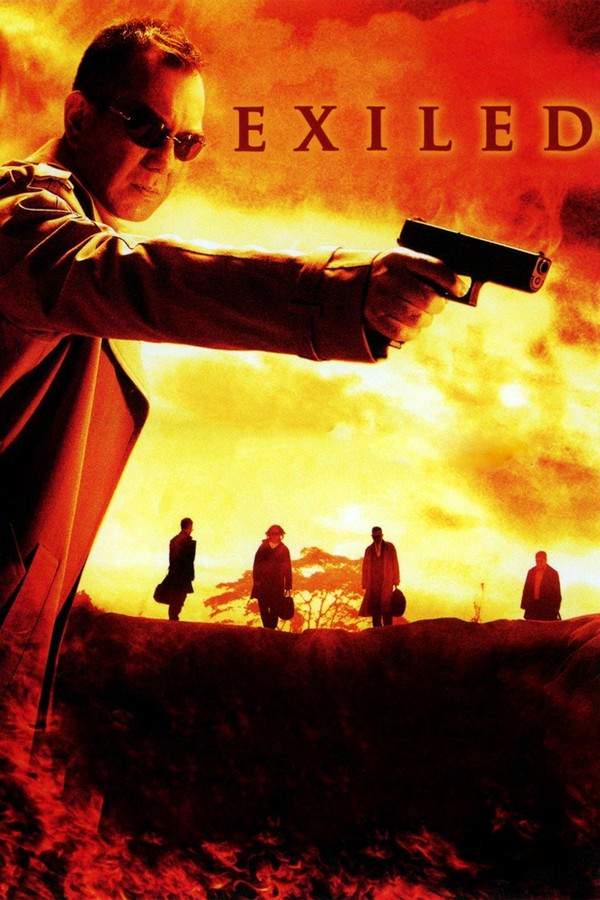
In Hong Kong, Jun, a man with a learning disability, has long felt like a burden to his family. Seeking a way to escape that weight and find a place where he might belong, he slips away to Shinjuku, where he encounters Hoi, a struggling pimp who is deeply in debt to Kano. Hoi tries to keep his head above water by spinning schemes, and Yan, a sharp-eyed madam who runs the underworld operation, quickly spots Jun’s striking looks and potential. She proposes using him as a gigolo, believing that his genuine warmth could draw clients who crave something simple and comforting, a kind of happiness that money can’t easily buy. The arrangement, at least at the start, seems to work. Jun’s signature hugs become a kind of soothing currency, and the business starts to pay off, which only fuels Yan’s confidence.
Profitability, however, brings trouble. Kano demands a larger share of the earnings, pressing Hoi for half the take as the price of protection and partnership. To prove a point and to press his advantage, they publish pictures of Kano’s wife with Jun, hoping to force Kano into a corner. The gambit backfires in a brutal, sudden way: Kano opens fire on his wife, accidentally striking a nearby policeman, and then vanishes into the shadows of the city. The chase begins, and the already precarious life of Jun and Hoi grows even more tangled as Kano disappears into hiding, leaving behind a trail of fear and suspicion.
Meanwhile, one of Jun’s other clients, Mr. Li, watches Jun with his own wife for a time, but a dispute after a single encounter ends with a balcony tragedy: Mr. Li’s rage drives him to throw his wife to her death. He immediately accuses Jun of murder, tipping the scales toward panic for Jun and Hoi, who decide to flee rather than face the police. The fear of authority becomes a central force in their lives, shaping every decision as they slip through crowded streets and back alleys, always listening for the sound of sirens and the wrong note of a memory that could betray them.
Jun’s fear, he explains, reaches back to a childhood moment when Hoi knocked over a plant and injured a woman who laid the blame at Jun’s feet, setting off a chain of events that ended with him being sent to a specialist who diagnosed him as retarded. This fragment from the past is not just a scar; it anchors his lifelong anxiety about authority and judgment, prompting him to fear the police whenever trouble arises. As the pair move deeper into danger, Jun traces his troubles to that moment, insisting that the past still speaks through the present danger.
In a final, tense confrontation, Hoi goes to the police and uses manipulation to elicit a confession from Mr. Li, pretending to possess a video that shows Jun pleasuring Mr. Li’s wife. The ruse unsettles the truth and complexifies loyalties, while Kano closes in. When the dust settles, Kano is killed by the police before he can kill Hoi, and the immediate threat to their lives ends. Yet the ending leaves Hoi with an unsettling question: there is no record of Jun ever being a former classmate, and the memory that tied their lives together seems to have dissolved into doubt. As Hoi searches for answers, he wonders whether Jun’s identity—once believed, then questioned—was real at all, or if the entire connection was a misremembered dream from the start.