Plot Explained Spoilers guaranteed!
Plot Explained

Browse by genre

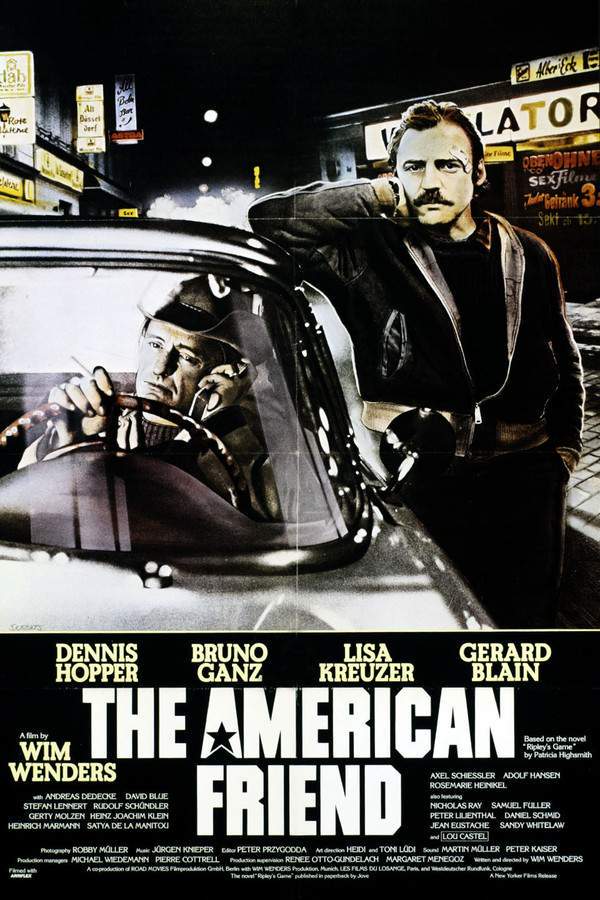
The American Friend (1977) movie poster

Plot Summary

The American Friend (1977) Plot Summary Explained

Release, runtime and language
1977 · 125 min · German
Starring
Dennis Hopper, Bruno Ganz, Daniel Schmid, Gérard Blain

In Hamburg, American expatriate Tom Hopper is involved in art forgeries when he's drawn into a murder plot. He’s tasked with finding a suitable hitman, and his search leads him to Jonathan Ganz, a man with cancer who wants to secure his family’s future. As they plan the job, their partnership becomes increasingly complex, blurring the lines between right and wrong and testing their loyalties in this suspenseful thriller.

On this page (7)
  1. 1 Where to watch
  2. 2 What happens: full plot
  3. 3 Plot questions answered
  4. 4 The book behind the movie
  5. 5 Movie threads
  6. 6 Movies like The American Friend
  7. 7 Every angle

Where to watch

Where to Watch The American Friend (1977)

Where can you watch The American Friend? Stream, rent or buy it in the US, including on Amazon Video, Apple TV Store and Fandango At Home: current JustWatch availability with up-to-date prices.

Streaming availability powered by JustWatch

Full plot summary · contains spoilers

What Happens in The American Friend: Full Plot Summary

The whole story of The American Friend (1977) explained, from the opening scene to the final frame: every key event, every twist and what it all adds up to. Read it as a quick recap before the sequel, to check a scene you missed, or to finally understand what really happened.

Tom Ripley is a wealthy American residing in Hamburg, Germany. He finds himself entangled in a forgery scheme, where he artificially inflates auction prices of supposedly newly-discovered artworks by an artist who has staged his own death. During an auction, he meets Jonathan Zimmermann, a picture framer suffering from leukemia. Upon introduction, Zimmermann coldly comments, >"I've heard of you," which leads to an awkward departure.

Enter Raoul Minot, a French criminal, who proposes to Ripley that he eliminate an American gangster. Initially, Ripley refuses the job but feels compelled to take revenge for Zimmermann's previous slight. He whimsically suggests that Minot use Zimmermann as the hitman. Ripley spreads rumors of Zimmermann's declining health, prompting Minot to offer him a lucrative deal to take out the gangster. Although Zimmermann initially declines, facing the reality of his illness, he ultimately agrees to accompany Minot to France for a second opinion. Minot manipulates the medical results to instill a sense of urgency in Zimmermann, compelling him to comply with the assassination plot for the sake of his wife, Marianne, and son, Daniel.

In a surprising turn, Ripley visits Zimmermann before and after the planned murder, presenting himself as merely seeking a framing service. Unbeknownst to Zimmermann, Ripley is the architect behind this deadly scheme, yet a bond begins to develop between them after Zimmermann apologizes for his earlier rudeness.

Minot updates Ripley on the success of Zimmermann's hit, yet an unsettling request follows: Zimmermann is to kill another gangster aboard an international express train to instigate a gang war. During this tense scenario, the gangster manages to catch Zimmermann off guard. However, at a critical moment, Ripley emerges and assists Zimmermann in overpowering both the target and his bodyguard, disposing of their bodies from the moving train. Back in Hamburg, Ripley admits to recommending Zimmermann to Minot, and when offered money for the second hit, he gracefully declines while urging Zimmermann to keep his involvement secret.

However, living a double life proves to be taxing for Zimmermann, creating strain in his marriage. Marianne grows suspicious of his stories about travel and experimental treatments, ultimately deciding to leave with Daniel. This departure sends Zimmermann into despair. Minot soon visits, inquiring whether Zimmermann has insights into a recent bombing at his flat. When Zimmermann mentions, "we killed the man on the train," it raises Minot's suspicions about Ripley's loyalty.

In desperation, Zimmermann reaches out to Ripley. The two men prepare for an oncoming threat from the assassins they expect. When they are ambushed, Ripley and Zimmermann spring into action, taking down the American gangsters. However, chaos ensues as Minot, having been captured and beaten, makes his escape amidst the confusion.

Ripley manages to gather the bodies into the ambulance provided by the gangsters. Before they can make their exit, Marianne confronts Zimmermann, revealing that the French medical reports were fraudulent. Offering a way out, Ripley suggests they all team up to navigate the ensuing crisis. As they head towards the coast in the ambulance, Ripley ignites a dramatic closure by dousing it in gasoline and lighting a fire. In a heart-pounding moment, Zimmermann loses control of the car and tragically dies at the wheel, while Marianne miraculously pulls the emergency brake, escaping the catastrophe.

On the beach, Ripley reflects to himself, "Oh well. We made it anyway, Jonathan. Be careful."
Last updated: November 16, 2024 at 15:12

Was this helpful?

Plot questions answered

The American Friend Plot Explained: Your Questions Answered

The questions people ask most about The American Friend (1977): what happens in the confusing scenes, why the characters do what they do, the twists, hidden details and what the ending means. Each answer contains spoilers.

Q1

Why does Tom Ripley involve Jonathan Zimmermann in the murder plot?

Ripley initially refuses Raoul Minot's proposition to hire a hitman, but changes his mind after Zimmermann gives him a cold reception at the auction, saying 'I've heard of you.' Feeling slighted, Ripley vindictively suggests Zimmermann as the perfect candidate, someone with a terminal illness who would be desperate enough to accept the job and less likely to be suspected.

Foreshadowing: Earlier at the auction, Zimmermann's dismissive comment plants the seed for Ripley's scheme.

  • tom ripley
  • jonathan zimmermann
  • raoul minot
  • hitman
  • manipulation
Q2

How does Ripley manipulate Zimmermann into becoming a hitman?

Ripley spreads rumors about Zimmermann's deteriorating health, making him an attractive candidate for Minot. When Zimmermann initially declines the assassination job, Minot manipulates his medical results to make his condition seem more urgent, creating false urgency about his remaining time. Facing death from leukemia and needing to secure his family's future, Zimmermann reluctantly agrees.

Foreshadowing: The mention of Zimmermann's leukemia at the auction establishes his vulnerability.

  • manipulation
  • leukemia
  • medical reports
  • coercion
  • family security
Q3

Why does Ripley help Zimmermann during the train assassination?

Ripley intervenes on the train because if Zimmermann fails or dies, the entire operation collapses and Ripley's own involvement could be exposed. By helping Zimmermann overpower both the target and bodyguard, Ripley ensures the job gets done while also deepening his strange bond with Zimmermann. This assistance also keeps Minot satisfied and maintains Ripley's position as the architect of the scheme.

Foreshadowing: Ripley's earlier visits to Zimmermann under the guise of needing framing services establish their developing relationship.

  • train assassination
  • teamwork
  • survival
  • minot
Q4

What do the fraudulent medical reports reveal?

The French medical reports that Minot shows Zimmermann are falsified, they exaggerate the severity and speed of his leukemia progression. This manipulation is designed to create false urgency, pushing Zimmermann to accept the assassination contracts out of desperation to leave his wife and son financially secure before he dies. Marianne discovers these reports were fake near the end.

Foreshadowing: Minot's willingness to offer huge sums of money to a dying man hints at his manipulation.

  • medical fraud
  • leukemia
  • deception
  • mariannes zimmermann
Q5

Why does Zimmermann's marriage fall apart?

Zimmermann's double life as an assassin creates mounting strain on his marriage. His frequent absences and vague stories about experimental treatments in France make Marianne increasingly suspicious. When she discovers he has been lying about his trips, she loses trust entirely and leaves with their son Daniel, devastating Zimmermann and contributing to his emotional unraveling.

Foreshadowing: Marianne's suspicious questions about Zimmermann's travels appear early in their escalating conflict.

  • marriage
  • family
  • double life
  • suspicion
  • daniel zimmermann
Q6

Why does Ripley set the ambulance on fire?

Ripley sets the ambulance ablaze to destroy the evidence, the bodies of the gangsters they just killed. It's his solution to eliminate witnesses and cover their tracks as they try to escape. However, this reckless act leads directly to Zimmermann's death when he loses control of the burning vehicle on the coastal road.

Foreshadowing: Ripley's criminal mindset and willingness to eliminate problems is established through his forgery scheme.

  • ambulance
  • evidence
  • fire
  • escape
  • death
Q7

Why does Zimmermann die at the end?

Zimmermann dies because he loses control of the ambulance after Ripley sets it on fire. As they speed along the coastal road fleeing the scene, the flames and chaos cause Zimmermann to crash the vehicle. He dies at the wheel while Marianne miraculously pulls the emergency brake and escapes. It's the tragic culmination of his descent into Ripley's criminal world.

Foreshadowing: The steady escalation of violence throughout the film foreshadows a violent end.

  • death
  • crash
  • ambulance
  • tragic ending
  • mariannes zimmermann
Q8

What is the nature of Ripley and Zimmermann's relationship?

Their relationship is complex and ambiguous. Ripley, who initially wanted revenge for Zimmermann's coldness, develops a genuine fascination with him. He helps Zimmermann on the train, declines payment for the second hit, and seems to genuinely care for him. Yet Ripley is also the architect of all Zimmermann's suffering, making their bond a twisted mix of manipulation, guilt, and something resembling friendship.

Foreshadowing: Ripley's unexpected visits to Zimmermann under the pretense of framing work hint at personal interest beyond the scheme.

  • friendship
  • manipulation
  • bond
  • complex relationship
Q9

Why does Minot become suspicious of Ripley?

Minot becomes suspicious after the bombing at their flat when Zimmermann casually mentions 'we killed the man on the train.' This slip reveals that Zimmermann knows too much, leading Minot to question whether Ripley has been loyal or if he's been working behind his back. The suspicion stems from Ripley's unusual involvement, recommending Zimmermann and helping him, which seems beyond a simple referral.

Foreshadowing: Ripley's refusal of payment for the second hit raises questions about his motives.

  • minot suspicion
  • betrayal
  • bombing
  • gang war
Q10

What is the bombing at the flat about?

The bombing is an attack by American gangsters, part of the escalating gang war Minot has been orchestrating. After Zimmermann's hits create tensions between criminal factions, the Americans retaliate by bombing Minot's flat. This event further traps Zimmermann in the violent situation and contributes to his desperation as he feels he can never escape the criminal world he's been drawn into.

Foreshadowing: The second assassination request explicitly aims to start a gang war.

  • bombing
  • american gangsters
  • retaliation
  • minot

Movie threads

More Movies Like The American Friend, by Mood & Story

Curated lists built around what makes The American Friend tick: the same mood, the same kind of story or the same emotional payoff. Each list explains why these movies belong together.

Thrillers of Unwilling Partnership like The American Friend

Reluctant allies are forced into a high-stakes crime with a bleak outcome. If you liked the tense, forced alliance in The American Friend, explore more movies like it. This collection features suspenseful crime stories where reluctant partners are drawn into dangerous plots, testing their loyalties and leading to grim conclusions.

  • tense
  • paranoid
  • fatalistic
  • grim
  • suspenseful
  • manipulative
  • Tone: dark, tense, fatalistic
  • Pacing: steady, methodical
Why these movies?

The story pattern: The narrative follows an ordinary or vulnerable individual who is coerced or manipulated into a criminal partnership with a more morally ambiguous figure. The story revolves around the tense, paranoid development of this bond, the planning and execution of a high-stakes crime, and the inevitable tragic consequences that unravel their lives.

Why they belong together: Movies are grouped here for their shared focus on a central, tense partnership born from desperation or manipulation. They deliver a specific kind of suspense rooted in character dynamics rather than just action, often culminating in a fatalistic or sad ending that underscores the fragility of such forced alliances.

Existential Neo-Noir Movies like The American Friend

Morally ambiguous characters navigate a bleak world of crime and deception. For viewers seeking films with the existential mood of The American Friend. Discover similar neo-noir dramas and thrillers that explore themes of moral ambiguity, loneliness, and deception within a stylistically dark and suspenseful crime narrative.

  • melancholic
  • existential
  • lonely
  • moral ambiguity
  • stylish
  • grim
  • Tone: melancholic, dark, existential
  • Pacing: steady, contemplative
Why these movies?

The story pattern: The narrative is less about the mechanics of the crime itself and more about the psychological and existential impact on the protagonist. The plot serves as a catalyst for the character to confront their own isolation, mortality, and the blurred lines between right and wrong, often leaving them in a state of despair or resignation.

Why they belong together: These movies are grouped by their shared mood and thematic depth. They prioritize a melancholic, paranoid atmosphere and explore weighty themes like existential crisis and moral decay, creating a specific, thoughtful, and emotionally heavy viewing experience within the crime genre.

If you liked this

Movies Like The American Friend

Similar movies to The American Friend: the same genre, themes or kind of story. Each one comes with its own plot summary, timeline and ending explained.

Browse all movie summaries

Every angle

The American Friend (1977) Explained: Plot, Timeline & Characters

Everything about The American Friend in one place: what happens in the plot summary, the timeline in chronological order, the characters and meaning and a spoiler-free summary. What's After the Movie adds the cast, box office and post-credit scenes.

Coming soon on iOS and Android

The Plot Explained Movie Summary App

Plot summaries, endings explained and timelines on your phone. Catch up on any movie in minutes, save your favorites and never miss a twist again.

Be the first to know when we launch. Your email stays private, always.

Learn more about the app