Plot Explained Spoilers guaranteed!
Plot Explained

Browse by genre

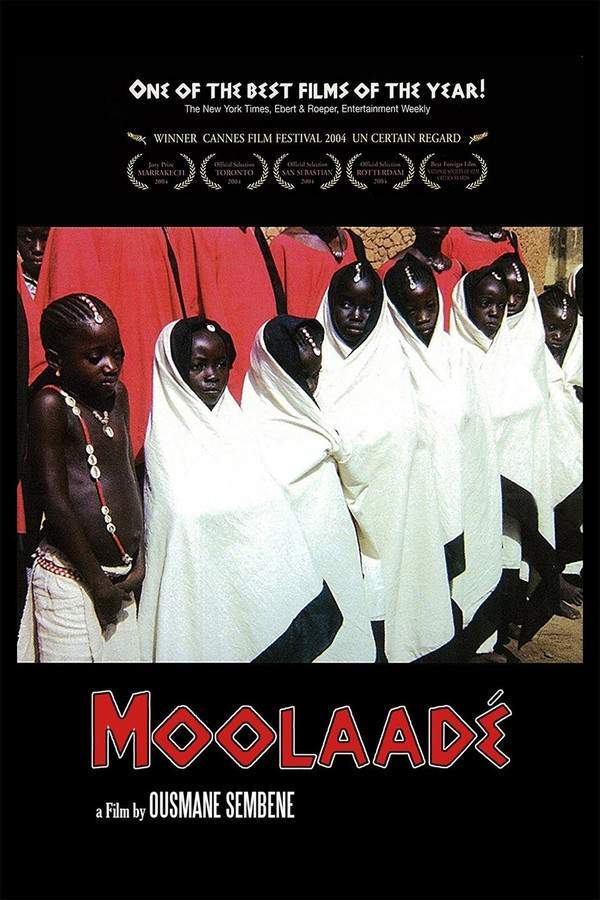
Moolaadé (2004) movie poster

Timeline

Moolaadé (2004) Timeline Explained – Every Event in Order

Release, runtime and language
2004 · 124 min · Bambara
Loading streaming availability…
Directed by
Ousmane Sembene

In a remote African village, four young girls flee a traditional ritual purification ceremony and find safety with Collé, a strong woman who has previously protected her own daughter. Collé’s act of sanctuary challenges the established customs and traditions of the close-knit community, sparking a conflict between modern beliefs and deeply ingrained practices. As tensions escalate, Collé’s courageous stand threatens to unravel the delicate balance of their society.

On this page (6)
  1. 1 Where to watch
  2. 2 Events in order (15)
  3. 3 Timeline questions answered
  4. 4 Movie threads
  5. 5 Movies like Moolaadé
  6. 6 Every angle
Loading streaming availability…

15 events in order · contains spoilers

Moolaadé Timeline: Events in Chronological Order

Every key event of Moolaadé (2004) in order, scene by scene, with when and where it takes place. Use it to untangle flashbacks, time jumps and parallel storylines, to refresh your memory before the sequel or to find the exact scene you are thinking of.

  1. Introduction to the Village

    The film begins in a vibrant Bambara village in Burkina Faso, characterized by termite mounds and a striking clay mosque. This picturesque setting exemplifies the beauty of green Africa while concurrently highlighting its vulnerability to modernization.

    Where
    Bambara village, Burkina Faso
  2. Collé's Position

    Collé is introduced as the second wife of a thoughtful and composed man, enjoying her favored status among the household. However, her daughter Amasatou faces societal challenges due to the absence of traditional female genital cutting.

  3. The Conflict Over Amasatou

    Amasatou's engagement is clouded by the local customs that deem her unfit for marriage without undergoing genital cutting. Collé stands against this practice, making her and her daughter targets of scorn from the elders in the village.

  4. Fleeing from Ritual

    In a desperate act, four frightened girls escape the impending ritual of genital mutilation. Collé offers hope by drawing the protection rope, or Moolaadé, across her home, preventing the village elders from entering.

  5. Support from the Rival

    Initially, Collé's rival, her husband's first wife, appears unsupportive. However, it is revealed that she secretly opposes the genital cutting and assists Collé in her quest, showcasing a bond forged in mutual defiance.

  6. Collé's Painful Past

    Facing her daughter's pleas for circumcision, Collé recounts her own painful experiences, including two nearly fatal pregnancies. Her revelations deepen the connection between maternal protection and the fight against harmful traditions.

  7. Ibrahima's Return

    Ibrahima returns from France, representing a progressive voice challenging patriarchal traditions. He is disturbed by witnessing a funeral for two girls who took their lives to escape genital mutilation, which galvanizes his commitment to Amasatou.

  8. The Elders' Intervention

    The village elders, fearing the influence of modernity embodied by the women’s radios, exert control over Collé's husband, urging him to publicly shame her. However, Collé’s refusal to submit demonstrates her strength and resilience in the face of adversity.

  9. Mercenaire's Complication

    A trader known as Mercenaire, a war veteran, complicates the situation by revealing underlying issues related to child abuse and genital cutting. His presence only intensifies the conflict as he attempts to exploit the villagers with his goods.

  10. Desperate Measures

    A tragedy unfolds when a desperate mother abducts her daughter to force her into the cutting ritual. The child's death during the procedure serves as a catalyst, igniting a movement among the other mothers against the harmful practice.

  11. Collé Reverses Protection

    Moved by the tragic event, Collé decides to revoke her protective stance and returns the fleeing girls to their families. This acts as a turning point that encourages dialogue and action against genital cutting within the community.

  12. Village Unity Against Tradition

    The villagers, inspired by the latest events, unite to denounce the oppressive traditions surrounding genital cutting. This collective resistance represents a significant cultural shift, marking the beginning of a communal fight for women's rights.

  13. Call for Surrender

    Collé boldly calls for the surrender of the cutting knives, symbolizing a crucial victory over past customs. This act of defiance becomes a watershed moment in the village's confrontation with ingrained traditions.

  14. Ibrahima's Defiance

    Ibrahima, fueled by his love for Amasatou, confronts his father's threats, declaring his intention to marry her despite familial pressure. This act of bravery enriches the narrative of love prevailing over oppressive societal norms.

  15. Symbolic Closure

    The film concludes with villagers burning radios, a powerful symbol of the triumph over the silencing of dissent. This imagery marks both a victory for the women and a poignant reminder of the ongoing struggle against patriarchal oppression.

Last updated: November 16, 2024 at 17:59

Was this helpful?

Timeline questions answered

Moolaadé Timeline Explained: Your Questions Answered

When does it happen, and why in that order? The questions people ask about the chronology of Moolaadé (2004): time jumps, flashbacks, cause and effect between scenes and the correct order of events, each answered with spoilers.

Q1

Why does Collé refuse to let her daughter undergo the cutting ritual?

Collé refuses because she experienced the procedure herself and suffered severe consequences, including two harrowing pregnancies that nearly killed her. Her traumatic past drives her determination to protect her daughter from the same physical and psychological damage, even though this stance makes them targets of village scorn.

Foreshadowing: Earlier scenes show Amasatou facing exclusion from marriage due to her uncut status, hinting at the social pressure Collé fights against.

  • Collé
  • Amasatou
  • female genital cutting
  • mother daughter
  • protection
  • trauma
Q2

What is Moolaadé and why does it stop the elders from entering?

Moolaadé is a sacred protection rope that Collé draws across her doorway. In the village's spiritual tradition, it creates a powerful barrier that forbids anyone from crossing it. The elders cannot legally or spiritually enter a home marked with Moolaadé, which is why they are initially forced to negotiate rather than forcibly take the fleeing girls.

Foreshadowing: The term Moolaadé is introduced early as a concept of sanctuary, establishing its significance before the girls arrive.

  • Moolaadé
  • protection rope
  • village elders
  • sanctuary
  • tradition
  • ritual
Q3

Why does the first wife pretend to be unsupportive of Collé?

The first wife secretly opposes the cutting and actively helps Collé throughout, but she maintains a public facade of unsupportiveness to protect herself from the elders' wrath. This double life allows her to assist without drawing attention to herself, revealing hidden resistance among the women.

Foreshadowing: Early scenes show the first wife appearing hostile to Collé, but subtle moments suggest she shares similar views about the practice.

  • first wife
  • Collé
  • secret support
  • village women
  • resistance
Q4

Why does Ibrahima still want to marry Amasatou despite her not being cut?

Ibrahima returns from France with progressive views and is horrified after witnessing a funeral for two girls who committed suicide to escape genital mutilation. This experience convinces him that the practice is barbaric. He defies his family's pressure and declares he will marry Amasatou regardless of her perceived impurity, choosing love and modern values over tradition.

Foreshadowing: The funeral scene directly follows Ibrahima's return and occurs before his confrontation with his family, establishing his firm stance.

  • Ibrahima
  • Amasatou
  • France
  • marriage
  • tradition
  • love
  • progressive
Q5

Why is Mercenaire killed by the villagers?

Mercenaire is a war veteran turned trader who exploits villagers by selling cheap plastic goods at inflated prices. He also openly criticizes the tradition of child marriage and cutting, exposing the village's internal problems to outsiders. His presence becomes a destabilizing force, and the elders ultimately have him killed for his disruptive influence and disrespect of their customs.

Foreshadowing: Mercenaire arrives shortly after the elders intensify their pressure on Collé, adding another layer of conflict.

  • Mercenaire
  • trader
  • war veteran
  • exploitation
  • village elders
  • death
Q6

What causes a mother to abduct her daughter for cutting, leading to tragedy?

Desperate to conform to village customs and avoid social ostracism, one mother secretly abducts her daughter and takes her to be cut. The procedure goes wrong and the child dies. This tragic death directly shocks the other mothers into recognizing the real danger of the practice, catalyzing their collective opposition.

Foreshadowing: The scene occurs after the elders intensify pressure on Collé and represents the extreme consequence of forced compliance.

  • mother
  • daughter
  • death
  • cutting
  • tragedy
  • catalyst
  • social pressure
Q7

Why does Collé decide to return the girls to their families?

The death of the child during the cutting procedure mobilizes the other mothers to oppose the practice. Moved by this turning point and believing the community will now protect the girls, Collé revokes her Moolaadé protection and returns the fleeing girls to their families. This act signals her trust that the village has fundamentally changed.

Foreshadowing: Collé's decision follows immediately after the mothers' shift in attitude, showing her read of the changing tide.

  • Collé
  • girls
  • families
  • protection
  • Moolaadé
  • community change
Q8

What do the burning radios symbolize at the end of the film?

The burning radios carry complex symbolism. Throughout the film, radios represent the women's connection to the outside world and modern ideas that the elders consider dangerous. The burning can be read as both a triumph, showing the villagers rejecting the elders' attempts to silence dissent, and a warning that they may be cutting themselves off from progress in their fight to preserve cultural identity.

Foreshadowing: Radios appear multiple times as symbols of forbidden knowledge, with elders repeatedly demanding they be confiscated.

  • radios
  • burning
  • symbolism
  • ending
  • tradition
  • modernity
  • dissent
Q9

What triggers the village to collectively reject the cutting tradition?

The catalyst is the death of a child during the forced cutting procedure. This tragedy shatters the community's tolerance and awakens the mothers to the real consequences of the practice. Combined with Collé's courageous stand and Ibrahima's public defiance, the mothers unite to demand an end to genital cutting, ultimately leading to the surrender of the cutting knives.

Foreshadowing: The buildup through multiple scenes of pressure on Collé and the growing tension makes this death the breaking point.

  • village
  • unity
  • cutting tradition
  • mothers
  • change
  • collective action
Q10

Why does Ibrahima defy his father's threats about marrying Amasatou?

Ibrahima confronts his father directly because his experiences in France and witnessing the suicide funeral have convinced him the cutting tradition is wrong. His love for Amasatou and his belief in modern values give him the courage to reject his family's coercion. He declares he will marry her despite threats, embodying the clash between tradition and progress.

Foreshadowing: His earlier return from France and his reaction to the funeral establish his progressive convictions.

  • Ibrahima
  • father
  • confrontation
  • marriage
  • Amasatou
  • defiance
  • tradition vs modern

Movie threads

More Movies Like Moolaadé, by Mood & Story

Curated lists built around what makes Moolaadé tick: the same mood, the same kind of story or the same emotional payoff. Each list explains why these movies belong together.

Movies about courageous social defiance like Moolaadé

Stories where one person's stand against injustice inspires a community to change. If you admired the powerful story of resistance in Moolaadé, explore these similar films. This collection features dramas where a lone individual challenges deeply ingrained traditions, sparking intense community conflict and inspiring change. Discover other emotionally heavy, tense stories about the difficult but hopeful fight for justice.

  • tense
  • dramatic
  • oppressive
  • uplifting
  • resolute
  • somber
  • Tone: tense, oppressive, ultimately hopeful
  • Pacing: steady, methodical build
Why these movies?

The story pattern: These stories typically follow a linear but deeply personal conflict. A protagonist, often an insider, confronts a harmful or unjust custom within their own community. The narrative steadily escalates the tension as they face isolation, pressure, and threats, culminating in a climax where their resilience either forces a reckoning or inspires others to join their cause, leading to a meaningful, if bittersweet, shift.

Why they belong together: Movies are grouped here for their shared focus on a powerful central conflict between individual conscience and collective tradition. They share a high-intensity, tense tone, a steady pacing that builds to a cathartic release, and a core emotional journey of heavy burden yielding to hopeful change. The unifying experience is witnessing the immense courage it takes to challenge the status quo.

Tense village drama movies similar to Moolaadé

Stories where a small community becomes a pressure cooker over a deep moral divide. For viewers who appreciated the intense community conflict in Moolaadé, this section highlights other powerful village dramas. These films capture the claustrophobic tension of a small society grappling with a moral crisis. Find more movies where tradition collides with modernity in a tightly-knit setting, leading to dramatic and emotionally charged storytelling.

  • claustrophobic
  • tense
  • dramatic
  • oppressive
  • somber
  • resolute
  • Tone: tense, dramatic, somber
  • Pacing: steady, character-driven
Why these movies?

The story pattern: The narrative pattern revolves around an insular world—a village, small town, or tight-knit group—whose harmony is shattered by a conflict over values. The story methodically explores how different characters align with tradition or change, leading to alliances, betrayals, and public dramas. The pacing is steady, focusing on the psychological pressure and social dynamics rather than fast action, often resolving with a changed social order.

Why they belong together: These films are connected by their specific world-building and mood. The enclosed setting creates a palpable sense of claustrophobia and inevitability. They share a tense, dramatic tone, steady pacing that allows the conflict to simmer, and a focus on the collective emotional weight of a community in crisis. The experience is of being immersed in a pressurized social environment.

If you liked this

Movies Like Moolaadé

Similar movies to Moolaadé: the same genre, themes or kind of story. Each one comes with its own plot summary, timeline and ending explained.

Browse all movie summaries

Every angle

Moolaadé (2004) Explained: Plot, Timeline & Characters

Everything about Moolaadé in one place: what happens in the plot summary, the timeline in chronological order, the characters and meaning and a spoiler-free summary. What's After the Movie adds the cast, box office and post-credit scenes.

Coming soon on iOS and Android

The Plot Explained Movie Summary App

Plot summaries, endings explained and timelines on your phone. Catch up on any movie in minutes, save your favorites and never miss a twist again.

Be the first to know when we launch. Your email stays private, always.

Learn more about the app