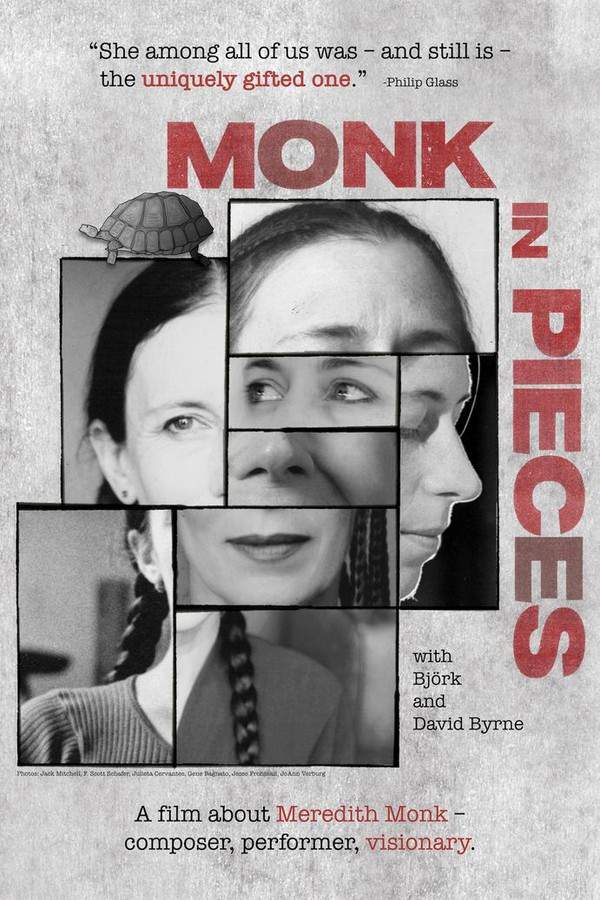
Monet, Meredith Monk, a trailblazing composer, performer, and interdisciplinary artist, stands as one of the most influential figures in contemporary art, although her vast cultural impact remains largely unrecognized by the broader public. Her work is characterized by a rich, original vocabulary of sound and imagery that continually pushes the boundaries of conventional artistic expression.
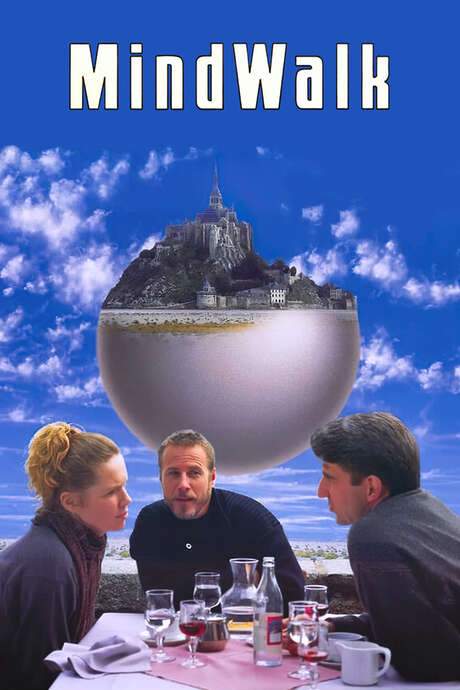
The film Monk in Pieces offers an insightful glimpse into her creative universe, structured as a mosaic that echoes the very nature of Monk’s own artistic style. Each chapter in the documentary is anchored by a single song and highlights significant moments in her artistic journey. For example, "Memory Song," which draws on images from her 1981 film Ellis Island, delves into Monk’s ancestral roots and her foundational musical influences, providing viewers with a deep understanding of her personal history that shapes her work.
Another important segment, "Dolmen Music," features a 1982 performance captured by filmmaker Peter Greenaway, illustrating the complex palette of sounds that nurtured a young Björk at the age of 16, inspiring her to pursue singing. This performance not only showcases Monk’s innovative approach to sound but also underscores her influence on subsequent generations of musicians.
Throughout the documentary, viewers are also given intimate glimpses of Monk’s solitary daily routine within her Tribeca loft, a space where she has lived and created since the early 1970s. These scenes serve to humanize her and reveal the environment where her groundbreaking ideas come to life, emphasizing the deeply personal nature of her art.
As a woman navigating the male-dominated art scene of downtown New York in the 1970s and beyond, Meredith Monk faced considerable obstacles. Early reviews from major outlets such as The New York Times were dismissive and even harsh—Clive Barnes labeled her work “a disgrace to the name of dancing,” and John Rockwell dismissed her as “earnestly strange in a talented-little-girl way.” Nevertheless, her peer, Philip Glass, praises her as “the uniquely gifted one,” acknowledging her exceptional talent that continues to resonate today.
One pivotal moment in her career was her revelation about the extraordinary potential of the human voice while practicing at her piano, a discovery that became a cornerstone of her artistic identity. She then dedicated herself to developing a distinctive vocal language that distinguishes her performances and compositions.
The documentary also explores Monk’s process of creating her work, which is often tailored specifically to the voices and bodies of her ensemble. For instance, the 1991 premiere of ATLAS at Houston Grand Opera is depicted through archival footage and internal memos, highlighting the challenges and intensive effort behind her innovative productions. Despite doubts and obstacles—such as limited rehearsals and uncertainty about the readiness of the piece—ATLAS eventually gained recognition as one of the defining operatic experiments of the 20th century, as acknowledged by The New York Times.
In its final chapters, the film addresses Monk’s reflections on mortality and her relationship with her work. We see her entrust ATLAS to the capable hands of opera director Yuval Sharon and singer Joanna Lynn-Jacobs for a new production at the Los Angeles Philharmonic, symbolizing her readiness to step back and let her creations live on even after her journey concludes. Throughout her six-decade career—marked by directing and performing in her own innovative music theater works—Monk has exemplified a fearless commitment to artistic integrity, constantly evolving and resisting the pressures to conform.
As she faces the inevitable, her story raises profound questions about legacy, creation, and the enduring power of the human voice and imagination. Monk in Pieces offers an invaluable window into the mind of a true artistic pioneer, celebrating her revolutionary contributions while contemplating her legacy and the future of her groundbreaking work.