Plot Explained Spoilers guaranteed!
Plot Explained

Browse by genre

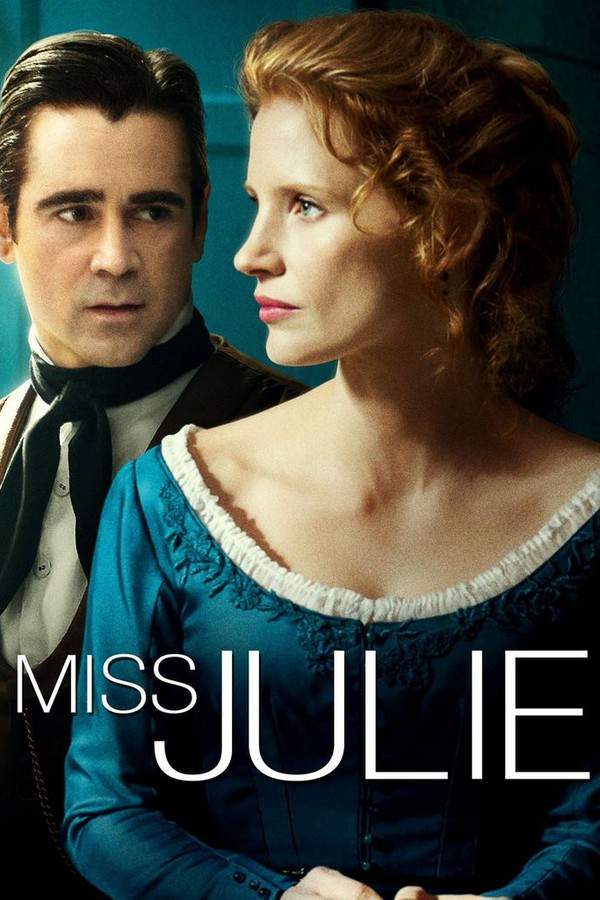
Miss Julie (1951) movie poster

Plot Summary

Miss Julie (1951) Plot Summary Explained

Release, runtime and language
1951 · 90 mins · Swedish
Loading streaming availability…
Directed by
Alf Sjöberg
Starring
Bibi Andersson, Margaretha Krook, Max von Sydow, Inga Gill, Svea Holst, Carl Andersson

Adapted from August Strindberg’s play, the film portrays a clash of gender and social hierarchy as Julie, the daughter of a wealthy businessman, becomes romantically entangled with Jean, the servant in her father’s household. Their attraction sparks a struggle that lays bare the rigid class divisions and power dynamics between them.

On this page (6)
  1. 1 Where to watch
  2. 2 What happens: full plot
  3. 3 Plot questions answered
  4. 4 Movie threads
  5. 5 Movies like Miss Julie
  6. 6 Every angle
Loading streaming availability…

Full plot summary · contains spoilers

What Happens in Miss Julie: Full Plot Summary

The whole story of Miss Julie (1951) explained, from the opening scene to the final frame: every key event, every twist and what it all adds up to. Read it as a quick recap before the sequel, to check a scene you missed, or to finally understand what really happened.

During a scandalous broken engagement, Miss Julie, the daughter of Count Carl, forgoes a family Midsummer's Eve celebration to attend the estate servants' ball, choosing to mingle with people who normally stand at the bottom of the social ladder. There, she dances with one of the servants, Jean, whom she finds herself increasingly drawn to. She orders him to sit at the table with her for beers and humiliates him by making him kiss her shoe. Outside, she makes advances on him; the hand, hidden behind a sculpture, witnesses the encounter in shock. Miss Julie asks Jean if he has ever been in love. He replies that he loved her as a boy when he lived in poverty and saw her on the estate, but he was chased off as an "urchin." The servants march forward, singing and looking for Jean; Julie and Jean realize the scandal that will erupt if they are seen together and attempt to escape and hide, but the hand has already told of what he saw.

Jean and Julie contemplate escape; Jean condemns the tradition and class bias of Sweden, expressing a desire to take a train to Italy, where he could run a hotel with investment capital from Julie. Julie counters that she has no money of her own and is shocked by his sudden demeanor of callousness toward her. He is unconcerned about her fears of the Count learning of the scandal and reveals he is not willing to die for her, as he had suggested. He then recounts his boyhood, and Julie retells her own girlhood: her mother, Countess Berta, a commoner who believed in women’s rights, had to be persuaded to marry; Julie was dressed in boys’ clothes, but she preferred playing with dolls. The Countess set fire to their home, and the Count later attempted suicide by firearm. Upon hearing the story, Jean declares himself of superior heritage, as Julie is the daughter of an arsonist.

Before leaving on Midsummer's Day, Jean sees Julie's finch Serine and declares they cannot take a birdcage. When Julie says she would rather Serine die than be left behind, Jean breaks its neck; Julie curses him and the day she was born. When the Count returns, he finds Julie has killed herself by razor, beneath the portrait of the Countess.

Last updated: October 07, 2025 at 09:46

Was this helpful?

Plot questions answered

Miss Julie Plot Explained: Your Questions Answered

The questions people ask most about Miss Julie (1951): what happens in the confusing scenes, why the characters do what they do, the twists, hidden details and what the ending means. Each answer contains spoilers.

Q1

Why does Miss Julie abandon the family Midsummer celebration to attend the servants' ball?

Julie seeks to escape the constraints of her aristocratic life after her engagement was scandalously broken. She is drawn to assert her independence and rebellion against the rigid class system by literally stepping into the servants' world. Her choice represents a direct challenge to social hierarchy, though it ultimately leads to her downfall.

  • class rebellion
  • midsummer celebration
  • social hierarchy
  • aristocracy
Q2

Why does Miss Julie humiliate Jean by making him kiss her shoe?

Julie uses her aristocratic power to assert dominance over Jean, testing the boundaries of class despite being physically intimate with him. The humiliation is both a power play and a way to process her broken engagement, she asserts control in one realm after losing it in another. The moment also reveals her conflicted attraction to someone beneath her station.

  • power dynamics
  • humiliation
  • class tension
  • dominance
Q3

Why does Jean suddenly change his demeanor and propose fleeing to Italy to run a hotel?

Jean sees Julie as his opportunity to escape his servant status and achieve financial independence. His sudden shift to callous pragmatism reveals he views Julie primarily as capital for his ambitions rather than a romantic partner. The Italy plan represents his class aspiration, he wants to become a hotel owner, ascending socially through her imagined wealth.

  • social mobility
  • italy
  • hotel
  • ambition
  • class aspiration
Q4

Why does Jean break the finch's neck instead of taking Serine with them?

Jean refuses to take the birdcage because it represents baggage that slows their escape and could expose their whereabouts. When Julie says she would rather the bird die than be left behind, Jean responds with brutal pragmatism, he kills the finch rather than compromise their escape. This act reveals his cold prioritization of survival over Julie's emotional attachments.

  • serine
  • finch
  • bird
  • cruelty
  • escape
Q5

What is the significance of Julie's childhood story about her mother Countess Berta?

Julie reveals her mother was a commoner who believed in women's rights and was persuaded to marry Count Carl. Julie was dressed in boys' clothes but preferred dolls, and her mother later set fire to their home before the Count attempted suicide. This traumatic family history explains Julie's psychological instability and her desire to escape her aristocratic cage, the same cage that trapped her mother.

  • countess berta
  • childhood
  • fire
  • father
  • trauma family history
Q6

Why does Jean claim to have superior heritage over Julie after hearing her childhood story?

After learning Julie's mother was an arsonist who burned down their home, Jean uses this to claim moral superiority despite his lower class status. He argues that Julie carries 'tainted' aristocratic blood through her mother's crime, while he frames himself as less corrupted. This is both a genuine shift in how he views her and a rhetorical weapon to justify his exploitation of her vulnerability.

  • heritage
  • lineage
  • arson
  • superiority
  • class blood
Q7

Why does Miss Julie kill herself at the end of the film?

Julie commits suicide with a razor beneath her mother's portrait after realizing Jean will abandon her and the Count is returning. She faces ruin from both the scandal and her complete abandonment by the only person she trusted. The suicide represents her final, tragic assertion of control, she chooses death over facing the consequences of broken class boundaries and ruined reputation.

  • suicide
  • razor
  • countess portrait
  • despair
  • death
Q8

Why does Jean refuse to die for Julie after initially suggesting they could die together?

Jean reveals his earlier romantic rhetoric was hollow, he is unwilling to sacrifice himself for Julie. His pragmatic survival instinct overrides any romantic devotion. He prioritizes escaping consequences over loyalty, and his refusal exposes that his pursuit of Julie was always driven by self-interest rather than genuine love.

  • death
  • sacrifice
  • loyalty
  • pragmatism
  • romance betrayal
Q9

What is the significance of the hidden witness who sees Julie and Jean together?

A servant's hand, hidden behind a sculpture, witnesses Julie and Jean's intimate encounter outside. This witness represents the ever-present surveillance of the lower classes over their aristocratic masters. The hand's later report of what he saw sets the scandal in motion, ultimately contributing to the tragic chain of events that leads to Julie's suicide.

  • witness
  • surveillance
  • scandal
  • servant
  • gossip
Q10

How does Julie's broken engagement contribute to her behavior throughout the film?

The scandalous broken engagement has left Julie humiliated and rebellious against the aristocratic system that controlled her life. It provides the immediate catalyst for her desire to transgress class boundaries by attending the servants' ball. Her engagement's failure also leaves her financially and socially vulnerable, making Jean's promise of escape to Italy seem appealing despite its impracticality.

  • engagement
  • broken engagement
  • shame
  • rebellion
  • vulnerability
Q11

How does the power dynamic between Jean and Julie shift throughout the film?

Initially, Julie asserts dominance through class privilege, ordering Jean to sit with her, humiliating him by kissing her shoe. However, once they are discovered and plan to escape, Jean gains power through his practical control over the escape plan and his willingness to leave Julie behind. By the end, Jean holds all the leverage while Julie is completely dependent, leading to her psychological breakdown and suicide.

  • power
  • control
  • dominance
  • class struggle
  • manipulation

Movie threads

More Movies Like Miss Julie, by Mood & Story

Curated lists built around what makes Miss Julie tick: the same mood, the same kind of story or the same emotional payoff. Each list explains why these movies belong together.

Movies about doomed cross-class romance like Miss Julie

Romantic attractions that shatter against the rigid walls of social hierarchy. If the tragic, forbidden love in Miss Julie captivated you, explore more movies like it. This thread gathers similar stories of romance doomed by class conflict, where passion clashes with power dynamics, leading to bleak and heartbreaking conclusions.

  • tragic
  • tense
  • desperate
  • fatalistic
  • oppressive
  • melancholic
  • Tone: dark, tragic
  • Pacing: steady, building
Why these movies?

The story pattern: The narrative pattern follows an intense, often sudden, attraction that defies social norms. This initial spark ignites a power struggle, where the romance is inseparable from the conflict of class and status, building steadily towards an inevitable and devastating collapse.

Why they belong together: Movies in this thread share a core focus on romance as a destructive force within a rigid social system. They are united by a dark tone, heavy emotional weight, and a bleak ending that comments on the immutability of class divisions.

Claustrophobic psychological dramas like Miss Julie

Two characters locked in a tense, intimate battle for dominance and survival. For viewers who appreciated the intense, dialogue-driven power struggle in Miss Julie, this section features similar movies. Discover psychological dramas built around tense, confined confrontations between two characters, where the battle of wits leads to devastating consequences.

  • tense
  • claustrophobic
  • psychological
  • oppressive
  • desperate
  • fatalistic
  • Tone: oppressive, tense
  • Pacing: steady, methodical
Why these movies?

The story pattern: The narrative is tightly focused on the escalating psychological war between two opposing forces. Set in a confined space, the plot unfolds through verbal sparring and manipulation, steadily increasing tension until it reaches a breaking point with profound, often tragic, consequences.

Why they belong together: These movies are grouped by their oppressive, tense mood and their structural focus on a dual-character conflict. They share a high intensity, a steady, methodical pacing, and a heavy emotional weight derived from the characters' psychological unraveling.

If you liked this

Movies Like Miss Julie

Similar movies to Miss Julie: the same genre, themes or kind of story. Each one comes with its own plot summary, timeline and ending explained.

Browse all movie summaries

Every angle

Miss Julie (1951) Explained: Plot, Timeline & Characters

Everything about Miss Julie in one place: what happens in the plot summary, the timeline in chronological order, the characters and meaning and a spoiler-free summary. What's After the Movie adds the cast, box office and post-credit scenes.

Coming soon on iOS and Android

The Plot Explained Movie Summary App

Plot summaries, endings explained and timelines on your phone. Catch up on any movie in minutes, save your favorites and never miss a twist again.

Be the first to know when we launch. Your email stays private, always.

Learn more about the app