Plot Explained Spoilers guaranteed!
Plot Explained

Browse by genre

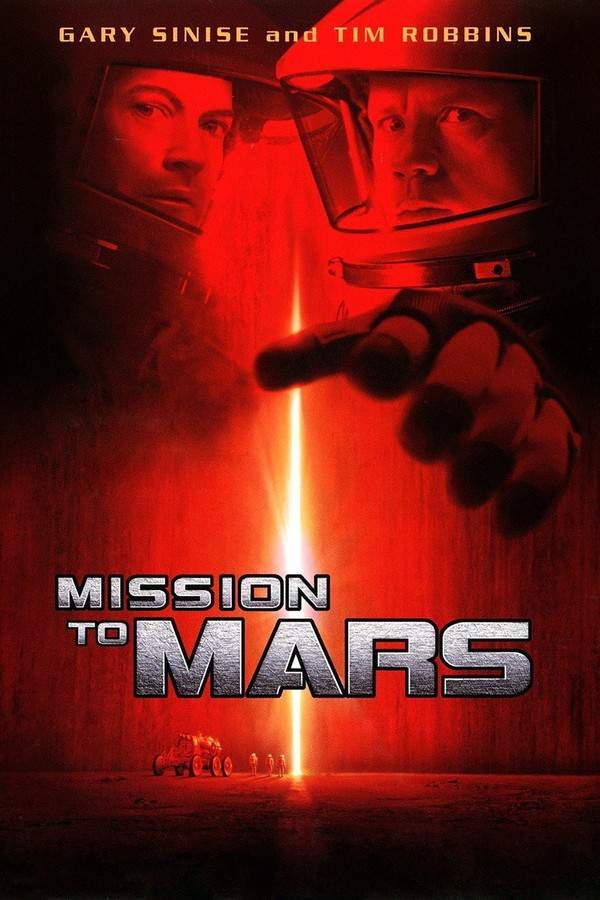
Mission to Mars (2022) movie poster

Plot Summary

Mission to Mars (2022) Plot Summary Explained

Release, runtime and language
2022 · 72 mins · Spanish
Loading streaming availability…
Directed by
Amat Vallmajor del Pozo
Starring
Mila del Pozo, Gerardo del Pozo, Txomin del Pozo

In a post‑apocalyptic Basque Country, unemployed archaeologist Txomin receives a commission to write an expert report on Mars. He and his frail brother Gene set off from Eibar on a surreal road‑trip across northern Spain, joined later by their sister Mila after a toxic mist derails their route. Old family grievances surface, and with the aid of spectral figures and even a vision of Jesus Christ, the brothers press on to fulfill their Mars mission.

On this page (5)
  1. 1 Where to watch
  2. 2 What happens: full plot
  3. 3 Plot questions answered
  4. 4 Movie threads
  5. 5 Every angle
Loading streaming availability…

Full plot summary · contains spoilers

What Happens in Mission to Mars: Full Plot Summary

The whole story of Mission to Mars (2022) explained, from the opening scene to the final frame: every key event, every twist and what it all adds up to. Read it as a quick recap before the sequel, to check a scene you missed, or to finally understand what really happened.

In 2020, a high-stakes Mars I mission is launched to push the boundaries of human presence on the red planet, with the crew led by a capable commander. As the team reaches the Cydonia region, they stumble upon a striking white formation that seems almost otherworldly. Their first readings suggest it might be the product of a subsurface geothermal process that could one day support human colonization. The discovery quickly becomes the focal point of their mission, and they relay the information to the Earth-orbiting World Space Station as they prepare to investigate more closely.

What begins as a routine examination rapidly takes a strange turn. While the engineers monitor the formation, a faint, unsettling hum threads through the通讯 channels, growing louder as power is dialed up. Initially, radar insists the structure is metallic, but when the crew intensifies the signal, a colossal vortex erupts from the formation. The vortex proves deadly, severing contact and taking the lives of everyone on site except for the mission lead, who is left to confront the mystery alone. In the aftermath, the structure is revealed to be far more than a mere anomaly: a colossal humanoid face emerges from the dust, marking a moment of awe and unease for anyone who witnesses it.

The event triggers a powerful electromagnetic pulse that disrupts Earth-to-space communications, while a distress message arrives from the lone survivor. Realizing that the pulse could have disabled the Earth Return Vehicle’s systems, the space agency makes a bold decision: the Mars II mission, already en route, must pivot to a rescue operation. Months pass, and the rescue team—comprising a seasoned commander, his spouse, a recent widower, and a skilled technician—embark on a perilous journey to Mars orbit. However, the mission quickly encounters a cascade of misfortunes. Satellite imagery of the formation area is swallowed by static, micrometeoroids breach exterior fuel lines, and the engines fail in a catastrophic explosion. The crew is forced to abandon the Mars II, venturing out in their spacesuits toward a nearby Resupply Module.

In a harrowing sequence, one crewmate sacrifices himself to save another. Stranded and separated, the remaining astronauts endure the brutal realities of space travel and Mars’ harsh environment, ultimately arriving on the planet’s surface to begin the painstaking repair of the Earth Return Vehicle. It is during this tense interlude that they encounter a survivor living in a greenhouse—a person who has kept faith in a future on Mars. This survivor, who has witnessed the enigmatic formation from within, shares images of the face and reveals a cryptic truth: the low-frequency pulses they heard were actually a three-dimensional model of human DNA, but something crucial is missing—a second chromosome pair.

With this revelation, the team realizes they must complete the genetic sequence to satisfy a test embedded within the structure. A plan forms: they send a rover to broadcast the completed sequence via radar, hoping to unlock the mystery’s next phase. The strategy works, and an enormous opening emerges on the side of the colossal formation. Time is short, as a massive dust storm barrels toward them, threatening to trap everyone inside the newly opened cavity. The group—two remaining astronauts and the greenhouse survivor—decide to venture inside.

Inside, they encounter a breathtaking sequence of revelations. A three-dimensional projection of the Solar System unfolds, showing a Martian world once rich with water that was struck by a catastrophic asteroid and rendered uninhabitable. A second projection reveals a Martian lifeform, one that has watched over the planet’s exodus as its people evacuated in ships. These beings had seeded Earth with DNA, hoping to plant the seeds of life that would one day recognize Mars as a shared ancestral home. The Martians extend an invitation to one of the humans to accompany them to their new home, a proposition that carries immense weight and consequence.

One member of the team accepts the invitation, bidding a quiet farewell to the others before stepping into a compact capsule. Back on the surface, the remaining duo races toward the Earth Return Vehicle, trying to outrun the encroaching storm. Just as the storm closes in, the chosen one’s capsule launches toward the Martian fleet, finally slipping away in a path that seems to trace the ancient voyage of those alien visitors who once seeded two worlds. The surviving pair barely escapes the dust storm and returns to space, where their mission evolves into an unprecedented rendezvous between human explorers and a distant, alien future.

Last updated: October 01, 2025 at 10:23

Was this helpful?

Plot questions answered

Mission to Mars Plot Explained: Your Questions Answered

The questions people ask most about Mission to Mars (2022): what happens in the confusing scenes, why the characters do what they do, the twists, hidden details and what the ending means. Each answer contains spoilers.

Q1

Why did the vortex kill everyone on Mars I except Luke?

The vortex was triggered when the crew increased radar power to examine the formation. Luke survived because he was the only crew member positioned outside the immediate blast zone when the vortex erupted. The electromagnetic pulse that followed severed all communications with Earth, leaving Luke as the sole witness to the deadly event.

Foreshadowing: The low-frequency hum that interrupted communications before the vortex appeared was actually a warning signal.

  • vortex
  • Luke
  • Mars I crew
  • radar
  • death
Q2

What was the white formation on Mars?

The white formation was not a geological feature but a colossal humanoid face embedded in the Martian surface. It was revealed after the vortex subsided, standing as an artificial structure built by ancient Martians. The face served as both a monument and a communication device.

Foreshadowing: The formation's initial readings suggesting geothermal processes were a misdirection from its true artificial nature.

  • white formation
  • face
  • Cydonia
  • Martian structure
Q3

Why did the Martians seed Earth with DNA?

After Mars was rendered uninhabitable by a catastrophic asteroid impact, the surviving Martians evacuated the planet. Before leaving, they seeded Earth with DNA to preserve their genetic legacy, hoping that humanity would one day evolve and recognize Mars as their ancestral home. The DNA was their message in a bottle across cosmic time.

Foreshadowing: The 3D DNA model missing a chromosome pair was the Martians' way of leaving an incomplete puzzle for humans to solve.

  • Martians
  • DNA
  • seeding
  • Earth
  • asteroid
  • evolution
Q4

What was the test the Martians gave humans?

The Martians embedded a test within the face structure: humans had to complete the DNA sequence they had seeded. The formation emitted pulses representing a 3D model of human DNA, but one chromosome pair was deliberately missing. When the rescue team broadcast the completed genetic sequence via rover radar, the structure recognized humanity's readiness and opened its entrance.

Foreshadowing: Luke's survival and his discovery of the greenhouse survivor suggest he was meant to be part of this test.

  • test
  • DNA sequence
  • chromosome
  • rover
  • Martians
Q5

Why did Terri sacrifice herself to save Woody?

During the escape from the exploding Mars II, Woody lost his grip on the rescue tether and began descending toward the Martian atmosphere. Terri attempted to pull him to safety but faced dwindling fuel. Woody removed his helmet to reduce weight, sacrificing himself so Terri could survive and continue the mission.

Foreshadowing: The micrometeoroid damage to Mars II created the desperate circumstances that led to this sacrifice.

  • Terri
  • Woody
  • sacrifice
  • helmet
  • rescue
Q6

What happened to Jim at the end of the movie?

Jim accepted the Martian invitation to join them on their journey to a new world. He was sealed inside a compact capsule and launched toward the Martian fleet as Terri and Luke escaped in the Earth Return Vehicle. Jim's departure represented humanity's first contact with an advanced alien civilization, though it came at the cost of leaving his companions behind.

Foreshadowing: The Martians' offer to invite one human was extended after they recognized humanity's genetic completion.

  • Jim
  • invitation
  • capsule
  • Martians
  • departure
Q7

Why was the DNA missing a chromosome pair?

The DNA model was incomplete by design. The Martians left one chromosome pair missing as part of their test for humanity. The idea was that a species smart enough to recognize the pattern and complete the genetic sequence would prove their worthiness for contact. This intentional gap forced humans to demonstrate their evolutionary understanding.

Foreshadowing: The low-frequency pulses Luke heard were actually the DNA data being transmitted.

  • DNA
  • chromosome
  • missing
  • signal
  • pulses
Q8

Why did the Mars Rescue mission fail?

The Mars Rescue mission suffered multiple catastrophes en route to Mars. Satellite imagery of the formation area was swallowed by static, micrometeoroids breached the ship's exterior fuel lines, and the engines failed in a catastrophic explosion. The crew was forced to abandon Mars II and take shelter in the Resupply Module, losing most of their equipment and supplies.

Foreshadowing: The electromagnetic pulse from the first contact had already disrupted Earth-to-space communications.

  • Mars Rescue
  • failure
  • micrometeoroids
  • explosion
  • engine
Q9

What did humans discover inside the Martian structure?

Inside the structure, a three-dimensional projection revealed Mars as a once water-rich world that was destroyed by a catastrophic asteroid impact. A holographic Martian lifeform explained that their people evacuated before the catastrophe and seeded Earth with DNA before departing. They then extended an invitation for one human to accompany them to their new world.

Foreshadowing: The greenhouse survivor had already seen images of the face and understood part of the truth.

  • structure
  • projection
  • Mars history
  • asteroid
  • holographic
Q10

Why was Luke the only survivor of Mars I?

Luke survived because he was positioned away from the immediate site when the vortex erupted. While the other crew members were directly at the formation when radar activation triggered the deadly event, Luke was just outside the lethal zone. This positioning allowed him to witness the destruction while avoiding the vortex's direct impact.

Foreshadowing: The formation seemed to selectively spare Luke for reasons that become clearer later.

  • Luke
  • survivor
  • Mars I
  • vortex
  • positioning
Q11

How did the survivors escape the dust storm on Mars?

As the massive dust storm approached, Terri and Luke raced toward the Earth Return Vehicle while Jim's capsule launched toward the Martian fleet. The timing was critical, the storm was about to close in on the newly opened cavity. The pair barely escaped by blasting off moments before the storm engulfed the structure, leaving Jim to depart alone toward the alien vessels.

Foreshadowing: Phil stayed behind to complete ERV repairs, enabling the final escape.

  • dust storm
  • escape
  • ERV
  • Terri
  • Luke
  • Jim

Movie threads

More Movies Like Mission to Mars, by Mood & Story

Curated lists built around what makes Mission to Mars tick: the same mood, the same kind of story or the same emotional payoff. Each list explains why these movies belong together.

Existential Sci-Fi Road Trips like Mission to Mars

Surreal journeys through broken landscapes that question humanity's place in the cosmos. If you liked the surreal, high-intensity journey in Mission to Mars, explore more movies where characters embark on epic trips through strange worlds, grappling with heavy existential questions and uncanny discoveries. These films blend tense survival with deep philosophical drama.

  • surreal
  • desolate
  • existential
  • tense
  • awe-inspiring
  • melancholic
  • Tone: tense, melancholic, awe-inspiring
  • Pacing: fast, driven by survival
Why these movies?

The story pattern: Narratives typically follow a group or individual on a challenging trek through a surreal or post-apocalyptic landscape. The physical obstacles they face force them to confront old grievances and new truths, building towards a revelation that recontextualizes humanity's role in the universe, often with a bittersweet cost.

Why they belong together: Movies are grouped here for their shared focus on a journey as a metaphor for existential inquiry, blending high-stakes survival with a melancholic, awe-inspiring tone and complex themes of cosmic destiny.

Bittersweet Cosmic First Contact stories like Mission to Mars

Profound alien encounters that bring transcendent knowledge at a heavy personal cost. For viewers who enjoyed the heavy emotional weight and bittersweet alien revelation in Mission to Mars, this section features similar movies about profound first contact. These films explore the lonely, awe-inspiring, and often costly consequences of meeting a cosmic destiny.

  • awe-inspiring
  • lonely
  • uncanny
  • anxious
  • melancholic
  • existential
  • Tone: awe-inspiring, tense, melancholic
  • Pacing: fast, mysterious
Why these movies?

The story pattern: The narrative pattern involves a gradual unraveling of a cosmic mystery, building tension towards a climactic encounter with an alien presence. The revelation is not purely uplifting; it demands a sacrifice or a difficult choice from the protagonists, resulting in an ending that mingles awe with a profound sense of loneliness or loss.

Why they belong together: These films share a specific emotional arc: the awe of discovery is tempered by the heavy cost of that knowledge. They feature tense pacing, complex mysteries, and a dominant tone that balances the uncanny and the melancholic.

Every angle

Mission to Mars (2022) Explained: Plot, Timeline & Characters

Everything about Mission to Mars in one place: what happens in the plot summary, the timeline in chronological order, the characters and meaning and a spoiler-free summary. What's After the Movie adds the cast, box office and post-credit scenes.

Coming soon on iOS and Android

The Plot Explained Movie Summary App

Plot summaries, endings explained and timelines on your phone. Catch up on any movie in minutes, save your favorites and never miss a twist again.

Be the first to know when we launch. Your email stays private, always.

Learn more about the app