Plot Explained Spoilers guaranteed!
Plot Explained

Browse by genre

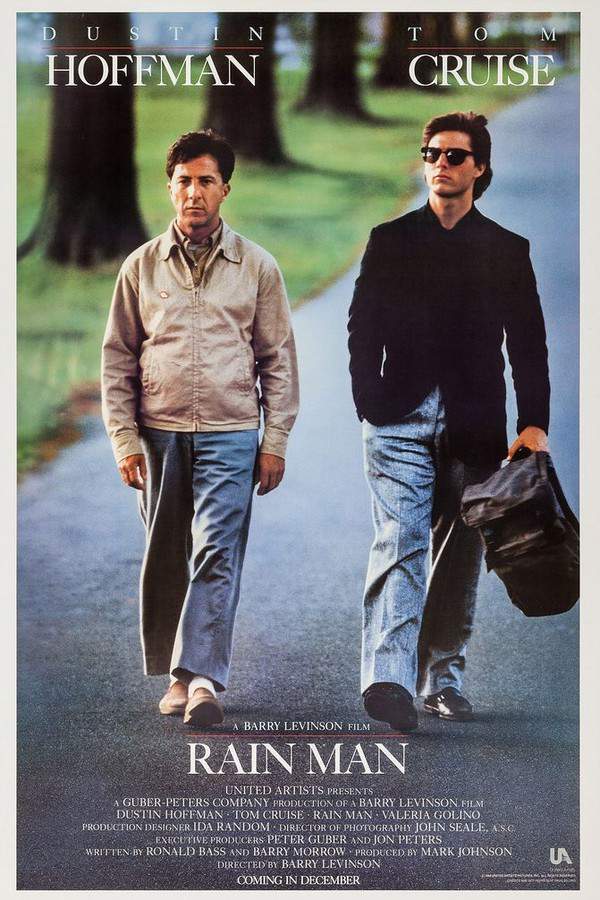
Rain Man (1988) movie poster

Plot Summary

Rain Man (1988) Plot Summary Explained

Release, runtime and language
1988 · 133 min · English
JustWatch #1,978 15
Directed by
Barry Levinson
Starring
Tom Cruise, Dustin Hoffman
Budget
$25M

Charlie Babbitt is stunned to learn his autistic older brother, Raymond, is the heir to a substantial inheritance. Determined to get his hands on the money, Charlie impulsively takes Raymond on a cross-country road trip from Cincinnati to Los Angeles. During their journey, the brothers experience unexpected moments of connection and understanding, leading to personal growth and a reevaluation of their relationship.

On this page (6)
  1. 1 Where to watch
  2. 2 What happens: full plot
  3. 3 Plot questions answered
  4. 4 Movie threads
  5. 5 Movies like Rain Man
  6. 6 Every angle

Where to watch

Where to Watch Rain Man (1988)

Where can you watch Rain Man? Stream, rent or buy it in the US, including on Amazon Prime Video, HBO Max and MGM Plus: current JustWatch availability with up-to-date prices.

Streaming availability powered by JustWatch

Full plot summary · contains spoilers

What Happens in Rain Man: Full Plot Summary

The whole story of Rain Man (1988) explained, from the opening scene to the final frame: every key event, every twist and what it all adds up to. Read it as a quick recap before the sequel, to check a scene you missed, or to finally understand what really happened.

Charlie Babbitt, portrayed by Tom Cruise, is a twenty-something car dealer from Los Angeles who finds himself in a bind while trying to import four gray market Lamborghinis. With the EPA threatening the deal, Charlie faces potential financial ruin. Just as he plans a weekend getaway to Palm Springs with his girlfriend, Susanna, played by Valeria Golino, he receives heartbreaking news: his estranged father, Sanford Babbitt, has passed away.

Traveling to Cincinnati, Ohio, to settle the family affairs, Charlie discovers an unexpected twist in the will—an undisclosed trustee is set to inherit a whopping $3 million on behalf of a beneficiary he knows nothing about. Instead, all he receives is a vintage Buick Roadmaster convertible and several prize-winning rose bushes. As tensions rise, he uncovers that the money is allocated to a mental institution housing his autistic brother, Raymond, played by Dustin Hoffman, someone Charlie never knew existed. This revelation strikes Charlie profoundly as he laments, > "Why didn't somebody tell me I had a brother?"

Despite his autism, Raymond exhibits remarkable memory skills, especially in mathematics, though he often lacks comprehension of the topics at hand. Some professionals refer to him as a savant. His world revolves around rigid routines and a deep discomfort with change, which is illustrated through his repeated recitation of the classic “Who’s on First?” comedy sketch. Emotionally reserved and avoiding eye contact, Raymond reveals layers of complexity that leave Charlie in a whirlwind of confusion and frustration.

Fueled by the desire to claim what he believes to be his rightful share of their father’s estate, Charlie embarks on a cross-country road trip with Raymond, circumventing air travel due to Raymond's phobia of flying. Charlie's original intention is to initiate a custody battle that would allow him to negotiate with Raymond's doctor, Dr. Gerald R. Bruner, in hopes of securing part of the inheritance for himself. This plan creates a rift with Susanna, who is disillusioned by Charlie's self-serving motives and ultimately decides to part ways in Cincinnati.

As the journey unfolds, Charlie learns more about Raymond’s condition, struggling to accept its authenticity and frequently growing frustrated with his brother’s quirks. Throughout their travels, stories from their childhood come to light, including song snippets of “I Saw Her Standing There” by The Beatles, which awaken memories of Raymond as Charlie's childhood guardian, misidentified as an imaginary friend named "Rain Man," a phonetic slip of "Raymond."

Charlie’s initial exploitative behavior becomes a point of transformation as he realizes Raymond’s immense value beyond financial gain. His foray into gambling in Las Vegas, exploiting Raymond’s counting abilities to win at blackjack, offers a glimpse into Charlie's changing character. By the end of their adventure, he begins to deeply care for Raymond, revealing a protective and loving side previously overshadowed by his greed.

Ultimately, when faced with his attorney to discuss inheritance claims, Charlie undergoes a profound shift, realizing that he truly desires to have his brother with him rather than any monetary reward. During a pivotal meeting with a court-appointed psychiatrist, cautioning Raymond about his decisions causes distress, leading Charlie to assertively protect his brother's well-being. In a bittersweet conclusion, Raymond returns to Cincinnati, and Charlie, having grown in his understanding, promises to visit him in two weeks, solidifying a newfound bond that transcends their earlier struggles.
Last updated: November 03, 2024 at 11:57

Was this helpful?

Plot questions answered

Rain Man Plot Explained: Your Questions Answered

The questions people ask most about Rain Man (1988): what happens in the confusing scenes, why the characters do what they do, the twists, hidden details and what the ending means. Each answer contains spoilers.

Q1

Why did Charlie's father keep Raymond a secret from him?

Sanford Babbitt kept Raymond hidden because he was placed in a mental institution due to his autism. The father likely believed it was best for both sons, Charlie grew up without knowing he had a brother, while Raymond received care in a controlled environment. This secret created the central mystery of the film when Charlie discovers the truth about the inheritance.

Foreshadowing: Earlier in the film, Charlie mentions feeling like something was missing in his childhood, hinting at the unresolved family secret.

  • Sanford Babbitt
  • inheritance
  • hidden brother
  • family secret
  • autism
Q2

Why did Charlie take Raymond on the cross-country trip?

Charlie initially took Raymond to force a custody battle. His plan was to gain partial guardianship so he could negotiate with Raymond's doctor, Dr. Bruner, and claim part of the $3 million inheritance for himself. The road trip避开 flying because Raymond has a severe phobia of air travel.

Foreshadowing: Charlie learns early in the trip that Raymond fears flying, which forces him to drive across the country instead.

  • custody battle
  • inheritance
  • Dr. Bruner
  • road trip
  • greedy motive
Q3

How did Charlie use Raymond's abilities in Las Vegas?

Charlie exploited Raymond's extraordinary savant abilities, he has hyperthymesia and can instantly count cards at blackjack. Charlie took him to a casino and had him count cards to win money. This scene marks a turning point where Charlie begins to see Raymond's value beyond just financial gain.

Foreshadowing: Earlier scenes establish Raymond's obsession with numbers and patterns, hinting at his potential at the blackjack table.

  • Las Vegas
  • blackjack
  • card counting
  • savant
  • winning money
  • casino
Q4

What does "Rain Man" refer to in the movie?

"Rain Man" is what Charlie misremembered his brother's name as from childhood. When Charlie hears snippets of "I Saw Her Standing There" by The Beatles, he recalls his early childhood caretaker, Raymond, who was briefly his guardian before being sent to the institution. Charlie had imagined this figure as an invisible friend named "Rain Man" (a phonetic slip of Raymond), not remembering him as a real person.

Foreshadowing: The film drops hints about Charlie's vague childhood memories before revealing the full truth about "Rain Man."

  • Rain Man
  • childhood memory
  • imaginary friend
  • Raymond
  • The Beatles
  • phonetic slip
Q5

Why did Susanna break up with Charlie?

Susanna left Charlie because she saw his pursuit of Raymond as purely selfish, he was only interested in the inheritance money, not in building a genuine relationship with his brother. Her departure in Cincinnati marks the lowest point of Charlie's greed, showing how his obsession with money was damaging his personal life.

Foreshadowing: Susanna expresses doubt about Charlie's motives early in the trip, foreshadowing her eventual departure.

  • Susanna
  • breakup
  • selfish motive
  • relationship
  • money vs love
Q6

What changed Charlie's attitude toward Raymond?

Charlie transformed through genuine connection with Raymond during the road trip. Key moments included learning about their childhood bond, seeing Raymond's unique intelligence, and experiencing his vulnerability. By the time they're in Las Vegas, Charlie starts protecting Raymond from being used rather than using him. The turning point comes when he realizes he wants a real relationship with his brother over money.

Foreshadowing: Charlie becomes increasingly protective of Raymond throughout the journey, especially when others undervalue him.

  • character development
  • growth
  • empathy
  • brotherly bond
  • transformation
Q7

Why can't Raymond fly on a plane?

Raymond has an intense phobia of flying, though the film doesn't deeply explore its origin. This fear is part of his broader discomfort with change and unfamiliar situations, which is characteristic of his autism. This phobia directly forces Charlie to drive across the country rather than fly, giving them the extended time together that facilitates their bond.

Foreshadowing: Raymond's rigid routines and discomfort with change are established early, making his fear of flying consistent with his condition.

  • flying phobia
  • autism
  • fear
  • change
  • rigid routine
Q8

Why does Raymond go back to the institution at the end?

Raymond returns to the Cincinnati mental institution because that's where he has lived for decades and where his structured care is maintained. The ending is realistic, the court wouldn't grant full custody to someone Raymond barely knew, especially given Charlie's initial exploitative behavior. However, the film ends on a hopeful note: Charlie promises to visit in two weeks, indicating their relationship will continue.

Foreshadowing: Throughout the film, Raymond's dependence on routine and his established life at the institution set up this realistic conclusion.

  • institution
  • Cincinnati
  • court
  • custody
  • realistic ending
  • promise to visit
Q9

What is the significance of the "Who's on First?" sketch?

Raymond repeatedly recites the classic "Who's on First?" comedy routine by Abbott and Costello, which becomes a recurring motif. It reflects his love of memorized content and wordplay, while also symbolizing his communication style, literal interpretation of language. The routine also serves as a humor piece that showcases Raymond's unique personality and provides comic relief.

Foreshadowing: Raymond begins reciting the sketch early in the film, establishing it as a key character trait.

  • Who's on First
  • Abbott and Costello
  • comedy
  • autism
  • repetitive behavior
  • literal thinking
Q10

Why does Charlie give up on claiming the inheritance?

During the meeting with his attorney about the inheritance, Charlie realizes he genuinely wants a relationship with Raymond rather than money. This realization marks his complete transformation from the greedy yuppie at the film's start. He chooses to protect Raymond's well-being over legal battles, understanding that their bond is more valuable than any financial gain.

Foreshadowing: Charlie's protective actions toward Raymond throughout the trip foreshadow this ultimate choice between money and family.

  • inheritance
  • money vs family
  • attorney
  • character arc
  • selflessness
  • growth

Movie threads

More Movies Like Rain Man, by Mood & Story

Curated lists built around what makes Rain Man tick: the same mood, the same kind of story or the same emotional payoff. Each list explains why these movies belong together.

Transformative Journey Movies Like Rain Man

Unlikely companions travel together, discovering connection and personal growth along the way. Discover more movies like Rain Man that feature heartfelt road trips leading to personal change. If you enjoyed the cross-country journey in Rain Man, you'll appreciate these stories where travel and shared experiences act as a catalyst for emotional healing and the development of unexpected bonds.

  • transformative
  • heartfelt
  • reflective
  • frustrating
  • tender
  • introspective
  • Tone: hopeful, reflective
  • Pacing: steady, linear
Why these movies?

The story pattern: The narrative typically begins with a pragmatic or selfish reason for travel that forces disparate characters into close quarters. The linear progression of the journey, marked by shared challenges and new locations, steadily builds empathy and understanding between characters, culminating in a significant shift in their relationship dynamic.

Why they belong together: Movies in this thread share a focus on the journey as a narrative device for character transformation. They blend a steady, linear pacing with moments of frustration and connection, ultimately arriving at a hopeful, if sometimes bittersweet, resolution centered on newfound understanding.

Movies About Difficult Family Bonds Like Rain Man

Characters initially clash but gradually build an unbreakable, protective bond through shared struggle. Explore films similar to Rain Man that explore the challenging but rewarding development of family bonds. If you liked the evolving brotherly relationship in Rain Man, these movies showcase characters who overcome initial friction and selfishness to discover a deep, protective love for one another.

  • frustrating
  • tender
  • heartfelt
  • transformative
  • introspective
  • cathartic
  • Tone: bittersweet, heartfelt
  • Pacing: steady character driven
Why these movies?

The story pattern: The story arc revolves around a central relationship that starts from a place of exploitation, obligation, or outright animosity. Through a series of shared experiences and challenges, the characters are pushed beyond their comfort zones, leading to small moments of vulnerability that accumulate into a major shift from selfishness to selfless care.

Why they belong together: These films are grouped by their shared emotional journey from friction to devotion. They masterfully balance feelings of frustration with tender breakthroughs, creating a medium-intensity, character-driven experience that feels authentic and ultimately hopeful about the capacity for human connection.

If you liked this

Movies Like Rain Man

Similar movies to Rain Man: the same genre, themes or kind of story. Each one comes with its own plot summary, timeline and ending explained.

Browse all movie summaries

Every angle

Rain Man (1988) Explained: Plot, Timeline & Characters

Everything about Rain Man in one place: what happens in the plot summary, the timeline in chronological order, the characters and meaning and a spoiler-free summary. What's After the Movie adds the cast, box office and post-credit scenes.
Coming soon on iOS and Android

The Plot Explained Movie Summary App

Plot summaries, endings explained and timelines on your phone. Catch up on any movie in minutes, save your favorites and never miss a twist again.

Be the first to know when we launch. Your email stays private, always.

Learn more about the app