Plot Explained Spoilers guaranteed!
Plot Explained

Browse by genre

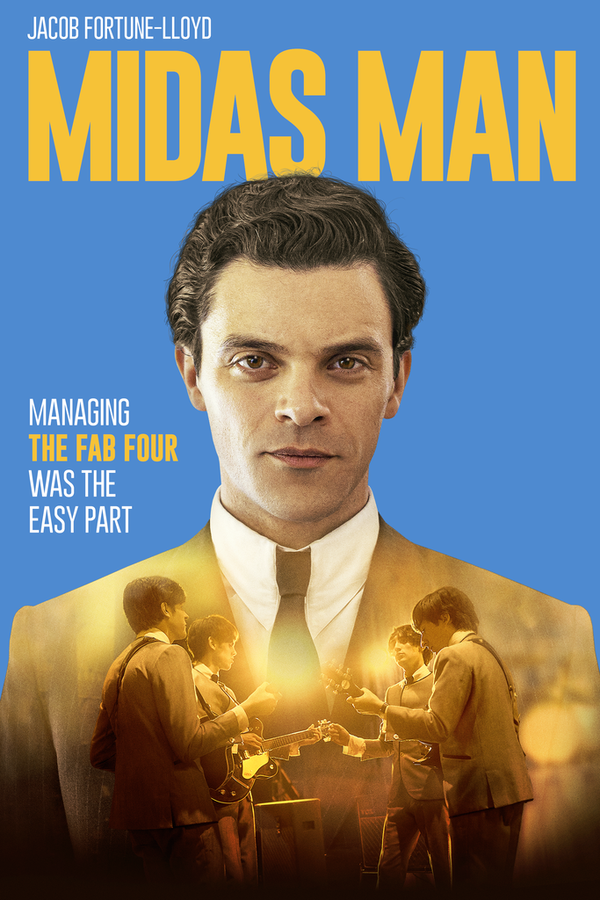
Midas Man (2025) movie poster

Timeline

Midas Man (2025) Timeline Explained – Every Event in Order

Release, runtime and language
2025 · 1 h 52 m · English
Echo score 72
Loading streaming availability…
Directed by
Joe Stephenson
Starring
Eddie Marsan, Emily Watson, Ed Speleers, Jacob Fortune-Lloyd, Bill Milner, Alfredo Tavares

This is the story of Brian Epstein, a man who experienced a lifetime of events in a short period, and who fundamentally altered the landscape of music. Beginning with his ownership of a Liverpool record store, Epstein’s career involved shaping the sound of a generation. Jacob Fortune-Lloyd portrays the ambitious and passionate figure behind The Beatles' incredible success, as he navigates unprecedented fame, a cultural revolution, and personal struggles. The film explores the triumphs and heartbreaks of a man seeking acceptance and love amidst the glitz and glamour of the 1960s, revealing the secrets of the man who changed music forever.

On this page (6)
  1. 1 Where to watch
  2. 2 Events in order (15)
  3. 3 Timeline questions answered
  4. 4 Movie threads
  5. 5 Movies like Midas Man
  6. 6 Every angle
Loading streaming availability…

15 events in order · contains spoilers

Midas Man Timeline: Events in Chronological Order

Every key event of Midas Man (2025) in order, scene by scene, with when and where it takes place. Use it to untangle flashbacks, time jumps and parallel storylines, to refresh your memory before the sequel or to find the exact scene you are thinking of.

  1. Brian Epstein at NEMS

    In 1961, Brian Epstein manages NEMS, his family's record store in Liverpool. He starts receiving numerous requests for a single by a local band, the Beatles, which piques his interest in the music industry.

    When
    1961
    Where
    Liverpool
  2. Discovering the Beatles

    Intrigued by their rising popularity, Brian attends a performance at the Cavern Club. He is captivated by the band's ability to engage the teenage audience and decides to approach them about management.

    When
    1961
    Where
    Cavern Club, Liverpool
  3. Becoming the Beatles' Manager

    Despite his lack of experience, Brian offers to manage the Beatles, leveraging his understanding of their audience from his record store experience. The group accepts his offer, beginning their professional relationship.

  4. First Audition at Decca

    In early 1962, Brian sets up an audition for the Beatles with Decca Records, but the audition does not go well. Decca executive Dick Rowe expresses skepticism about Brian's commitment to the band and their potential success.

    When
    Early 1962
    Where
    Decca Records
  5. Signing with Parlophone

    Undeterred by the rejection from Decca, Brian approaches George Martin at Parlophone. After a successful audition, Martin encourages Brian to replace drummer Pete Best with Ringo Starr, leading to a new chapter for the Beatles.

    Where
    Parlophone
  6. Rise to Fame

    With Ringo Starr on board, the Beatles release their first hits, 'Love Me Do' and 'From Me To You'. The band's popularity skyrockets, and they capture national attention, marking the beginning of Beatlemania.

    When
    1963
  7. Managing New Acts

    Throughout 1963, Brian signs several Liverpudlian acts, expanding his management portfolio. This includes notable artists like Gerry and the Pacemakers and Cilla Black, who starts as the Cavern's coat check girl.

    When
    1963
  8. Blackmail Incident

    Brian faces a personal crisis when a man from a past encounter attempts to blackmail him. Despite his parents’ urge to go to the police, Brian decides to deal with the situation quietly, fearful of public scrutiny.

    When
    1963
  9. Move to London

    Feeling the pressure of the Beatles' growing fame, Brian reveals his decision to move to London. His increased workload leads to a worsening dependence on barbiturates and stimulants to cope with stress.

    Where
    London
  10. Trip to America

    In 1964, Brian travels to America to secure an appearance for the Beatles on 'The Ed Sullivan Show'. During this trip, he meets Tex Ellington, and their connection offers Brian a glimpse of companionship amidst his busy life.

    When
    1964
    Where
    America
  11. International Fame

    The Beatles' performance on The Ed Sullivan Show, coupled with their hit 'I Want to Hold Your Hand', propels them to international fame. This marks the beginning of an intense and exhausting American tour.

    When
    1964
  12. Final Concert

    By 1966, the Beatles decide to stop touring after a challenging Asian tour and controversies surrounding John Lennon. On the night of their final concert, Brian experiences betrayal when Tex steals a suitcase containing a large sum of money.

    When
    1966
  13. Nervous Breakdown

    After the end of the Beatles' touring, the combination of stress, betrayal, and substance dependence leads Brian to suffer a nervous breakdown. This period marks a significant decline in his mental health.

    When
    1966
  14. Invited to Our World

    In 1967, the Beatles are invited to perform on 'Our World', the first global television broadcast. Brian plays a key role in suggesting a new song with a hopeful message, reflecting his desire for positivity.

    When
    1967
    Where
    Television Broadcast
  15. Tragic Death

    In September 1967, Brian's father, Harry, passes away, leaving him devastated. Just two months later, Brian dies from an accidental barbiturate overdose, marking a tragic end to his extraordinary but tumultuous life.

    When
    September 1967

Last updated: March 08, 2025 at 15:50

Was this helpful?

Timeline questions answered

Midas Man Timeline Explained: Your Questions Answered

When does it happen, and why in that order? The questions people ask about the chronology of Midas Man (2025): time jumps, flashbacks, cause and effect between scenes and the correct order of events, each answered with spoilers.

Q1

Why did Brian Epstein decide to manage the Beatles?

Brian Epstein decided to manage the Beatles after visiting the Cavern Club and witnessing their ability to captivate the teenage audience. Despite having no experience in the music industry, he believed his background in retail at his family's record store NEMS gave him an understanding of what audiences wanted. He was confident he could help shape their public image and career.

  • brian epstein
  • beatles manager
  • cavern club
  • nemS
  • motivation
Q2

Why did Decca Records reject the Beatles?

Decca Records rejected the Beatles after an audition in early 1962. Executive Dick Rowe questioned Brian's motivation for leaving his comfortable life to manage the band, expressing skepticism about their potential commercial success. This rejection led Brian to approach other labels until he secured an audition with George Martin at Parlophone.

  • decca records
  • dick rowe
  • beatles audition
  • rejection
Q3

Why was Pete Best replaced by Ringo Starr?

George Martin, head of Parlophone, advised Brian Epstein to replace drummer Pete Best after the successful audition. Martin believed Ringo Starr would be a better fit for the band's sound and image. Brian followed this advice, bringing in Ringo, which proved pivotal to the Beatles' later success with hits like "Love Me Do" and "From Me To You."

  • pete best
  • ringo starr
  • george martin
  • beatles drummer
  • replacement
Q4

What was the blackmail situation involving Brian Epstein?

In 1963, Brian learned that a man he had a sexual encounter with was attempting to blackmail him. Despite his parents urging him to involve the police, Brian insisted on handling the matter privately to protect his privacy and avoid public scrutiny. This incident added to the growing pressures in his life.

  • blackmail
  • brian epstein
  • privacy
  • 1963
Q5

Why did Brian Epstein move to London?

Brian decided to move to London to better handle the Beatles' burgeoning fame and expand his management operations. The move was prompted by his increasing workload and the need to be closer to the center of the music industry. This transition also marked the beginning of his increased reliance on substances to cope with stress.

  • brian epstein
  • london move
  • beatles fame
  • 1963
Q6

Who was Tex Ellington and what was his relationship with Brian?

Tex Ellington was an aspiring actor Brian met during his 1964 trip to America while securing the Beatles' appearance on The Ed Sullivan Show. Their brief affair developed into a complicated relationship, with Brian urging Tex to visit him in London and eventually taking him on as a client with a financial retainer. In 1966, Tex betrayed Brian by stealing a suitcase containing $20,000 and pills on the night of the Beatles' final concert.

  • tex ellington
  • brian epstein relationship
  • betrayal
  • suitcase theft
Q7

Why did the Beatles stop touring in 1966?

The Beatles decided to stop touring in 1966 after a disastrous Asian tour and the controversy surrounding John Lennon's controversial statements about Jesus. The combination of fan chaos, exhaustion from constant touring, and public backlash prompted the band to end their live performances permanently, marking a significant turning point in their career.

  • beatles touring
  • 1966
  • john lennon jesus
  • final concert
  • asia tour
Q8

What caused Brian Epstein's nervous breakdown?

Brian's nervous breakdown in 1966 was triggered by multiple factors: Tex's betrayal and theft of $20,000 and pills on the night of the Beatles' final concert, the emotional turmoil of the band ceasing to tour, and his long-standing struggle with substance abuse. The combination of these events led to a profound emotional spiral and mental health crisis.

  • brian epstein
  • nervous breakdown
  • tex betrayal
  • 1966
  • substance abuse
Q9

Why did Brian suggest the Beatles perform on Our World?

In 1967, Brian suggested the Beatles perform on "Our World," the first-ever global television broadcast, because he wanted them to craft a new song with a hopeful message to uplift spirits in a troubled world. His idea reflected his desire for positivity during a difficult period in his life, including his father's recent death.

  • our world
  • beatles performance
  • global broadcast
  • all you need is love
  • 1967
Q10

How did Brian Epstein die?

Brian Epstein died in September 1967 at age 32 from an accidental overdose of barbiturates. His death came just two months after his father Harry passed away. The overdose was a tragic end to a life marked by extraordinary professional success but profound personal struggle with loneliness, addiction, and the pressures of managing the world's biggest band.

  • brian epstein death
  • barbiturate overdose
  • 1967
  • age 32
  • accidental death
Q11

What was Brian Epstein's relationship with his father Harry?

Brian had a complex relationship with his father Harry Epstein. Despite Harry's pride in his son's achievements, which Queenie revealed to Brian after Harry's death, their bond was strained by Brian's secrets about his personal life and his struggles. At Harry's funeral, Brian observed familial moments that deepened his sorrow and longing for acceptance and a traditional family life.

  • harry epstein
  • father son relationship
  • brian epstein family
  • funeral
Q12

Why did Brian Epstein become dependent on drugs?

Brian Epstein developed a dependence on barbiturates and stimulants as his managerial responsibilities escalated and the pressures of managing the Beatles' international fame grew. The combination of work stress, personal loneliness, the blackmail threat, and his struggles with his identity contributed to his substance abuse as a coping mechanism.

  • brian epstein
  • drug dependence
  • barbiturates
  • stimulants
  • addiction
  • stress
Q13

What was Brian Epstein's relationship with Cilla Black?

Brian signed Cilla Black to his management roster in 1963, having first known her as the coat check girl at the Cavern Club. He took her as his date to his brother Clive's wedding, sharing his fears about familial rejection and his search for a significant other. Their relationship was professional but also reflected Brian's longing for genuine connection and family life.

  • cilla black
  • brian epstein
  • management
  • relationship
  • 1963

Movie threads

More Movies Like Midas Man, by Mood & Story

Curated lists built around what makes Midas Man tick: the same mood, the same kind of story or the same emotional payoff. Each list explains why these movies belong together.

Tragic biopics of fame and loneliness like Midas Man

Stories of brilliant but troubled figures who achieved greatness at a heavy cost. If you were captivated by the melancholic story of Brian Epstein in Midas Man, explore these movies like Midas Man. These films are similar biographical dramas about brilliant, troubled figures in music, art, or culture, whose public triumphs are shadowed by private despair and a tragic end.

  • melancholic
  • tragic
  • lonely
  • reflective
  • somber
  • bittersweet
  • Tone: melancholic, tragic
  • Pacing: steady, character-driven
Why these movies?

The story pattern: Narratives in this thread typically follow a chronological rise-to-fame arc, but with a central focus on the protagonist's internal battles. The external success serves as a stark contrast to their personal deterioration, culminating in an ending that feels more tragic than triumphant, emphasizing the high price of fame and genius.

Why they belong together: Movies are grouped here for their shared focus on the duality of success and suffering. They share a melancholic tone, steady pacing that allows for deep character study, and a heavy emotional weight derived from themes of addiction, loneliness, and the ultimate tragedy of a life cut short.


Movies about the hidden forces behind fame like Midas Man

Focus on the unsung, often isolated figures who shape cultural phenomena. For viewers who liked the perspective of Midas Man, this section features movies similar to Midas Man that explore the lives of behind-the-scenes figures. These dramas focus on the creators, managers, and mentors who build cultural legends, often grappling with their own identity and loneliness amidst the glitz of success.

  • lonely
  • reflective
  • somber
  • triumphant
  • melancholic
  • nostalgic
  • Tone: somber, reflective
  • Pacing: steady, linear
Why these movies?

The story pattern: These narratives often use a straightforward, chronological structure to show how a behind-the-scenes figure strategically builds something monumental. The central conflict is internal: the protagonist's struggle with their own demons, identity, and the feeling of being an outsider, even as they orchestrate massive public adoration for others.

Why they belong together: These films share a specific character archetype and thematic focus. They are united by a melancholic, reflective mood, a steady pacing that allows for character depth, and a heavy emotional weight stemming from themes of creative ambition, LGBTQ+ identity, and the personal cost of building a legacy for someone else.

If you liked this

Movies Like Midas Man

Similar movies to Midas Man: the same genre, themes or kind of story. Each one comes with its own plot summary, timeline and ending explained.

Browse all movie summaries

Every angle

Midas Man (2025) Explained: Plot, Ending, Timeline & Characters

Everything about Midas Man in one place: what happens in the plot summary, the timeline in chronological order, the characters and meaning, the ending explained and a spoiler-free summary. What's After the Movie adds the cast, box office and post-credit scenes.

Coming soon on iOS and Android

The Plot Explained Movie Summary App

Plot summaries, endings explained and timelines on your phone. Catch up on any movie in minutes, save your favorites and never miss a twist again.

Be the first to know when we launch. Your email stays private, always.

Learn more about the app