Plot Explained Spoilers guaranteed!
Plot Explained

Browse by genre

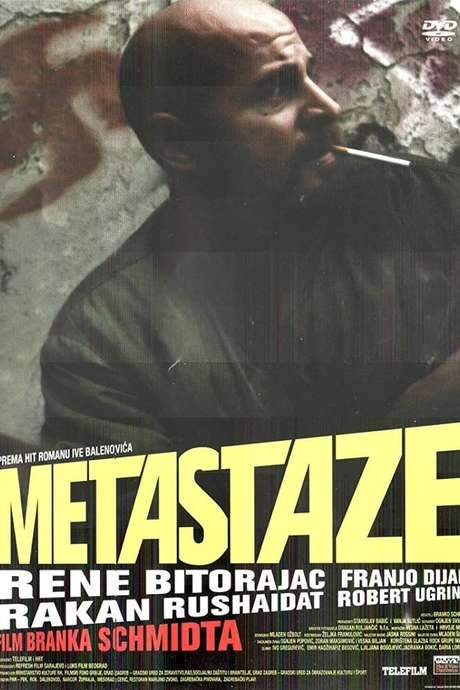
Metastases (2009) movie poster

Plot Summary

Metastases (2009) Plot Summary Explained

Release, runtime and language
2009 · 82 mins · Croatian
Loading streaming availability…
Directed by
Branko Schmidt
Starring
Rene Bitorajac, Franjo Dijak, Predrag 'Pređo' Vušović, Robert Ugrina, Emir Hadžihafizbegović, Daria Lorenci Flatz

Using stark cancer imagery, the drama examines the social ills afflicting contemporary Croatia. It follows four young addicts in Zagreb as they come of age in the post‑war environment, mirroring the petty hatreds, violence, prejudices and pervasive mood that linger over the nation like an incurable disease.

On this page (6)
  1. 1 Where to watch
  2. 2 What happens: full plot
  3. 3 Plot questions answered
  4. 4 Movie threads
  5. 5 Movies like Metastases
  6. 6 Every angle
Loading streaming availability…

Full plot summary · contains spoilers

What Happens in Metastases: Full Plot Summary

The whole story of Metastases (2009) explained, from the opening scene to the final frame: every key event, every twist and what it all adds up to. Read it as a quick recap before the sequel, to check a scene you missed, or to finally understand what really happened.

Set in 1999, the film follows four unconventional friends from a Zagreb neighbourhood – Krpa Rene Bitorajac, Filip Franjo Dijak, Kizo Robert Ugrina and Dejo Rakan Rushaidat – who are all football fans and Dinamo Zagreb supporters.

Krpa is an antisocial football hooligan and a Croatian War of Independence veteran who constantly abuses his wife. Throughout the story, he also insults and physically attacks several people who speak up about his behaviour. In the final scene, he robs a betting shop and ends up in a tense foot chase with two police officers, exposing a life of aggression and volatility that frames the group’s world.

Filip is a drug addict who spent three years in a rehabilitation program in Spain. When he returns to Zagreb at the start of the film, his parents try to persuade him to find a job to keep him from slipping back into old habits. That same day, he reunites with the other three members of the group at a neighbourhood bar, where old bonds re-emerge and tensions simmer just beneath the surface.

Kizo is an ailurophiliac alcoholic and Croatian War of Independence veteran. He lives with his mother after his father’s death and carries a quiet burden that seems to fuel his dependence on alcohol. One day, he heads to the bar hoping to join the group for a match, only to discover they had already left. He returns home, stopping at a supermarket to buy more drink and cat food, before being seen tending to a litter of kittens in his backyard, a vignette that humanizes him amid the rough edges of the group.

Dejo, half Serb, is the son of a former Yugoslav officer. He is also a drug addict who owes money to people, and his ethnicity becomes a target for insults from Krpa, who even goads him to kiss the Altar of the Homeland, a moment that underscores the ethnic tensions simmering beneath their friendship.

The plot deepens as Filip and Dejo travel to Sarajevo to buy heroin. On the journey back, they visit Filip’s aunt and uncle somewhere in Bosnia and Herzegovina. The relatives propose giving his parents two bags of potatoes, but there isn’t enough space in Dejo’s car to transport them immediately, so they agree to move the bags later. Filip hides the drug inside one of the bags, yet the scheme unravels when the bags are moved by a neighbor of Filip’s aunt and uncle, Reuf, who is unaware of the drugs. The near-miss with border control heightens the tension, testing loyalty, risk, and the lines between friendship and crime.
Last updated: October 05, 2025 at 11:35

Was this helpful?

Plot questions answered

Metastases Plot Explained: Your Questions Answered

The questions people ask most about Metastases (2009): what happens in the confusing scenes, why the characters do what they do, the twists, hidden details and what the ending means. Each answer contains spoilers.

Q1

Why does Krpa force Dejo to kiss the Altar of the Homeland?

Krpa uses the nationalist ritual to psychologically humiliate Dejo because of his half-Serb ethnicity. The scene demonstrates how Krpa weaponizes Croatian national identity to assert dominance over his friend, exposing the ethnic prejudice that simmers beneath the group's surface-level friendship. This moment reveals that Krpa's hostility toward Dejo is deeply rooted in post-war Balkan tensions.

Foreshadowing: The ethnic tension established here foreshadows the fractured dynamics that will ultimately unravel the group.

  • krpa
  • dejo
  • altar of homeland
  • ethnic tension
  • croatia
  • nationalism
Q2

How does Filip conceal the heroin in the potato bags?

Filip hides the heroin inside one of the two bags of potatoes given to him by his aunt and uncle. When they realize there isn't enough space in Dejo's car to transport both bags immediately, they agree to move them later. Filip exploits this arrangement, secretly placing the drugs in the potato bag while the relatives are unaware, creating a dangerous improvised smuggling method.

Foreshadowing: The rushed decision to leave the bags for later transport creates the critical window for Reuf's involvement.

  • filip
  • heroin
  • potato bags
  • smuggling
  • border
Q3

Why does Krpa rob the betting shop at the end of the film?

Krpa's robbery represents the culmination of his volatile and violent character arc. As an antisocial hooligan and war veteran struggling with adaptation to civilian life, he has already demonstrated patterns of aggression through domestic abuse and random attacks on strangers. The betting shop robbery is his final escalation, a desperate or impulsive act that crystallizes his inability to function within normal society, ultimately trapping him in a violent chase with police.

Foreshadowing: The pattern of aggression established early in the film makes this violent climax inevitable rather than surprising.

  • krpa
  • betting shop
  • robbery
  • police chase
  • violence
Q4

What happens when Reuf agrees to transport the potato bags?

Reuf, a neighbor of Filip's aunt and uncle, agrees to transport the bags of potatoes to Zagreb a few days later. He is completely unaware that Filip has hidden heroin inside one of the bags. This makes Reuf an innocent intermediary in the smuggling scheme, when the drugs are eventually discovered at the border crossing, Reuf becomes an unwitting participant in a criminal operation, heightening the consequences for everyone involved.

Foreshadowing: The plan to use Reuf as an unknowing carrier introduces unnecessary risk that ultimately leads to the scheme's downfall.

  • reuf
  • potato bags
  • drugs
  • transport
  • innocent
Q5

How do authorities discover the drugs at the border?

During the transport of the potato bags across the Bosnia-Croatia border, police officers discover the hidden heroin. The exact moment of discovery isn't detailed in the summary, but the drugs were concealed within one of the potato bags that Reuf or the group was transporting. This discovery exposes their smuggling operation and raises the stakes significantly for all four friends.

Foreshadowing: Filip's rushed decision to hide drugs in a food item intended for family creates a vulnerable moment that authorities easily detect.

  • border
  • drugs
  • police discovery
  • crossing
  • heroin
Q6

Why is Dejo targeted by Krpa despite being friends?

Dejo faces Krpa's hostility primarily because of his half-Serb heritage, his father was a former Yugoslav officer. This ethnic background becomes a constant source of insult and intimidation from Krpa, who uses it to assert superiority and control. Despite being part of the same friend group and sharing common interests like Dinamo Zagreb, the deep-rooted ethnic divisions from the recent war continually surface, revealing how post-war prejudices poison even close relationships.

Foreshadowing: This ethnic tension foreshadows the eventual fracturing of the group's already fragile unity.

  • dejo
  • krpa
  • ethnic tensions
  • serb
  • croatian war
  • friendship
Q7

Why does Kizo care for kittens despite his tough exterior?

Kizo is depicted as an ailurophiliac (cat lover) who, despite being a war veteran and heavy drinker, maintains a gentle side visible only in private. After discovering his friends have already left for a football match, he returns home, buys cat food at the supermarket, and tends to a litter of kittens in his backyard. This moment humanizes Kizo, showing that the trauma androughness of his life haven't completely erased his capacity for tenderness and care.

Foreshadowing: The contrast between his violent past and gentle private moments hints at the complexity beneath hardened veterans.

  • kizo
  • kittens
  • alcoholic
  • veteran
  • gentle side
Q8

What triggers Filip to return to drugs after rehabilitation?

Filip returns to Zagreb after three years in a Spanish rehabilitation program, and his parents immediately pressure him to find employment as a preventive measure against relapse. However, the very day of his return, he reunites with his old friends at a bar, people deeply embedded in drug culture. This reconnection, combined with Dejo's drug debts and the group's criminal activities, creates an environment where relapse becomes almost inevitable, demonstrating how easily recovered addicts can be pulled back into addiction.

Foreshadowing: The bar reunion on his first day back sets the trajectory toward his inevitable return to heroin.

  • filip
  • rehabilitation
  • relapse
  • drugs
  • zagreb
  • friends
Q9

What does the title Metastases represent in the film?

The title uses a stark cancer metaphor to describe the social ailments afflicting post-war Croatia. Much like cancer metastases spread uncontrollably through the body, the film's four protagonists represent how the nation's lingering issues, addiction, violence, ethnic prejudice, and trauma from the Yugoslav Wars, have spread throughout society. The characters themselves become metaphorical cancer cells, harming themselves and those around them while reflecting a national mood of decay that feels incurable.

Foreshadowing: The metaphor permeates every character arc, suggesting systemic rather than individual problems.

  • metastases
  • cancer metaphor
  • social decay
  • post-war croatia
  • theme
Q10

Why does Dejo owe money to dangerous people?

Dejo is a drug addict who has accumulated debts to people from whom he purchases heroin. His addiction drives him to continuously use and therefore owe money to suppliers or lenders within the criminal underworld. This financial pressure adds another layer of vulnerability to his situation, making him desperate and potentially more willing to participate in high-risk operations like the Sarajevo drug trip.

Foreshadowing: His mounting debts create the motivation for the dangerous Sarajevo journey.

  • dejo
  • drugs
  • debts
  • money
  • addiction
Q11

Why does Krpa abuse his wife throughout the film?

Krpa is characterized as an antisocial individual and Croatian War of Independence veteran who channels his accumulated trauma and rage into domestic violence against his wife. His abusive behavior represents the broader theme of violence perpetuating through generations and relationships. The film uses his domestic abuse to illustrate how wartime trauma manifests in peacetime civilian life, affecting not just strangers but those closest to the abuser.

Foreshadowing: The domestic violence establishes his pattern of aggression that eventually extends to the betting shop robbery.

  • krpa
  • wife
  • abuse
  • domestic violence
  • veteran
  • trauma

Movie threads

More Movies Like Metastases, by Mood & Story

Curated lists built around what makes Metastases tick: the same mood, the same kind of story or the same emotional payoff. Each list explains why these movies belong together.

Gritty Social Decay Dramas like Metastases

Unflinching portraits of life on the margins of a broken society. Movies like Metastases that offer a raw, unflinching look at life on the margins. If you were drawn to its portrayal of a fractured society, you'll find similar powerful stories exploring urban decay, systemic failure, and the struggle for survival in a bleak world.

  • gritty
  • oppressive
  • raw
  • socially critical
  • anxious
  • melancholic
  • Tone: dark, raw, socially critical
  • Pacing: steady, immersive
Why these movies?

The story pattern: Narratives in this thread typically follow a group or individual navigating the harsh realities of a neglected city or community. The story is often character-driven, focusing on the daily struggles, moral compromises, and simmering tensions that arise from a hostile environment, building towards an outcome that underscores the cyclical nature of the problems.

Why they belong together: These films are grouped together for their shared commitment to a raw, oppressive aesthetic and their thematic focus on social critique. They create a cohesive viewing experience defined by a heavy emotional weight, a steady, deliberate pacing that builds tension, and a consistently dark, critical tone.

Bleak Post-War Trauma Stories like Metastases

Stories where the wounds of conflict infect the present generation. If you appreciated how Metastases used a post-war setting to explore trauma and social illness, this list is for you. Discover similar movies that delve into the psychological aftermath of conflict, showing how historical wounds shape the lives of the next generation in bleak and powerful ways.

  • bleak
  • melancholic
  • anxious
  • war trauma
  • gritty
  • unflinching
  • Tone: bleak, melancholic, anxious
  • Pacing: steady, methodical
Why these movies?

The story pattern: These stories often follow young characters coming of age in the shadow of a recent war, grappling with a legacy of violence they didn't create. The narrative explores how collective trauma breeds personal demons, ethnic tensions, and a pervasive sense of disillusionment, typically leading to a bleak conclusion with little hope for redemption.

Why they belong together: The connection is based on a shared thematic core: the exploration of war's long-term, corrosive impact. They share a bleak tone, a steady pace that allows for deep immersion in a damaged world, and a high intensity derived from the unflinching portrayal of psychological and social wounds.

If you liked this

Movies Like Metastases

Similar movies to Metastases: the same genre, themes or kind of story. Each one comes with its own plot summary, timeline and ending explained.

Browse all movie summaries

Every angle

Metastases (2009) Explained: Plot, Timeline & Characters

Everything about Metastases in one place: what happens in the plot summary, the timeline in chronological order, the characters and meaning and a spoiler-free summary. What's After the Movie adds the cast, box office and post-credit scenes.

Coming soon on iOS and Android

The Plot Explained Movie Summary App

Plot summaries, endings explained and timelines on your phone. Catch up on any movie in minutes, save your favorites and never miss a twist again.

Be the first to know when we launch. Your email stays private, always.

Learn more about the app