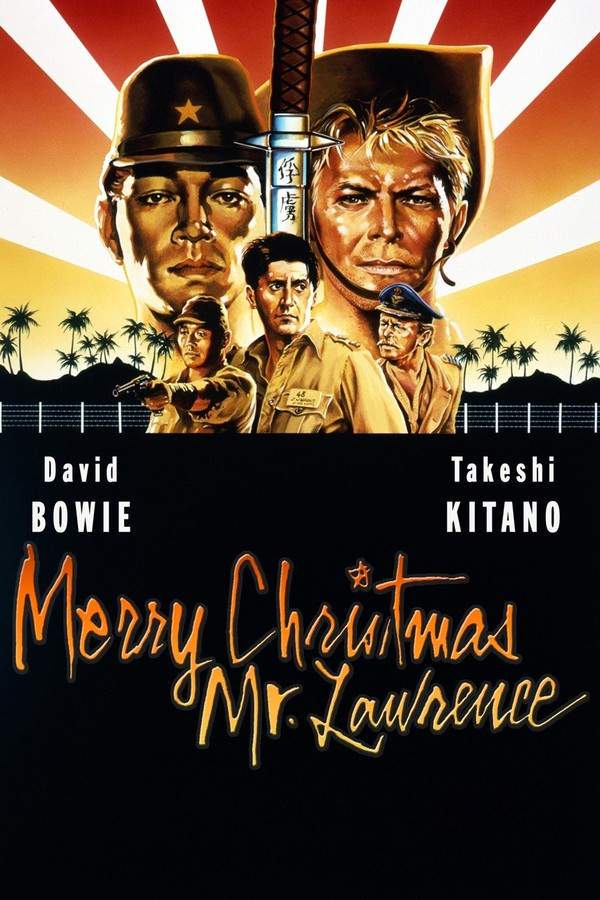
During World War II, a British officer named Jack Celliers finds himself in a Japanese POW camp where he clashes with the strict code of conduct of Captain Yanoi. Sergeant Hara’s practical approach contrasts with Lieutenant Colonel Lawrence’s attempts to foster understanding between the prisoners and their captors. The film explores the escalating tensions, cultural differences, and the profound human impact of war and resistance against a backdrop of oppressive circumstances.
Find where to stream, rent, or buy Merry Christmas Mr. Lawrence (1983) in the US with current JustWatch availability, up-to-date pricing, and platform listings for subscription, rental, and digital purchase options.
Warning: spoilers below!
Haven’t seen Merry Christmas Mr. Lawrence yet? This summary contains major spoilers. Bookmark the page, watch the movie, and come back for the full breakdown. If you're ready, scroll on and relive the story!
Read the complete plot breakdown of Merry Christmas Mr. Lawrence (1983), including all key story events, major twists, and the ending explained in detail. Discover what really happened, and what it all means.
In the sweltering heat of 1942, Captain Yonoi ruled with an iron fist over Lebak Sembada’s POW camp, situated in Japanese-occupied Java. His unwavering commitment to the bushido code became a rigid guiding principle amidst chaos. Two prisoners emerged as fascinating anomalies within this strict discipline: Lt. Col. John Lawrence, portrayed by Tom Conti, the only captive fluent in Japanese, whose empathetic nature fostered an unexpected bond with Yonoi; and Gp. Capt. Hicksley, a staunch advocate for his fellow inmates who consistently resisted Yonoi’s attempts to seek out potential weapons experts among them.
As Lawrence maintained a delicate friendship with Sgt. Gengo Hara, portrayed by Yûya Uchida, he found himself increasingly at odds with the camp’s officers. This emotional divide would ultimately be bridged with the arrival of Major Jack Celliers, whose situation took a turn when he was summoned for a military trial regarding his perceived offenses against the Japanese army. During this trial, Yonoi became captivated by the indomitable spirit of Celliers, leading to his internment at the camp. After the trial, Yonoi, burdened by shadows from his past, confided in Lawrence, revealing deep-seated feelings of shame regarding his absence during the February 26 Incident—a haunting reminder of a perceived failure that drove his desperate need to uphold his honor.
As time progressed, Yonoi’s fascination with Celliers burgeoned into an obsession characterized by unusual displays of favoritism, such as special privileges, whispered conversations, and secretive observations. The camp was engulfed in turmoil when the inmates were punished through enforced fasting after the brutal execution of a guard named Okura, a scene steeped in horror. In an act of defiance, Celliers secretly smuggled food but was eventually caught, leading both him and Lawrence to bear the brunt of the consequences. In a moment of betrayal, Yonoi’s batman attempted to kill Celliers in his sleep, but the plot unraveled when Celliers awoke, leading to a daring escape that set Lawrence free as well.
After capturing Celliers, Yonoi delivered a chilling ultimatum: to surrender himself in a duel, granting him freedom in return. Celliers, however, remained resolute and refused. The batman, enveloped by guilt over his failure, ultimately took his own life, leaving Yonoi torn between duty and an all-consuming passion for the prisoner.
Amidst the somber atmosphere of a funeral, Lawrence faced devastating news: he and Celliers were marked for execution, a decision made to maintain the precarious order within the camp. This injustice ignited a furious rage within him, resulting in an explosive outburst as he destroyed the funeral altar before being forcibly returned to his cell. That very night, shrouded in darkness, Celliers revealed his troubled past to Lawrence, including a moment of betrayal from his youth where he did not intervene during a brutal initiation at his boarding school. The weight of their shared emotional pain bonded them in unexpected ways. Their moment of reflection was interrupted when Hara made a reckless decision, confessing to being the true culprit behind the radio incident, thereby inadvertently freeing Lawrence and Celliers. This act brought Hara to irreverently wish Lawrence a “Merry Christmas!” in English, a jibe that further exacerbated Yonoi’s frustrations.
As tensions escalated, Hicksley grew increasingly wary, sensing that Yonoi intended to replace him with Celliers as the representative of the camp. This suspicion ignited fierce arguments between them over their failure to uphold transparency. In a moment of uncontrolled anger, Yonoi demanded that the entire camp assemble outside the barracks, which led to dire consequences when a frail patient succumbed to exhaustion during the ordeal. Despite Hicksley remaining unpunished for his defiance, Yonoi’s wrath yielded immediate consequences, culminating in a shocking on-the-spot execution.
In an incredible act of courage, Celliers selflessly sacrificed his life to save Hicksley, sealing his fate with a poignant kiss bestowed upon Yonoi. Overwhelmed with conflicting emotions of valor and love for Celliers, Yonoi collapsed, engulfed by guilt. As the camp authorities intervened, they left Celliers buried up to his neck in sand, rendered helpless. In a powerful moment of sorrow, Yonoi snatched a lock of Celliers’ hair, a bittersweet token that symbolized their tumultuous connection just moments before his death.
Years later, as fate would have it, Captain Hara, now a prisoner of war, found himself face-to-face with his former enemy, Colonel Lawrence (played by Takeshi Kitano). The surroundings contrasted starkly with their previous encounters, this time in a bleak, Allied-occupied environment. Despite the differences in their circumstances, Hara had made remarkable strides in mastering English, showcasing that his time as an inmate had not dulled his astuteness. During this unexpected reunion, Lawrence grappled with the chilling reality of Hara’s imminent execution, scheduled for the following day, having been condemned for war crimes deemed horrific by the Allies.
As they exchanged thoughts, they found common ground in a moment of reflection, confronting the harsh truths that lingered between both sides, burdened by the atrocities committed in the name of war. In a poignant farewell, Hara called after Lawrence, with a mix of irony and longing in his voice, saying, > “Merry Christmas, Mr. Lawrence!” The phrase resonated deeply, encapsulating the absurdities, hardships, and painful memories that war had etched into their lives.
Last updated: November 18, 2024 at 21:16
Explore frequently asked questions about Merry Christmas Mr. Lawrence (1983) with spoiler-rich answers covering the full plot summary, major story beats, character motivations, hidden details, and ending meaning. This movie summary FAQ helps explain confusing scenes, plot twists, and narrative decisions in clear, searchable detail.
Yonoi became fascinated with Celliers after his military trial, where he witnessed Celliers' defiant spirit despite facing severe charges. Thisobsession stemmed partly from Yonoi's own psychological state, he was burdened by shame over his absence during the February 26 Incident, which he viewed as a failure of honor. Celliers' unwavering defiance represented the kind of courage Yonoi wished he had displayed, leading him to grant Celliers special privileges, engage in whispered conversations, and watch him secretly. This fascination evolved into a repressed emotional attachment that conflicted with his rigid adherence to the bushido code.
The February 26 Incident refers to a real historical event in 1936 where young Japanese officers led a failed coup attempt in Tokyo. In the film, Yonoi confesses to Lawrence that he was absent during this critical moment, viewing his absence as a shameful dereliction of duty. This feeling of having failed his country and his code drove Yonoi to overcompensate with extreme rigidity and strict enforcement of discipline at the camp. His obsession with Celliers was partly an attempt to reconnect with the honorable spirit he felt he had lost.
Celliers kissed Yonoi as a final act of compassion and understanding toward a man who was simultaneously his captor and someone experiencing profound emotional conflict. This kiss represented Celliers' recognition of Yonoi's humanity beneath the rigid military exterior, and it was an attempt to free Yonoi from the burden of his own repressed feelings and duty. It was a selfless gesture that shocked everyone present, leading Yonoi to collapse under the weight of conflicting emotions, love, guilt, and the realization that he had just ordered the death of someone who showed him kindness.
Celliers revealed that as a boy at boarding school, he witnessed a younger student being brutalized during a hazing ritual but did nothing to intervene, this betrayal of someone who needed his help haunted him throughout his life. He confessed this to Lawrence during their final night together before their execution, explaining that his defiance in the camp was partly driven by a desire to finally act with courage rather than flee from moral responsibility. This revelation deepened their bond and explained Celliers' willingness to sacrifice himself for others.
Hara confessed to being responsible for a radio incident, which had actually been done by someone else, as a reckless act to save Lawrence and Celliers from execution. His confession inadvertently freed both men from their death sentences, though it placed him in grave danger. This selfless act demonstrated Hara's pragmatic nature and his growing sympathy for the prisoners, even though his method was impulsive and put his own life at risk. His motivation stemmed from genuine respect for Lawrence's humanity and the moral contradictions he witnessed in the camp's leadership.
Hicksley was executed on the spot by Captain Yonoi after a frail prisoner collapsed and died during a forced assembly punishment. Despite Hicksley's previous defiance and arguments with Yonoi, it was this incident that triggered his immediate execution. However, Celliers sacrificed himself to save Hicksley in the crucial moment, taking the fatal blow intended for his fellow officer. This act of selfless heroism allowed Hicksley to survive, though Celliers paid the ultimate price.
Earlier tensions between Hicksley and Yonoi over transparency and camp leadership foreshadowed this fatal confrontation.
Lawrence destroyed the funeral altar in a fit of rage after learning that he and Celliers had been marked for execution. This explosive outburst represented his fury at the injustice of their impending deaths and his defiance against the oppressive system that had confined them. The destruction of the altar, a sacred symbol in Japanese culture, was a powerful act of rebellion, though it also meant Lawrence would face severe consequences for his transgression.
The phrase "Merry Christmas, Mr. Lawrence" serves as a poignant and ironic farewell between former enemies. Hara uses the English phrase he once used mockingly during the war, calling it a "jibe", now as a genuine wish to Lawrence before his execution for war crimes. The phrase carries deep irony: what was once a symbol of the cultural divide and mockery between captor and prisoner has become a moment of shared humanity and acknowledgment of their complex relationship. It encapsulates the film's themes of reconciliation, the absurdity of war, and the lingering connections between those who once stood on opposite sides.
Yonoi's batman attempted to assassinate Celliers in his sleep as an act of loyalty to his captain, likely hoping to spare Yonoi from the emotional turmoil and dishonor that his obsession with a prisoner was causing. The batman understood that Celliers' influence over Yonoi was threatening his captain's reputation and standing within the military hierarchy. However, the assassination attempt failed when Celliers awoke, leading to a dramatic escape attempt that freed both Celliers and Lawrence before they were recaptured.
Lawrence was marked for execution along with Celliers as a strategic move by Yonoi to maintain order in the camp after the chaos surrounding Okura's execution, the food-smuggling incident, and the failed assassination attempt. The camp authorities decided that executing these two prominent prisoners would serve as a warning and restore discipline. Lawrence's fluency in Japanese and his close relationship with both the prisoners and Yonoi made him a significant figure whose removal would potentially stabilize the camp's unpredictable dynamics.
Discover curated groups of movies connected by mood, themes, and story style. Browse collections built around emotion, atmosphere, and narrative focus to easily find films that match what you feel like watching right now.
Stories where prisoners and captors are divided by a deep cultural rift.If you liked the exploration of cultural misunderstandings and connections in Merry Christmas Mr. Lawrence, this thread features similar movies about prisoner-of-war camps and other confined settings where deep-seated cultural differences drive the narrative tension and emotional drama.
Narratives in this thread typically unfold in confined settings like POW camps or isolated outposts, where characters from opposing sides must coexist. The plot is driven by escalating misunderstandings, acts of defiance based on different codes of honor, and rare, poignant moments where the shared humanity of enemies briefly transcends the cultural abyss, often with tragic or bittersweet consequences.
These movies are grouped together because they share a core focus on the psychological and emotional impact of cultural differences within a high-stakes, restrictive environment. They possess a similar tone of tension and melancholy, exploring themes of honor, shame, and the possibility of human connection in the most unlikely and oppressive of circumstances.
Stories centered on a dangerous obsession that leads to profound sacrifice.For viewers who appreciated the complex dynamic of obsessive fascination and its tragic consequences in Merry Christmas Mr. Lawrence, this section collects similar character-driven dramas where a powerful, often destructive, fixation leads to a moment of profound and haunting sacrifice.
These stories often feature a character who becomes intensely fixated on another, propelled by a mix of envy, admiration, or repressed desire. The narrative builds steadily around this psychological tension, as the obsessed character's actions become increasingly consequential, leading to a climax defined by a grand, tragic gesture of sacrifice that forever alters the relationship and leaves a bittersweet or mournful resonance.
Movies in this thread are connected by their exploration of a specific, intense character dynamic—obsessive fascination—and its inevitable trajectory toward sacrifice. They share a heavy emotional weight, a steady, character-focused pacing, and a dark, psychologically complex tone that examines the destructive yet poignant nature of such fixations.
Don't stop at just watching - explore Merry Christmas Mr. Lawrence in full detail. From the complete plot summary and scene-by-scene timeline to character breakdowns, thematic analysis, and a deep dive into the ending - every page helps you truly understand what Merry Christmas Mr. Lawrence is all about. Plus, discover what's next after the movie.
Track the full timeline of Merry Christmas Mr. Lawrence with every major event arranged chronologically. Perfect for decoding non-linear storytelling, flashbacks, or parallel narratives with a clear scene-by-scene breakdown.
Discover the characters, locations, and core themes that shape Merry Christmas Mr. Lawrence. Get insights into symbolic elements, setting significance, and deeper narrative meaning - ideal for thematic analysis and movie breakdowns.
Discover movies like Merry Christmas Mr. Lawrence that share similar genres, themes, and storytelling elements. Whether you’re drawn to the atmosphere, character arcs, or plot structure, these curated recommendations will help you explore more films you’ll love.
Merry Christmas Mr. Lawrence (1983) Scene-by-Scene Movie Timeline
Merry Christmas Mr. Lawrence (1983) Movie Characters, Themes & Settings
Merry Christmas Mr. Lawrence (1983) Spoiler-Free Summary & Key Flow
Movies Like Merry Christmas Mr. Lawrence – Similar Titles You’ll Enjoy
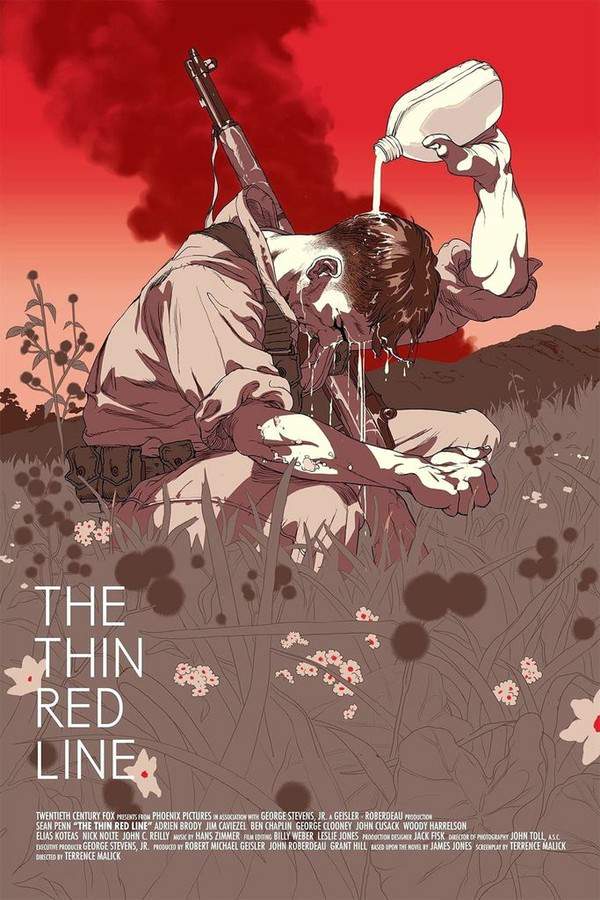
The Thin Red Line (1999) Full Summary & Key Details
Merry Christmas (2006) Complete Plot Breakdown
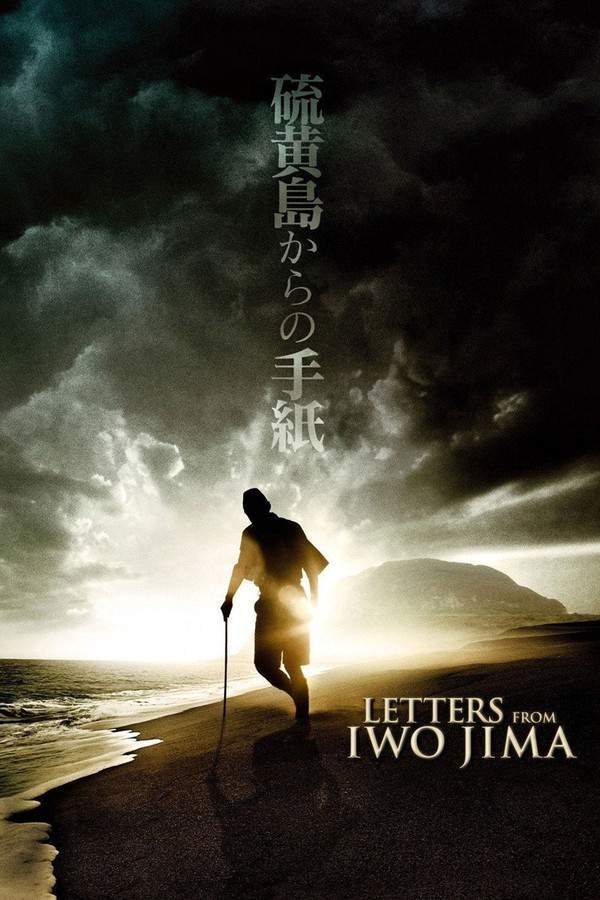
Letters from Iwo Jima (2006) Story Summary & Characters
Holiday (2014) Film Overview & Timeline
Pearl Harbor (2001) Detailed Story Recap
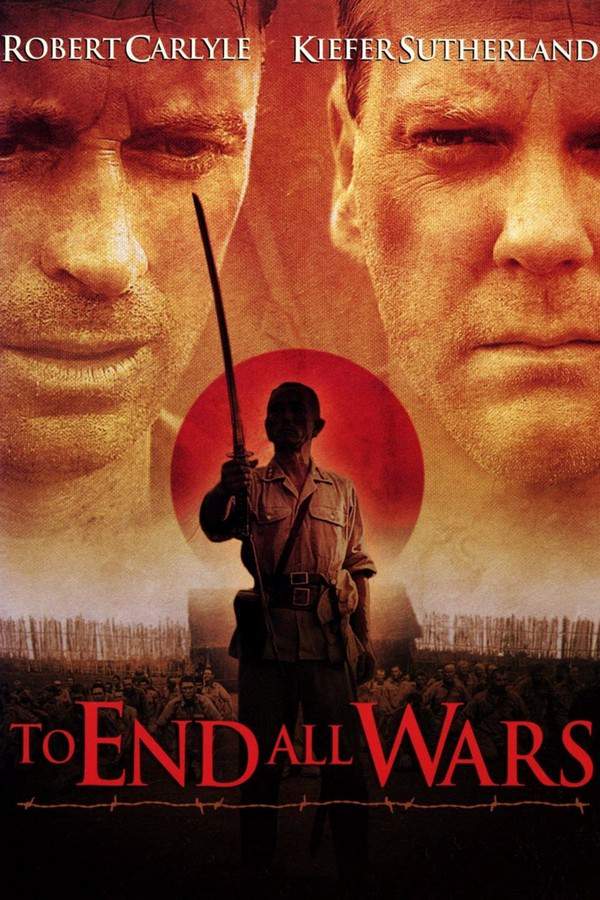
To End All Wars (2002) Full Summary & Key Details
Joyeux Noel (2005) Detailed Story Recap
December (1991) Full Movie Breakdown
Priest of Love (1981) Complete Plot Breakdown
Santa Fe (1985) Full Movie Breakdown
Lawrence After Arabia (2020) Film Overview & Timeline
The Long and the Short and the Tall (1961) Spoiler-Packed Plot Recap
Carol for Another Christmas (1964) Movie Recap & Themes
Christmas at Camp 119 (1947) Detailed Story Recap
Men of the Fighting Lady (1954) Plot Summary & Ending Explained