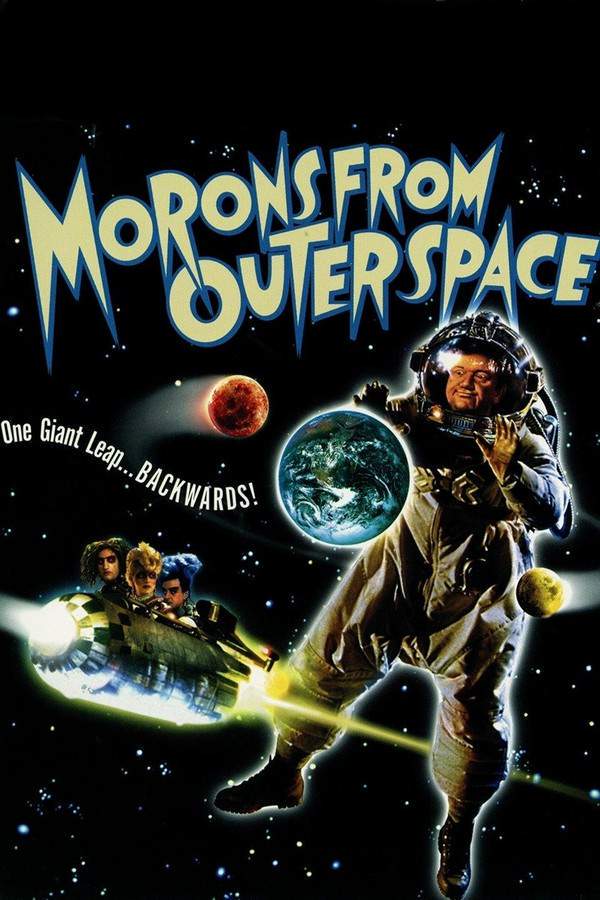
Mark Deveraux [Randy Quaid] spent years chasing a true jazz breakthrough, drifting between gigs writing TV show themes and jingles to pay the bills. He’s technically successful—busy and steady—but the work doesn’t satisfy his creative itch. When a shot at scoring a sci‑fi film comes through, he packs up for a weekend in a cabin with one goal: to composer a piece that could serve as a universal greeting, something that would speak to everyone, everywhere. The process is painstaking but intimate, turning a personal longing into a measured, expressive experiment.
The moment he finally drafts something he believes could work, he reaches out to his girlfriend, a producer for an internationally syndicated talk show. She accidentally broadcasts the track, setting off a chain of unlikely consequences. The song, meant to be a private milestone, slips into the public sphere in an instant, and what begins as a personal victory becomes the spark for something far larger and stranger than either of them anticipated.
The next day brings an unexpected visitor: a Martian who claims the project’s greeting has reached Mars and that peace on Earth might be possible. The visitation quickly sours when the visitor retracts the claim and admits it was a joke. The Martian, who can read minds and teleport, demonstrates abilities that shock Deveraux and everyone watching. The encounter reveals a larger truth—billions of Martians are bored and itching to have fun at humanity’s expense. The threat is not a single visitor but a global invasion of mischief, as Martians begin to disrupt major events, expose intimate secrets, and even voyeuristically spy on people who are intimate, all while the Earth’s defenses scramble to respond.
As the Martian mischief spreads, Deveraux realizes the invasions feel curiously invited by his music. He interrupts a national broadcast once more, only to learn that the proper approach is to play the song in reverse. The revelation hits hard: the power behind the invasion isn’t force but resonance, and the key to reversing the chaos lies in reversing the tune itself. The Martians’ antics escalate, and the situation culminates in a dramatic push to reclaim control of the airwaves.
Bleeding from a failed attempt to stop the spectacle, Deveraux finds himself committed to a psychiatric hospital, where his recovery becomes intertwined with the ongoing crisis. His girlfriend aids in a daring rescue, and together they hijack another international broadcast to try the song again—this time in reverse. The plan unfolds amid a flurry of distractions and counter‑moves from the Martians, but the reversal works, and the Martians begin to withdraw across the globe.
With the threat gone, Deveraux face a new realization: he has found his true talent. He decides to leave Hollywood behind, stepping away from the studio world to pursue a life in music on the road. He reunites his Jazz quartet and hits the road at last, ready to explore a creative path that had always lived just out of reach. In this new frame, the once‑stalled composer discovers not just a career, but a sense of purpose that resonates far beyond a single song.
> Mars is a dump
Even the President [Ronny Cox] is drawn into the growing disruption, a reminder that the stakes stretch from private studios to national broadcasts. In the end, the story circles back to a single, hopeful truth: music has the power to reveal, unite, and heal—as long as it speaks with authenticity, even when the world seems to be listening to something entirely alien. Dr. Jane [Anita Morris] provides quiet support in the hospital phase, grounding the chaos with care as the true rhythm of Deveraux’s life reclaims its beat.