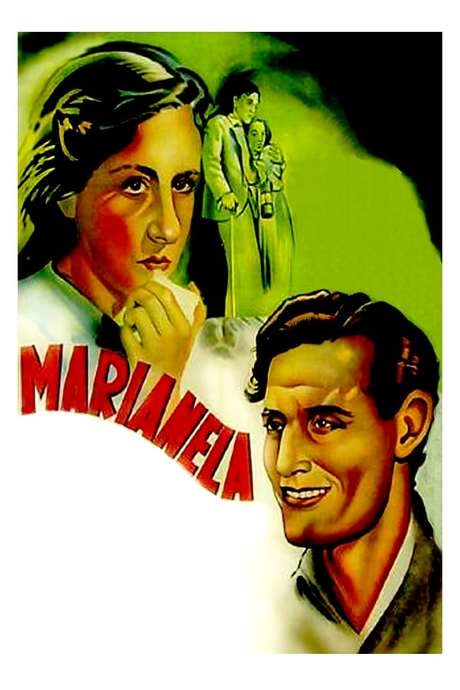
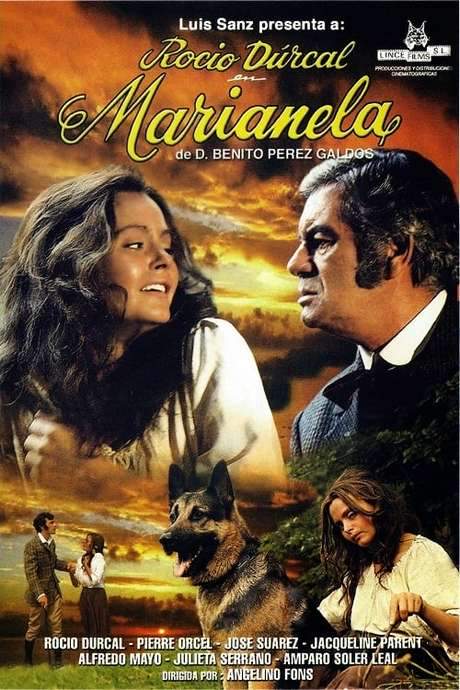
Between Socartes, the mining town, and Aldeacorba, the agricultural countryside, the film unfolds as a quiet, unfairly hopeful tragedy centered on Marianela and Pablo. Nela is a poor, despised girl who lives with the mine foreman Centeno’s family, while Pablo is a young man born blind who loves her deeply. Their days are simple and intimate: Pablo moves through the world with Nela as his steadfast guide, sharing conversations, small joys, and a sense of safety that comes from their close companionship. To the outside world, Nela’s poverty marks her as disposable, but to Pablo she embodies goodness and a beauty that goes far beyond appearances. The two dream of a future together, and Pablo believes that love can outshine any darkness, clinging to the belief that her goodness is the true image of beauty.
A new light arrives with Don Teodoro Golfín, a renowned ophthalmologist who travels to Socartes with a hopeful purpose. Teodoro Golfín represents not just a medical chance for Pablo’s sight, but also the social hinge that could unlock a more secured future for the family’s fortune. The Penáguila household has flourished in wealth, yet their comfort is shadowed by Pablo’s blindness, and Don Francisco de Penáguila—often referred to through his role as Pablo’s Father—sees a cure as a doorway to a carefully arranged destiny. The plan hinges on a traditional, wealth-driven alliance: once Pablo is able to see again, he might marry Florentina, Manuel’s daughter, a match expected to strengthen the family’s status and fortunes. This looming arrangement casts a pale light over the bond between Pablo and Nela, testing whether true love can survive a future dictated by money and social expectation.
As the operation progresses, the possibility of sight rekindles a dangerous tension between reality and desire. Pablo’s mind, filled with images of Nela’s inner beauty, begins to imagine a future where their love could be publicly recognized. Yet the town’s whispering chorus—together with the looming marriage to Florentina—casts doubt on whether such a bond could endure under the weight of appearances and obligation. Nela, although she yearns for Pablo’s happiness, fears that the moment he can truly see will expose her plainness and compromise the dream they share. She makes a painful choice to leave, seeking to spare him a sight that might not align with the vision of her he holds in his heart.
The tragedy deepens as events spiral toward a heartbreaking climax. When the doctor returns and moves the pieces on the board, Nela’s path intersects with a moment of revelation that neither she nor Pablo can fully control. The doctor finds Nela in a vulnerable state and brings her back to the house, where Pablo, now perhaps able to see, is confronted with Marianela in a new light. The narrative builds toward the moment when “seeing” becomes a double-edged gift: it reveals not only a face, but a truth too fragile to bear. In the end, Marianela’s death casts a long shadow over Pablo’s awakening, transforming his newly restored sight into a somber reminder of what was lost and what cannot be replaced.
The film closes with a measured, solemn resonance that lingers after the dust settles. It’s a story about the tension between appearance and essence, between social ambition and personal love, and about how a single human heart can carry the weight of both hope and despair. The characters—Pablo, Nela, the patient, and the doctor—are drawn with careful restraint, letting the tragedy rise from their choices rather than from melodrama. Across the landscapes of Socartes and Aldeacorba, the film invites viewers to consider the true meaning of beauty, the cost of societal expectations, and the fragile thread that binds sight to sightlessness, desire to duty, and life to love.