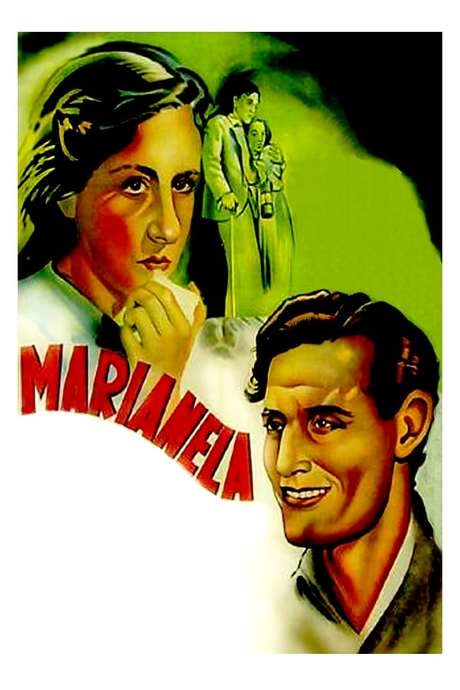
Year: 1944
Runtime: 102 mins
Language: Spanish
Director: Emilio Fernández
A young journalist visits an elderly artist to inquire about a striking portrait of a naked Indigenous woman displayed in his studio. The artist recounts the tragic tale of Maria Candelaria, a young Indigenous woman shunned by her community because she is the daughter of a prostitute. Despite the ostracism, she finds a protector in Lorenzo Rafael, a young Indigenous man who has fallen deeply in love with her and vows to shield her from prejudice.
Warning: spoilers below!
Haven’t seen Maria Candelaria yet? This summary contains major spoilers. Bookmark the page, watch the movie, and come back for the full breakdown. If you're ready, scroll on and relive the story!
Read the complete plot breakdown of Maria Candelaria (1944), including all key story events, major twists, and the ending explained in detail. Discover what really happened—and what it all means.
A young journalist presses an elderly artist to display the portrait of a naked indigenous woman he keeps in his study. As the artist begins to tell the story behind the painting, the narrative shifts into a rich flashback set in Xochimilco, Mexico in 1909, a time just before the Mexican Revolution when the region’s landscapes cradle a tight-knit community of indigenous people. The woman in the painting, María Candelaria, is a young indigenous woman shunned by her own people for being the daughter of a prostitute. She and her lover, Lorenzo Rafael, face constant exclusion and threats, despite being honest and hardworking. They are met with criticism and condemnation from the townsfolk, and their hopes for a life together are continually crushed by social prejudice.
Don Damián, a jealous Mestizo store owner who wants María for himself, blocks their marriage and relentlessly harasses them over a minor debt. María owes him money for goods, and their attempts to barter—flowers from María and vegetables from Lorenzo—are rebuffed. In a cruel turn, Don Damián’s cruelty escalates when he murders a piglet that the couple planned to raise for profit, sabotaging their chances to save enough money to wed. When María contracts malaria, Don Damián stubbornly refuses to supply the quinine they need. In desperation, Lorenzo breaks into the store to steal the medicine and to obtain a wedding dress for María. He is caught and imprisoned for the theft, and María agrees to model for the painter to secure his release. The painter, El Pintor, begins the portrait and asks María to pose nude, a request she refuses, choosing instead to preserve her dignity.
The artist finishes the painting with the nude body of another woman, and when the villagers of Xochimilco see it, they presume it is María Candelaria. They stone her to death and burn her house, while Lorenzo watches in helpless horror. In the end, Lorenzo escapes from prison to carry María’s lifeless body through the Canal of the Dead, a heartbreaking journey that underscores the tragedy born from prejudice and intolerance. The film’s portrayal of the villagers—often portrayed as shrill and bullying—reads as a pointed critique of small-town superstition, yet the narrative also delves into the nuanced tensions between those beliefs and a more compassionate, if still imperfect, Christian conscience as expressed in interactions with the Priest. The story surrounds not just María’s suffering but the communal inertia that allows such injustice to unfold, weaving a somber meditation on beauty, honor, and the consequences of judging others too quickly.
Last Updated: October 09, 2025 at 11:20
Discover curated groups of movies connected by mood, themes, and story style. Browse collections built around emotion, atmosphere, and narrative focus to easily find films that match what you feel like watching right now.
Stories where societal prejudice destroys a pure, passionate romance.If you were moved by the doomed romance of Maria Candelaria and Lorenzo Rafael, explore these similar movies. These films feature passionate love stories tragically cut short by societal prejudice, class conflict, or community ostracism, resulting in bleak, heavy-hearted narratives.
These narratives typically follow a linear, cause-and-effect path where two lovers from different social strata or marginalized backgrounds find each other. Their happiness is immediately threatened by external forces—be it family, community, or the law. The plot escalates through a series of injustices and hardships, building towards an inevitable, tragic conclusion where love is not enough to overcome systemic oppression.
Movies in this thread are united by their core conflict: a deeply emotional romantic connection pitted against an unyielding and prejudiced society. They share a bleak tone, high emotional weight, and a focus on the dignity of the lovers even in the face of their inevitable destruction.
Stories where a steady, inescapable dread leads to a brutal, unjust end.For viewers who appreciated the methodical, heartbreaking build-up of Maria Candelaria, this list features similar movies. These films use a steady pace to create a sense of inevitable doom, where innocent characters face escalating injustices leading to a bleak and emotionally heavy conclusion.
The narrative pattern is one of accumulation. Beginning with a initial hardship or social disadvantage, the story introduces a series of escalating crises—each one chipping away at the characters' chances of survival or happiness. There is no sudden twist; the tragedy is foretold in the very fabric of the world, making the journey a somber procession towards a known, devastating outcome.
These films are grouped by their shared structural and tonal approach: a steady, deliberate pacing that creates a suffocating sense of inevitability, a bleak and oppressive atmosphere, and a narrative that focuses on the helplessness of its protagonists against overwhelming forces, resulting in a climax of profound sadness.
Don't stop at just watching — explore Maria Candelaria in full detail. From the complete plot summary and scene-by-scene timeline to character breakdowns, thematic analysis, and a deep dive into the ending — every page helps you truly understand what Maria Candelaria is all about. Plus, discover what's next after the movie.
Track the full timeline of Maria Candelaria with every major event arranged chronologically. Perfect for decoding non-linear storytelling, flashbacks, or parallel narratives with a clear scene-by-scene breakdown.
Discover the characters, locations, and core themes that shape Maria Candelaria. Get insights into symbolic elements, setting significance, and deeper narrative meaning — ideal for thematic analysis and movie breakdowns.
Get a quick, spoiler-free overview of Maria Candelaria that covers the main plot points and key details without revealing any major twists or spoilers. Perfect for those who want to know what to expect before diving in.
Visit What's After the Movie to explore more about Maria Candelaria: box office results, cast and crew info, production details, post-credit scenes, and external links — all in one place for movie fans and researchers.
Discover movies like Maria Candelaria that share similar genres, themes, and storytelling elements. Whether you’re drawn to the atmosphere, character arcs, or plot structure, these curated recommendations will help you explore more films you’ll love.
Maria Candelaria (1944) Scene-by-Scene Movie Timeline
Maria Candelaria (1944) Movie Characters, Themes & Settings
Maria Candelaria (1944) Spoiler-Free Summary & Key Flow
Movies Like Maria Candelaria – Similar Titles You’ll Enjoy
Cumbia Callera (2007) Full Summary & Key Details
María Cano (1990) Ending Explained & Film Insights
Mi querido viejo (1991) Complete Plot Breakdown
Maria’s Lovers (1984) Plot Summary & Ending Explained
Mariana Mariana (1987) Film Overview & Timeline
Marianela (1972) Ending Explained & Film Insights
María (1972) Full Movie Breakdown
María de la O (1959) Spoiler-Packed Plot Recap
El amor de María Isabel (1968) Story Summary & Characters
Marianela (1940) Story Summary & Characters
Maria of My Heart (1979) Movie Recap & Themes
María Isabel (1967) Movie Recap & Themes
María de la O (1939) Story Summary & Characters
Maria: The Outlaw Legend (1000) Full Movie Breakdown
Maria Pentagiotissa (1957) Ending Explained & Film Insights