Plot Explained Spoilers guaranteed!
Plot Explained

Browse by genre

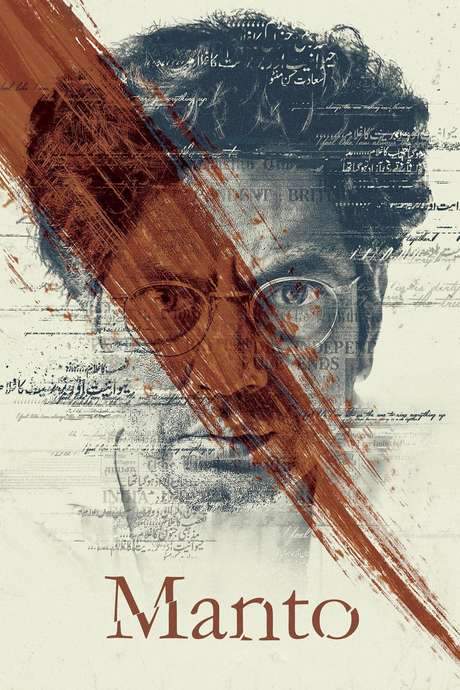
Manto (2018) movie poster

Plot Summary

Manto (2018) Plot Summary Explained

Release, runtime and language
2018 · 112 mins · Hindi
Echo score 84
Directed by
Nandita Das
Starring
Vijay Varma, Rajshri Deshpande, Rishi Kapoor, Tahir Raj Bhasin, Chandan Roy Sanyal, Madhurjeet Sarghi

Amidst the vibrant and sometimes corrupt film industry of Bombay, writer Saadat Hasan Manto achieves considerable recognition for his stories. However, as religious tensions escalate and widespread violence erupts across the country, he makes the challenging decision to leave Bombay and relocate to Lahore. There, he struggles to find acceptance and faces difficulty getting his work published, feeling isolated from his former circle of friends.

On this page (4)
  1. 1 What happens: full plot
  2. 2 Plot questions answered
  3. 3 Movie threads
  4. 4 Every angle

Full plot summary · contains spoilers

What Happens in Manto: Full Plot Summary

The whole story of Manto (2018) explained, from the opening scene to the final frame: every key event, every twist and what it all adds up to. Read it as a quick recap before the sequel, to check a scene you missed, or to finally understand what really happened.

Last updated: February 18, 2026 at 23:43

Was this helpful?

Plot questions answered

Manto Plot Explained: Your Questions Answered

The questions people ask most about Manto (2018): what happens in the confusing scenes, why the characters do what they do, the twists, hidden details and what the ending means. Each answer contains spoilers.

Q1

Why did Manto decide to move from Bombay to Pakistan?

Manto decided to leave Bombay after Shyam Chadda, a Hindu friend, threatened him during the escalating Hindu-Muslim tensions of late 1947. Shyam bluntly told Manto he could have killed him simply because Manto was Muslim. Although Manto was a non-practicing Muslim, this moment forced him to confront the dangerous reality that his identity had become a target. Fearing for his safety and feeling increasingly alienated in Bombay, he made the painful decision to relocate to Lahore in 1948.

  • manto move
  • partition
  • mumbai to lahore
  • communal tension
  • exile
Q2

What was the Thanda Gosht trial about?

Thanda Gosht was a short story written by Manto that depicted a man who scalds his wife to death with boiling water. The story was based on a real case but used explicit language and graphic imagery. In the late 1940s in Lahore, Manto was charged with obscenity for this story. He vigorously defended literature and free expression in court, but was ultimately convicted. The trial drained his energy and finances, symbolizing the personal cost of his fearless literary stance.

  • thanda gosht
  • court case
  • obscenity charges
  • literary censorship
Q3

Why is Toba Tek Singh considered Manto's most famous story?

Toba Tek Singh is Manto's most celebrated short story, depicting the exchange of mentally ill patients between India and Pakistan after Partition. A Sikh protagonist named Bishan Singh dies in the no-man's land between the two countries, unable to understand which side now belongs to him. The story serves as a powerful allegory for the madness of political borders and the human cost of Partition. The film uses this story to mirror Manto's own sense of displacement and identity loss.

  • toba tek singh
  • partition allegory
  • sikh patient
  • bishan singh
  • no mans land
Q4

Why did Manto have difficulty getting published in Lahore?

After moving to Lahore in 1948, Manto faced significant obstacles in getting his work published. The literary environment in Lahore was conservative, and publishers were wary of his controversial stories that tackled taboo subjects and challenged social norms. Additionally, his unflinching portrayal of Partition violence and his defense of free expression made him a controversial figure. This rejection intensified his sense of isolation and betrayal, compounding his personal struggles.

  • publishing rejection
  • literary censorship
  • pakistan writers
  • lahore publishers
Q5

Why was Manto admitted to the Lahore Mental Hospital?

Manto voluntarily admitted himself to the Lahore Mental Hospital in 1949-1950 to receive treatment for alcohol addiction. The admission came after years of mounting personal turmoil: financial strain, failed marriages, legal battles, and the emotional toll of exile. Unable to bear watching his family suffer any longer, he sought help at the rehabilitation center within the hospital. This period marked a turning point where the line between illness and genius became increasingly blurred.

  • alcohol addiction
  • rehabilitation
  • lahore mental hospital
  • health decline
Q6

How are Manto's fictional stories related to his real life?

The film weaves five of Manto's stories throughout his biographical narrative, using fiction as a lens to reflect his inner world and emotional state. Each story explores themes of exile, censorship, and the trauma of Partition that Manto experienced personally. The stories are not mere adaptations but serve as autobiographical reflections, showing how his creative work was deeply intertwined with his lived experiences, struggles, and the chaotic world around him.

  • autobiographical stories
  • film structure
  • fiction vs reality
  • partition themes
Q7

What triggered Manto's identity crisis after Partition?

Manto's identity crisis was triggered when Shyam Chadda, his Hindu friend, confronted him in late 1947 and said he could have killed him because of Manto's Muslim identity. Although Manto was not a religious man and had friends from various communities, this threat exposed how Partition had transformed personal relationships along religious lines. The conversation forced him to confront the fact that despite his secular identity, the world now saw him only as a Muslim in a divided society.

  • identity crisis
  • shyam chadda
  • hindu-muslim
  • partition violence
  • personal relationships
Q8

How did Partition affect Manto's family life?

Partition severely strained Manto's marriage to Safia. While Safia remained his unwavering support throughout the upheavals, the move to Lahore brought mounting emotional and financial pressures. Manto's addiction, inability to provide稳定收入, and his obsessive dedication to writing created growing distance between them. The family's happiness suffered as his health deteriorated, leading to increased marital tension despite Safia's continued loyalty.

  • safia wife
  • marriage strain
  • family
  • financial difficulties
  • lahore life
Q9

Why did Manto refuse to apologize for his controversial writings?

Manto refused to apologize for his writings because he believed literature should reflect reality honestly, even when that reality was uncomfortable or disturbing. He argued that a writer's duty was to tell the truth, not soften it for social approval. He viewed censorship as a betrayal of artistic freedom. His stance led to multiple court battles and convictions, but he maintained that compromising his artistic integrity would be a greater loss than any legal penalty.

  • free speech
  • censorship
  • artistic integrity
  • writer principles
  • literary defense
Q10

What is Manto's lasting legacy in literature?

Manto's legacy endures as one of Urdu literature's most courageous voices. Despite poverty, legal persecution, and personal suffering, he wrote some of his sharpest works in his final years. His stories about Partition, violence, and human nature remain powerful and relevant. Toba Tek Singh continues to be studied and adapted worldwide as a definitive Partition allegory. His fierce commitment to truth and free expression made him a martyr of literary integrity whose influence persists in literature and cinema.

  • literary legacy
  • urdU literature
  • partition stories
  • free expression
  • influence

Movie threads

More Movies Like Manto, by Mood & Story

Curated lists built around what makes Manto tick: the same mood, the same kind of story or the same emotional payoff. Each list explains why these movies belong together.

Movies about displaced artists and creative crises like Manto

Stories of creators torn from their world, struggling against isolation and political upheaval. If you appreciated the portrayal of artistic displacement in Manto, you'll find similar journeys in these films. They feature writers, painters, and musicians grappling with exile, censorship, and the fight to preserve their voice against overwhelming odds.

  • exile
  • creative block
  • isolating
  • despairing
  • political turmoil
  • introspective
  • Tone: melancholic, introspective, despairing
  • Pacing: steady, character-driven
Why these movies?

The story pattern: These narratives typically follow an artist at the height of their power who is suddenly uprooted by political or social conflict. The journey focuses on their disillusionment, the erosion of their creative spirit in exile, and their struggle to find acceptance and relevance in a new land.

Why they belong together: These films are grouped together because they share a deep focus on the psychological toll of displacement on the creative process, blending intense personal drama with larger historical forces, resulting in a heavy, melancholic viewing experience.

Movies about finding bittersweet legacies after historical trauma like Manto

Personal stories of profound loss where a glimmer of hope survives in the legacy left behind. For viewers moved by the bittersweet ending of Manto, these films offer similar emotional journeys. They depict characters facing great personal tragedy amidst wider historical events, culminating in an ending that is sad yet carries a sense of enduring hope or legacy.

  • historical trauma
  • bittersweet
  • enduring legacy
  • heavy
  • reflective
  • despairing
  • Tone: bittersweet, heavy, reflective
  • Pacing: steady, deliberate
Why these movies?

The story pattern: The plot follows a protagonist through a period of intense historical upheaval, such as war or partition, which leads to their personal downfall or profound loss. The ending, while emotionally heavy, provides a counterpoint by highlighting how their spirit, work, or actions continue to resonate, creating a bittersweet feeling.

Why they belong together: These movies are connected by their shared structure of pairing a deeply sad, often tragic, central journey with an ending that offers a nuanced, bittersweet resolution, focusing on the survival of an idea or memory rather than a purely happy or bleak conclusion.

Every angle

Manto (2018) Explained: Plot, Timeline & Characters

Everything about Manto in one place: what happens in the plot summary, the timeline in chronological order, the characters and meaning and a spoiler-free summary. What's After the Movie adds the cast, box office and post-credit scenes.

Coming soon on iOS and Android

The Plot Explained Movie Summary App

Plot summaries, endings explained and timelines on your phone. Catch up on any movie in minutes, save your favorites and never miss a twist again.

Be the first to know when we launch. Your email stays private, always.

Learn more about the app