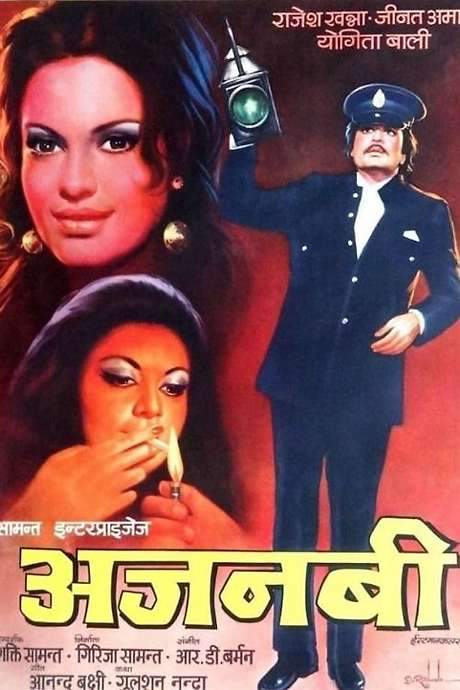
Year: 1978
Runtime: 149 mins
Language: Hindi
Director: Raj Khosla
Thakur Rajnath Singh Chouhan announces he will marry Tulsi, a prostitute, upsetting his mother. Tulsi convinces him to wed Sanjukta. After Tulsi dies, her son Ajay is raised by Sanjukta, and Pratap is born. Ajay inherits the estate; Pratap wastes it. Sanjukta discovers Ajay has impregnated his daughter Geeta, embezzled funds and owes money to Leelabai.
Find where to stream, rent, or buy Main Tulsi Tere Aangan Ki (1978) in the US with current JustWatch availability, up-to-date pricing, and platform listings for subscription, rental, and digital purchase options.
Warning: spoilers below!
Haven’t seen Main Tulsi Tere Aangan Ki yet? This summary contains major spoilers. Bookmark the page, watch the movie, and come back for the full breakdown. If you're ready, scroll on and relive the story!
Read the complete plot breakdown of Main Tulsi Tere Aangan Ki (1978), including all key story events, major twists, and the ending explained in detail. Discover what really happened, and what it all means.
Main Tulsi Tere Aangan Ki follows the labyrinth of love, duty, and family within a defined social order. Thakur Rajnath Singh Chouhan, a respected aristocrat, is torn between the woman he loves, Tulsi Asha Parekh, and the arrangement that society expects him to honor with Sanjukta Nutan. The tension between private happiness and public obligation sets the tone for a saga where loyalty is tested and lineage dictates every choice.
Tulsi makes a quiet, devastating sacrifice after giving birth to Ajay R. Chouhan Vinod Khanna. By stepping back, she ensures that Sanjukta can hold the marriage together and gain the protection of the family’s name. This act weaves a lasting undercurrent through the narrative, shaping Ajay’s sense of belonging and the expectations that will chase him throughout his life. The family’s balance is already fragile, and the plot deepens when Rajnath dies in a horse-riding accident, leaving Sanjukta to shoulder both widowhood and guardianship over a household built on layered loyalties.
Sanukta’s guardianship leads her to Ajay in his boarding school, where she visits him regularly and then brings him home when the moment is right. Ajay grows into a young man who meets Naini and discovers love, yet the shadows of his birth and the compromises that kept the family intact linger as ever-present backdrop. Sanjukta embraces her role with a blend of authority and care, publicly affirming Ajay’s status as her husband’s first son and a rightful heir, a revelation that lends him influence but also invites resentment.
The story’s tension is magnified by Pratap, Sanjukta’s own son, who feels slighted and begins to drift. As external pressures and internal ambitions collide, the brothers’ bond is tested by those who would drive a wedge between them. Ajay repeatedly acts to shield Pratap, taking the blame for misdeeds that aren’t his, a pattern that unsettles Sanjukta and deepens the emotional complexity within the family. The consequences ripple outward, affecting how each member navigates pride, loyalty, and the duties of blood.
Geeta becomes a focal point in the upheaval surrounding Pratap. He seduces Geeta, she becomes pregnant, and he tries to pin the blame on Ajay in front of Geeta’s father, Rana. Geeta herself bears the burden of such accusations, and Ajay’s absence from the fray tests the endurance of family bonds. The family’s cohesion frays as the narratives of blame and honor collide, pushing Ajay toward a decision to leave the house and forge a path free from the immediate judgment of those who would define him by his past.
Rana’s stance shifts as he witnesses the strain Pratap’s choices place on his daughter’s life, and he begins to question the loyalties that have long held the family together. In the climax, the polo field becomes a stage for old rivalries and new truths. A plot to harm Pratap surfaces, but Ajay learns of the plan in time and acts to rescue him, reaffirming the protective role he has assumed within the family. This act of courage becomes a turning point, as Pratap recognizes the enduring kindness and strength of his elder brother, ultimately surrendering to him and accepting Ajay as the true elder.
With the brothers reconciled, the family moves toward a hard-won togetherness. The narrative remains grounded in the sense that duty, forgiveness, and mutual loyalty are more powerful than pride or resentment. The film’s core is a portrait of a household where love is filtered through tradition, where sacrifice by Tulsi resonates through every consequence, and where Ajay and Pratap find a way to coexist not as rivals but as brothers bound by the shared history that created them.
Throughout, the story maintains a steady, restrained tone that lets the characters’ choices drive the drama rather than sensational twists. It is a contemplation on how a family navigates sacrifice, stigma, and expectation, and how resilience—born of love and duty—can restore a fractured lineage. In the end, the reunion of the family is earned, not given, echoing the film’s central belief that kinship, when tempered by humility and courage, can endure even the fiercest trials.
Last updated: October 09, 2025 at 11:09
Explore frequently asked questions about Main Tulsi Tere Aangan Ki (1978) with spoiler-rich answers covering the full plot summary, major story beats, character motivations, hidden details, and ending meaning. This movie summary FAQ helps explain confusing scenes, plot twists, and narrative decisions in clear, searchable detail.
Tulsi sacrificed her place in Rajnath's life after giving birth to their son Ajay. She stepped back intentionally so that Sanjukta could have Rajnath entirely to herself and maintain the marriage. This sacrifice was meant to preserve Rajnath's social standing and ensure Sanjukta could keep her husband and raise Ajay within the family fold without scandal.
Tulsi's sacrifice establishes the central theme of selflessness that resonates throughout the entire family saga.
Ajay was sent to boarding school shortly after his birth to protect him from the stigma of being illegitimate. Rajnath and Sanjukta made this decision to shield Ajay's future prospects and maintain appearances within the aristocratic community. This separation kept Ajay away from the family estate until he was older.
The boarding school separation plants the seeds for Ajay's later return and his complicated relationship with his family identity.
After Tulsi died in sacrifice, Sanjukta took responsibility for Ajay as her own son. Despite Ajay being her husband's child from another woman, she chose to raise him within the family. She visited him at boarding school regularly and later brought him home to live with the family, eventually publicly acknowledging him as her husband's first son.
Sanjukta's early investment in Ajay's future sets the stage for her unwavering support of him against Pratap.
Pratap became resentful after Sanjukta publicly acknowledged Ajay as Rajnath's first son and rightful heir. This revelation meant Ajay held the position of elder brother and primary heir, which displaced Pratap from the status he expected as the son of the main wife. The public acknowledgment made Ajay's legitimacy official, causing Pratap to feel slighted in the family hierarchy.
Pratap's jealousy is foreshadowed early when the family dynamics shift after Ajay's return from boarding school.
Pratap seduced Geeta, the daughter of Rana, which resulted in Geeta becoming pregnant. When the pregnancy was discovered, Pratap tried to escape responsibility by falsely blaming Ajay for the wrongdoing in front of Rana. This accusation was an attempt to tarnish Ajay's reputation and shift blame away from himself.
The pregnancy scandal directly leads to Ajay's decision to leave the house, fulfilling the consequences of Pratap's schemes.
Ajay left the house after being falsely blamed for Geeta's pregnancy. Despite being innocent, he chose not to defend himself aggressively and instead walked away from the family that had raised him. The accusation, combined with the general suspicion around his illegitimacy, convinced him that he could never fully belong despite Sanjukta's efforts.
Ajay's departure marks the emotional low point before his eventual return as a hero who saves Pratap.
During the polo match, men who opposed Pratap attempted to kill him on the field. However, Ajay had learned of this assassination plot and intervened just in time to rescue his brother. This act of bravery demonstrated Ajay's unwavering loyalty to family despite being falsely accused and expelled from the home.
The polo field confrontation represents the ultimate payoff for Ajay's pattern of protecting Pratap throughout the story.
Pratap reconciled with Ajay after witnessing his brother's act of saving his life during the polo field assassination attempt. Overwhelmed by Ajay's kindness and loyalty, despite all the mistreatment and false accusations, Pratap finally accepted Ajay as his true elder brother and surrendered to him. The brothers were reconciled, and the family reunited under Ajay's rightful place as the elder son.
This reconciliation fulfills the narrative arc established by Ajay's repeated protection of Pratap throughout the story.
Ajay inherited the family estate but wasted his portion, leading to financial difficulties. This mismanagement and his need for money created a situation where he owed debts to Leelabai, a money lender. The financial troubles contributed to his overall downward spiral and desperation during the period when he was being blamed for Geeta's pregnancy.
The financial troubles compound Ajay's problems and contribute to the family's loss of honor.
Naini was a woman whom Ajay met after returning home from boarding school. He fell in love with her after a series of misadventures that tested his resolve. Their romance represented Ajay's attempt to build a personal life separate from the family conflicts, though the relationship faced obstacles typical of the film's dramatic circumstances.
Naini represents Ajay's connection to a life outside the family inheritance disputes.
Rajnath was in love with Tulsi, who was a prostitute, but societal pressures forced him to marry Sanjukta, a strong aristocratic woman. The rigid social hierarchy of the time prohibited an aristocrat from marrying someone of Tulsi's profession, so Rajnath complied with expectations while maintaining his connection to Tulsi secretly.
This forced marriage directly leads to Tulsi's tragic sacrifice and the complex family dynamics that follow.
Rajnath Singh Chouhan died in a horse-riding accident. This tragic event occurred after he had already fathered both Ajay with Tulsi and Pratap with Sanjukta. His death left Sanjukta as a widow who had to navigate the aristocratic world alone while protecting Ajay's place in the family.
Rajnath's death forces Sanjukta to become the sole protector of both sons and their respective positions in the family.
Discover curated groups of movies connected by mood, themes, and story style. Browse collections built around emotion, atmosphere, and narrative focus to easily find films that match what you feel like watching right now.
Stories where family secrets and burdens unravel a carefully built inheritance.If you liked the saga of familial duty and inheritance in Main Tulsi Tere Aangan Ki, explore these movies about family legacies unraveling. Discover similar dramatic stories of sibling rivalry, financial ruin, and the heavy burden of upholding a family name across generations.
These narratives typically span long periods, chronicling how a single decision or hidden truth creates ripples that eventually fracture a family. The central conflict arises from the clash between personal desires and rigid societal or familial obligations, often culminating in a loss that forces a painful reckoning.
Movies are grouped here for their shared focus on the cyclical nature of family trauma, the destructive power of secrets within a household, and the melancholic tone that accompanies the decline of a once-respected legacy.
Emotional journeys where profound personal sacrifice leads to a hard-worn peace.For viewers who appreciated the themes of maternal and familial sacrifice in Main Tulsi Tere Aangan Ki, this collection highlights movies with similar emotional weight. Find stories about quiet suffering, lifelong duty, and bittersweet endings where peace comes only after great loss.
The emotional journey in these films is defined by characters making difficult, often hidden, sacrifices for the sake of others. The pacing is deliberate, allowing the full weight of these choices to settle over time. The ending provides a sense of closure or reconciliation, but it is tinged with the sadness of what was lost along the way.
These films are united by their heavy emotional weight, a melancholic tone, and a narrative structure that prizes the emotional impact of sacrifice over fast-paced plot twists. They deliver a deeply resonant, bittersweet viewing experience.
Don't stop at just watching - explore Main Tulsi Tere Aangan Ki in full detail. From the complete plot summary and scene-by-scene timeline to character breakdowns, thematic analysis, and a deep dive into the ending - every page helps you truly understand what Main Tulsi Tere Aangan Ki is all about. Plus, discover what's next after the movie.
Track the full timeline of Main Tulsi Tere Aangan Ki with every major event arranged chronologically. Perfect for decoding non-linear storytelling, flashbacks, or parallel narratives with a clear scene-by-scene breakdown.
Discover the characters, locations, and core themes that shape Main Tulsi Tere Aangan Ki. Get insights into symbolic elements, setting significance, and deeper narrative meaning - ideal for thematic analysis and movie breakdowns.
Discover movies like Main Tulsi Tere Aangan Ki that share similar genres, themes, and storytelling elements. Whether you’re drawn to the atmosphere, character arcs, or plot structure, these curated recommendations will help you explore more films you’ll love.
Main Tulsi Tere Aangan Ki (1978) Scene-by-Scene Movie Timeline
Main Tulsi Tere Aangan Ki (1978) Movie Characters, Themes & Settings
Main Tulsi Tere Aangan Ki (1978) Spoiler-Free Summary & Key Flow
Movies Like Main Tulsi Tere Aangan Ki – Similar Titles You’ll Enjoy
Main Te Bapu (2022) Spoiler-Packed Plot Recap
Aap Mujhe Achche Lagne Lage (2002) Story Summary & Characters
Main Prem Ki Diwani Hoon (2003) Story Summary & Characters
Main, Meri Patni Aur Woh (2005) Ending Explained & Film Insights
Tulasi (2007) Movie Recap & Themes
Main Hoon Na (2004) Ending Explained & Film Insights
Ankur: The Seedling (1974) Plot Summary & Ending Explained
Main Chup Rahungi (1962) Film Overview & Timeline
Dil Kya Kare (1999) Ending Explained & Film Insights
Sapne Saajan Ke (1992) Complete Plot Breakdown
Ajanabee (1974) Story Summary & Characters
Tulsi: Mathrudevobhava (2008) Full Movie Breakdown
Tumsa Nahin Dekha (1957) Plot Summary & Ending Explained
Dil Diya Dard Liya (1966) Detailed Story Recap
Main Aurr Mrs Khanna (2009) Detailed Story Recap