


Plot Explained Spoilers guaranteed!
Plot Explained

Browse by genre

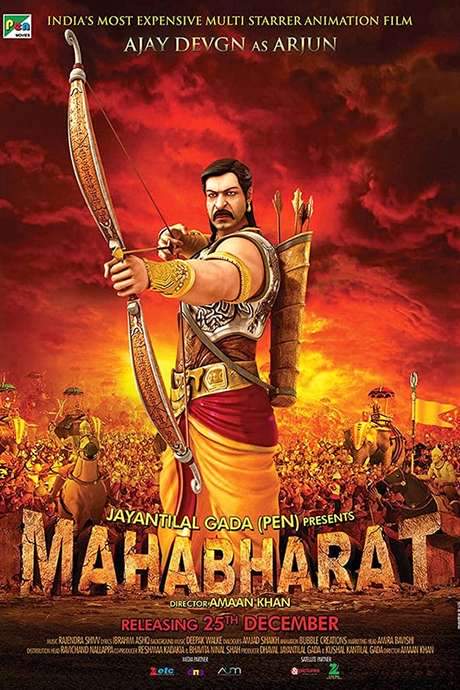
Mahabharat (2013) movie poster

Timeline

Mahabharat (2013) Timeline Explained – Every Event in Order

Release, runtime and language
2013 · 119 mins · Hindi
Directed by
Amaan Khan
Starring
Ajay Devgn, Anil Kapoor, Amitabh Bachchan, Anupam Kher, Paresh Rawal, Jackie Shroff

Considered the greatest and longest epic in world literature, this sprawling saga encompasses a vast range of themes and emotions. It explores conflict, duty, sacrifice, heroism, truth, justice, romance, adventure, fantasy, and complex relationships. The narrative delves into the intricacies of human nature and the consequences of choices, making it a truly captivating and all-encompassing story.

On this page (5)
  1. 1 Where to watch
  2. 2 Events in order (15)
  3. 3 Timeline questions answered
  4. 4 Movie threads
  5. 5 Every angle

Where to watch

Where to Watch Mahabharat (2013)

Where can you watch Mahabharat? Stream, rent or buy it in the US, including on Google Play Movies and YouTube: current JustWatch availability with up-to-date prices.

Streaming availability powered by JustWatch

15 events in order · contains spoilers

Mahabharat Timeline: Events in Chronological Order

Every key event of Mahabharat (2013) in order, scene by scene, with when and where it takes place. Use it to untangle flashbacks, time jumps and parallel storylines, to refresh your memory before the sequel or to find the exact scene you are thinking of.

  1. Kunti bears Karna and sends him to the Ganga

    Kunti uses the mantra granted by Durvasa to invoke the Sun God, and Karna is born. Being unmarried, she places the newborn in a basket and sends him down the Ganga river to keep him safe. The summary identifies Karna as the Sun's son who is thus set on a separate path from the Pandavas.

    Where
    Durvasa's ashram and the Ganga river
  2. Birth of the Pandavas and Nakul/Sahdev

    Kunti bears Yudhisthira, Bhima, and Arjun. Madri, Pandu's second wife, bears Nakul and Sahdev. The brothers are thus born under different mothers, setting the stage for a united dynasty.

    Where
    Hastinapur
  3. Dhritarashtra's reign and Dronacharya trains the princes

    Pandu dies and Dhritarashtra becomes king, with Gandhari by his side. The Kaurava princes, led by Duryodhan, are trained by Dronacharya. The stage is set for rising tensions between the Pandavas and Kauravas.

    Where
    Hastinapur
  4. Royal assembly and Yudhishthira is crowned prince

    A grand royal assembly is organized to introduce the princes to the masses under Bhishma's watch. After Pandu's death, Bhishma oversees the proceedings and declares Yudhishthira the crown prince. This fuels the rivalry with Duryodhan.

    Where
    Hastinapur
  5. Karna's challenge and Kunti's secret

    Drona proclaims Arjun the best archer in the land, and Karna challenges him to a duel. Although Kunti recognizes Karna as her son, she keeps silent about their relation. Shakuni and Duryodhana soon install Karna as the King of Anga to pit him against Arjun.

    Where
    Hastinapur / Anga
  6. Duryodhana's palace fire plot and escape

    Duryodhana engineers a trap by constructing a palace of combustibles to burn the Pandavas alive. With Vidur's help, the Pandavas learn of the plot and escape the fire, fleeing across a river to safety. Their survival marks the beginning of their exile.

    Where
    Hastinapur; river crossing
  7. Vidur's counsel and exile begins

    Vidur advises the Pandavas to gather allies while in exile, traveling incognito to seek support. The brothers comply, forming strategies and plans away from Hastinapur's prying eyes. Their bond and resolve are tested during this period.

    Where
    Forest / exile landscape
  8. Hidimba and Bheem's alliance

    Bheem defeats Hidimb in the forest and wins Hidimba's love. She agrees to marry him, and they begin a lasting alliance that strengthens the Pandava camp. The relationship adds an element of romance amid their hardship.

    Where
    Forest
  9. Draupadi swayamvar and Arjun's victory

    Draupadi's swayamvar is held, and Arjun, in disguise as a sage, wins her hand. Krishna intervenes and reveals Arjun's true identity, preventing a kidnapping and ensuring Draupadi becomes a wife of the Pandavas. The sum total of their marriages foreshadows the five-husband arrangement.

    Where
    King Drupada's kingdom
  10. Indraprastha founded after five-year plan

    Krishna explains Draupadi's boon of five husbands from her past life, prompting the Pandavas to return after five years. Vishwakarma is invoked to construct a majestic city and palace, giving rise to Indraprastha. The new capital marks a turning point in their sovereignty.

    Where
    Indraprastha
  11. Draupadi's boon and return planning

    With Draupadi's boon and Krishna's guidance, the Pandavas set their sights on Hastinapur, planning a return that could clash with the Kauravas. The period includes intrigue, alliance-building, and sharpening martial prowess in preparation for the looming conflict.

    Where
    Indraprastha / Hastinapur
  12. Krishna's Gita and war prep

    As war approaches, Bhishma is appointed commander-in-chief. Arjun doubts whether to fight, and Krishna imparts the essence of the Gita to resolve his moral dilemma. The epic inner struggle culminates in a vow to engage in the battle.

    Where
    Kurukshetra / Hastinapur
  13. Bhishma falls and Drona's Chakravyuh

    In the war, Bhishma falls after using Shikhandi as a shield. Dronacharya adapts and launches the Chakravyuh to trap Yudhisthira, while Abhimanyu fights valiantly and dies in the trap.

    Where
    Kurukshetra
  14. Karna's death and the fall of Duryodhana’s camp

    Karna dies after a fierce duel when his chariot gets stuck; Shakuni is slain by Sahdev; Duryodhana is killed by Bhima after a climactic confrontation. The Pandavas' victory comes at the cost of immense tragedy and moral reckoning.

    Where
    Kurukshetra
  15. Yudhishthira's coronation and Karna's kinship revealed

    Yudhishthira is crowned king of Hastinapur, and Kunti publicly acknowledges Karna as her son. To honor Karna's legacy, Yudhishthira vows to donate 50 kgs of gold daily in his memory.

    Where
    Hastinapur

Last updated: October 01, 2025 at 10:24

Was this helpful?

Timeline questions answered

Mahabharat Timeline Explained: Your Questions Answered

When does it happen, and why in that order? The questions people ask about the chronology of Mahabharat (2013): time jumps, flashbacks, cause and effect between scenes and the correct order of events, each answered with spoilers.

Q1

How did Kunti get the power to summon gods and bear Karna?

Kunti was granted a secret mantra by the, which allowed sage Durvasa her to invoke any god to beget children. As a test of this power, she called upon the Sun God, who answered and fathered Karna. Since Kunti was unmarried at the time, she placed the newborn in a basket and sent him down the Ganga river to keep him safe, keeping his existence a secret.

  • kunti
  • karna
  • sun god
  • durvasa
  • mantra
  • birth
Q2

Why did Arjun refuse to fight Karna when he was challenged?

When Karna challenged Arjuna to a duel at the royal assembly, Arjuna's brother Bheem publicly pointed out that Karna was the son of a charioteer, implying he was of lower social status. Arjuna, respecting this social distinction, declined to fight him. Meanwhile, Kunti recognized Karna as her son but remained silent about their relationship.

Foreshadowing: This moment plants the seed of rivalry that will ultimately lead to the great war.

  • karna
  • arjun
  • duel
  • charioteer
  • challenge
  • status
Q3

How did the Pandavas escape the palace fire set by Duryodhana?

Duryodhana constructed a palace made of combustible materials and invited the Pandavas to stay there, planning to burn them alive. However, Vidur, the wise advisor who favored the Pandavas, learned of the plot and warned them. The Pandavas escaped through a secret tunnel and fled across a river, beginning their period of exile and concealment.

  • duryodhana
  • palace fire
  • vidur
  • escape
  • exile
  • pandavas
Q4

Why did Draupadi end up marrying all five Pandavas?

During Draupadi's swayamvar, Arjuna won her hand in disguise. When Kunti told her sons to share whatever they received, Draupadi became bound by this promise. Krishna later explained that in a previous life, Draupadi had asked Shiva for a husband and received a boon that she would have five husbands in her next life. This divine arrangement bound her to all five Pandavas.

  • draupadi
  • pandavas
  • five husbands
  • boon
  • shiva
  • krishna
  • swayamvar
Q5

What happened during the gambling match that led to Draupadi's public humiliation?

Yudhisthira, known for his weakness in gambling, was challenged by Shakuni and repeatedly lost everything, his kingdom, his brothers, himself, and finally Draupadi in bets. Dushasana dragged Draupadi to the court, and Duryodhana ordered her public disrobing. This horrific insult became the pivotal moment that fueled the Pandavas' determination to wage war.

Foreshadowing: Draupadi vows not to wash her hair until Dushasana's blood is shed, foreshadowing his violent death.

  • draupadi
  • gambling
  • yudhisthira
  • duryodhana
  • humiliation
  • disrobing
  • shakuni
Q6

What were the Pandavas doing during their twelve years of exile in the Virata kingdom?

After losing their kingdom in the gambling match, the Pandavas entered a twelve-year exile in disguise. Each brother took a different role: Bheem worked as a cook, Draupadi as a maid, Arjuna as a dance master, Nakul as a weapons keeper, Sahdev as a stable boy, and Yudhisthira as the king's advisor. They lived incognito until their term ended.

  • pandavas
  • exile
  • virata
  • disguise
  • twelve years
  • incognito
Q7

Why was Arjuna reluctant to fight in the Kurukshetra war, and what did Krishna teach him?

Before the war, Arjuna was overwhelmed by moral doubt, he could not bear to fight his own relatives, teachers, and friends. Krishna then imparted the teachings of the Bhagavad Gita, revealing his universal Vishnu form and explaining concepts of duty (dharma), detachment, and the eternal nature of the soul. This divine discourse convinced Arjuna to take up arms.

  • krishna
  • gita
  • arjun
  • doubt
  • duty
  • dharma
  • kurukshetra
  • war
Q8

How was Bhishma defeated despite being the greatest warrior?

Bhishma was the commander-in-chief of the Kaurava army and had taken a vow never to fight a woman. Krishna devised a strategy: Shikhandi, who was born female but became male, was placed in front of Arjuna. Bhishma recognized Shikhandi as the woman he had wronged in a past life and, honoring his vow, lowered his weapons. Arjuna then unleashed a relentless barrage of arrows that brought Bhishma down to a bed of arrows.

Foreshadowing: Bhishma's fall marks the turning point of the war in the Pandavas' favor.

  • bhishma
  • shikhandi
  • defeat
  • vow
  • kurukshetra
  • past life
Q9

What promise did Karna make to Kunti during the war, and why did he keep it?

Before the war, Kunti revealed to Karna that she was his mother and begged him to spare her sons. Karna promised to spare all the Pandavas except Arjuna, since he could not forgive Arjuna for their past rivalry. He also explained that he had already sacrificed his divine solar armor to Indra, who had disguised himself as a beggar, leaving him vulnerable.

  • karna
  • kunti
  • promise
  • mercy
  • arjun
  • indra
  • solar armor
Q10

How did Karna die despite being an invincible warrior?

During his final duel with Arjuna, Karna's chariot wheel became stuck in the mud. According to the rules of warfare, a warrior cannot attack an unarmed or disabled opponent. However, Krishna reminded Arjuna of Karna's past crimes, particularly the killing of Abhimanyu while he was trapped in the Chakravyuh. Arjuna then killed Karna while he was vulnerable, fulfilling the cycle of vengeance.

Foreshadowing: Karna's death marks the end of the greatest warrior rivalry in the epic.

  • karna
  • death
  • chariot
  • stuck
  • arjun
  • krishna
  • abhimanyu
Q11

How did Bheem finally kill Duryodhana in their final confrontation?

In the aftermath of the war, Duryodhana fled to a pond and hid underwater. The Pandavas found him, and Bheem engaged him in a final duel. Bheem used a trick: he struck Duryodhana below the waist, which was against the rules of fair combat but was justified as vengeance for the humiliation of Draupadi. Bheem killed Duryodhana by breaking his thigh with a powerful blow.

  • duryodhana
  • bheem
  • death
  • thigh
  • duel
  • pond
  • vengeance
Q12

Why did Kunti reveal Karna's identity only after the war was over?

Kunti kept Karna's secret throughout her life to protect her position and the Pandavas' interests. After the war, when Yudhisthira was crowned king, Kunti made a public confession that Karna was her son. This revelation brought closure to the family's tragic history, and Yudhisthira honored Karna's memory by vowing to donate gold daily in his name.

  • kunti
  • karna
  • reveal
  • secret
  • yudhisthira
  • gold
  • legacy
Q13

What was the Chakravyuh formation and how did Abhimanyu die?

The Chakravyuh was a complex military formation that no one could penetrate except through a specific entry point. Dronacharya created this formation to trap Yudhisthira. Abhimanyu, Arjuna's young son, entered the formation but did not know how to exit. Despite fighting valiantly, he was killed by multiple Kaurava warriors, including Karna, who attacked him when he was trapped and vulnerable.

Foreshadowing: Abhimanyu's death fuels Karna's determination to seek vengeance against Arjuna.

  • chakravyuh
  • abhimanyu
  • drona
  • formation
  • death
  • karna
  • trapped

Movie threads

More Movies Like Mahabharat, by Mood & Story

Curated lists built around what makes Mahabharat tick: the same mood, the same kind of story or the same emotional payoff. Each list explains why these movies belong together.

Epic tragedies of moral collapse like Mahabharat

Grand stories where a dynasty tears itself apart over honor, duty, and vengeance. For viewers seeking movies like Mahabharat, this thread gathers epic stories of dynastic conflict and moral downfall. If you liked the grand scale and heavy emotional weight of Mahabharat's war, you'll find similar tales of honor, betrayal, and the tragic cost of power in these recommendations.

  • epic
  • tragic
  • mythic
  • fateful
  • grandiose
  • moral
  • Tone: dark, tragic, mythic
  • Pacing: steady, epic build
Why these movies?

The story pattern: These stories typically follow a powerful family or dynasty over a long period, charting their descent into internal conflict. The narrative often escalates from personal slights and betrayals to a cataclysmic, fated confrontation, exploring the gray areas between duty, righteousness, and destruction.

Why they belong together: Movies in this thread share a grandiose scale, a dark tone centered on moral conflict, and a heavy emotional weight. They deliver a similarly intense and tragic viewing experience, where victory is often hollow and the cost of power is devastatingly high.

Philosophically complex sagas similar to Mahabharat

Dense narratives where divine prophecy and human choices collide with devastating results. If you appreciated the deep philosophical questions and very complex narrative of Mahabharat, this thread collects movies with similar intellectual depth. These recommendations are for viewers who enjoy stories that blend high drama with profound explorations of fate, justice, and the human condition.

  • complex
  • fateful
  • philosophical
  • moral
  • profound
  • thoughtful
  • Tone: dark, contemplative, profound
  • Pacing: steady, deliberate
Why these movies?

The story pattern: The narrative pattern involves multiple, interwoven character arcs that are shaped by past actions, prophecies, or divine intervention. The central conflict is often as much an internal, philosophical debate as it is an external, physical struggle, leading to a resolution that is deeply thought-provoking.

Why they belong together: This thread groups movies based on their very high narrative complexity and heavy thematic focus on philosophy and morality. They share a steady, deliberate pacing that allows for deep exploration of ideas, creating a similarly intellectually and emotionally demanding experience.

Every angle

Mahabharat (2013) Explained: Plot, Timeline & Characters

Everything about Mahabharat in one place: what happens in the plot summary, the timeline in chronological order, the characters and meaning and a spoiler-free summary. What's After the Movie adds the cast, box office and post-credit scenes.

Coming soon on iOS and Android

The Plot Explained Movie Summary App

Plot summaries, endings explained and timelines on your phone. Catch up on any movie in minutes, save your favorites and never miss a twist again.

Be the first to know when we launch. Your email stays private, always.

Learn more about the app