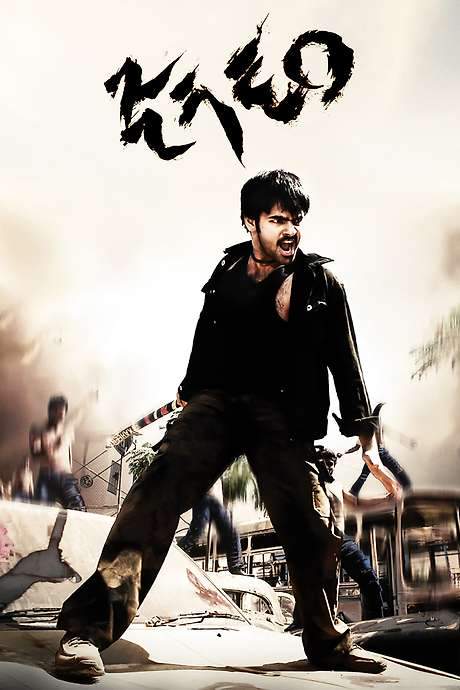
Surya alias Madhagaja is an orphan who earns his living as a real estate agent in Varanasi. He also makes quick money from the dead who end up at the Manikarnika Ghat, nursing a hunger to dominate the area. A courtroom battle, however, redirects his fate to Shivagaada, a village in Karnataka where the power rests with the stern landlords Bhairava Dorai and Rathnamma. Surya arrives as a guest at Bhairava Dorai’s home, stepping into a world where loyalty, land, and bloodshed weave a precarious balance.
Rathnamma is wary of Surya from the start, and she learns from Basavanna that Surya is her own son, a revelation that could upend everything she has built to maintain control over the village. Fearing that the truth might drive Surya away or complicate her grip on the land, Rathnamma discreetly arranges funds for Surya to secure the rights to the land, hoping to keep him close enough to watch him. Basavanna, who has taken care of Surya since infancy, then reveals a deeper truth: Bhairava and Rathnamma are Surya’s biological parents, a realization born from years of rivalry and bloodshed that Basavanna has shielded him from. He presses Surya to keep this knowledge secret, and to protect Bhairava’s family from danger, a duty that weighs heavily on him as he makes Surya promise not to reveal his lineage.
The village’s fragile peace is further unsettled by a long-standing water dispute with another local landlord, Veerabhadra. When Veerabhadra storms into a village festival to attack Bhairava and his kin, Surya steps forward, intervening with calm authority and a decisive show of force that earns Bhairava’s initial trust. This act of defiance against a powerful rival binds Surya to Bhairava not just as an outsider, but as someone who can alter the balance of power in Shivagaada.
Veerabhadra’s son, Tandava, recently released from prison, learns of his father’s humiliation at Surya’s hand. Tandava moves to strike back, targeting Surya and Bhairava at the DC’s office. Surya narrowly evades the confrontation, and Tandava’s anger shifts toward discovering Surya’s true identity. As the feud intensifies, Veerabhadra and Tandava hatch a plan to defuse the tension not through direct battle, but by marriage: Tandava would marry Pallavi, Bhairava’s friend’s daughter, and through this union secure a controlled passage of river water into the village, a symbolic and practical move to settle the water dispute.
Pallavi’s affection for Surya becomes a leak in the carefully guarded fortress of Bhairava and Rathnamma. They confront Surya, urging him to leave the village for his own safety and the sake of everyone involved. Yet the plan behind Tandava and Veerabhadra’s marriage remains more complex than it seems: it is meant to shield the river’s flow and manipulate the river’s governance, effectively using matrimony as a tool to steer the village’s fate away from a climactic clash.
As tensions rise, it becomes clear that Pallavi’s feelings for Surya are genuine, and Bhairava and Rathnamma must reckon with a future where Surya’s true origins could upend their carefully built power. The truth about Surya’s lineage goes public in a dramatic moment, and Tandava and Veerabhadra move to remove Surya from Shivagaada entirely. Basavanna is taken, along with Bhairava and his family, creating a perilous moment when Surya must act to save them all.
In the end, Surya arrives just in time to rescue his loved ones, confronting Tandava and Veerabhadra in a climactic showdown. The confrontation ends with the demise of Tandava and Veerabhadra, and the village finally experiences a restored sense of peace as the river’s waters flow freely into Shivagaada once more. The film closes on a note of resolution, loyalty, and the enduring ties of family that bind Surya to the people he has chosen to protect.