Year: 2009
Runtime: 130 mins
Language: Portuguese
Directors: Fábio Barreto, Marcelo Santiago
Born into a working‑class family, he heads to the bustling financial capital, where his drive leads him from labor activism and imprisonment to a dramatic political rise. Seen as a family man, militant, hero, convict, savior and romantic legend, he becomes one of Brazil’s most influential politicians.
Warning: spoilers below!
Haven’t seen Lula, the Son of Brazil yet? This summary contains major spoilers. Bookmark the page, watch the movie, and come back for the full breakdown. If you're ready, scroll on and relive the story!
Explore the full timeline and setting of Lula, the Son of Brazil (2009). Follow every major event in chronological order and see how the environment shapes the story, characters, and dramatic tension.
Last updated: February 17, 2026 at 17:22
Meet the key characters of Lula, the Son of Brazil (2009), with detailed profiles, motivations, and roles in the plot. Understand their emotional journeys and what they reveal about the film’s deeper themes.
Last updated: February 17, 2026 at 17:22
Explore the central themes of Lula, the Son of Brazil (2009), from psychological, social, and emotional dimensions to philosophical messages. Understand what the film is really saying beneath the surface.
Last updated: February 17, 2026 at 17:22
Browse frequently asked questions about Lula, the Son of Brazil (2009) focused on characters, relationships, themes, symbols, setting, and story context. This movie info FAQ gives spoiler-aware explanations for character arcs, world details, and thematic interpretation so readers can better understand what the film is really about.
The film begins in Garanhuns, a rural town in Pernambuco, Brazil. The family later migrates first to Santos and then to the industrial city of São Paulo, reflecting the mid-century urban migration trend in Brazil.
The shift from countryside to city foreshadows Lula's exposure to industrial labor and collective action.
The movie opens in October 1945, placing Lula's early life in the immediate post-war era. It follows his childhood and coming-of-age through the subsequent decades of mid-century Brazil.
The post-war setting establishes the limited political space for workers that would later shape Lula's activism.
The narrative centers on a mother who raises a large family under economic strain, including a revelation that Lula's father Aristides has two families living under one roof. This highlights resilience, sacrifice, and how family bonds shape Lula's worldview.
The family dynamics established early in the film directly influence Lula's later sense of justice and perseverance.
Lula's journey from factory worker to labor organizer illustrates the emergence of workers' rights movements under repressive conditions. A factory accident that costs him a finger becomes a catalyst for his commitment to better working conditions.
The factory accident marks a turning point that fuels Lula's lifelong dedication to labor rights and political organizing.
The move from rural Pernambuco to Santos and then to São Paulo mirrors Brazil's mid-century urban migration. The city environment offers opportunity but also poverty, overcrowding, and competition for jobs, shaping Lula's social awakening.
The urban setting serves as the catalyst for Lula's exposure to collective action and political consciousness.
Dona Lindu is Lula's mother, portrayed as a driving force who raises her children with limited means while resisting an abusive marriage. Her strength and perseverance form the foundation of Lula's sense of justice.
Her resilience under hardship establishes the moral framework that Lula carries into his political life.
Aristides is Lula's father, whose double family life, maintaining two families under one roof, reveals the complexities of loyalty and survival within a fragile household. His flaws and the resulting family difficulties contribute to Lula's moral growth.
The revelation of Aristides' two families creates the family betrayal that drives Lula's later sense of justice.
Lambari is a family member who shares the household, illustrating the close-knit yet strained ties born from poverty and shared hardship. His presence highlights the communal aspects of survival in working-class Brazilian families.
The film portrays Brazil during a period of limited political space for workers, with economic hardship defining daily life. This environment of oppression and the struggle for workers' rights becomes the foundation for Lula's later political movement.
The restrictive political conditions directly establish why Lula's later activism was necessary and dangerous.
The tone is hopeful because, despite bleak circumstances of poverty, family betrayal, and political persecution, the core of the story depicts Lula's resilient rise to prominence. Hardship is framed as a catalyst for transformative change.
The hopeful tone is established through Lula's mother's perseverance despite overwhelming adversity.
The journey from rural Garanhuns to industrial São Paulo exposes Lula to the realities of urban poverty and labor exploitation. This geographic progression directly shapes his political consciousness and eventual leadership in workers' movements.
The contrast between rural simplicity and urban hardship creates the conditions for Lula's awakening to social injustice.
Discover curated groups of movies connected by mood, themes, and story style. Browse collections built around emotion, atmosphere, and narrative focus to easily find films that match what you feel like watching right now.
Inspiring true stories of individuals overcoming incredible odds to achieve greatness.Explore movies like Lula, the Son of Brazil that tell powerful true stories of individuals overcoming immense hardship. If you enjoyed watching a protagonist rise from poverty and oppression to become a historical figure, these similar inspiring biopics are for you.
These films typically follow a linear, chronological structure, methodically tracing key life events that shape the protagonist. The story arc is defined by escalating challenges that test the character's resolve, culminating in a hard-won victory or societal impact that feels earned and triumphant.
Movies in this thread share a core narrative of triumph over systemic adversity. They balance gritty, realistic depictions of struggle with an ultimately hopeful tone, creating a powerful emotional journey centered on human resilience and the potential for change.
Stories that immerse you in the harsh realities of class conflict and systemic change.Find movies similar to Lula, the Son of Brazil that explore themes of poverty, political activism, and the fight for workers' rights. If you were gripped by the gritty depiction of social struggle and a character's journey through the political system, these dramas offer a comparable intense and thought-provoking experience.
The narrative is driven by the conflict between the individual or community and a larger, often unjust, power structure. The plot follows the protagonist's awakening to systemic issues, their involvement in collective action, and the personal sacrifices endured in the pursuit of a more equitable society.
These films are grouped by their unflinching portrayal of social hardship and the mechanisms of political change. They share a high emotional intensity, a sober and often oppressive atmosphere, and a central theme of resilience against overwhelming odds.
Don't stop at just watching - explore Lula, the Son of Brazil in full detail. From the complete plot summary and scene-by-scene timeline to character breakdowns, thematic analysis, and a deep dive into the ending - every page helps you truly understand what Lula, the Son of Brazil is all about. Plus, discover what's next after the movie.
Read a complete plot summary of Lula, the Son of Brazil, including all key story points, character arcs, and turning points. This in-depth recap is ideal for understanding the narrative structure or reviewing what happened in the movie.
Track the full timeline of Lula, the Son of Brazil with every major event arranged chronologically. Perfect for decoding non-linear storytelling, flashbacks, or parallel narratives with a clear scene-by-scene breakdown.
Discover movies like Lula, the Son of Brazil that share similar genres, themes, and storytelling elements. Whether you’re drawn to the atmosphere, character arcs, or plot structure, these curated recommendations will help you explore more films you’ll love.
Lula, the Son of Brazil (2009) Plot Summary & Movie Recap
Lula, the Son of Brazil (2009) Scene-by-Scene Movie Timeline
Lula, the Son of Brazil (2009) Spoiler-Free Summary & Key Flow
Movies Like Lula, the Son of Brazil – Similar Titles You’ll Enjoy
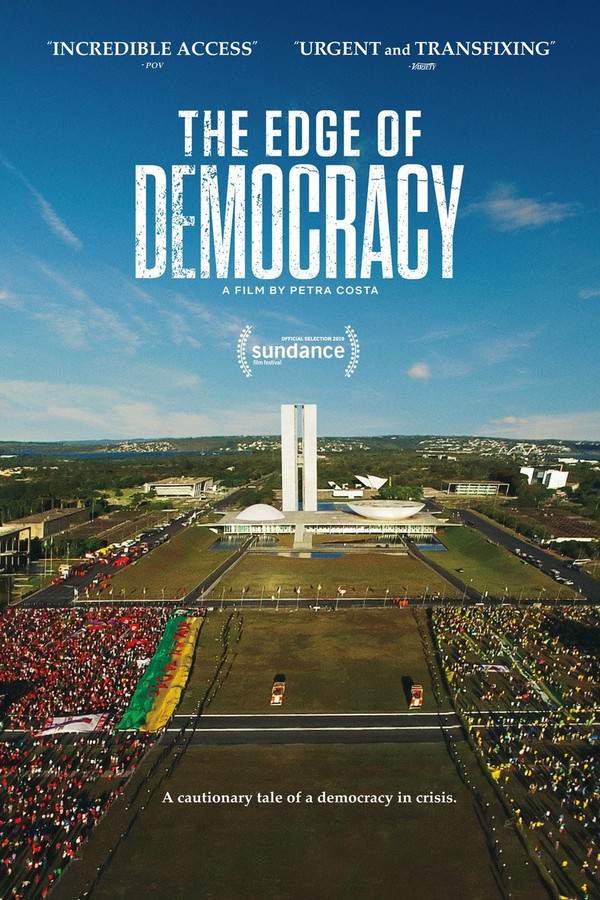
The Edge of Democracy (2019) Movie Recap & Themes
Lula, the Son of Brazil (2012) Spoiler-Packed Plot Recap
The Patient (2018) Full Movie Breakdown
Endless June - Brazil’s New Political Culture (2019) Full Summary & Key Details
ABC of a Strike (1990) Full Movie Breakdown
Go Ahead, Brazil! (1982) Detailed Story Recap
The JK Years: A Political Trajectory (1980) Full Summary & Key Details
Linha de Montagem (1982) Story Summary & Characters
Jango (1984) Ending Explained & Film Insights
O País dos Tenentes (1987) Film Overview & Timeline
Twenty Years Later (1984) Complete Plot Breakdown
The Heirs (1970) Full Movie Breakdown
Soul of Brazil (1931) Story Summary & Characters
The Boys from Brazil: Rise of the Bolsonaros (2022) Ending Explained & Film Insights
Lamarca (1994) Story Summary & Characters