Plot Explained Spoilers guaranteed!
Plot Explained

Browse by genre

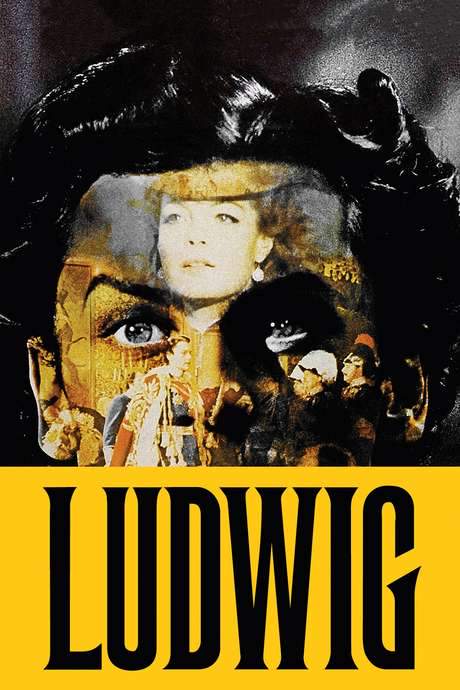
Ludwig (1973) movie poster

Timeline

Ludwig (1973) Timeline Explained – Every Event in Order

Release, runtime and language
1973 · 238 mins · English
Directed by
Luchino Visconti
Starring
Gert Fröbe, Adriana Asti, Trevor Howard, Marc Porel, Eva Axén, Romy Schneider

From his 1864 coronation to his 1886 death, the film shows Ludwig as a controversial ruler who pursued women and men, ignoring public opinion. He admired Richard Wagner—later spurned and fell hopelessly for his cousin Elisabeth of Austria, whose rejection fuels his turmoil. Haunted by his sexuality, he descends into madness, a tragic romantic saga.

On this page (5)
  1. 1 Events in order (14)
  2. 2 Timeline questions answered
  3. 3 Movie threads
  4. 4 Movies like Ludwig
  5. 5 Every angle

14 events in order · contains spoilers

Ludwig Timeline: Events in Chronological Order

Every key event of Ludwig (1973) in order, scene by scene, with when and where it takes place. Use it to untangle flashbacks, time jumps and parallel storylines, to refresh your memory before the sequel or to find the exact scene you are thinking of.

  1. Ludwig II crowned King of Bavaria

    In Munich in 1864 Ludwig II is crowned King of Bavaria. His first official act is to lavishly support the arts by backing Richard Wagner, a composer he adores. This reckless patronage unsettles his cabinet and foreshadows the financial strains to come.

    When
    1864
    Where
    Munich
  2. Wagner's affair and exile

    Behind the King's back, Wagner begins an affair with Cosima von Bülow. When the affair becomes public pressure, Wagner leaves Munich to avoid a scandal. Ludwig's trust in his beloved composer is shaken, even as he continues to fund Wagner's projects.

    When
    1865
    Where
    Munich
  3. Elisabeth and Ludwig's kiss

    During a social gathering in Bad Ischl, Empress Elisabeth of Austria and Ludwig grow close and share a kiss. Elisabeth's ambitions center on marrying off her sister Sophie to the king, a plan Ludwig ignores. Their moment hints at personal longing clashing with political and family expectations.

    When
    1865
    Where
    Bad Ischl
  4. Ludwig withdraws from politics

    Disappointed by Wagner and Elisabeth, Ludwig withdraws from public life and retreats into dream worlds. His growing detachment alarms his cabinet, his brother Otto, and Count Dürckheim. The combination of debts and fantasies marks a turning point in his reign.

    When
    1865-1866
    Where
    Bavaria
  5. Neutrality in the 1866 war

    Bavaria faces the Austro-Prussian War in 1866; Ludwig wants neutrality, but his cabinet commits the state to the Austrian side. Ludwig ignores the fighting and stays secluded in his castle, while his brother Otto and Count Dürckheim worry about the future. The political rift deepens as the king pursues his own path.

    When
    1866
    Where
    Bavaria
  6. Engagement to Sophie and the bathtub incident

    January 1867 Ludwig announces an engagement to Sophie. His mother and cabinet respond by sending an actress into his apartments to provide sexual experience; he reacts by throwing the actress into the bathtub. The incident underscores his inner turmoil about sexuality and duty.

    When
    January 1867
    Where
    Munich
  7. Marriage doubts and secret affairs

    Ludwig doubts he can be a good husband to Sophie, who loves him, and postpones the marriage. He instead pursues relationships with his servants, despite Catholic guilt about his sexuality. The secrecy of his sexual life intensifies his estrangement from public life.

    When
    1867-1870
    Where
    Bavaria
  8. War and loss of sovereignty

    Bavaria supports the Prussian army in the Franco-Prussian War of 1871. In the wake of unification, Ludwig loses much sovereignty to Wilhelm I and Bismarck. The shift marks a major erosion of Bavarian independence within a new German empire.

    When
    1871
    Where
    Germany/Bavaria
  9. Palace-building and political apathy

    Ludwig turns away from politics and spends his wealth on building Neuschwanstein, Linderhof, and Herrenchiemsee. The cabinet grows increasingly frustrated by the eccentric, debt-laden king. His opulent palatial projects define the late years of his reign.

    When
    1870s-1880s
    Where
    Bavaria
  10. Kainz and the king's vulnerability

    1881 marks a short but intense friendship with actor Josef Kainz. Kainz admires the king's Romeo performances as much as the king's money, a dynamic that reveals both admiration and exploitation. The visit highlights the king's vulnerability to flattery and financial extraction.

    When
    1881
    Where
    Munich/Bavaria
  11. Private excesses and Elisabeth's distance

    That period also sees Ludwig hosting orgies with his servants. When Elisabeth's visit is proposed later, he refuses to see her, signaling a further withdrawal from even close kin. These private excesses illustrate a ruler increasingly isolated from public duties.

    When
    1880s
    Where
    Bavaria
  12. Insanity declared and arrest

    In 1886, the psychiatrist Bernhard von Gudden declares Ludwig insane, a ruling supported by the cabinet. With his loyal servants, Ludwig briefly confronts but fails to mount a defense, and he loses control.

    When
    1886
    Where
    Bavaria
  13. Berg Castle and the walk to tragedy

    Ludwig is brought to Berg Castle near Lake Starnberg under guard. Two days later, he and von Gudden leave for a walk and are found dead in the lake under mysterious circumstances.

    When
    1886
    Where
    Berg Castle, Lake Starnberg
  14. Regency begins as Ludwig declines

    Uncle Luitpold is declared Prince Regent of Bavaria as Ludwig's health and will decline. The regency marks the end of Ludwig's direct rule and the beginning of a somber chapter in Bavarian history.

    When
    1886
    Where
    Bavaria

Last updated: October 09, 2025 at 12:39

Was this helpful?

Timeline questions answered

Ludwig Timeline Explained: Your Questions Answered

When does it happen, and why in that order? The questions people ask about the chronology of Ludwig (1973): time jumps, flashbacks, cause and effect between scenes and the correct order of events, each answered with spoilers.

Q1

Why did Ludwig II support Wagner so extravagantly?

Ludwig saw in Wagner's artistic vision a reflection of his own idealistic nature and longing for beauty beyond the confines of his royal duties. The king was deeply moved by Wagner's operas, particularly their mythological grandeur and emotional intensity, which resonated with his own desire to escape reality into dreamlike realms. Wagner's financial struggles presented Ludwig with an opportunity to not only patronize genius but also to forge a friendship with someone whose artistic passion matched his own romantic sensibility.

Foreshadowing: Earlier in the film, Ludwig is shown as an isolated young king seeking genuine connection beyond the politicalmachinations of his court.

  • Ludwig II
  • Wagner
  • patronage
  • composer
  • Munich
Q2

Why did Ludwig's engagement to Sophie get cancelled?

Ludwig announced his engagement to his cousin Sophie in January 1867, likely to satisfy his family's pressure to produce an heir and secure his position. However, his mother and cabinet attempted to 'prepare' him for marriage by sending an actress to his apartments, which Ludwig interpreted as a violation of his privacy and autonomy. He reacted with anger, throwing the actress into a bathtub, and this incident deepened his conviction that he could not fulfill the duties of a husband, leading to the engagement's postponement and eventual cancellation.

Foreshadowing: The timeline shows Ludwig was already withdrawing from public life and experiencing internal conflict about his sexuality before the engagement.

  • Sophie
  • engagement
  • marriage
  • Bavaria
  • actress
  • bathtub incident
Q3

Why was Ludwig II declared insane?

In 1886, psychiatrist Bernhard von Gudden declared Ludwig insane, citing his escalating eccentricities, massive debts from castle construction, and increasingly reclusive behavior as evidence of mental illness. The cabinet supported this diagnosis as a political solution to remove a king who had become unresponsive to their counsel, had withdrawn from governance, and had accumulated unsustainable financial obligations. The declaration enabled them to place Ludwig under guard and eventually move him to Berg Castle.

Foreshadowing: The film traces Ludwig's gradual withdrawal from politics beginning in 1865-1866, which his advisors viewed with growing alarm.

  • insanity
  • Bernhard von Gudden
  • psychiatrist
  • Bavaria
  • deposition
  • mental health
Q4

How did Ludwig II die at Berg Castle?

Two days after being moved to Berg Castle near Lake Starnberg in 1886, Ludwig and psychiatrist Bernhard von Gudden went for a walk together. Their bodies were later recovered from the lake, but the circumstances remain mysterious and have fueled speculation ever since. The official account suggested a murder-suicide, though some historians propose Ludwig may have been trying to escape captivity, or that the psychiatrist attempted to save him and both drowned. The true cause of death was never definitively determined.

Foreshadowing: The film's depiction of Ludwig's increasing isolation and the forced removal from power sets the stage for this tragic final chapter.

  • death
  • Berg Castle
  • Lake Starnberg
  • Bernhard von Gudden
  • mysterious death
Q5

Why did Ludwig II withdraw from political duties?

Ludwig's withdrawal from governance stemmed from multiple factors: his disappointment over Wagner's exile, his failed romance with cousin Elisabeth, his internal struggle with his sexuality and Catholic guilt, and his growing preference for the private world of artistic fantasies over the realities of ruling. His desire for Bavaria to remain neutral in the Austro-Prussian War was overridden by his cabinet, deepening his disillusionment with political power. Eventually, he chose to channel his energy and wealth into building elaborate castles rather than engaging with government affairs.

Foreshadowing: The timeline shows his withdrawal beginning in 1865-1866, immediately following the Wagner affair and his disappointing encounter with Elisabeth.

  • politics
  • withdrawal
  • Bavaria
  • neutrality
  • government
  • ruling
Q6

Why did Ludwig II build such extravagant castles?

Ludwig poured his wealth into constructing Neuschwanstein, Linderhof, and Herrenchiemsee as personal refuges from the constraints of reality and his royal duties. These architectural projects represented his romantic vision of a medieval fantasy world, inspired by Wagner's operas and his own desire to create a utopian realm far from political obligations. The castles became increasingly elaborate as his isolation deepened, serving as both artistic expressions and private sanctuaries where he could live among his idealized visions without facing the pressures of governance or his personal conflicts.

Foreshadowing: The film establishes Ludwig's retreat into dreamlike reveries early in his reign, which eventually manifested in his castle-building obsession.

  • Neuschwanstein
  • Linderhof
  • Herrenchiemsee
  • castles
  • construction
  • debts
  • fantasy
Q7

What caused the rift between Ludwig and Elisabeth of Austria?

Ludwig and Elisabeth shared an intimate moment and kiss during a gathering at Bad Ischl in 1865, but their relationship was complicated by Elisabeth's true agenda: she wanted to engineer a marriage between her sister Sophie and the king. When Ludwig failed to pursue Sophie according to Elisabeth's plans and instead retreated into isolation, the distance between them grew. Later, when Elisabeth attempted to visit Ludwig during his reclusive years, he refused to see her, signaling a complete break from even his closest familial connection.

Foreshadowing: The Bad Ischl meeting establishes both the emotional connection between the cousins and the conflicting expectations that would divide them.

  • Elisabeth of Austria
  • Sophie
  • Bad Ischl
  • cousin
  • marriage
  • rejection
Q8

What was Ludwig II's relationship with his sexuality?

Ludwig struggled throughout his life with his sexual orientation, experiencing same-sex attraction that conflicted with his Catholic faith and his duty to produce an heir. Rather than consummating his engagement to Sophie, he began forming relationships with his male servants, which brought him significant guilt and deepened his sense of isolation. This internal conflict contributed to his withdrawal from public life and his inability to fulfill the expectations placed upon him as a monarch. The tension between his desires and his sense of sinfulness was a constant source of personal turmoil.

Foreshadowing: The bathtub incident with the actress sent by his mother reveals his resistance to heterosexual intimacy and hints at his true inclinations.

  • sexuality
  • servants
  • Catholic faith
  • guilt
  • same-sex relationships
  • internal conflict
Q9

How did the Austro-Prussian War affect Ludwig's rule?

In 1866, Bavaria faced the Austro-Prussian War, and while Ludwig desired neutrality, his cabinet committed the kingdom to the Austrian side. Ludwig largely ignored the conflict, staying sequestered in his castles while his advisors made political decisions without him. Though Bavaria ultimately supported the Prussian-led victory in the Franco-Prussian War of 1871, the subsequent German unification significantly eroded Ludwig's sovereignty. These political defeats, combined with his personal struggles, accelerated his withdrawal from governance.

Foreshadowing: Ludwig's desire for neutrality represents his first major divergence from his cabinet's counsel, setting the pattern of his passive resistance to political responsibility.

  • Austro-Prussian War
  • neutrality
  • Prussia
  • sovereignty
  • German unification
  • Bismarck
Q10

Why did Ludwig's cabinet want to remove him from power?

Ludwig's cabinet grew increasingly desperate to remove him because he had effectively abandoned his duties as king, leaving governance to function without him while he pursued his private interests in art, architecture, and personal relationships. His mounting debts from castle construction threatened Bavaria's financial stability, and his unpredictable behavior and reclusiveness made him impossible to control through normal political channels. Declaring him insane provided the legal mechanism to strip him of power and place his uncle Luitpold as Prince Regent.

Foreshadowing: The timeline shows mounting cabinet frustration throughout the 1870s-1880s as Ludwig's debts and eccentricities escalated.

  • cabinet
  • removal
  • deposition
  • Prince Regent
  • Luitpold
  • debts
  • power
Q11

What happened to Ludwig's brother Otto?

Ludwig's younger brother Otto was under constant pressure from Count Dürckheim and other advisors who urged Ludwig to marry and produce an heir partly because Otto's vitality was declining under the scrutiny and expectations placed upon him. Otto's diminishing health represented a source of anxiety for the court, as he represented the succession should anything happen to Ludwig. The timeline notes his death as a sobering counterpoint to Ludwig's feverish castle-building, symbolizing the fragility underlying the kingdom's future.

Foreshadowing: Dürckheim's mentions of Otto as a reason for Ludwig to marry establish early that the brother's health was a concern for the monarchy's continuation.

  • Otto
  • brother
  • Count Dürckheim
  • health
  • succession
  • heir

Movie threads

More Movies Like Ludwig, by Mood & Story

Curated lists built around what makes Ludwig tick: the same mood, the same kind of story or the same emotional payoff. Each list explains why these movies belong together.

Tragic Royalty Stories like in Ludwig

Stories of kings and queens whose inner turmoil leads to a tragic downfall. Movies like Ludwig that explore the tragic downfall of monarchs haunted by mental illness, loneliness, and the crushing weight of the crown. If you liked the story of King Ludwig's descent into madness, you'll find similar epic and melancholic historical dramas here.

  • tragic
  • melancholic
  • opulent
  • lonely
  • decadent
  • somber
  • Tone: melancholic, tragic
  • Pacing: slow, deliberate
Why these movies?

The story pattern: These narratives follow a character arc of a powerful figure, often a monarch, whose reign is marked by increasing psychological distress and alienation. The story contrasts their external wealth and status with internal decay, culminating in a tragic, often politically motivated, end.

Why they belong together: Movies in this thread share a focus on the intersection of absolute power and profound personal fragility. They are united by a melancholic tone, heavy emotional weight, and a slow pacing that allows for a deep dive into a character's psychological unraveling against a backdrop of historical grandeur.

Slow-Burn Psychological Dramas like Ludwig

Character studies where internal conflict and isolation lead to a gradual mental collapse. If you appreciated the slow, heavy psychological unraveling in Ludwig, explore these character-driven dramas. These movies focus on mental health decline, internal conflict, and a palpable sense of isolation, often culminating in a tragic or bleak conclusion.

  • psychological
  • somber
  • dreamlike
  • oppressive
  • lonely
  • tragic
  • Tone: somber, melancholic, bleak
  • Pacing: slow burn, deliberate
Why these movies?

The story pattern: The narrative pattern is a gradual, in-depth character study. The plot is secondary to the internal journey, focusing on the accumulation of small moments, repressed emotions, and societal pressures that contribute to a character's mental fragmentation over time.

Why they belong together: These films are grouped by their shared commitment to a slow, deliberate pace that mirrors the process of psychological deterioration. They possess a heavy emotional weight, a melancholic or bleak tone, and prioritize mood and internal state over fast-paced plot mechanics.

If you liked this

Movies Like Ludwig

Similar movies to Ludwig: the same genre, themes or kind of story. Each one comes with its own plot summary, timeline and ending explained.

Browse all movie summaries

Every angle

Ludwig (1973) Explained: Plot, Timeline & Characters

Everything about Ludwig in one place: what happens in the plot summary, the timeline in chronological order, the characters and meaning and a spoiler-free summary. What's After the Movie adds the cast, box office and post-credit scenes.

Coming soon on iOS and Android

The Plot Explained Movie Summary App

Plot summaries, endings explained and timelines on your phone. Catch up on any movie in minutes, save your favorites and never miss a twist again.

Be the first to know when we launch. Your email stays private, always.

Learn more about the app