Year: 2026
Runtime: 1 h 26 m
Language: english
Director: Adrian Chiarella
Echo Score: 88Budget: $3.5M
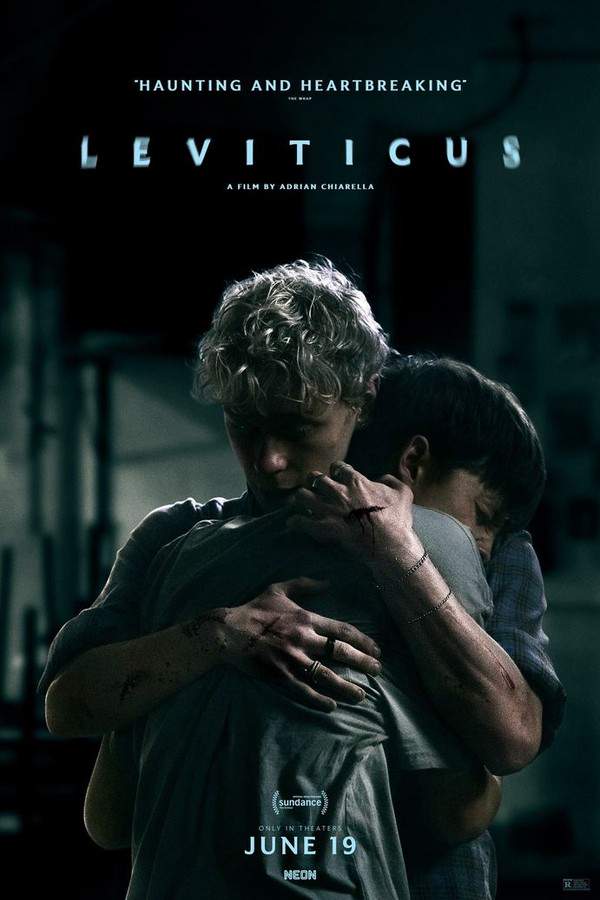
Two star-crossed teenage boys must escape a violent entity that takes the form of the person they desire most - each other.
Find where to stream, rent, or buy Leviticus (2026) in the US with current JustWatch availability, up-to-date pricing, and platform listings for subscription, rental, and digital purchase options.
Warning: spoilers below!
Haven’t seen Leviticus yet? This summary contains major spoilers. Bookmark the page, watch the movie, and come back for the full breakdown. If you're ready, scroll on and relive the story!
Still thinking about how Leviticus (2026) ended? Here’s a full breakdown of the ending, key final moments, major twists, and the deeper meaning behind the film’s conclusion.
Naim’s ability to trust has been systematically destroyed by the curse. The entity assumes the appearance of the person its victim most desires, meaning that any encounter with Ryan may be either the boy Naim loves or a lure leading him to a violent death. The adults who should help make that uncertainty worse. Arlene physically delivers her terrified son to the town’s “deliverance” healer, and the ritual does not remove desire; it infects Naim with fear of it. After Naim and Ryan survive the immediate pursuit, the final confrontation with Arlene exposes that her betrayal was not an innocent mistake made in ignorance. She tells Naim that what was done “can’t be undone” and reveals she had been warned the change was irreversible. She still does not offer a real apology. Instead, she argues that she will not be alive forever and that her son, like everyone else, needs fear to keep him on the narrow Christian path. Naim and Ryan ultimately leave the conservative town together. Their departure gives them distance from the healer, their families, and the community that authorized the ritual, but it does not kill or contain the shape-shifting entity. It remains somewhere behind them, able to exploit the same learned fear in another encounter. The boys escape the place that empowered it without receiving a supernatural guarantee of safety.
Arlene’s admission is the ending’s decisive horror because it removes the comforting explanation that conversion practices are harmful only when parents misunderstand them. She understands that she is placing Naim at risk and accepts that danger as a tool of discipline. The director’s conception of the monster follows directly from that logic: exorcisms claiming to take queerness out of teenagers actually put terror inside them, teaching them to experience their own feelings as an approaching predator. That is why Naim cannot solve the curse simply by identifying the “real” Ryan once. Every future desire can reactivate the doubt the adults installed. Leaving together is nevertheless a substantial choice. Naim and Ryan refuse the premise that safety depends on isolation, celibacy, or obedience to people who knowingly endangered them. The still-living creature prevents the road out of town from becoming a cure, just as geographical escape cannot instantly undo internalized shame. Hope rests in the boys choosing companionship while afraid. They are not fearless at the end; they have stopped accepting fear as proof that their love is wrong.
Last updated: August 26, 2026 at 20:31
Read frequently asked questions about the ending of Leviticus (2026), including final-scene interpretation, twist explanations, character outcomes, and the deeper meaning behind the conclusion. This ending explained FAQ is designed for viewers searching for clear spoiler-heavy answers and ending breakdown insights.
No. The shape-shifting monster is never killed, exorcised, or contained in the final act of Leviticus. Naim and Ryan manage to escape the town, but the creature remains somewhere behind them, still able to exploit the same learned fear in another encounter. The film deliberately avoids giving the boys a supernatural victory, so the road out of town never becomes a cure. The horror is that geographical escape cannot instantly undo the internalized shame that the conversion ritual embedded inside Naim.
The curse's rules are established early on as a psychological condition rather than a physical one, hinting that it cannot be defeated by physical confrontation alone.
The shape-shifting entity is conceived as a direct metaphor for the psychological damage inflicted by conversion practices. The director frames exorcisms that claim to take queerness out of teenagers as actually putting terror inside them, teaching victims to experience their own feelings as an approaching predator. Because the creature appears as the person each victim desires most, it weaponizes love itself against Naim and Ryan. The monster is not a punishment for their desire; it is the byproduct of adults weaponizing shame.
The opening chase sequence already presents the entity as something that responds to desire rather than location, signaling that it tracks an internal condition.
In the final confrontation, Arlene admits that she had been warned the change brought on by the healer was irreversible. She still does not apologize, defending her choice by saying she will not be alive forever and that her son needs fear to keep him on the Christian path. This admission removes the comforting explanation that conversion harms teens only when parents act out of ignorance. Arlene understands she is placing Naim at risk and accepts that danger as a tool of discipline. The ending reframes the ritual as something deliberately cruel rather than misguided.
Earlier scenes already show Arlene deferring entirely to the healer instead of asking questions, foreshadowing that her compliance is chosen rather than naive.
Arlene's refusal is the core of the ending's horror. Even after Naim has survived the entity's pursuit and confronted her directly, she does not retract the choice that put him in danger. Instead she reframes her decision as a necessary form of discipline, arguing that fear is what keeps people on the narrow Christian path. Her refusal to apologize signals she views her role not as a parent protecting him but as a guardian of doctrine. The non-apology makes clear that the threat to Naim was never a misunderstanding but a deliberate cost she was willing to impose.
Throughout the film Arlene consistently treats the healer as an authority rather than a service provider, foreshadowing that her loyalty is to the method itself.
The shape-shifting creature is never killed or contained during the escape from the conservative town. It survives behind them and can still adopt the appearance of whoever each victim desires most. Because Naim's attraction has been weaponized by fear, every future encounter with someone who resembles Ryan can reactivate the doubt the conversion ritual installed. Leaving town removes them from the immediate danger of the healer and the community that authorized the ritual, but it does not undo the internalized terror that powers the curse. The boys escape the place that empowered the monster without receiving a supernatural guarantee of safety.
The curse is presented from the beginning as something attached to Naim's perception, not to a specific location.
The film builds its horror directly out of the real-world logic of conversion practices. The shape-shifting entity is conceived as the psychological byproduct of adults telling a teenager that his own desire is dangerous, which teaches him to experience love as the approach of a predator. Leviticus uses that mechanism to literalize the cost of conversion rituals: the exorcism does not remove queerness from Naim, it puts terror in its place. By making the monster take the form of the person Naim loves, the film argues that conversion does not cure desire, it weaponizes it against the person who feels it.
The healer's ritual is shown as producing fear in Naim rather than calm, hinting that the procedure installs the very condition the monster exploits.
After surviving the immediate pursuit and the final confrontation with Arlene, the boys refuse the premise that safety depends on isolation, celibacy, or obedience to the adults who knowingly endangered them. Leaving together is a substantial choice because it rejects the logic of the healer and Arlene, who argued that distance from desire and fear of feeling were the only paths to survival. By staying together, Naim and Ryan reject the idea that their love is something to be cured. Their departure also physically removes them from the healer, their families, and the community that authorized the ritual.
Earlier scenes show the boys instinctively reaching for each other during attacks, foreshadowing that companionship is their only consistent defense.
The ending of Leviticus is deliberately both. Naim and Ryan escape the town together and choose companionship over isolation, which is a real, defiant act of hope. At the same time, the creature is still alive, the fear installed by the ritual is still inside Naim, and Arlene has chosen fear over love even after being confronted with what her son went through. Hope in the film rests in the boys choosing each other while afraid, not in being fearless. They are not cured at the end; they have simply stopped accepting fear as proof that their love is wrong.
Throughout the film the boys are repeatedly told their desire is dangerous, setting up the ending's argument that the real horror is the framing, not the feeling.
Early in the film the ritual is presented as a misguided but well-intentioned attempt to help Naim, but the ending strips away that reading. Once Arlene admits she was warned the change was irreversible and that she still chose to proceed, the healer's deliverance stops looking like failed medicine and starts looking like deliberate harm. The final confrontation reveals that the adults closest to Naim understood the danger and accepted it as a tool of discipline. The horror of Leviticus is therefore not the monster but the community that produced it.
The healer is introduced as an authority figure rather than a healer in any medical sense, foreshadowing that the procedure is doctrinal, not therapeutic.
The curse's mechanics are designed so that doubt, not identity, keeps the monster dangerous. The conversion ritual taught Naim to experience his own attraction as the first sign of an approaching predator, so every time Ryan appears, Naim's fear primes him to suspect the entity even when the real boy is in front of him. There is no single moment of recognition that solves the curse, because the adults' conditioning ensures that any future desire can reactivate the same suspicion. The film presents the doubt as installed, not chosen, which is why leaving together rather than identifying the real Ryan becomes the only real answer.
Early in the film Naim already flinches from Ryan in moments of closeness, foreshadowing that his fear will outlast any single encounter.
The film ends with Naim and Ryan leaving the conservative town together, but the final scenes make clear that their safety is partial. They have escaped the healer, their families, and the community that authorized the ritual, which is a substantial victory. However, the shape-shifting entity is still alive somewhere behind them, and the fear the conversion ritual installed in Naim is still inside him. There is no supernatural guarantee of safety at the end of Leviticus, only a decision by the boys to stay together in spite of the danger.
The film's earlier rule that the entity follows desire, not geography, foreshadows that leaving town alone is not a cure.
Leaving together matters because it is a direct rejection of the logic the adults used to justify endangering Naim. Arlene and the healer argued that safety depended on isolation from desire, fear of one's own feelings, and obedience to their authority. By choosing to stay with Ryan rather than submit, Naim rejects the premise that his love is something to be cured. The director frames companionship under fear as the only real counter to the curse, because the monster feeds on shame rather than on desire itself. Their departure is therefore less about physical escape and more about refusing the terms of their own destruction.
Scenes of the boys being separated under the guise of protection foreshadow that reunion, not flight, is the actual ending.
Arlene uses the phrase during her final confrontation with Naim to confirm that the healer's ritual permanently altered how her son relates to his own desire. She was warned ahead of time that the change was irreversible, and she chose to proceed anyway. Her phrasing makes clear she is not describing a mistake she thought she could fix later; she knowingly accepted permanent harm to Naim in order to keep him on the path she believed was right. The line is the ending's decisive horror because it shows Arlene understood the cost and chose it regardless.
The healer's vague warnings earlier in the film take on new meaning once this line reveals that adults knew the procedure would stick.
During the final confrontation, Arlene argues that she will not be alive forever and that her son, like everyone else, requires fear to remain on the Christian path she believes is correct. In her logic, fear is not a side effect of the healer's ritual but the actual point of it. The terror installed in Naim is meant to discipline his desire, even if it leaves him vulnerable to a monster that mimics the person he loves. Her statement reframes the conversion ritual as a feature, not a bug, which is why her choice is the ending's decisive horror.
Arlene's earlier insistence that Naim stop spending time with Ryan foreshadows that her concern is desire itself, not his safety.
Discover curated groups of movies connected by mood, themes, and story style. Browse collections built around emotion, atmosphere, and narrative focus to easily find films that match what you feel like watching right now.
Stories where the thing you crave most is the very thing that hunts you.Looking for horror movies like Leviticus where desire itself becomes the threat? These films blend supernatural terror with tragic romance, featuring shape-shifting entities, doppelgangers, or psychic monsters that weaponize longing, attraction, and love. Expect psychological dread, doomed intimacy, and bodies of work where the monster wears the face of the one you want most.
In these stories, the protagonist wants something deeply and specifically, and an otherworldly force latches onto that want, shapeshifting into the object of desire as a predatory strategy. The horror grows out of psychological manipulation rather than brute force: the victim cannot fight back without denying their own heart, and every tender moment risks being a trap. The story unfolds as a slow erosion of trust, with characters forced to question whether the lover in front of them is real or the monster wearing their skin. The romance engine and the survival engine become the same engine, which is what makes the dread so intimate and the tragedy so heavy.
These films share a core conceptual hook: desire is bait, love is a vulnerability, and the monster exploits emotional intimacy rather than physical weakness. They tend toward dark tones, heavy emotional weight, and variable pacing that alternates between quiet doomed-romance beats and violent confrontations. Viewers who respond to the idea that wanting someone can literally put you in danger will feel right at home in this thread, and the shape-shifting doppelganger archetype is a recurring anchor.

Two hearts find each other just as something inevitable comes for them both.Searching for movies like Leviticus where star-crossed lovers are hunted by an inescapable force? This thread gathers sci-fi horror and thriller stories that blend tragic romance with high-stakes pursuit, forbidden or marginalized love, and characters who must escape together or die together. Expect teen or young adult protagonists, claustrophobic tension, and emotional weight that lingers long after the credits.
These stories introduce two characters whose bond is immediate, intense, and clearly fated, but almost immediately place them in the crosshairs of something they cannot negotiate with: a predator, a system, a curse, or a war. The narrative then becomes a series of escapes, close calls, and forced intimacy under pressure, with the relationship deepening precisely because the threat refuses to let them rest. Moments of tenderness are interrupted by pursuit, and moments of pursuit reveal new layers of devotion. The arc usually trends toward tragedy or ambiguity, with hope offered but rarely rewarded.
Films in this thread share a structural pattern: a young or marginalized couple, a love the world does not want them to have, and an external threat that turns the romance into a survival pact. They tend toward dark tones, heavy emotional weight, and variable pacing that balances intimate character moments with sustained chase or stalking sequences. The combination of romance score and tension score both running high is a reliable signature, as is a sense that escape is possible in any single scene but survival is not guaranteed across the whole film.
Don't stop at just watching - explore Leviticus in full detail. From the complete plot summary and scene-by-scene timeline to character breakdowns, thematic analysis, and a deep dive into the ending - every page helps you truly understand what Leviticus is all about. Plus, discover what's next after the movie.
Read a complete plot summary of Leviticus, including all key story points, character arcs, and turning points. This in-depth recap is ideal for understanding the narrative structure or reviewing what happened in the movie.
Track the full timeline of Leviticus with every major event arranged chronologically. Perfect for decoding non-linear storytelling, flashbacks, or parallel narratives with a clear scene-by-scene breakdown.