Plot Explained Spoilers guaranteed!
Plot Explained

Browse by genre

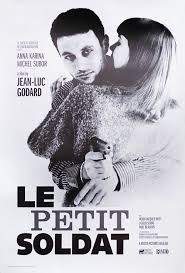
Le Petit Soldat (re-release) (2013) movie poster

Timeline

Le Petit Soldat (re-release) (2013) Timeline Explained – Every Event in Order

Release, runtime and language
2013 · 88 min
Loading streaming availability…
Directed by
Jean-Luc Godard
Starring
Anna Karina, Michel Subor

Set against the backdrop of the Algerian War, this film explores a tender romance between a young soldier and a local woman. Their connection develops amidst the escalating tensions and political unrest, forcing them to confront difficult choices about loyalty and duty. The story examines the complexities of love and morality in a time of conflict, highlighting the human cost of war.

On this page (5)
  1. 1 Where to watch
  2. 2 Events in order (15)
  3. 3 Timeline questions answered
  4. 4 Movie threads
  5. 5 Every angle
Loading streaming availability…

15 events in order · contains spoilers

Le Petit Soldat (re-release) Timeline: Events in Chronological Order

Every key event of Le Petit Soldat (re-release) (2013) in order, scene by scene, with when and where it takes place. Use it to untangle flashbacks, time jumps and parallel storylines, to refresh your memory before the sequel or to find the exact scene you are thinking of.

  1. Bruno's Deserter Status

    In 1958, Bruno Forestier, a deserter from the French army, is living in Geneva amidst the Algerian War. His lack of political allegiance places him in a precarious position as he attempts to navigate life in a foreign city filled with tension and conflict.

    When
    1958
    Where
    Geneva
  2. Entanglement with La Main Rouge

    Bruno becomes embroiled with La Main Rouge, a French terrorist organization, posing as a reporter to blend into their ranks. As the group demands loyalty, he finds himself deeply enmeshed in their dangerous dealings.

  3. The Assassination Order

    In a chilling twist, Bruno receives orders to assassinate Arthur Palivoda, a radio host and supporter of Algerian independence. This request heightens Bruno's internal conflict, as he grapples with his hesitations about taking another life.

  4. Meeting Véronica

    Amidst the chaos, Bruno encounters Véronica Dreyer, a woman who captures his heart. Unbeknownst to him, she is secretly affiliated with the FLN, the group at the center of the conflict regarding Algerian independence.

  5. Pressure from La Main Rouge

    Bruno faces increasing pressure from La Main Rouge after they orchestrate a hit-and-run incident involving his car. This violent act intensifies his contemplation about going through with the assassination to protect himself.

  6. Conflict of Conscience

    Despite the mounting pressure, Bruno struggles with his conscience regarding the assassination. The ethical implications weigh heavily upon him as he grapples with the notion of carrying out an order that feels wrong.

  7. Branded a Traitor

    Bruno's fortunes take a dire turn when he is labeled a traitor by the French government. This condemnation fuels his desperate desire to flee with Véronica, seeking refuge far away from the turmoil surrounding him.

  8. Capture and Torture

    Bruno's attempts to escape are thwarted when he is captured by Algerians who had spotted him observing Palivoda. He undergoes brutal torture, testing his resilience and resolve amid dire circumstances.

  9. Leap to Freedom

    In a moment of instinctual desperation, Bruno manages to escape from captivity by jumping out of a second-story window. This act of bravery marks a turning point, as he looks for ways to ensure his survival.

  10. Negotiating with the French

    With freedom in mind, Bruno devises a plan to secure two diplomatic passports from the French in exchange for revealing the Algerians' hideout. However, he soon learns that they have already retreated, leaving him feeling trapped.

  11. Acceptance of the Assassination

    In a desperate bid for his safety, Bruno reluctantly accepts the task of assassinating Palivoda. This decision comes as a means to secure his escape and rid himself of the pressures bearing down on him.

  12. Véronica's Abduction

    Tragedy strikes when Véronica is abducted by French agents who aim to manipulate Bruno further. They resort to brutal interrogation techniques, seeking to uncover the location of the Algerian hideout.

  13. Execution of Palivoda

    Under immense pressure and with his motivations driven by desperation, Bruno executes Arthur Palivoda. This act serves as a devastating climax, intertwining his fate with the tragic events unfolding around him.

  14. The Bitter Revelation

    After the assassination, Bruno is faced with the heart-wrenching news that Véronica has died. This revelation overwhelms him, contrasting with his prior resolve and forcing him to confront the enormity of his actions.

  15. Finding Peace Amid Chaos

    In a profound moment of reflection, amidst the chaos of his life, Bruno chooses not to harbor bitterness over Véronica's death. Instead, he seeks a semblance of peace, embodying a complex understanding of love and loss.

Last updated: November 16, 2024 at 17:06

Was this helpful?

Timeline questions answered

Le Petit Soldat (re-release) Timeline Explained: Your Questions Answered

When does it happen, and why in that order? The questions people ask about the chronology of Le Petit Soldat (re-release) (2013): time jumps, flashbacks, cause and effect between scenes and the correct order of events, each answered with spoilers.

Q1

Why does Bruno agree to assassinate Palivoda?

Bruno agrees to assassinate Palivoda as a desperate means to secure his escape. After being captured and tortured by Algerians, he plans to trade information about their hideout for diplomatic passports from the French. However, when he learns the Algerians have already retreated, he has no leverage left. The French then offer him the passports in exchange for completing the assassination, leaving him with no other option to flee the country.

Foreshadowing: Earlier, Bruno expresses hesitation about the assassination, saying the task feels too perilous, hinting at his internal struggle.

  • bruno forestier
  • palivoda
  • assassination
  • passports
  • escape
Q2

What happens to Véronica?

Véronica is abducted by French agents who use her as leverage against Bruno. They brutally interrogate her to extract information about the Algerian hideout. While the summary states she dies, it does not specify the exact circumstances of her death. The timing suggests her death occurs during or after the interrogation, and the French use her as a tool to manipulate Bruno into compliance.

Foreshadowing: Bruno and Véronica's relationship is secretly complicated by her FLN affiliation, which creates inherent danger throughout their connection.

  • véronica dreyer
  • abduction
  • death
  • french agents
Q3

Why is Bruno considered a traitor by the French?

Bruno is branded a traitor by the French because he is a deserter who has been working with La Main Rouge, a French terrorist organization, while also having connections to the FLN through Véronica. His ambiguous position and refusal to immediately carry out the assassination makes him suspect to both sides. The French view his reluctance as evidence of potential double agency.

Foreshadowing: Bruno's lack of strong political beliefs and his deserter status set the stage for his precarious position between factions.

  • bruno
  • traitor
  • french
  • deserter
  • la main rouge
Q4

Why does Bruno hesitate to kill Palivoda when he has killed before?

Despite having killed in the past during his military service, Bruno hesitates with this particular assassination because the situation is different. He now has a personal stake, he is in love with Véronica, who is secretly connected to the FLN. Additionally, carrying out a targeted political assassination feels more morally weighty than combat killings, and he recognizes the task is perilous, possibly fearing it will draw him deeper into an unwinnable situation.

Foreshadowing: The film establishes Bruno as someone without strong political convictions, making arbitrary killing feel hollow and pointless.

  • bruno
  • palivoda
  • hesitation
  • conscience
  • moral dilemma
Q5

What is La Main Rouge in the film?

La Main Rouge is a French terrorist organization operating during the Algerian War. They pose as a nationalist paramilitary group dedicated to suppressing Algerian independence movements. Bruno becomes entangled with them while posing as a reporter, and they use him to carry out political operations, including ordering the assassination of Arthur Palivoda, a radio host who supports the FLN and Algerian independence.

Foreshadowing: Bruno's initial involvement with La Main Rouge under the guise of reporting establishes his dangerous entrapment.

  • la main rouge
  • terrorist organization
  • algerian war
  • fln
Q6

How does Bruno escape from the Algerians?

Bruno escapes by leaping from a second-story window where he was detained. After being captured by Algerians who witnessed him tailing Palivoda, he is subjected to brutal torture. In a moment of desperation and instinct, he makes the desperate jump from the window, successfully breaking free from his captors.

Foreshadowing: Earlier, Bruno is established as someone trying to survive without strong political allegiances, which drives his survival instinct.

  • bruno escape
  • captivity
  • torture
  • window jump
Q7

Why does Bruno want to flee to Brazil with Véronica?

Bruno wants to flee to Brazil because he is caught between dangerous factions and labeled a traitor by the French. His life in Geneva has become unbearable as he faces pressure from La Main Rouge, suspicion from all sides, and the constant threat of being sent back to France. Seeking refuge with Véronica represents his attempt to escape the political turmoil and start fresh away from the conflict.

Foreshadowing: Bruno's lack of political allegiance and his precarious status as a deserter make survival in Geneva increasingly impossible.

  • brazil
  • flight
  • veronica
  • escape
  • survival
Q8

What does Bruno's decision not to harbor bitterness mean at the end?

Bruno's decision to not harbor bitterness over Véronica's death represents a form of moral exhaustion and acceptance. After being forced into killing Palivoda under duress, losing the woman he loved, and being manipulated by both French and Algerian sides, Bruno reaches a state of emotional numbness. Rather than succumbing to revenge or anger, he chooses peace, suggesting he has been broken by the war and found a hollow serenity in letting go of his anger.

Foreshadowing: Throughout the film, Bruno constantly wrestles with his conscience, showing his capacity for moral reflection despite his circumstances.

  • bruno
  • peace
  • acceptance
  • bitterness
  • ending
Q9

Why do the French abduct Véronica?

The French abduct Véronica to pressure Bruno into revealing the location of the Algerian hideout. Knowing Bruno is in love with her, they use her as leverage to manipulate him into compliance. They subject her to brutal interrogation, attempting to extract information that would help the French locate Algerian operatives. Her abduction is specifically designed to break Bruno's resistance.

Foreshadowing: Véronica's secret FLN affiliation was always a dangerous liability that could be exploited against Bruno.

  • veronica
  • abduction
  • french
  • interrogation
  • leverage
Q10

Why is Arthur Palivoda targeted for assassination?

Arthur Palivoda is targeted because he is a radio host who advocates for the National Liberation Front (FLN) and supports Algerian independence. La Main Rouge views him as a dangerous pro-independence voice that must be silenced. By ordering Bruno to kill Palivoda, they aim to suppress FLN propaganda and intimidate independence supporters during the Algerian War.

Foreshadowing: The escalating tensions of the Algerian War provide the political backdrop for this targeting.

  • arthur palivoda
  • radio host
  • fln
  • assassination target
Q11

Why does Bruno get involved with La Main Rouge?

Bruno becomes involved with La Main Rouge because as a deserter from the French army living in Geneva, he lacks strong political beliefs and needs a way to survive financially and socially. Posing as a reporter provides cover, but he finds himself deeply enmeshed in their dangerous operations. They likely approached him knowing his military background and desperation, using him for their political agenda.

Foreshadowing: Bruno's lack of political conviction from the start makes him vulnerable to manipulation by any faction.

  • bruno
  • la main rouge
  • involvement
  • reporter
  • deserter

Movie threads

More Movies Like Le Petit Soldat (re-release), by Mood & Story

Curated lists built around what makes Le Petit Soldat (re-release) tick: the same mood, the same kind of story or the same emotional payoff. Each list explains why these movies belong together.

Movies about forbidden romance in war like Le Petit Soldat (re-release)

Tender love stories that blossom amidst the brutal realities of political conflict. If you were moved by the tragic love story in Le Petit Soldat (re-release), explore other films about romances that cross enemy lines. These movies like Le Petit Soldat feature couples caught between loyalty and love, set against the backdrop of political turmoil and war.

  • tragic romance
  • forbidden love
  • moral conflict
  • war-torn
  • desperate
  • melancholic
  • Tone: tense, tragic, melancholic
  • Pacing: steady, character-driven
Why these movies?

The story pattern: Stories in this thread follow characters from opposing sides of a conflict who fall in love, navigating a world of espionage, secrecy, and moral compromise. The journey is typically one of intense emotional connection threatened by external political forces, often leading to tragic or bittersweet conclusions that highlight the human cost of war.

Why they belong together: They are grouped by their shared focus on the powerful, tragic dynamic of a romance existing within a larger, violent conflict, creating a unique blend of heavy emotional weight, tense pacing, and profound moral questioning.

Espionage thrillers with moral conflict like Le Petit Soldat (re-release)

Gritty spy stories where the real enemy is the protagonist's own crumbling morality. For viewers who appreciated the ethical dilemmas and tense atmosphere of Le Petit Soldat (re-release), this list features similar spy thrillers. Find movies like Le Petit Soldat that explore the psychological weight of duty, featuring protagonists grappling with betrayal and the heavy cost of their actions.

  • paranoid
  • moral conflict
  • espionage
  • torture
  • assassination
  • political turmoil
  • Tone: tense, paranoid, bleak
  • Pacing: steady, relentless
Why these movies?

The story pattern: The narrative pattern involves a protagonist assigned a morally questionable task, often an assassination. Their journey is internal, wrestling with doubt and ideology as they are captured, interrogated, or betray others. The plot unfolds in a world where trust is impossible, and survival requires sacrificing one's ethical compass, leading to a hollow, contemplative resolution.

Why they belong together: They share a core experience of high-tension paranoia, complex political landscapes, and a deep exploration of a protagonist's moral collapse, creating a consistently anxious and intellectually demanding viewing experience.

Every angle

Le Petit Soldat (re-release) (2013) Explained: Plot, Timeline & Characters

Everything about Le Petit Soldat (re-release) in one place: what happens in the plot summary, the timeline in chronological order, the characters and meaning and a spoiler-free summary. What's After the Movie adds the cast, box office and post-credit scenes.

Coming soon on iOS and Android

The Plot Explained Movie Summary App

Plot summaries, endings explained and timelines on your phone. Catch up on any movie in minutes, save your favorites and never miss a twist again.

Be the first to know when we launch. Your email stays private, always.

Learn more about the app