




Plot Explained Spoilers guaranteed!
Plot Explained

Browse by genre

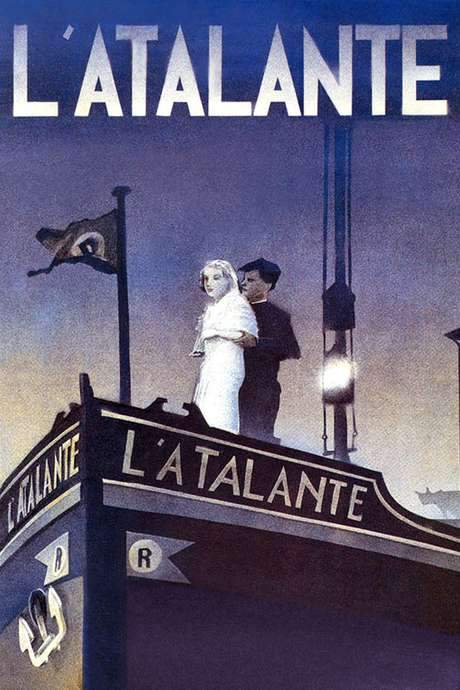
L’Atalante (1934) movie poster

Timeline

L’Atalante (1934) Timeline Explained – Every Event in Order

Release, runtime and language
1934 · 88 mins · French
JustWatch #24,420 4
Directed by
Jean Vigo
Starring
Jean Dasté, Michel Simon, Paul Grimault, Pierre Prévert, Jacques Brunius, Louis Lefebvre

Juliette, a small‑town girl, marries barge captain Jean and joins him aboard his vessel L’Atalante as they travel down the Seine. Jean grows irritated by her flirtations with his all‑male crew, while she yearns to escape the boat’s routine for Paris. When she disappears to Paris alone, Jean begins to question whether their marriage was a mistake.

On this page (6)
  1. 1 Where to watch
  2. 2 Events in order (11)
  3. 3 Timeline questions answered
  4. 4 Movie threads
  5. 5 Movies like L’Atalante
  6. 6 Every angle

Where to watch

Where to Watch L’Atalante (1934)

Where can you watch L’Atalante? Stream, rent or buy it in the US, including on Darkroom, Amazon Video and Apple TV Store: current JustWatch availability with up-to-date prices.

Streaming availability powered by JustWatch

11 events in order · contains spoilers

L’Atalante Timeline: Events in Chronological Order

Every key event of L’Atalante (1934) in order, scene by scene, with when and where it takes place. Use it to untangle flashbacks, time jumps and parallel storylines, to refresh your memory before the sequel or to find the exact scene you are thinking of.

  1. Wedding and boarding L'Atalante

    Jean and Juliette marry in her village and move aboard the canal barge L'Atalante with Jean's eccentric crew, Père Jules and the cabin boy. The couple begins married life at sea, while the crew's quirks press close around them. The barge becomes their small world as they depart toward Paris.

    When
    after the wedding
    Where
    village and on board L'Atalante
  2. Voyage toward Paris and honeymoon

    They travel along the canal toward Paris to deliver cargo, and the trip doubles as an impromptu honeymoon for the newlyweds. The mood is light as Juliette adjusts to life aboard and the crew's idiosyncrasies. The journey sets the stage for tensions to come.

    When
    en route to Paris
    Where
    on the canal toward Paris
  3. Jealous outburst on board

    Uncomfortable with a woman aboard, Jules and the cabin boy's behavior fuels Jean's jealousy. He discovers them talking near Jules' quarters and erupts, smashing plates and scattering Jules' many cats. The moment foreshadows the strain that will haunt the marriage.

    When
    during voyage to Paris
    Where
    on the barge
  4. Paris promises a night out

    In Paris, Jean promises Juliette a night on the town, but Jules and the cabin boy leave with a fortune teller instead. Juliette feels disappointed that Jean cannot leave the barge unattended, and the distance between them grows. The city, with its temptations, becomes a test for their marriage.

    When
    in Paris after arrival
    Where
    Paris
  5. Dance hall confrontation

    Jean takes Juliette to a dance hall where a street peddler flirts, dances with her, and invites her to run away with him. A tense confrontation follows as Jean asserts control over Juliette's choices. He drags her back to the barge, renewing the sense of confinement.

    When
    evening in Paris
    Where
    Paris, dance hall
  6. Juliette's city wanderings

    Still craving Parisian nightlife, Juliette sneaks off to explore the city. When Jean discovers she is gone, he angrily sets sail, leaving her behind on the river.

    When
    same night
    Where
    Paris
  7. Juliette left behind in the city

    Juliette spends the day window shopping, unaware that the barge has already departed. After returning, she tries to buy a train ticket to follow, but is robbed of her purse. With no money, she must work her way toward Le Havre, where the barge may be headed.

    When
    the following day
    Where
    Paris; Le Havre
  8. Jean's depression and dilemma

    Jean sinks into a deep depression as he contemplates his actions and concerns over losing his job. The company's manager calls him, but Jules intervenes to steady him and prevent him from being dismissed. The atmosphere aboard conveys growing despair.

    When
    post-departure
    Where
    on the barge
  9. The water-based love vision

    Jean recalls Juliette's folk tale about seeing the face of one's true love in water and tries to replicate it. He dunks his head in a bucket and then jumps into the river, hoping for a sign or reunion. The ritual is a desperate act born of longing and guilt.

    When
    during his depression
    Where
    by the barge and river
  10. Discovery and approach to reunion

    Jules locates Juliette in a store along the way toward reunion and they set out to bring her back to the barge. The moment marks a turning point as the search narrows to a hopeful reconciliation. Tension aboard gives way to a possible reunion.

    When
    upon discovery
    Where
    store in Le Havre
  11. Joyful reunion on the barge

    Jules finds Juliette in a store and they return to the barge where Jean and Juliette are joyfully reunited. The earlier frictions ease as the couple resumes life aboard with their river family. The film closes on a note of hopeful harmony.

    When
    upon return
    Where
    L'Atalante barge

Last updated: October 09, 2025 at 12:39

Was this helpful?

Timeline questions answered

L’Atalante Timeline Explained: Your Questions Answered

When does it happen, and why in that order? The questions people ask about the chronology of L’Atalante (1934): time jumps, flashbacks, cause and effect between scenes and the correct order of events, each answered with spoilers.

Q1

Why does Jean get so jealous of Juliette talking to Jules?

Jean feels threatened because Juliette is the only woman aboard a barge with an all-male crew. When he sees her in Jules' quarters talking privately, his insecurity and suspicion flare. The moment also reveals his deeper fear of losing her to the excitement and freedom that Paris represents, making him hypersensitive to any close interaction she has with other men.

Foreshadowing: The jealousy foreshadows the marital tensions that will escalate throughout the journey.

  • jean jealousy
  • jules
  • marital tension
  • barge crew
  • controlling behavior
Q2

Why does Juliette want to leave the barge for Paris?

Juliette is enchanted by the city's neon glow and endless possibilities, representing freedom and excitement far from the repetitive routine of barge life. Having grown up in a small village, the contrast between her limited world and the vibrant metropolis is overwhelming. The confined space of the barge, with its close quarters and constant proximity to Jean's jealous crew, makes her feel trapped rather than cherished.

Foreshadowing: Earlier scenes showing Juliette's wonder at Paris windows and the dance hall establish her deep attraction to city life.

  • juliette
  • paris
  • escape
  • boredom
  • freedom
  • wandering
Q3

Why does Jean leave Juliette behind in Paris?

When Jean discovers Juliette has sneaked off again to explore the city, he reacts out of anger and hurt rather than reason. He assumes she has run away with someone, possibly the street peddler from the dance hall. In a fit of rage, he orders the barge to set sail without her, abandoning her in a city where she knows no one and has no money.

Foreshadowing: The confrontation at the dance hall, where Jean physically drags Juliette away, demonstrates his tendency toward controlling behavior when threatened.

  • jean
  • abandoned
  • paris
  • anger
  • departure
  • regret
Q4

How does Juliette get to Le Havre after being left in Paris?

After Jean sails away, Juliette returns to find the barge gone. She tries to buy a train ticket to follow it but is robbed of her purse, leaving her penniless in an unfamiliar city. Forced to survive, she works her way toward Le Havre, though the exact details of her labor and journey remain unclear. Her determination to return to the barge shows her underlying commitment to the marriage despite her longing for the city.

  • le havre
  • juliette
  • journey
  • robbed
  • work
  • survival
Q5

What is the water ritual Jean performs and what does it mean?

Jean remembers a folk tale Juliette once told him about seeing the face of one's true love reflected in water. Desperate and guilt-ridden after leaving her behind, he attempts to replicate this by dunking his head in a bucket, then finally jumping into the river itself. This desperate act symbolizes his realization that he truly loves Juliette and his willingness to search for her, rather than simply waiting.

Foreshadowing: Juliette's folk tale earlier in the film sets up this moment of romantic desperation.

  • water ritual
  • folk tale
  • jean
  • true love
  • guilt
  • desperation
Q6

How does Jules help reunite Jean and Juliette?

When Jean falls into deep depression and risks losing his job, Jules steps in to support him and prevent his dismissal. More importantly, Jules takes initiative to locate Juliette, finding her in a store and arranging for her return to the barge. His loyalty to Jean and the couple's relationship demonstrates that despite his eccentricities, he genuinely cares about their marriage succeeding.

Foreshadowing: Jules' earlier conflict with Jean over jealousy foreshadows his later role as peacemaker.

  • jules
  • reunion
  • support
  • loyalty
  • forgiveness
  • search
Q7

Why does the street peddler invite Juliette to run away with him?

The street peddler is charmed by Juliette at the dance hall and sees an opportunity to tempt her with the freedom and adventure she craves. His invitation represents the external temptation that tests Jean and Juliette's marriage. However, the film makes clear that Juliette is drawn to the idea of escape itself rather than specifically to this man, highlighting her restlessness rather than infidelity.

  • street peddler
  • temptation
  • run away
  • dance hall
  • flirting
Q8

What does the ending of L'Atalante signify for Jean and Juliette's future?

The reunion represents a quieter, more mature understanding between the couple. Both have learned hard lessons: Jean has overcome his jealousy and Control, while Juliette has experienced the difficulties of life without the barge and her husband. They return to their shared voyage with deeper appreciation for each other, though the film suggests their challenges are not over, the pull of the city and Jean's jealousy remain潜在 threats.

  • reunion
  • marriage
  • happily ever after
  • reconciliation
  • harmony
  • new beginning
Q9

Why does life on the barge feel so suffocating to Juliette?

The barge represents a world of endless routine navigating the same canal, with no privacy and constant proximity to Jean's eccentric crew. The cramped quarters, the repetition of the journey, and Jean's jealous temperament make it feel like a prison rather than a home. Her longing for Paris symbolizes her desire for a fuller life beyond these confined boundaries.

  • barge
  • claustrophobia
  • confined
  • trapped
  • routine
  • monotony

Movie threads

More Movies Like L’Atalante, by Mood & Story

Curated lists built around what makes L’Atalante tick: the same mood, the same kind of story or the same emotional payoff. Each list explains why these movies belong together.

Movies about longing and reunion like L’Atalante

Stories of quiet yearning and the slow, joyful repair of fractured bonds. If you liked the melancholic mood and gentle reconciliation in L’Atalante, explore other films about yearning and reunion. These movies share a similar tone of bittersweet romance and emotional journeys, often set against the backdrop of travel, featuring couples or partners rebuilding their connection after a painful separation.

  • yearning
  • melancholic
  • nostalgic
  • romantic
  • dreamlike
  • lonely
  • Tone: melancholic, romantic, nostalgic
  • Pacing: slow, atmospheric
Why these movies?

The story pattern: These narratives typically follow a couple or close partners whose bond is tested by circumstance, often involving a physical or emotional separation. The story unfolds at a deliberate pace, exploring the loneliness and yearning of both parties before building towards a heartfelt, often understated, reconciliation that feels earned rather than rushed.

Why they belong together: Movies in this thread are grouped by their shared focus on the emotional landscape of longing, the atmospheric use of a journey as a narrative device, and a tone that balances melancholy with the quiet hope of reconnection. They offer a specific, resonant feeling of nostalgic romance.


Movies about love in confined spaces like L’Atalante

Intimate dramas where a shared space becomes a pressure cooker for relationships. For viewers who enjoyed the claustrophobic tension and marital strife aboard the barge in L’Atalante, this section collects similar movies about love tested in close quarters. These films explore how confined settings intensify relationship dynamics, featuring couples or small groups grappling with jealousy, boredom, and the need for personal space.

  • claustrophobic
  • tense
  • melancholic
  • lonely
  • yearning
  • working-class
  • Tone: claustrophobic, tense, melancholic
  • Pacing: slow, character-driven
Why these movies?

The story pattern: The narrative pattern involves a new or established relationship placed under microscope within a small, shared world—a boat, a remote house, a small town. The central conflict arises from the friction between domesticity and wanderlust, commitment and individuality. The story builds tension through small,accumulated grievances rather than large dramatic events, often leading to a breaking point before resolution.

Why they belong together: These films are united by their use of a confined setting as a central character, a focus on the quiet, escalating tensions of co-dependency, and a realistic portrayal of working-class or unconventional relationships. They share a specific vibe of intimate, atmospheric pressure.

If you liked this

Movies Like L’Atalante

Similar movies to L’Atalante: the same genre, themes or kind of story. Each one comes with its own plot summary, timeline and ending explained.

Browse all movie summaries

Every angle

L’Atalante (1934) Explained: Plot, Timeline & Characters

Everything about L’Atalante in one place: what happens in the plot summary, the timeline in chronological order, the characters and meaning and a spoiler-free summary. What's After the Movie adds the cast, box office and post-credit scenes.

Coming soon on iOS and Android

The Plot Explained Movie Summary App

Plot summaries, endings explained and timelines on your phone. Catch up on any movie in minutes, save your favorites and never miss a twist again.

Be the first to know when we launch. Your email stays private, always.

Learn more about the app