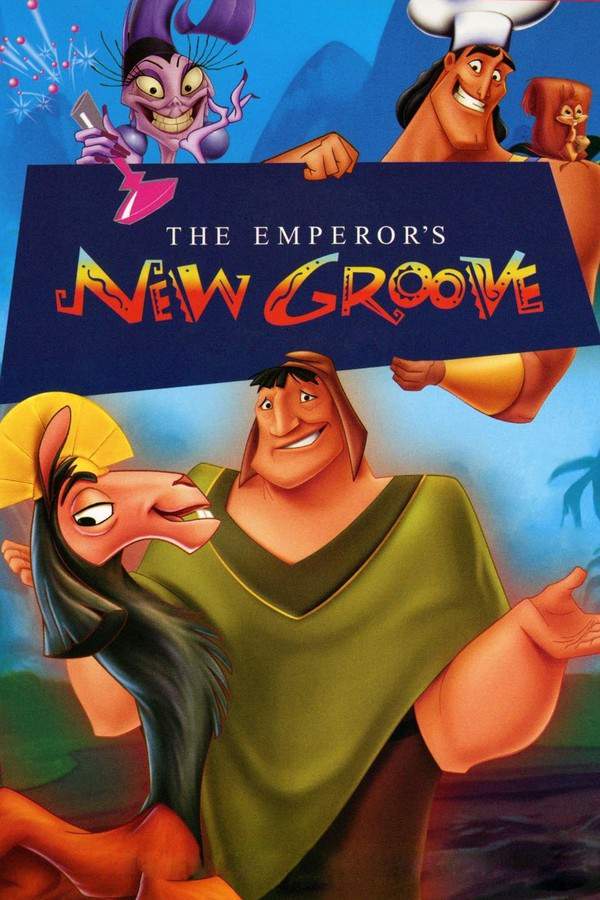
Kuzco, the former emperor who now serves as a wry narrator, guides us into the twistedly funny tale centered on Kronk Pepikrankenitz, who has climbed into a curious new life as the chef and Head Delivery Boy at Mudka's Meat Hut. He is fretting over his father’s upcoming visit, the kind of pressure that makes a big personality feel small, and his nerves are on edge as the clock ticks toward the arrival that could either reassure or nag him about every life choice he’s ever made.
In a vivid flashback, Kronk unfolds how he almost managed to knit together a dream of wealth with a dream of a quiet home life. He finds himself as an unwitting accomplice to Yzma, the former villainess of the first film who now appears human again—tail intact, mind as sharp as ever—and who schemes to peddle sewer slime as a “youth potion.” The plan, ridiculous on the surface, plays out with comic peril as Kronk slides deeper into the ruse, enough to amass money and the semblance of a future that could satisfy even the most stubborn expectations.
The duo’s audacious scheme leads them to acquire the old folks’ home from the residents themselves, a purchase that seems like a grand gateway to Kronk’s lofty dreams of a sprawling life—a grand house, a sweeping yard, and acceptance that might finally quiet the nagging voice of doubt about his culinary calling. But the ruse unravels in spectacular fashion when the old folks discover the truth of the potion’s failure. Yzma is exposed as a fake, and the crowd—an unlikely chorus of supportive friends—pursues her to a bridge spanning a crocodile-filled river. To escape judgment and punishment, she transforms into a rabbit, but fate has other plans: she’s seized and carried away by a condor, leaving Kronk to confront the consequences of his choices.
Back in the present, Kronk’s world shifts again as he serves as a camp counselor to the Junior Chipmunks at Camp Chippamunka, where he finds himself falling for fellow counselor Miss Birdwell. The romance complicates an already precarious balance between responsibility and play, especially when one of Kronk’s Chipmunks, a mischievous youngster named Tipo, pulls a prank to win the camp championships and ends up getting caught. Kronk, feeling partly to blame for pushing his Chipmunks to win “by any means,” must decide how far his loyalty to his team should go, all while his own heart off the field begins to tilt toward Miss Birdwell.
The plot thickens as Kronk’s father, a figure whose approval he has long sought, arrives with a parade of misunderstandings and a chorus of friends who step into pretend roles—posing as Kronk’s wife and children—to sway the visiting elder’s opinion. The deception creates a cascade of comic misunderstandings and tender moments as Kronk learns that the true wealth in his life isn’t measured by money or status, but by the friendships he has earned and the bonds he has deepened. In the end, patience, honesty, and a willingness to choose affection and loyalty over hollow grandeur win the day: his father’s blessing comes, and Miss Birdwell’s love feels within reach.
As the credits prepare to roll, the story closes on a comical note outside the house: Yzma remains perched in the condor’s nest, the two eggs she’s guarding hatching in an ominous, mischievous finale that hints at more trouble—and more laughter—on the horizon.