Year: 1995
Runtime: 118 mins
Language: Kannada
Director: Girish Kasaravalli
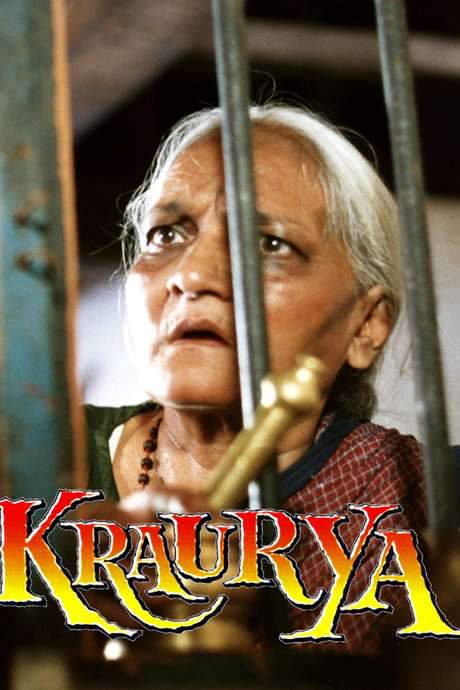
Rangajji, a widowed storyteller beloved by village children, endures hardship after her only son dies mysteriously. Sent to live with a distant relative, she receives a welcome and finds her freedom severely restricted, yet her longing to tell stories endures. She endures isolation while dreaming of sharing her imagination with the next generation.
Warning: spoilers below!
Haven’t seen Kraurya yet? This summary contains major spoilers. Bookmark the page, watch the movie, and come back for the full breakdown. If you're ready, scroll on and relive the story!
Read the complete plot breakdown of Kraurya (1995), including all key story events, major twists, and the ending explained in detail. Discover what really happened, and what it all means.
Kraurya follows Rangajji Renukamma Murgod, a widow who loves to tell stories of fantasy to the children of her village. Her life changes when her only son dies young under mysterious circumstances, and she must move in with a distant relative who receives her with a cold welcome. With little freedom and days stretched thin by boredom, Rangajji clings to the dream of captivating the village’s children with imagination, hoping to keep the spark of her storytelling alive even as her own spirit grows worn.
Murty Master Vishwas, the youngest son in the household, becomes a quiet source of companionship for Rangajji, reviving a sense of purpose in her days and giving her a reason to hope again.
Her fortunes begin to shift when Subbanna, the eldest son, decides to go to Bangalore to start his own private business. Rangajji lends him the money, imagining that Subbanna might also help her locate her husband’s close friend, Mr. Padmanabiah, in the city.
Subbanna leaves for Bangalore, and after a few months Rangajji travels to the city with Murty in the hope of finding Padmanabiah. Upon reaching, she again meets Subbanna, who greets her with a cold reception that reminds her how rarely she is welcomed with warmth.
Her search in Bangalore leads to a painful truth: Mr. Padmanabiah is no longer alive. The discovery drains Rangajji of her will to live, leaving her feeling hopeless as the city’s vast streets loom over her memory and dreams.
Murty decides to bring Rangajji back to the village, but the return journey is fraught with trouble. A sequence of events along the way leaves Rangajji physically wounded, testing the limits of both her endurance and Murty’s ability to protect her.
In the film’s climactic turn, Rangajji lies unconscious in a police station, her fate hanging in the balance. Murty, fearing arrest for murder, escapes into the night, trying to outrun the consequences of the evening’s chaotic events. Rangajji’s fate remains unresolved at that moment, her story echoing the power and peril of a life spent weaving dreams for others.
Last updated: February 17, 2026 at 19:58
Explore frequently asked questions about Kraurya (1995) with spoiler-rich answers covering the full plot summary, major story beats, character motivations, hidden details, and ending meaning. This movie summary FAQ helps explain confusing scenes, plot twists, and narrative decisions in clear, searchable detail.
Rangajji lends Subbanna money because she hopes he will help her locate her husband's close friend, Mr. Padmanabiah, in Bangalore. This represents her final connection to her past and her only remaining hope of finding meaning or companionship after losing her son.
Earlier, Rangajji mentions her husband's close friend as someone from her past she desperately wants to reconnect with, showing how isolated she has become.
Padmanabiah was Rangajji's husband's close friend, representing the last living link to her past life before her son's death. Finding him symbolizes her search for connection, belonging, and a piece of her former identity as a loved wife and mother.
Rangajji's stories about her past and her husband's friend reveal her deep longing to reclaim a sense of family and belonging after her loss.
Rangajji travels to Bangalore with Murty to search for Mr. Padmanabiah, hoping to find some closure and connection after the death of her son. The journey represents her final attempt to hold onto hope and find meaning outside her restrictive life with distant relatives.
Rangajji's decision to lend money to Subbanna earlier sets up this journey, showing her willingness to invest in any possibility of reconnecting with her past.
During the return journey from Bangalore to the village, a sequence of traumatic events leaves Rangajji physically wounded. Murty attempts to bring her back to safety, but the journey turns dangerous, causing her injuries that compound her emotional suffering.
The journey itself represents a turning point from hope to further despair, as the earlier optimism of searching for Padmanabiah gives way to physical harm.
In the climax, Rangajji lies unconscious in a police station as a result of the violent events that occurred during the return journey. The specific circumstances remain unclear, but she is severely injured and abandoned, with her fate hanging in the balance.
The troubled return journey with Murty directly leads to this climactic moment, suggesting the violence she suffers leaves her near death.
Murty flees from the police station because he fears being arrested for murder. The chaotic events of the return journey have led to a situation where he believes he will be blamed for what happened to Rangajji, causing him to escape into the night instead of staying to face the consequences.
Earlier, Murty was Rangajji's protector and source of hope, making his abandonment of her unconscious body in the police station a tragic reversal of their bond.
Subbanna greets Rangajji and Murty with a cold reception in Bangalore, reminding her of how rarely she is welcomed with warmth. This reflects Subbanna's self-centered nature and his lack of gratitude for the financial support Rangajji gave him to start his business.
Rangajji's earlier decision to lend money to Subbanna despite her own hardship shows her trusting nature, making his coldness particularly painful.
When Rangajji discovers that Mr. Padmanabiah is no longer alive, her fragile hope shatters. Finding Padmanabiah was her final attempt to reconnect with her past and find meaning after her son's death. His death leaves her with nothing to hold onto, draining her will to live.
The entire journey to Bangalore was built on the hope of finding this connection, making its failure a crushing blow to Rangajji's already fragile spirit.
When Rangajji moves in with distant relatives after her son's death, she receives a cold, uneasy welcome. This reflects the lack of genuine compassion in her new environment and highlights her vulnerability and isolation, as even family offers her no warmth or support.
This cold reception establishes the tone for her entire stay, foreshadowing the restrictions and loneliness she will endure.
Murty, the youngest son in the household, becomes Rangajji's companion and gives her a renewed sense of purpose. Their bond brings light to her otherwise bleak existence, providing her with someone who genuinely cares for her and giving her a reason to hope again.
Murty's companionship is the primary source of hope in Rangajji's life after her loss, making his eventual abandonment of her in the police station even more devastating.
Discover curated groups of movies connected by mood, themes, and story style. Browse collections built around emotion, atmosphere, and narrative focus to easily find films that match what you feel like watching right now.
Stories focusing on the quiet suffering and resilience of aged characters.If you appreciated the poignant portrayal of Rangajji's struggle in Kraurya, this section collects similar movies about elderly characters facing loneliness and neglect. These dramas explore themes of aging, family obligation, and the quiet search for dignity.
Stories in this thread typically follow an elderly character's gradual decline into isolation after a major personal loss, often a spouse or child. The narrative focuses on their internal emotional state, their strained relationships with younger relatives, and their attempts to hold onto fragments of their identity, often ending on a somber note.
Movies are grouped here because they share a primary focus on the emotional landscape of an aging protagonist. They feature a melancholic tone, slow pacing that reflects the character's reality, and a heavy emotional weight derived from themes of grief, abandonment, and the crushing weight of family duties.
Characters who use stories and imagination to endure harsh realities.For viewers moved by Rangajji's enduring passion for stories in Kraurya, this section features other movies where characters use narrative as a tool for resilience. These films often involve artists, writers, or oral storytellers preserving their spirit against adversity.
The narrative pattern involves a protagonist whose creative spirit is threatened by external circumstances—be it loss, confinement, or societal pressure. The story's central conflict is between their internal, imaginative world and the bleakness of their external reality. Their journey is one of holding onto their art as a form of resistance, even if victory is ambiguous.
These movies are connected by the powerful theme of creativity as a lifeline. They share a tone that balances melancholy with a glimmer of hope, a pacing that allows for introspection, and a focus on the internal struggle of an artist or storyteller fighting to preserve their voice.
Don't stop at just watching - explore Kraurya in full detail. From the complete plot summary and scene-by-scene timeline to character breakdowns, thematic analysis, and a deep dive into the ending - every page helps you truly understand what Kraurya is all about. Plus, discover what's next after the movie.
Track the full timeline of Kraurya with every major event arranged chronologically. Perfect for decoding non-linear storytelling, flashbacks, or parallel narratives with a clear scene-by-scene breakdown.
Discover the characters, locations, and core themes that shape Kraurya. Get insights into symbolic elements, setting significance, and deeper narrative meaning - ideal for thematic analysis and movie breakdowns.