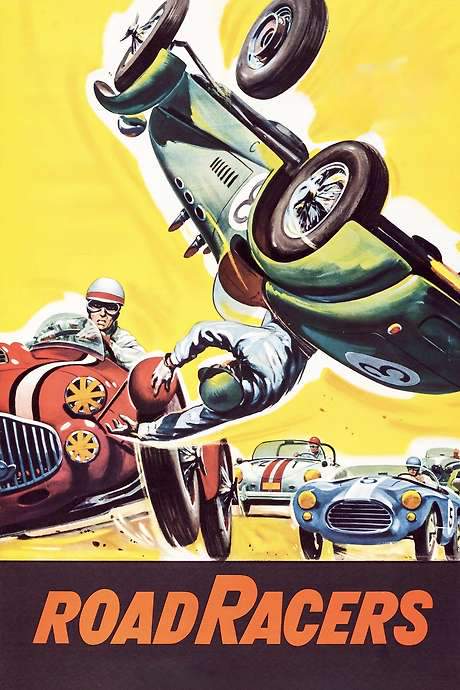
Johnny Wayne, a once-promising street racer, carries the weight of a devastating mistake that landed him in prison for five years after a reckless illegal race in Los Angeles left a young boy disabled. Upon release, he strives to rebuild his life and live as a steady, law-abiding member of society, determined to leave his racing days behind. Yet the shadow of his past clings closely, and his parole officer continually tests his resolve, turning a plea for a fresh start into a precarious game of risk and leverage.
Forced back toward the edge he swore to abandon, Wayne finds himself navigating a dangerous tug-of-war between duty and temptation. The parole system, coupled with taunts from former street racing peers, nudges him back toward the world he fled. A new job at a wrecking yard run by a gruff, wary owner named Red becomes a reluctant lifeline. At first, their relationship is strained, but as Red sees the consequence-free discipline and quiet skill in Wayne, a wary camaraderie grows. Red even takes the time to coach Wayne in the subtle art of racing: not just speed, but timing, control, and strategy—skills that remind Wayne of the thrill he once chased, though now redirected toward honesty and precision.
Wayne’s parole conditions also push him toward community service, and he lands a role at a rehabilitation facility. There, he meets Danny, a boy who was crippled in the same car accident years earlier, and who now fights to relearn how to walk with the help of physical therapy. Danny, and his older sister, welcome Wayne with cautious trust, drawn by his quiet resolve and the way he refuses to quit. Wayne’s presence becomes a source of inspiration for Danny, encouraging him to put in the effort required to regain mobility, even as the boy’s family faces mounting medical bills and overwhelming stress. The two develop a fragile bond, built on mutual respect and a shared determination to move forward.
As time passes, Wayne begins to confront a hard truth he has kept buried: the accident that crippled Danny was the very incident he caused five years earlier. He grapples with the weight of this revelation, fearing the impact it could have on Danny and his sister if the truth ever came out. The moment of confrontation arrives when Danny’s father—furious and protective— discovers Wayne at the rehabilitation facility and publicly exposes the hidden connection. The revelation tests Wayne’s nerve and shakes Danny’s family, who are already strained by financial and medical pressures. Danny’s sister speaks openly about the pain and burden Wayne’s past has imposed, forcing Wayne to reckon with the consequences of his actions and the real cost of his second chance.
The story escalates to a high-stakes showdown as Wayne faces off against his former ally-turned-rival, Mickey Styles, in a decisive street race for the title of Los Angeles’ ultimate street racer and a cash prize of $10,000. The crooked parole officer, ever cynical, bets against Wayne and tries to pressure him into throwing the race, threatening to violate his parole and escalate harm to Danny and his family if he refuses. The challenge tests every fiber of Wayne’s character—to resist the coercion, race with integrity, and honor the fragile hope he’s rekindled in Danny and those around him.
In a culmination that blends talent, nerve, and consequence, Wayne crosses the finish line first, securing the prize money and choosing a path of generosity by donating the entire sum to Danny. The victory carries a deeper resonance: it marks a reclaiming of his past and a commitment to use his now-refined skills for good, rather than for reckless risk. The story closes on a sobering note for the corrupt parole officer, who meets a brutal, fitting end as street racers mete out their own justice. Wayne’s triumph is not just about a win on the asphalt; it’s about responsibility, forgiveness, and the hard-won belief that real redemption comes from choices that protect and uplift others, even when the past continues to demand its due.