Plot Explained Spoilers guaranteed!
Plot Explained

Browse by genre

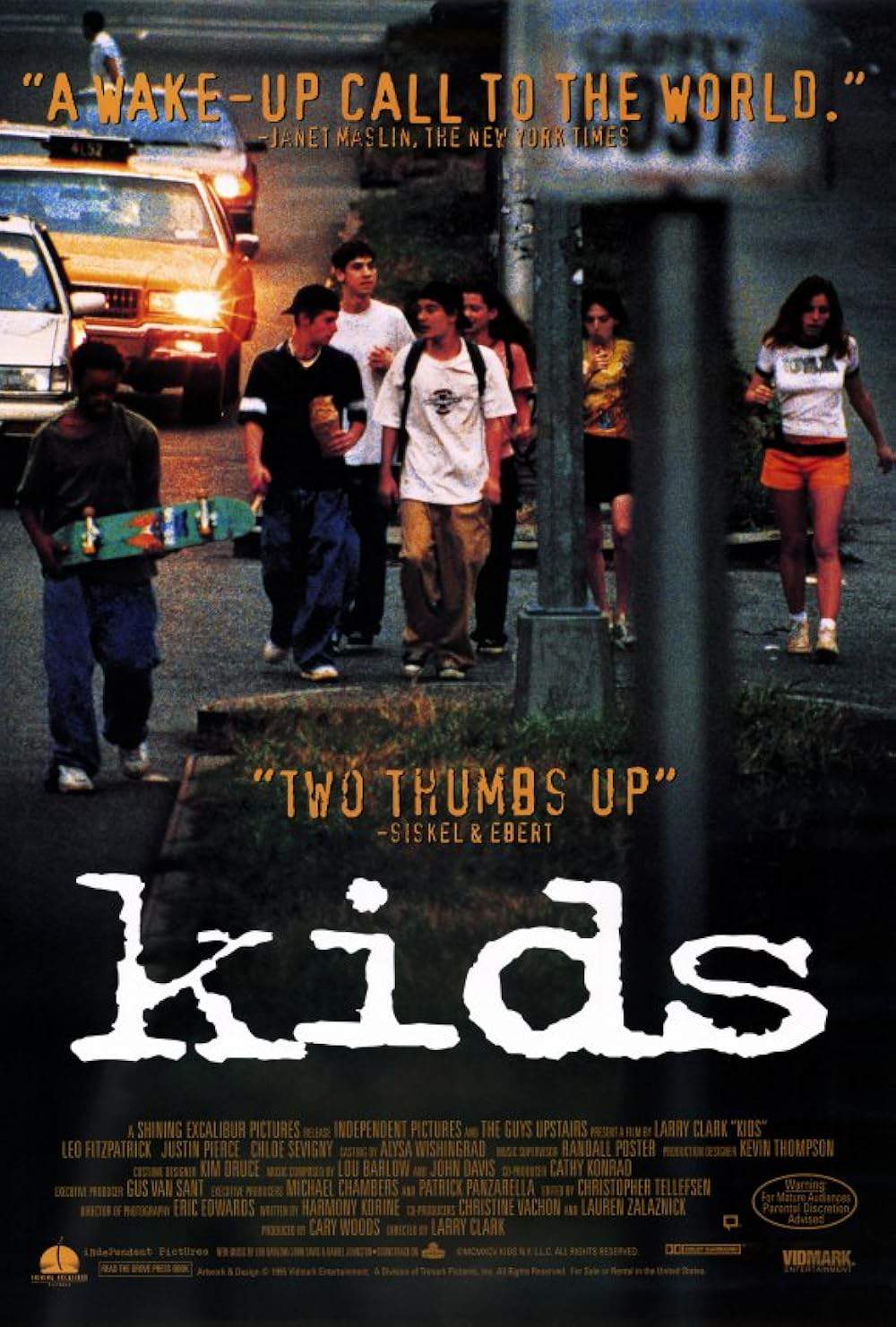
Kids (1995) movie poster

Characters & Themes

Kids (1995) Characters, Setting & Themes Explained

Release, runtime and language
1995 · 91 min · Lithuanian
Directed by
Larry Clark
Starring
Chloë Sevigny, Adriane Brown, Billy Valdes, Billy Waldeman, Johnathan Staci Kim, Joseph Chan
Budget
$1.5M

The film follows Telly, a teenager with a specific and troubling idea of safe sex. He believes it means only having sexual encounters with young, inexperienced women. When one of the girls he previously had relationships with discovers she has contracted HIV, she seeks him out to reveal the news. Telly, unaware of the potential consequences, is about to engage in another risky sexual encounter with a young woman.

On this page (7)
  1. 1 Characters explained (5)
  2. 2 Where & when it takes place
  3. 3 Themes & meaning (3)
  4. 4 Character & meaning questions
  5. 5 Movie threads
  6. 6 Movies like Kids
  7. 7 Every angle

5 main characters · contains spoilers

Kids Characters Explained: Who Is Who

The main characters of Kids (1995), heroes and villains: what drives them, how they change over the course of the story and what each of them reveals about the film's bigger ideas.

  • Telly (Leo Fitzpatrick)

    Telly is a scrawny 16-year-old who pursues sexual experiences with a mix of bravado and insecurity. He defines himself through sexual conquest and aligns with a group that prizes risk-taking and boastful attitudes. His apparent confidence masks a lack of guidance and a susceptibility to peer pressure.

    • 👦 Teen
    • 🌀 Rebellious
    • ⚠️ Risk-taking
  • Casper (Justin Pierce)

    Casper is Telly's best friend, drawn to thrill-seeking and impulsive behavior. He shoplifts, uses drugs, and participates in escalating acts of aggression and sexual coercion. His reckless bravado hides insecurity and a dependence on the group for validation.

    • 👦 Teen
    • 🕺 Hedonistic
    • ⚠️ Aggressive
  • Jennie (Chloë Sevigny)

    Jennie is part of the girls' circle discussing sex and HIV risk. She tests HIV positive after a single encounter with Telly and tries to locate him to protect Darcy; she arrives at Steven's house too late. Her experiences reflect fear, stigma, and the consequences of unprotected sex.

    • 👧 Teenage girl
    • 💉 HIV
    • ⚠️ Stigma
  • Ruby

    Ruby is one of the girls discussing sex and testing; she tests negative for HIV despite multiple encounters, offering a counterpoint to the HIV-positive narrative. She contributes to the conversation about sexual status, trust, and risk among teens.

    • 👧 Teenage girl
    • 🧪 STD testing
    • ⚖️ Caution
  • Darcy

    Darcy is a 13-year-old virgin, the younger sister of an acquaintance, whom Telly tries to coerce into sex. She shows restraint and is the object of the group’s predatory behavior, underscoring the vulnerable position of younger teens in the culture depicted.

    • 👶 Minor
    • ⚠️ Exploitation
    • 💔 Innocence

Last updated: October 04, 2025 at 08:08

Was this helpful?

Setting

Where and When Does Kids Take Place?

The setting of Kids (1995): the year and time period, the places and locations, and how they shape the characters, the mood and the tension of the story.

Time period

1990s

Set in the mid-1990s in New York City, the film captures the era’s street culture, casual attitudes toward sex and drugs, and the frenetic pace of adolescence. There are no adults monitoring the characters, a factor that accelerates risky decisions. The time period reinforces the sense of fearless experimentation and the consequences that follow.

Location

New York City

New York City serves as the sprawling backdrop, with scenes unfolding in skate parks, rooftops, a local store, a pool, and a crowded party house. The urban environment functions as a rough, exhilarating playground where teens seek belonging and momentary escape. The city’s anonymity and crowded streets amplify risk, vulnerability, and the pressure to perform.

  • 🏙️ New York City
  • 🎭 Urban youth culture
  • 🏬 Street life

Last updated: October 04, 2025 at 08:08

Was this helpful?

3 major themes

Kids Meaning: Themes & Message Explained

What is Kids (1995) really about? The emotional, social and philosophical themes the film keeps returning to, its symbolism and the message beneath the surface.

  • Sexuality

    The film centers on teenage sexuality, examining curiosity, first experiences, and the thrill of rebellion. It portrays how peer pressure, bravado, and the lack of guidance drive risky choices and the pursuit of sexual status. The narrative challenges conventional notions of innocence by presenting acts and conversations about sex in blunt terms.

  • STD & HIV

    The plot juxtaposes HIV testing results among girls with the consequences of unprotected sex. Jennie tests HIV positive after a single encounter with Telly, while Ruby tests negative, highlighting stigma, fear, and misinformation surrounding HIV in the mid-1990s. The interactions reveal how disclosure and judgment complicate relationships and decisions.

  • Violence

    The story includes violent acts and coercive behavior among the teens, from theft and intimidation to rape. These events illustrate how aggression and entitlement escalate into real harm and reflect the consequences of unsupervised adolescence in a permissive social environment.

Last updated: October 04, 2025 at 08:08

Was this helpful?

Character & theme questions

Kids Characters & Meaning: Your Questions Answered

The questions people ask about Kids (1995): who the characters really are, their relationships, what the symbols mean, where it takes place and what the movie is really about. Each answer contains spoilers.

Q1

Where does the story take place?

The movie is set entirely in New York City, utilizing locations like skate parks, rooftops, and crowded party houses. This urban environment serves as a sprawling backdrop that amplifies the anonymity and risk faced by the characters in Kids.

Foreshadowing: The opening scenes establish the busy streets as a playground for unsupervised teens.

  • new york city
  • setting
  • urban
  • location
Q2

How does New York City influence the characters' behavior?

The city functions as a rough, exhilarating playground where teens seek belonging and momentary escape without adult monitoring. In Kids, the crowded streets and anonymity amplify vulnerability and the pressure to perform risky behaviors.

  • nyc
  • urban culture
  • anonymity
  • risk
Q3

What time period is the movie set in?

The story takes place in the mid-1990s, capturing the specific street culture and casual attitudes of that era. This timeframe is crucial to Kids as it reflects the pre-internet age and the specific public health concerns of the time.

  • 1990s
  • era
  • time period
  • mid-90s
Q4

Why is the 1990s setting crucial to the story?

The era defines the context of HIV stigma and the lack of digital supervision that accelerates risky decisions. In Kids, the mid-90s setting reinforces the sense of fearless experimentation and the severe consequences surrounding sexual health.

  • 1990s context
  • hiv stigma
  • culture
  • supervision
Q5

Who is Telly and what motivates him?

Telly is a 16-year-old who defines himself through sexual conquest driven by a mix of bravado and insecurity. His motivation in Kids stems from a lack of guidance and a susceptibility to peer pressure within his group.

Foreshadowing: Early conversations reveal his specific and troubling ideas about safe sex.

  • telly
  • motivation
  • protagonist
  • insecurity
Q6

What is Jennie's role in the story?

Jennie represents the consequence of unprotected sex, testing HIV positive after a single encounter with Telly. Her role in Kids is to seek out Telly to reveal the news, highlighting fear, stigma, and the desperate search for truth.

Foreshadowing: Her initial discussions with friends hint at the underlying anxiety about testing.

  • jennie
  • hiv
  • consequence
  • victim
Q7

How does Casper contribute to the story?

Casper acts as Telly's best friend, drawn to thrill-seeking, shoplifting, and impulsive behavior. In Kids, his reckless bravado hides insecurity and dependence on the group, escalating acts of aggression and coercion.

Foreshadowing: His early drug use and theft signal his volatile nature.

  • casper
  • best friend
  • reckless
  • aggression
Q8

Are there adult figures in the movie?

There are virtually no adults monitoring the characters, a factor that accelerates risky decisions throughout the narrative. This absence in Kids underscores the unsupervised adolescence and the permissive social environment the teens inhabit.

  • adults
  • supervision
  • parents
  • absence
Q9

What is the main theme regarding sexuality?

The film centers on teenage sexuality, examining curiosity, first experiences, and the thrill of rebellion. Kids portrays how peer pressure and the lack of guidance drive risky choices and the pursuit of sexual status.

  • sexuality
  • theme
  • rebellion
  • peer pressure
Q10

How does the film portray HIV and STDs?

The plot juxtaposes HIV testing results among girls with the consequences of unprotected sex to highlight stigma and fear. In Kids, these interactions reveal how disclosure and judgment complicate relationships and decisions among teens.

  • hiv
  • std
  • health
  • stigma
Q11

What role does violence play in the narrative?

The story includes violent acts and coercive behavior among teens, from theft and intimidation to rape. These events in Kids illustrate how aggression and entitlement escalate into real harm within an unsupervised environment.

Foreshadowing: Early shoplifting and intimidation hint at escalating physical harm.

  • violence
  • coercion
  • aggression
  • harm
Q12

What is the overall tone of the film?

The tone is consistently bleak, with no redemptive arcs or hopeful outcomes offered to the viewer. Kids maintains a high intensity due to the constant threat of HIV transmission and adolescent recklessness without moral judgment.

  • tone
  • bleak
  • realistic
  • intensity
Q13

What does the title signify?

The title reflects the exploitation and endangerment of youth caused by their own ignorance and lack of guidance. In Kids, it underscores the tragic reality of adolescents navigating a dangerous world without protection.

  • title
  • meaning
  • youth
  • innocence
Q14

What cinematic style does the movie use?

The film employs a documentary-like realism that refuses to offer solace or complex subplots to the audience. This straightforward approach in Kids focuses on a linear 24-hour period that builds momentum toward inevitable tragic encounters.

  • style
  • realism
  • documentary
  • linear
Q15

What message does the movie convey about youth culture?

The narrative challenges conventional notions of innocence by presenting acts and conversations about sex in blunt terms. Kids delivers a heavy emotional weight derived from themes of youth being exploited by their own ignorance.

  • message
  • youth culture
  • innocence
  • exploitation

Movie threads

More Movies Like Kids, by Mood & Story

Curated lists built around what makes Kids tick: the same mood, the same kind of story or the same emotional payoff. Each list explains why these movies belong together.

Raw Urban Youth Stories Like Kids

Raw, unsettling portraits of young lives spiraling in a harsh urban reality. Explore movies like Kids that depict the grim realities of teenage life with unflinching honesty. These similar gritty dramas focus on urban settings, drug use, and sexual promiscuity, often with bleak endings. If you liked the raw, confrontational style of Kids, you'll find more films that capture this specific, desperate vibe.

  • gritty
  • raw
  • unflinching
  • anxious
  • desperate
  • grim
  • Tone: bleak, confrontational
  • Pacing: steady, procedural
Why these movies?

The story pattern: Stories in this thread typically follow a day-in-the-life structure, charting the inevitable downward spiral of characters trapped by their environment and poor choices. There is often a looming consequence—like disease or violence—that the narrative builds towards, culminating in a devastating climax that offers no redemption or escape.

Why they belong together: This thread groups films that share a commitment to realistic, non-judgmental portrayals of marginalized youth. They connect through their bleak tone, high emotional intensity, and focus on the raw, anxious, and transgressive aspects of growing up in a world devoid of safety nets.

Bleak Tragic Spiral Movies Like Kids

Stories where characters march relentlessly toward a devastating, foreshadowed fate. Discover films like Kids that follow characters on an irreversible path to tragedy. These movies share a steady pacing that builds to a devastating climax, high emotional weight, and a profoundly bleak ending feel. If you appreciated the inevitable, dreadful momentum of Kids, this list features similar stories of moral and physical collapse.

  • bleak
  • grim
  • desperate
  • tense
  • unflinching
  • anxious
  • Tone: bleak, tense
  • Pacing: steady, momentum-building
Why these movies?

The story pattern: The narrative pattern is defined by a linear, cause-and-effect progression where early actions have severe, inescapable consequences. There are no last-minute rescues or redemptive arcs; instead, the story functions as a cautionary tale or a stark observation of human failure, leaving the audience with a profound sense of loss and despair.

Why they belong together: Movies are grouped here based on their shared structural and emotional core: a steady pacing that conveys inevitability, a high-tension score derived from foreshadowed doom, and a bleak ending that confirms the worst-case scenario. The dominant mood is one of grim, desperate anxiety.

If you liked this

Movies Like Kids

Similar movies to Kids: the same genre, themes or kind of story. Each one comes with its own plot summary, timeline and ending explained.

Browse all movie summaries

Every angle

Kids (1995) Explained: Plot, Timeline & Characters

Everything about Kids in one place: what happens in the plot summary, the timeline in chronological order, the characters and meaning and a spoiler-free summary. What's After the Movie adds the cast, box office and post-credit scenes.

Coming soon on iOS and Android

The Plot Explained Movie Summary App

Plot summaries, endings explained and timelines on your phone. Catch up on any movie in minutes, save your favorites and never miss a twist again.

Be the first to know when we launch. Your email stays private, always.

Learn more about the app